100+ Best Resume Skills in 2026 (Examples & Formatting Tips)
Learn which skills to put on your resume, with 100+ examples of hard, soft, technical, and industry-specific skills, plus tips for showing them effectively.
The best resume skills are job-relevant and supported by examples elsewhere on your resume.
Hard and technical skills usually work well in a dedicated skills section, while soft skills are stronger when you demonstrate them through achievements.
Use the job description to identify skills and terminology employers are prioritizing, but only include skills you actually have.
For many resumes, about six to 10 highly relevant skills are enough for a dedicated skills section.
Reinforce your most important skills in your professional summary and work experience, rather than relying on a standalone list.
You can list dozens of impressive abilities on your resume and still get no response if they aren't the skills an employer needs. A strong resume doesn't treat the skills section as a keyword dump. It connects relevant qualifications across your summary, skills section, and work experience.
This guide explains what skills to put on a resume, how hard, soft, and technical skills differ, and how to tailor them to your career stage. You'll also find resume skills examples by industry, along with tips for showing employers how you've actually used those abilities.
Hard Skills vs Soft Skills vs Technical Skills
Hard skills are teachable abilities used to perform specific tasks, soft skills describe how you work with others and approach your responsibilities, and technical skills are specialized hard skills involving particular tools, systems, or processes.
A strong resume typically uses all three, but where and how you present them matters.
Hard Skills
Hard skills are teachable abilities you use to complete specific tasks. You typically learn them through education, training, or experience, and they're often easier to demonstrate or measure than soft skills.
For example, a retail associate's hard skills might include cash handling, inventory management, point-of-sale (POS) systems, and merchandise stocking. Other common hard skills include data analysis, financial modeling, foreign language proficiency, project management, and graphic design.
Soft Skills
Soft skills, sometimes called people skills, describe how you work, solve problems, and interact with others. Communication, teamwork, adaptability, critical thinking, and empathy are examples of soft skills that can transfer across jobs and industries.
Because soft skills are harder to measure, they're usually more convincing when demonstrated through accomplishments. Instead of simply listing “leadership,” for example, show how you led a team, improved a process, or helped achieve a measurable result.
Technical Skills
Technical skills are a specialized subset of hard skills involving specific tools, technologies, systems, equipment, or processes. Examples include SQL, Python, Salesforce, Adobe Illustrator, cloud platforms, machinery operation, and specialized software.
Include relevant technical skills when they're required or preferred for the job you're targeting, and be specific. For example, “Excel: PivotTables, XLOOKUP, and macros” tells an employer more than simply listing “computer skills.”
Why These Skills Matter
Hard skills show employers what you can do, while soft skills help show how you do it. Most roles require both: A project manager may need budgeting and scheduling expertise, for example, along with communication, leadership, and problem-solving skills.
Use your dedicated skills section to highlight relevant hard skills, then reinforce important soft skills through examples in your professional summary and work experience.
In-Demand Resume Skills by Industry & Skill Category
The most useful skills categories depend on the role, but employers commonly look for a mix of communication, problem-solving, digital literacy, job-specific tools, and measurable technical abilities. Start with broadly transferable skills, then prioritize the specialized skills named in your target job description.
Universal Soft & Durable Skills
Durable skills are broadly useful abilities that can remain valuable across roles, industries, and career stages. Employers may prioritize different combinations depending on the position, so choose the ones that best match the job description and your actual experience.
Examples include:
Communication: Writing, presentations, public speaking, email, and communication skills
Problem-solving: Critical thinking, research, troubleshooting, and decision-making
Time management: Prioritization, scheduling, deadline management, and multitasking
Leadership: Goal setting, delegation, decision-making, coaching, and team motivation
Adaptability: Learning quickly, responding to change, applying feedback, and adjusting priorities
Customer service: Client support, conflict resolution, active listening, and relationship building
Teamwork: Collaboration, reliability, listening, and cross-functional coordination
Organization: Calendar management, project planning, filing, documentation, and data organization
Technical & Digital Literacy Skills
Technical and digital literacy skills range from everyday workplace software to specialized programming, analytics, and cloud platforms. Prioritize specific programs and functions over broad labels, especially when the job description names particular tools.
Examples include:
Data and analytics: Microsoft Excel, SQL, Python, data visualization, statistical analysis
Cloud and infrastructure: Amazon Web Services (AWS), Microsoft Azure, network administration, cloud management
Customer relationship management (CRM) and office software: Salesforce, Microsoft 365, Google Workspace, QuickBooks
Development and design: HTML, CSS, JavaScript, UX design, Adobe Creative Cloud
Digital communication: Zoom, Slack, Microsoft Teams, email platforms
Industry-Specific Skills
Industry-specific skills show employers that you understand the tools, tasks, and requirements of your target role. Use the examples below as a starting point, then prioritize the skills that appear in your target job description and match your actual experience.
Administrative & Office Support Skills
Administrative and office support roles require organization, accuracy, communication, and proficiency with common workplace tools. Employers may also look for candidates who can coordinate schedules, maintain records, prepare documents, and keep day-to-day operations running efficiently.
Examples include:
Calendar management
Data entry
Microsoft 365
Google Workspace
QuickBooks
Salesforce
Meeting logistics
Document preparation
Scheduling
Presentation preparation
Healthcare & Nursing Skills
Healthcare skills vary widely by role and credential, but clinical support and nursing positions often require a mix of patient care, documentation, safety, communication, and technical skills. Review the job description carefully, since required clinical abilities and certifications can differ substantially by position.
Examples include:
Patient assessment
Vital signs
Electronic health record (EHR) documentation
HIPAA compliance
Medication administration
Glucose monitoring
Infection prevention
Patient communication
Care coordination
Medical equipment operation
Sales & Marketing Skills
Sales and marketing professionals need skills that help attract prospects, build relationships, communicate value, and generate measurable growth. Depending on the role, employers may prioritize skills in lead generation, digital marketing, customer relationship management, negotiation, analytics, or account development.
Examples include:
Account acquisition
Lead generation
CRM software
Contract negotiation
Search engine optimization (SEO)
Pay-per-click (PPC) advertising
Customer retention
Market research
Campaign analysis
Product knowledge
Project Management & IT Skills
Project management and IT roles combine technical knowledge with planning, communication, and problem-solving. Employers may look for skills related to project delivery, budgets, systems, infrastructure, risk, and stakeholder coordination, depending on the position.
Examples include:
Agile and Scrum
Project planning
Budget monitoring
Stakeholder communication
Issue tracking
Network administration
Cloud management
Debugging
Risk management
Cross-functional collaboration
Customer Service & Hospitality Skills
Customer service and hospitality roles depend on communication, responsiveness, and the ability to solve problems while maintaining service standards. Employers may also prioritize conflict resolution, customer retention, sales, and the ability to create a positive experience in fast-paced or high-volume environments.
Examples include:
Active listening
Conflict resolution
Customer retention
POS operation
Complaint resolution
Quality assurance
Guest relations
Upselling
Issue documentation
Service recovery
Job-Specific Skills Tips for Your Resume
To see examples of resume skills, you can search by job title.
SEARCH BY JOB TITLE
For popular job titles, we have a special series of skills writing advice guides:
How to Tailor Your Resume Skills for Your Career Stage
Your strongest resume skills depend partly on where you are in your career. Entry-level candidates can draw from education, projects, internships, and transferable skills, while career changers need to connect existing abilities to a new field. Experienced professionals should emphasize leadership, strategy, and measurable business impact.
Entry-Level & New Graduates
Entry-level candidates and new graduates can draw resume skills from coursework, internships, volunteer experience, extracurricular activities, and academic projects. Prioritize transferable skills, such as communication, teamwork, organization, research, and basic digital proficiency, along with technical skills required for the job.
If limited work history makes it difficult to showcase your abilities, a combination resume can give relevant qualifications more visibility while still preserving your work history. College students can also use skills developed in school and other experiences to show they're ready for the workplace.
Career Changers
Career changers should focus on transferable skills that connect their previous experience to the requirements of a new field. Project coordination, vendor management, public speaking, training, client communication, research, and leadership can remain relevant even when your target job title changes.
A combination resume format can help balance transferable skills with your work history. Use accomplishments to show how you've applied those skills rather than expecting employers to make the connection themselves.
Career Advancement & Leadership
Experienced professionals seeking advancement should emphasize skills that reflect broader responsibility and business impact. Strategic decision-making, budget management, team leadership, process improvement, stakeholder management, and cross-functional collaboration can help demonstrate readiness for greater responsibility.
A chronological resume format often works well when your recent work history clearly demonstrates career progression. Focus your bullets on measurable outcomes rather than simply adding more skills as your experience grows.
How to Show Skill Proficiency Levels Accurately
Show skill proficiency with clear language, specific functions, and recognized credentials rather than subjective graphics. Proficiency labels can add context when appropriate, but concrete evidence usually tells employers more than a self-assigned rating.
Use Clear Proficiency Labels
When a proficiency level provides useful context, use recognizable terms such as “Beginner,” “Intermediate,” “Advanced,” and “Expert.” Reserve “expert” for skills you can use independently at a high level and explain or teach to others.
Proficiency labels can be especially useful for languages and specialized technical skills, but they aren't necessary for every item in your skills section.
Show Proficiency Through Context & Certifications
Specific details often communicate proficiency better than a label. Instead of writing “Advanced Excel,” for instance, you might list “Excel: PivotTables, XLOOKUP, and macros.”
Relevant credentials can also show depth of skill. Certifications such as Project Management Professional (PMP) or AWS Certified Solutions Architect give employers an established benchmark rather than relying solely on self-assessment.
Skip Skill Rating Bars
Avoid rating skills with stars, percentages, or graphic bars, such as “Python: 4/5.” These scales are subjective and don't tell employers what you can actually accomplish with the skill.
Simple text is also easier for an applicant tracking system (ATS) to interpret. Instead, use specific functions, credentials, and accomplishments to demonstrate proficiency.
Where & How to List Skills on Your Resume
List your most relevant hard and technical skills in a dedicated skills section, then reinforce them throughout your summary and work experience. Match terminology from the job posting when it accurately describes your abilities, but vary the surrounding phrasing so your resume sounds natural.
Dedicated Resume Skills Section
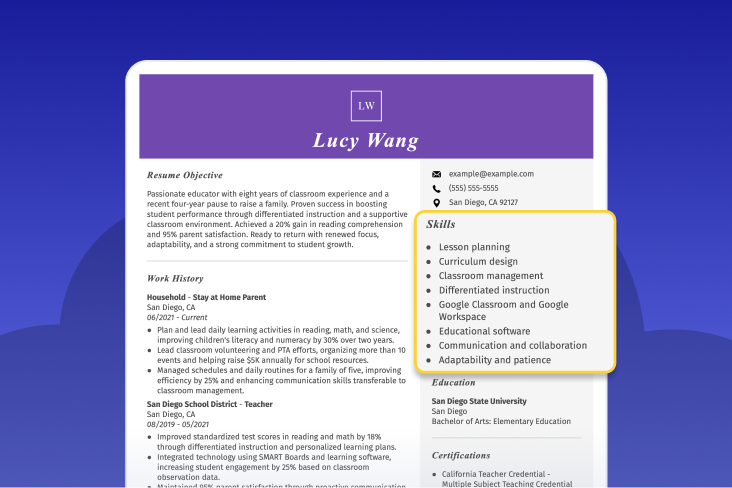
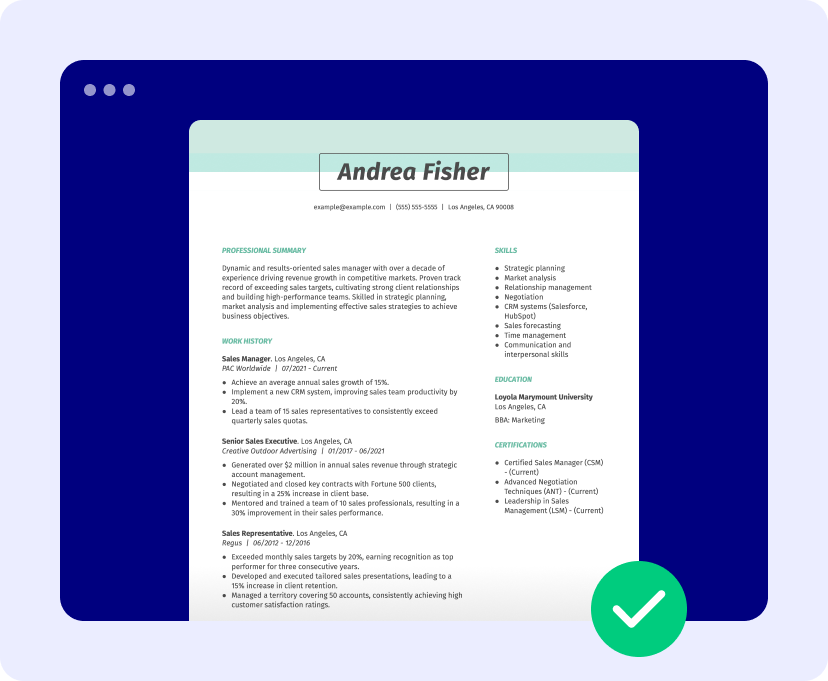
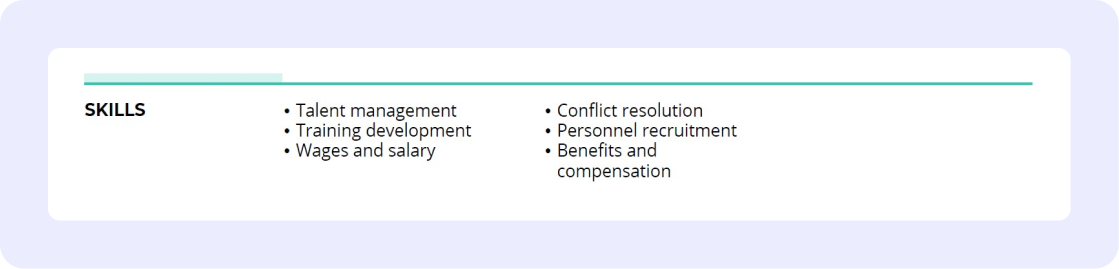
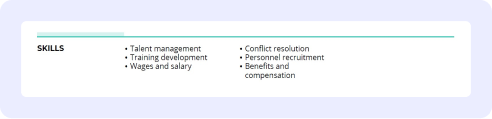
For many resumes, about six to 10 relevant skills are enough for a dedicated skills section, formatted in a simple one- or two-column layout.
Prioritize specific hard and technical skills over vague traits, and use wording from the job description when it accurately reflects your experience. This makes your most relevant qualifications easy for employers and ATS software to identify.
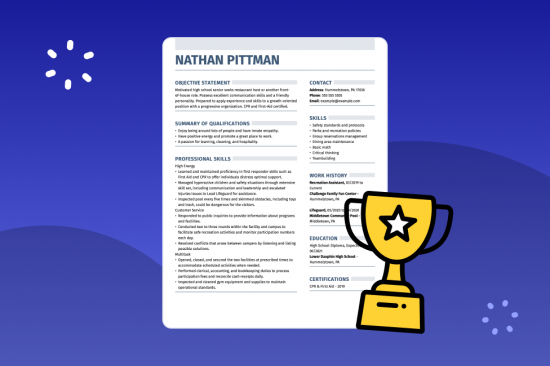
A well-structured resume template can also help organize your skills section and keep your most important qualifications easy to scan.
Professional Summary
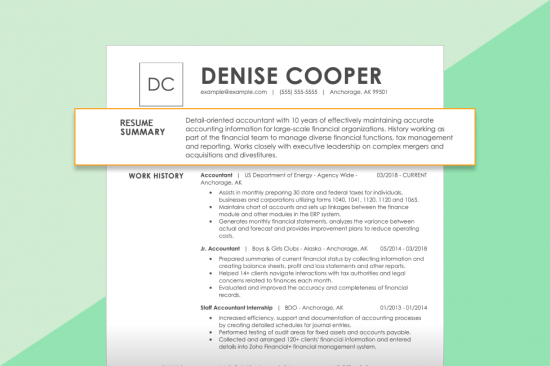
Your professional summary should reinforce two or three qualifications that are especially important to the target job. Pair those skills with experience or results so the opening of your resume immediately shows their value.
For example:
Data-driven financial analyst with 4+ years of experience using statistical modeling and forecasting to identify market trends and inform investment strategies.
Work Experience Section
Your work experience section is where you prove that you've used your skills successfully. Build achievement bullets around an action + skill + result structure, adding numbers when they make the impact clearer.
For example:
Reduced monthly reporting time by 25% by building automated Excel dashboards and standardizing data-validation procedures.
You can also use the STAR method, which stands for situation, task, action, and result, to identify the details behind a strong accomplishment before condensing them into a resume bullet.
Reinforce, Don’t Repeat Your Skills
Reinforce priority skills across your resume without repeating the same wording in every section. If a job description emphasizes “cross-functional collaboration,” for example, you might use that exact term in your skills section and demonstrate it naturally in your work history.
For example:
Collaborated with product, marketing, and sales teams to launch three new client initiatives ahead of schedule.
Strategic repetition reinforces key qualifications, but stuffing generic buzzwords into multiple sections can make your resume sound unnatural.
Match Your Skills to the Job Description
ConBefore deciding how to list skills on a resume, read the job description closely and identify the qualifications, tools, and abilities the employer emphasizes. Prioritize terms that appear repeatedly or are listed as required, but use them only when they accurately describe your abilities.
Tailoring your skills can also help an ATS identify relevant qualifications. Update your resume for each application rather than sending the same skills list to every employer.
Key Takeaways
Read the job description before choosing your resume skills, and prioritize qualifications that appear in the posting and match your experience.
Keep your dedicated skills section focused on a concise list of relevant hard and technical skills; for many resumes, six to 10 is enough.
Demonstrate soft skills through achievements instead of relying only on labels such as “leader” or “team player.”
Reinforce priority skills in your summary and work experience with examples, metrics, and results.
Replace vague proficiency ratings with specific tools, functions, certifications, or demonstrated outcomes.
The best skills for a resume match the job you want and the experience you can back them up with. Depending on the role, these may include communication, problem-solving, data analysis, project management, customer service, industry software, or technical tools. Prioritize skills mentioned in the job description and reinforce your strongest ones with examples in your work experience.
How do I list skills on my resume?
List your most relevant hard and technical skills in a dedicated resume skills section, using a simple, easy-to-scan format. Then reinforce your most important skills in your professional summary and work experience. Match terminology from the job description when it accurately describes your abilities, and show soft skills through specific accomplishments rather than standalone labels.
What are hard and soft skills on a resume?
Hard skills are teachable, job-specific abilities, while soft skills describe how you work, communicate, and collaborate. Examples of hard skills include data analysis, financial modeling, and software proficiency; soft skills include communication, adaptability, and problem-solving. On a resume, list relevant hard skills directly and demonstrate soft skills through accomplishments and work examples.
How many skills should I list on my resume?
Most job seekers can list about six to 10 relevant skills in a dedicated resume skills section. You can highlight additional skills throughout your professional summary and work experience instead of trying to fit every ability into one list. Focus on relevance rather than reaching a specific number, since the right total can vary by role and experience level.
How do I tailor my resume skills to a job description?
Tailor your resume skills by identifying the qualifications, tools, and abilities the job description emphasizes. Add matching terms when they accurately describe your experience, prioritize the most important requirements, and demonstrate key skills through accomplishments in your work history. Use the employer's terminology when it accurately describes your skills, but avoid adding keywords for abilities you don't have.
How We Reviewed This Article
Over the past 15 years, we’ve helped more than 10 million job seekers build stronger cover letters, discover their career paths, interview confidently, and boost their chances of finding the right job faster. Review our Editorial Policy to learn more about our process.
About the Author
Marla Figueroa • Career Advice Writer
Marla is a career advice writer. She focuses on helping job seekers improve their professional resumes to highlight their unique skills and experience. Marla holds a master's degree in media writing and brings five years of specialized experience to helping candidates navigate the complexities of the online job market, with a strong focus on resume optimization and effective self-presentation.