Combination Resume Format: Templates & Writing Guide for 2026
Use our combination resume format guide and templates to craft a resume that helps you compete for top jobs by emphasizing your key skills while demonstrating a proven work history.

Hired By:*

What Is a Combination Resume Format?
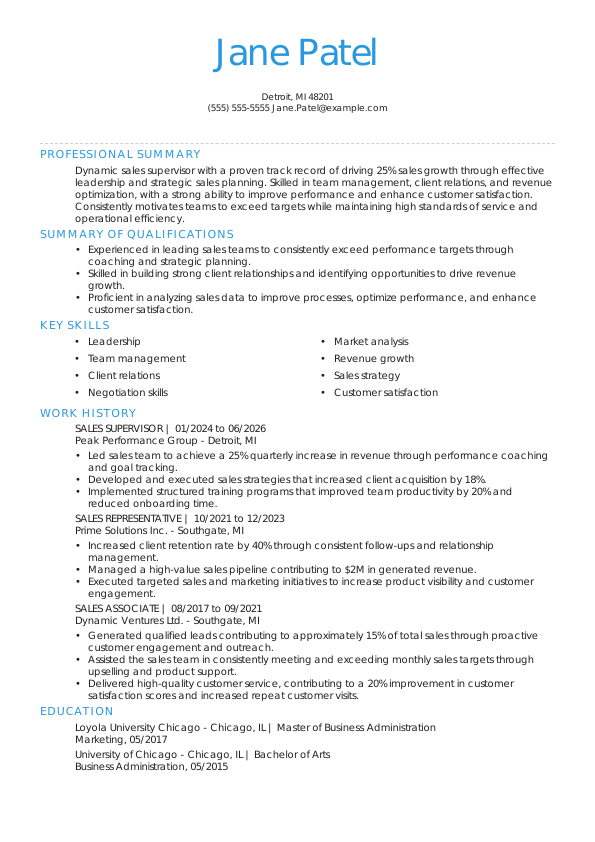
A combination resume format is a hybrid resume style that blends a skills-focused section with a traditional reverse-chronological work history. It allows you to highlight your most relevant qualifications and accomplishments while still showing employers a clear employment timeline.
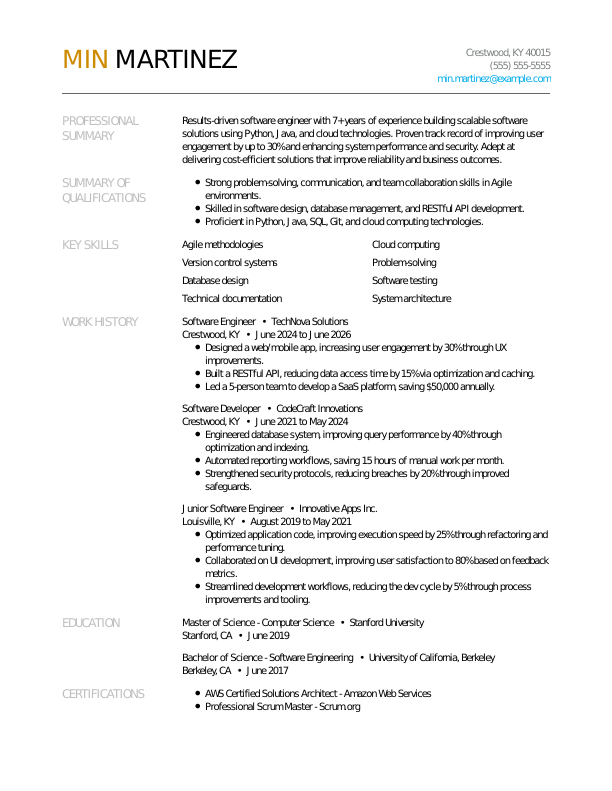
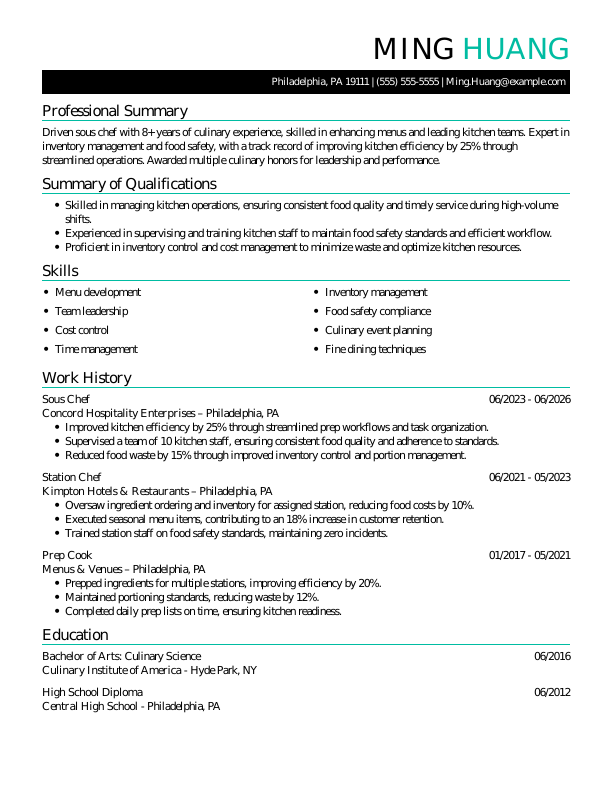
Here’s an example of a typical resume layout for the combination format:
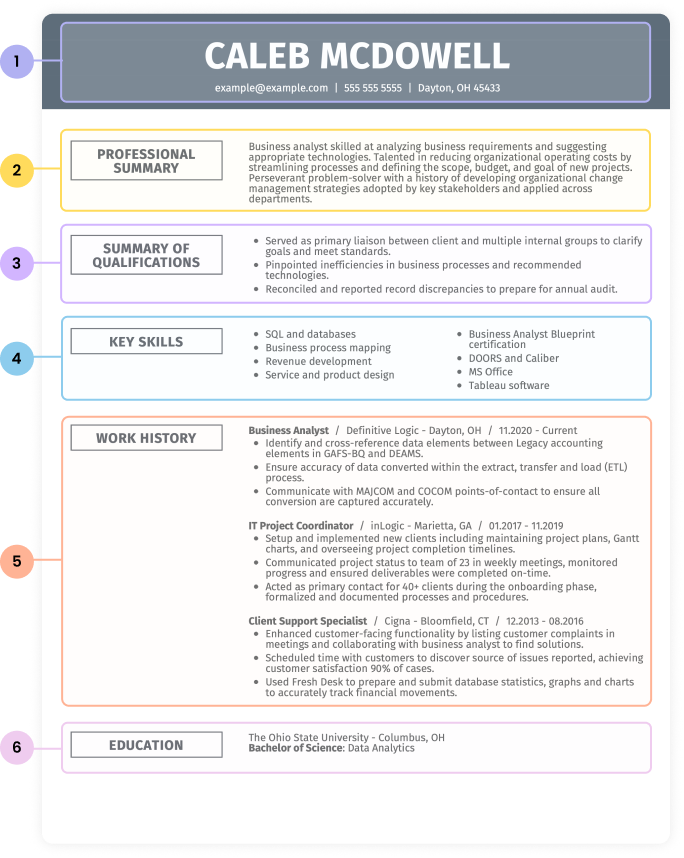
Contact information
Professional Summary
Summary of Qualifications
Key Skills
Work History
Education
Who Should Use a Combination Resume Format?
A combination-format resume is best for job seekers who want to highlight both their skills and their work experience. It works particularly well when your qualifications are just as important as your employment history, and you want employers to see the value you bring.
Here’s when to use a combination resume format:
- You want to highlight both your skills and your work experience equally.
- You're changing careers and need to emphasize transferable skills.
- Your most relevant qualifications aren't immediately obvious from your job titles.
- You have specialized technical, leadership, or project-based skills.
- You've worked across multiple roles, industries, or areas of expertise.
- You have freelance, contract, consulting, or a nontraditional employment history.
- You're returning to the workforce after some time away.
Top-Rated Combination Resume Templates
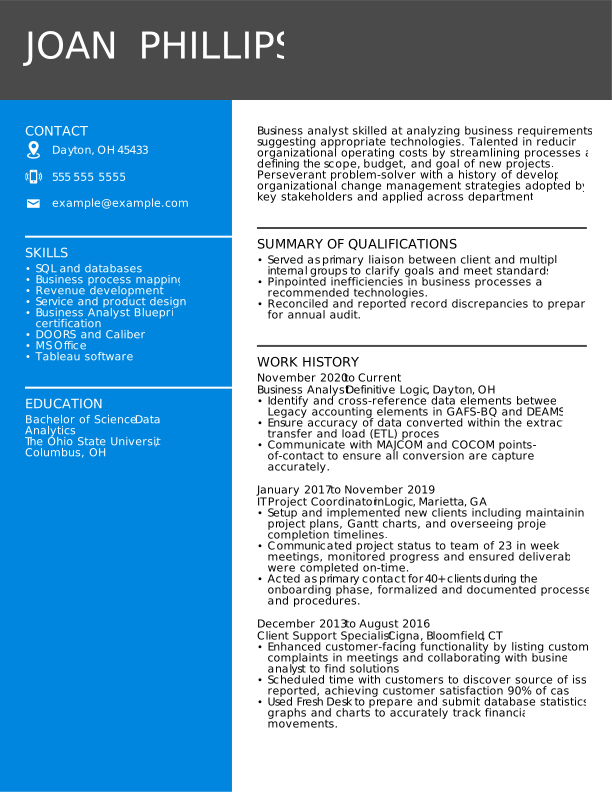
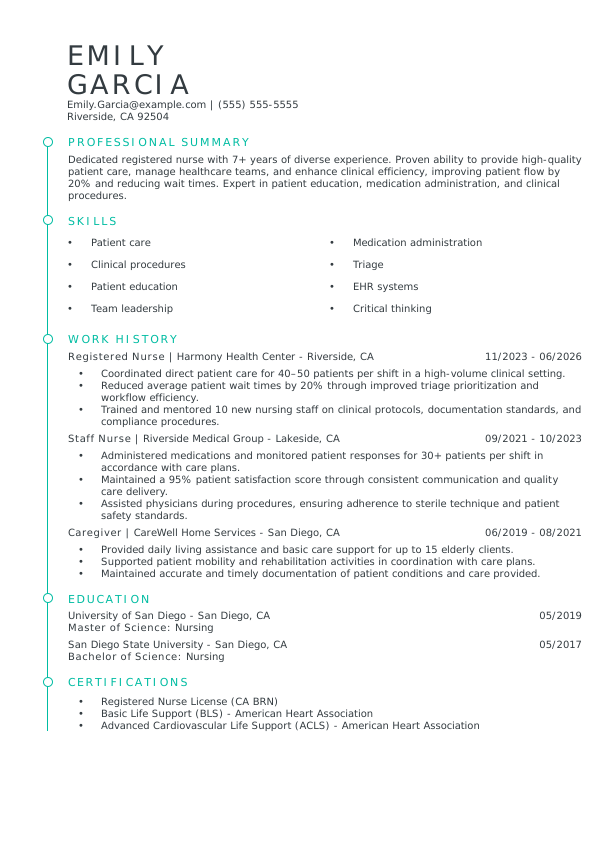
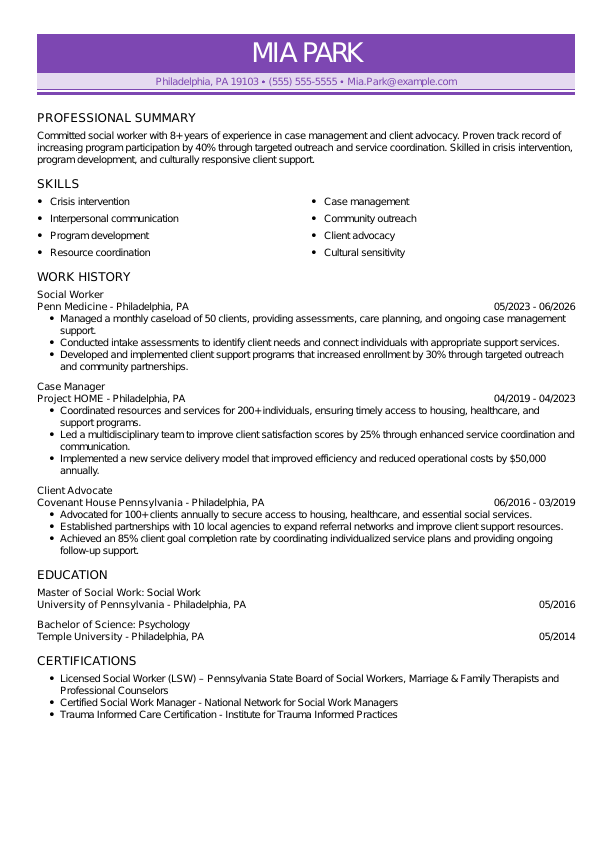
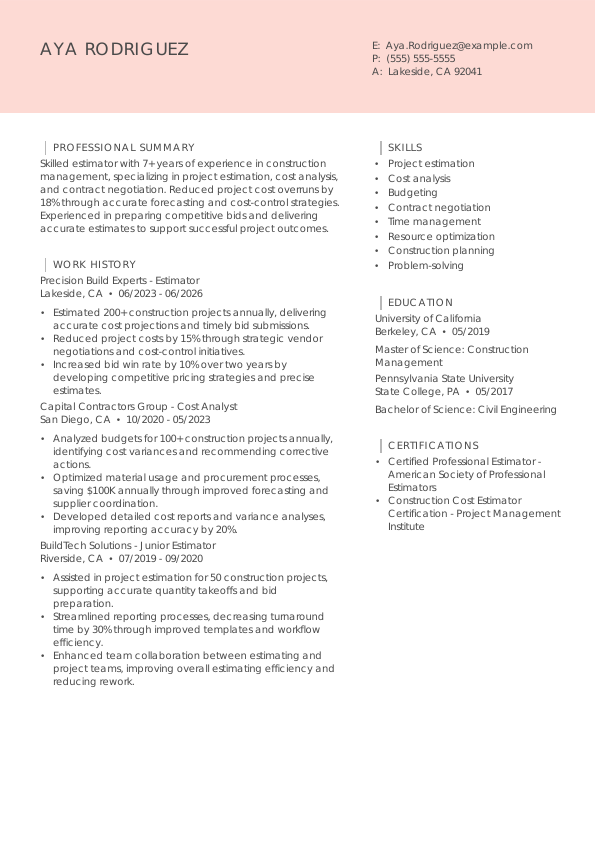
Select from professionally crafted combination resume format templates that are designed to highlight your job-relevant skills and work experience. You can customize them with our Resume Builder to add your information and adjust the design to match your style.
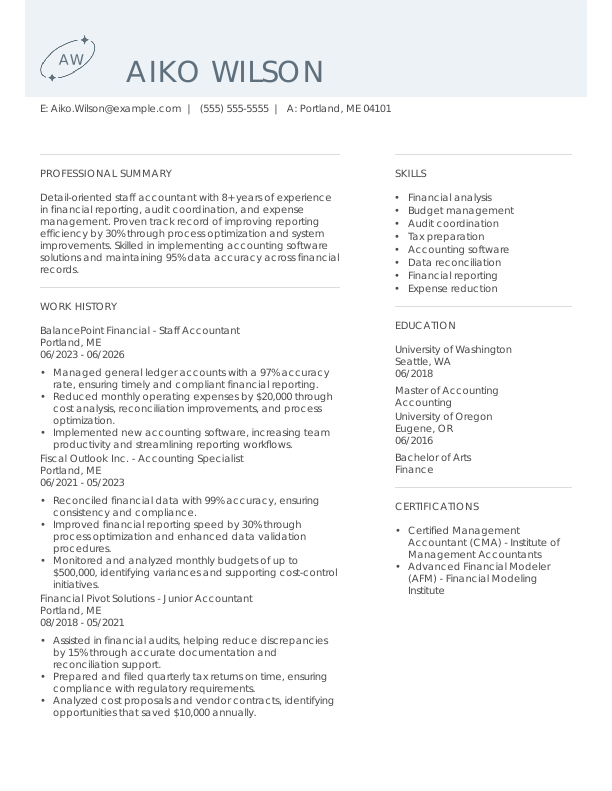
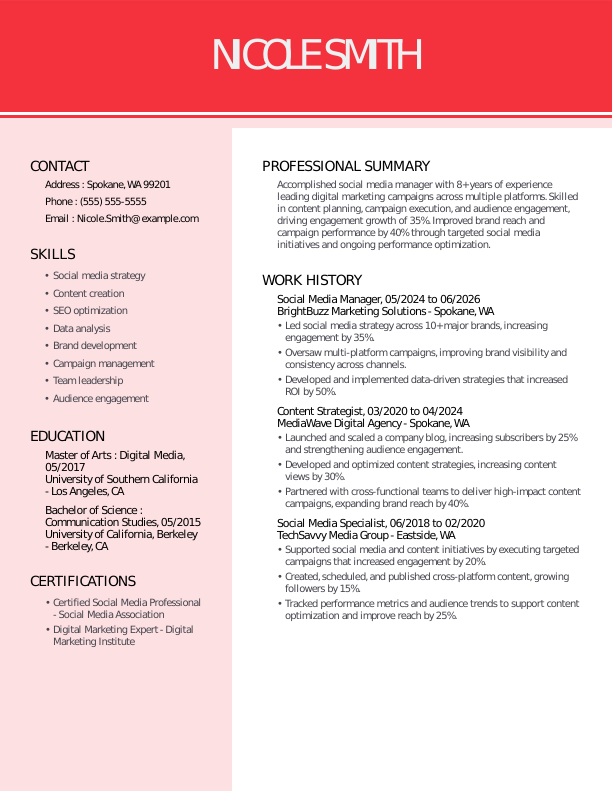
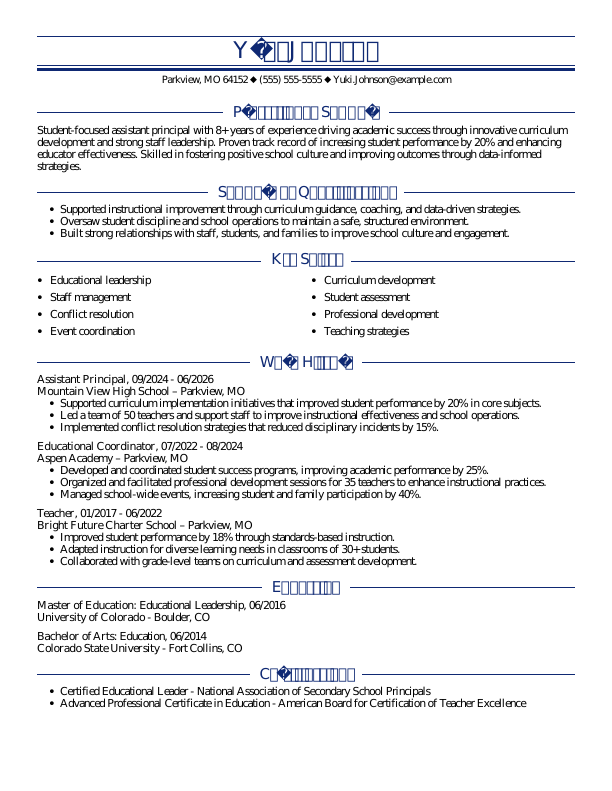
How to Write a Combination Resume
Write a combination resume by strategically balancing your most relevant skills with a clear, easy-to-follow work history. The steps and tips below will help you showcase your qualifications and demonstrate how your experience supports the role you're targeting.
Step 1
Start With a Strong Professional Summary
Add a concise two- to four-sentence professional summary that highlights both your key skills and your most relevant work experience. In a combination resume, this section should immediately show employers what you can do and how your background aligns with the job.
Step 2
Present Your Core Skills & Qualifications
Showcase your core skills and qualifications near the top of your resume. In addition to a structured skills section, you can include a summary of qualifications—a brief, bullet-point section that highlights your most relevant abilities, achievements, and experience.
Together, these elements help demonstrate both what you've accomplished and the skills you bring to the role, making it easier for recruiters to assess your qualifications and fit.

Pro Tip
Step 3
List Work Experience in Reverse-Chronological Order
Present your work history starting with your most recent role and working backward. For each position, include your job title, company name, location, and dates of employment. When using a resume combination format, focus less on listing every responsibility and more on highlighting achievements that reinforce the skills featured above.
Use bullet points to show measurable results and impact, starting each one with strong action verbs like “led,” “developed,” or “improved” to emphasize ownership and outcomes.
Step 4
Include Education & Supporting Sections at the End
Add your education section near the end of your resume, including your degree, institution, and any relevant honors or coursework. You can also include additional sections, such as certifications, licenses, awards, or professional affiliations. Keep these sections concise and only include details that strengthen your overall qualifications for the target role.
When to Consider a Different Format
A combination resume offers an effective balance of skills and work experience, but depending on your background and career goals, another format may be a better fit.
For example, a chronological resume is a better choice if your career growth and work experience are your strongest selling points, and a functional resume is more effective if your skills and qualifications are more important than your employment history.
Consider a chronological or a functional format if you:
- Have a consistent work history and want to emphasize career progression
- Have extensive experience in the same field and don't need to focus on skills
- Want a simpler, more traditional resume format that recruiters can review quickly
- Have limited work experience and need to draw attention away from employment
- Are entering the workforce for the first time and want to focus primarily on skills
- Want to shift focus away from employment gaps or an unconventional career path
Comparing the Top 3 Resume Formats
See the comparison chart below to determine which resume format best matches your experience level, career goals, and employment history. Our full selection of resume templates includes all three formats, so you can use the layout that best presents your skills and qualifications.
Functional
Skills-focused format that emphasizes abilities over work history
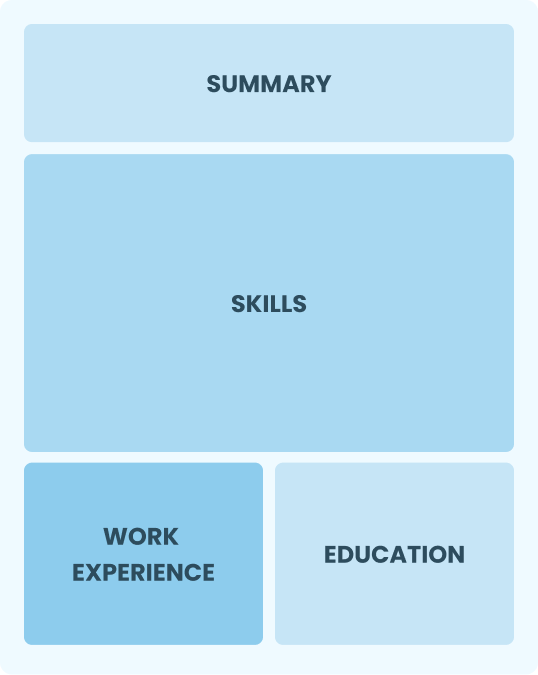
- You’re a student or recent graduate with limited experience.
- You want to emphasize skills over a traditional job timeline.
- You’re applying for entry-level roles that value skills most.
Combination
A middle-ground format that combines skills and work experience
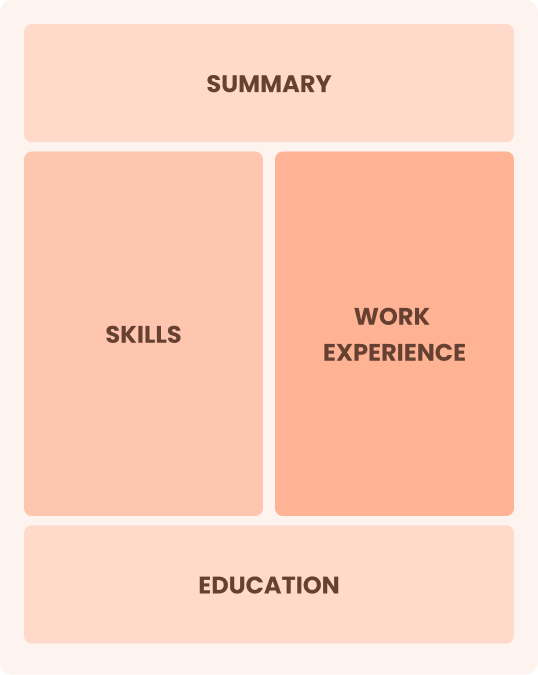
- You have strong, transferable skills and a solid work history.
- You have gaps in employment or a nonlinear career path
- You want to balance career progression with your abilities.
Chronological
Experience-focused format that highlights steady career progression
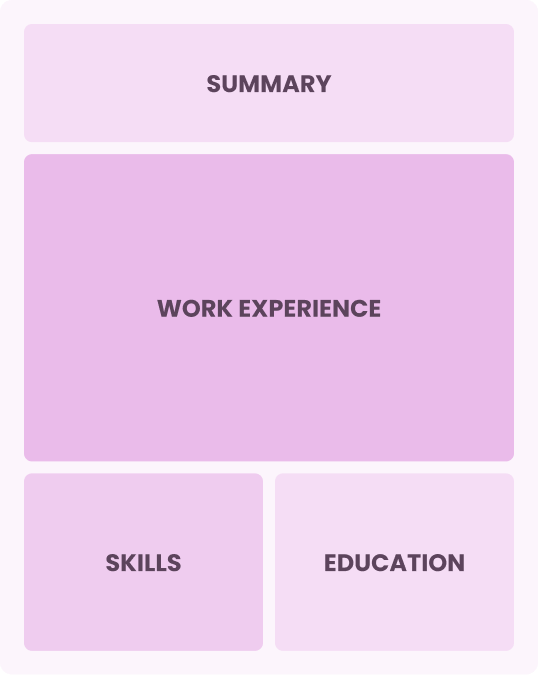
- You have a steady career path with clear progression in your field.
- You’ve built experience over time with no major employment gaps.
- You’re applying in traditional fields where work history is key.
Job Seekers Trust LiveCareer’s Templates
Frequently Asked Questions
What is the advantage of a combination resume?
The advantage of a combination resume is that it highlights both your skills and your work experience, giving employers a more complete picture of your qualifications.
This format allows you to showcase job-relevant competencies near the top of your resume while still providing a clear employment history, making it especially useful for career changers, experienced professionals, and candidates with diverse skill sets.
What are the drawbacks of a combination resume?
The drawbacks of a combination resume are that it can be longer, more complex, and less straightforward than other resume formats. Because it includes both a detailed skills section and a work history section, it may take more effort to organize effectively.
This format can also feel repetitive if the same qualifications appear in multiple sections, and it may not be necessary for candidates with a simple, linear career path.
Is a combination resume ATS-friendly?
Yes, a combination resume is ATS-friendly as long as it uses a clean, well-organized layout and includes relevant keywords from the job description.
Applicant tracking systems (ATS) can typically parse combination resumes without difficulty when standard section headings and formatting are used. To maximize ATS compatibility, follow the combination resume format examples on this page, avoid graphics and complex tables, and incorporate role-specific keywords throughout both your skills and work experience sections.
Are your combination resume templates free?
To use our combination resume templates for free, choose a template that catches your eye, personalize it in our builder to add your experience, skills, and education, and download it in plain text (TXT) format. If you want additional polished formats like PDF or Word, premium download options are available for a more refined, presentation-ready finish.
What are the three C’s of a resume?
The three C's of a resume are clarity, conciseness, and consistency. Together, these principles help make your resume more readable, polished, and effective.
Clarity ensures your qualifications are easy for recruiters to understand, conciseness keeps the focus on the most relevant information, and consistency creates a professional appearance through uniform formatting, language, and structure.
Which resume type do most employers prefer?
Most employers prefer a chronological resume because it clearly shows your work history in reverse order and makes it easy to track career progression. The best choice, however, depends on your background and the role you’re applying for.
A combination resume can be equally effective when you want to highlight both skills and experience in a balanced, easy-to-scan format.
Related Content
Learn more about how to create a resume that stands out to recruiters and wins interviews.


![Best Resume Font and Size in 2026 [14+ Examples]](/lcapp/uploads/2023/05/best-resume-font-size-banner.webp)





Ready to Land the Job?
Join 28M+ others who’ve built a resume that works.