A strong resume connects your skills to what employers need. Use these resume tips to improve content, formatting, ATS compatibility, and job applications.
Customize your resume for each job by prioritizing the skills, experience, and accomplishments that match the employer's needs.
Show what you accomplished using specific examples, action verbs, and meaningful numbers when possible.
Use clear section headings, consistent spacing, and an ATS-friendly layout that's easy for both software and people to scan.
Prioritize qualifications that support your candidacy rather than trying to document your entire career.
Use AI to brainstorm, edit, and identify keywords, then verify every suggestion before submitting.
A good resume does more than summarize your work history. It shows employers why your experience, skills, and accomplishments make you a strong fit for a specific job. The best resume tips come down to relevance, clarity, and evidence: Your resume should be easy to scan, tailored to the position, and specific about the value you’ve delivered.
This guide covers resume formatting, content, applicant tracking systems (ATS), career changes and employment gaps, AI tools, and the application process. Use these strategies to build a stronger resume and present your qualifications clearly from start to finish.
Choose the Right Resume Format & Layout
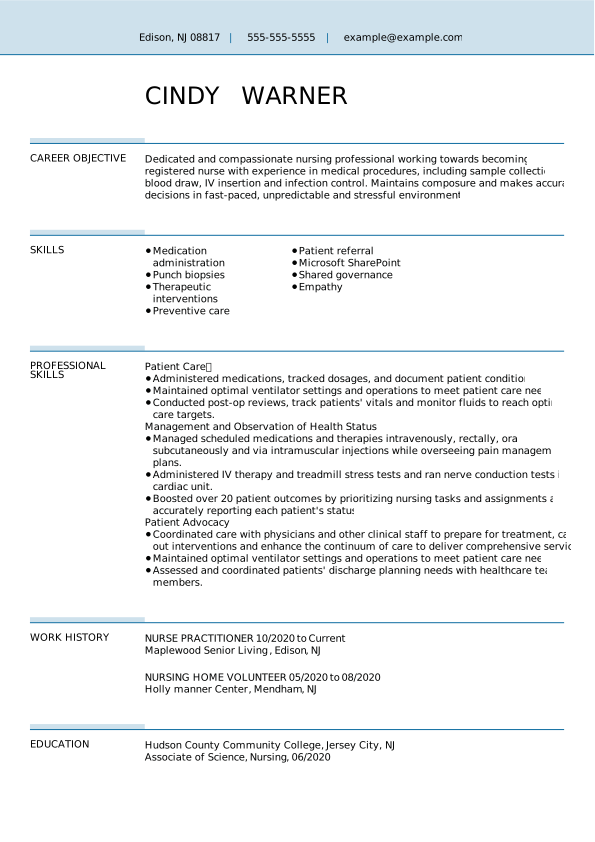
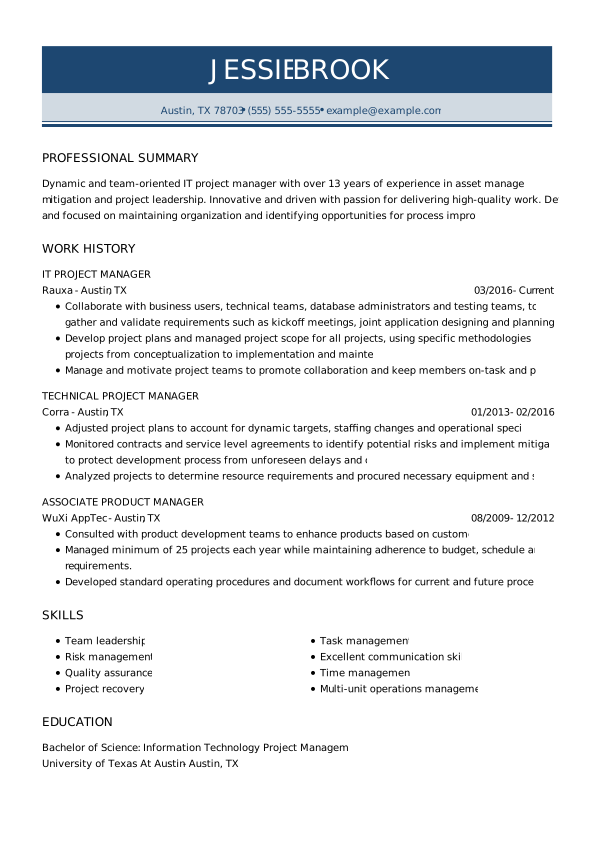
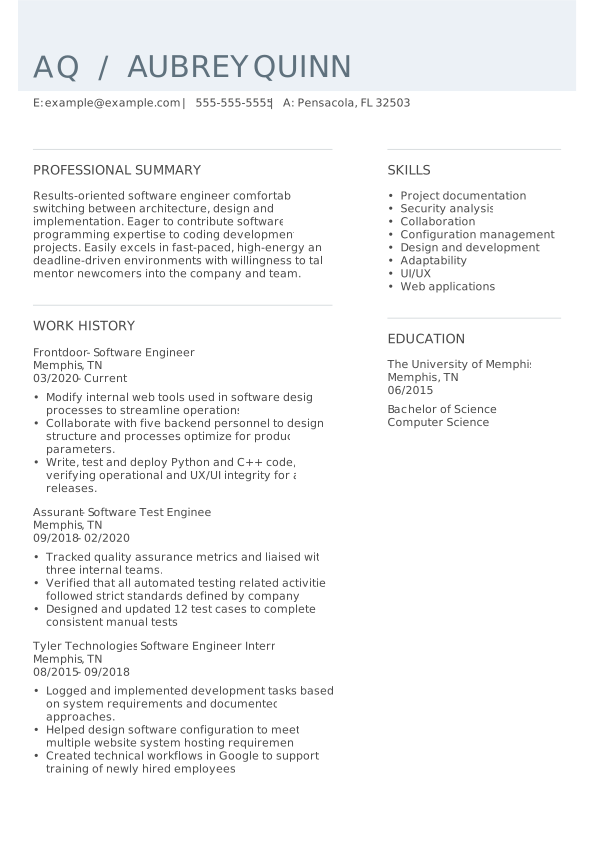
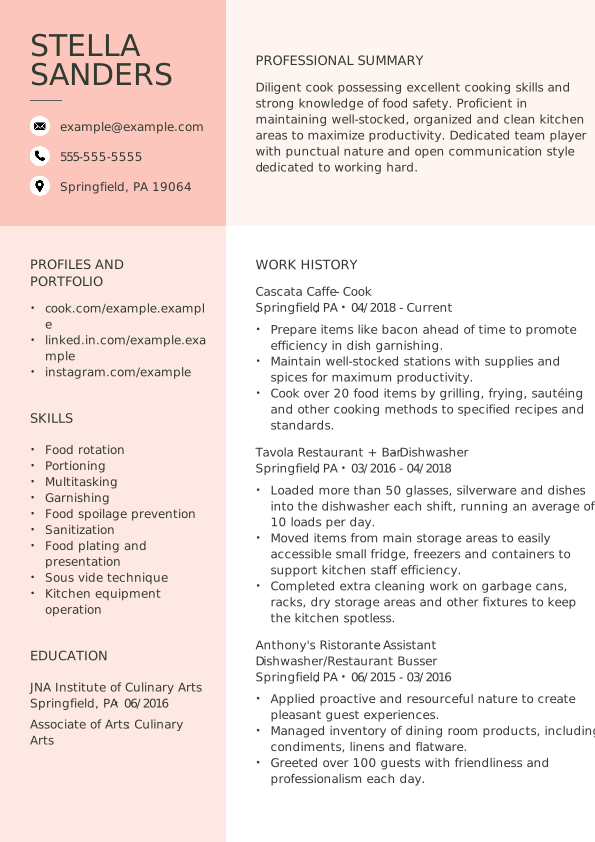
A strong resume layout makes your qualifications easy to find without distracting from the content. Choose a format that fits your experience, use consistent fonts and spacing, and organize sections with clear headings. Simple formatting also helps ATS software interpret your information correctly.
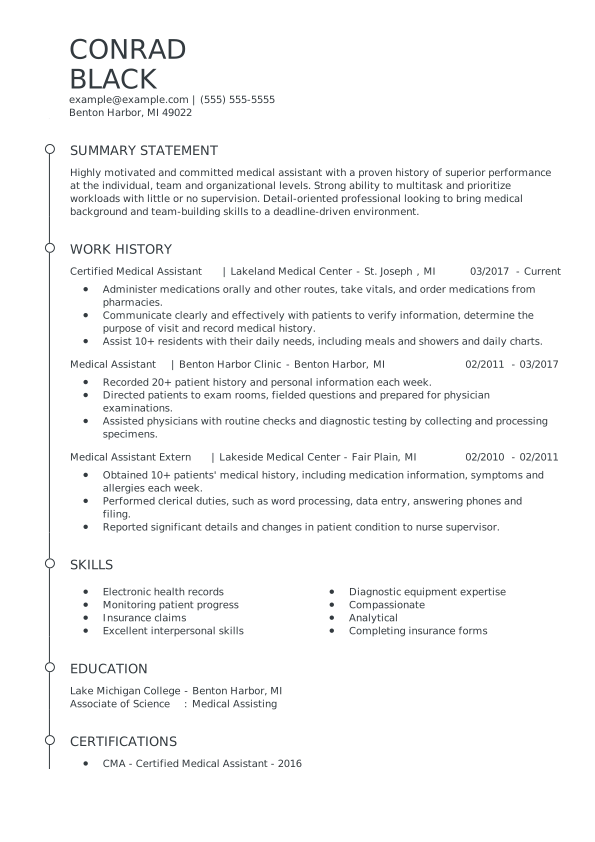
For most job seekers, a chronological resume format is the clearest choice because it puts recent work experience front and center. List your current or most recent position first, then work backward through earlier roles.
A combination format can work well when you want to give both skills and work history significant attention, while a functional format may be useful in more limited circumstances.
Whatever format you choose, keep the design consistent. Use an easy-to-read font, clear section headings, uniform alignment, balanced margins, and enough white space to separate sections.
Make Your Resume ATS-Friendly
An ATS-friendly resume uses clear organization, standard section headings, and job-relevant keywords that resume-screening software can identify. Review the job description for recurring skills, credentials, tools, and qualifications, then incorporate the terms that accurately describe your background.
Use familiar headings, such as “Work Experience,” “Skills,” and “Education,” rather than creative labels that could make sections harder to interpret. Keep the layout straightforward and avoid relying on visual elements to communicate essential information.
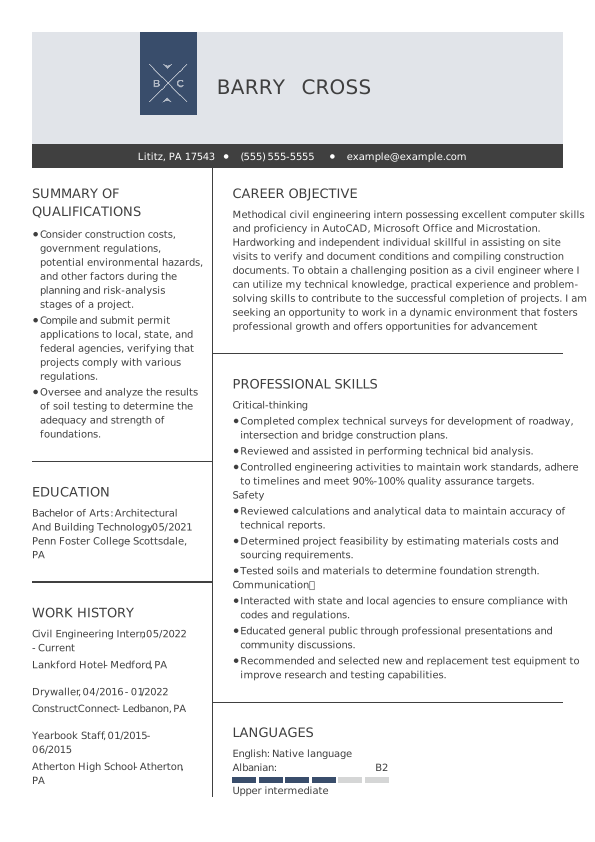
When ATS compatibility is a priority, avoid using graphics, charts, skill-rating bars, decorative icons, photos, text boxes, or complex tables for important information.
Don't sacrifice readability just to satisfy an ATS. Your resume ultimately needs to work for a human reader, too. The goal is a clean document that software can parse and a recruiter can quickly understand.
Get the Length, Contact Details, & File Right
Most resumes should be one or two pages, depending on how much relevant experience you need to show. One page often works for students and early-career candidates, while two pages can be appropriate for experienced professionals with substantial relevant accomplishments.
At the top of your resume, include:
Your full name
Your phone number
Your professional email address
Your city and state
Your LinkedIn profile or professional portfolio, when relevant
You generally don't need to include your full street address.
Follow the employer's instructions when choosing a file type. Use the requested format whenever one is specified. If the employer accepts multiple options, PDF can help preserve formatting, while DOCX may be preferred by some application systems.
Finally, give the file a clear, professional name using this simple formula:
[FirstName]-[LastName]-[JobTitle]-Resume.pdf
For example, “Jessica-McNarren-Digital-Designer.pdf” is stronger than “resume-final2.pdf” or an automatically generated file name.
Leave Out Unnecessary Personal Information
Leave out information that doesn't help an employer evaluate your qualifications for the job. That generally means avoiding personal details unrelated to your professional background or the employer's application requirements. Focus the available space on information that demonstrates your fit for the role.
Unless specifically requested or appropriate for the country or industry, leave out:
Your photo
Your age or date of birth
Your gender, marital status, or family status
Your Social Security number or similar identification numbers
“References available upon request”
Personal information unrelated to the role
You can also usually omit first-person pronouns. Instead of writing “I managed a team of six,” a resume bullet can simply begin, “Managed a team of six.”
Write Resume Content That Shows Your Value
Strong resume content shows what you can contribute, not simply what jobs you've held. Focus each section on the qualifications most relevant to the target role, support your claims with accomplishments and evidence, and use specific language that helps employers understand your skills quickly.
Write a Targeted Summary
A resume summary should give employers a quick, targeted snapshot of your most relevant qualifications. In two to four concise sentences, highlight your experience, area of expertise, important skills, and one or two accomplishments or strengths that relate directly to the target job.
For example:
Customer service supervisor with 7+ years of experience leading high-volume retail teams. Skilled in staff training, conflict resolution, and process improvement, with a record of increasing customer satisfaction and reducing response times.
A resume summary works well for candidates with relevant experience. If you're entering the workforce or making a major career change, a targeted resume objective may make more sense.
Tailor Your Resume to the Job
Tailoring your resume means emphasizing the qualifications that matter most for a specific job, rather than sending the same document to every employer. Start by reading the job posting closely and identifying recurring skills, credentials, responsibilities, and terminology.
Then customize the areas employers are most likely to scan:
Summary: Lead with experience and strengths relevant to the target role.
Work experience: Prioritize accomplishments that demonstrate the employer's desired qualifications.
Keywords: Use important terms from the posting naturally when they're accurate for your background.
Don't copy the job description word for word or add keywords for skills you don't have. Effective tailoring creates a clearer match between your real qualifications and the employer's needs.
Turn Experience Into Accomplishments
Resume bullets are stronger when they show what you accomplished rather than simply listing what you were responsible for. A useful formula isaction + context + result: Explain what you did, where or why it mattered, and what changed because of your work.
Quantify results when the number adds useful context. Your work experience might include revenue, cost savings, time saved, customer satisfaction, volume, team size, or percentage improvements.
For example:
Before: Responsible for training new sales associates.
After: Trained 12+ sales associates in customer service and merchandising practices, helping the department exceed quarterly sales goals by 15%.
Numbers aren't required in every bullet, however. If a meaningful metric isn't available, describe the scope, outcome, or improvement as specifically as you can.
Here’s how a sales associate might apply these tips when describing a recent sales floor attendant role:
Work Experience
Sales Floor Attendant The Fashion Specialist, Los Angeles, CA | 02/2019–03/2023
Increased individual sales by 40% annually by providing personalized product recommendations and customer service, earning Lead Salesperson honors twice.
Trained 12+ sales attendants and shop assistants in customer service, client retention, visual merchandising, and sales techniques.
If you need a hand, LiveCareer's Resume Builder offers job-specific content suggestions to strengthen your experience and tailor resume bullets to your target role. Choose from professional resume templates to keep your formatting consistent without manually adjusting every element.
Use Strong, Specific Language
Strong resume language begins with specific action verbs and describes what you actually did. Replace passive phrases, such as “responsible for,” “helped with,” or “worked on,” with verbs that identify your contribution more precisely. Specific language makes your experience easier for employers to understand and gives your accomplishments more impact.
For example:
Instead of “Responsible for customer accounts,” try “Managed 45 customer accounts.”
Instead of “Helped improve onboarding,” try “Redesigned onboarding materials to reduce training time.”
Instead of “Worked on social media,” try “Planned and published weekly social media campaigns across three platforms.”
Use present tense for ongoing responsibilities in your current role and past tense for completed accomplishments and previous positions. Most importantly, show skills with evidence instead of generic resume buzzwords or by describing yourself as “hardworking,” “results-driven,” or a “team player.”
Include Relevant Skills, Education, & Credentials
Your skills, education, licenses, and certifications should reinforce your qualifications for the target job. Prioritize the credentials and abilities the employer requires or values most, and remove details that take up space without strengthening your candidacy. Each section should help show that you have the knowledge and qualifications needed for the role.
In your skills section, include a focused mix of relevant hard skills and soft skills. Hard skills might include software, technical methods, languages, or industry-specific knowledge, while soft skills such as leadership or communication are strongest when you also demonstrate them through your accomplishments.
In your education section, list your most recent or relevant degree first. Include the degree, school, and location, plus an expected graduation date if you're currently enrolled.
You can also include relevant licenses, certifications, professional training, honors, or coursework. Experienced candidates can usually omit high school information once they have a college degree or substantial professional experience.
Adapt Your Resume to Your Career Situation
Resume advice isn't one-size-fits-all. Students, career changers, experienced professionals, and people returning after an employment gap may need to emphasize different parts of their background, but the goal remains the same: Give employers the most relevant evidence that you're prepared for the role.
Writing a Resume With Limited or Nontraditional Experience
If you have limited traditional work experience, build your resume around relevant skills and accomplishments from other settings. Internships, freelance work, volunteer experience, academic projects, extracurricular activities, part-time jobs, and significant coursework can all demonstrate qualifications.
For students and entry-level candidates, focus on what the experience proves. A school fundraiser, for example, can demonstrate sales, organization, teamwork, or communication when you explain the result:
Exceeded a $4,000 fundraising goal by 35% by promoting add-on services to event attendees.
Career changers should take a similar approach and focus on transferable skills. Instead of trying to make an old job title sound like the new one, highlight skills and accomplishments that transfer across industries, such as project management, leadership, sales, analysis, communication, or client relations.
Experienced candidates should take the opposite approach and prioritize recent, relevant experience rather than documenting every role they've held. Older positions can be shortened or omitted when they no longer strengthen your candidacy for the target job.
Addressing Employment Gaps
You don't need to explain every employment gap on your resume, especially when the gap was brief or occurred years ago. If a longer or more recent gap could leave an employer unsure about your timeline, provide concise context when it helps clarify your experience.
Relevant activity during a gap can be included when appropriate, such as:
Freelance or contract work
Volunteer experience
Education or professional training
Certifications
Independent projects
Caregiving, when you choose to identify it
Keep the explanation factual and brief. Your resume doesn't need to disclose personal or medical details. Focus on relevant skills you maintained or developed and what you're prepared to contribute now.
If you've returned to work since the gap, give your recent experience more space and attention than the gap itself.
Include Optional Information Only When It Helps
Optional resume sections should earn their space by adding relevant information that isn't already clear elsewhere. Certifications, projects, publications, languages, volunteer work, and other sections can strengthen your resume when they support your candidacy. Don't add optional sections simply to make your resume look longer or more complete.
Depending on your background and target role, useful optional sections may include:
Certifications and licenses
Awards and honors
Projects
Publications
Professional memberships
Languages
Volunteer experience
Relevant hobbies or interests
Relevance should determine both whether a section appears and how prominently it's placed.For example:
An academic or researcher may need “Publications.”
A multilingual, customer-facing candidate may want “Languages” near the top of the page.
Use AI & Manage Your Application Strategically
A strong resume is only one part of an effective application strategy. AI tools can help you edit and tailor your materials, while simple organization can help you track what you've submitted, keep information consistent, and follow up appropriately. Use these tools to support your judgment rather than replace it.
Use AI as an Editing Tool
AI can help you brainstorm, edit, and tailor resume content, but the final resume should remain accurate and specific to your real experience. Give the tool concrete information about your skills, responsibilities, accomplishments, and target job rather than asking it to invent content from scratch.
AI can be useful for:
Identifying relevant keywords in a job description
Suggesting stronger action verbs
Tightening wordy resume bullets
Checking grammar and clarity
Brainstorming ways to describe an accomplishment
Verify every AI-generated suggestion before using it. Never add fabricated skills, employers, credentials, responsibilities, or metrics, and rewrite generic language so the final resume sounds natural and accurately reflects your work.
Keep Your Applications Organized
Track your applications so you know which resume you sent, when you applied, and what needs follow-up. A simple spreadsheet or document can prevent confusion when you're applying to several positions at once and help you keep tailored resume versions, contacts, interview dates, and application statuses organized.
For each application, record:
Company and job title
Job posting or description
Application date
Resume version submitted
Cover letter version
Contact name, when available
Interview or follow-up dates
Current status
Keep a master resume with your full work history, skills, accomplishments, and credentials. Create tailored copies from that source instead of rebuilding each resume from scratch.
Coordinate Your Resume With the Rest of Your Application
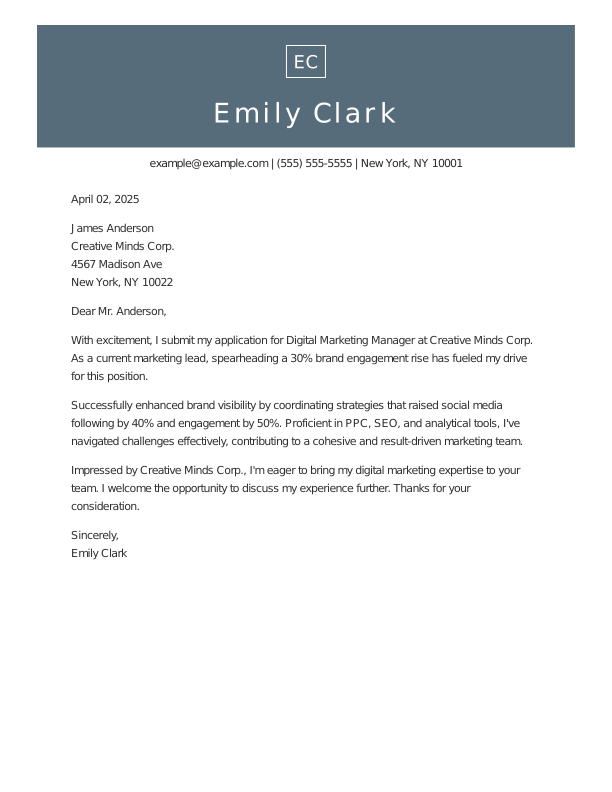
Your resume and cover letter should reinforce the same qualifications without repeating the same content word for word. Your resume provides concise evidence of your experience, while your cover letter gives you room to explain why your background fits the employer's needs.
Keep job titles, employment dates, credentials, and other factual information consistent across your application materials and professional profiles. Use your cover letter to expand on one or two relevant accomplishments, explain your interest in the role, or add useful context that doesn't fit naturally on the resume.
Above all, follow the employer's application instructions, including requested documents, file formats, naming conventions, and submission requirements.
Proofread & Follow Up
Proofread your resume after tailoring it and again before submitting it. Check names, job titles, employment dates, contact information, spelling, punctuation, verb tense, and formatting. Reading the document aloud or asking another person to review it can help you catch mistakes you've stopped noticing.
Also confirm that you've attached the correct resume version and followed every application instruction. After applying, follow up when it makes sense for the situation. If an employer provides a timeline or specifically asks candidates not to contact them, follow those instructions. Otherwise, a brief, professional follow-up can reaffirm your interest without repeatedly contacting the hiring team.
Resume Examples for Every Job & Industry
Need resume examples with relevant, trustworthy content written by professionals? Use these resume examples as inspiration when writing your own:
Tailor your resume to each job by prioritizing the employer's most relevant skills and qualifications.
Lead with accomplishments, using specific action verbs, context, and meaningful results.
Keep formatting simple and consistent so your resume is easy for both ATS software and employers to read.
Include only relevant information, and adapt your resume honestly for employment gaps, career changes, or limited experience.
Use AI to edit, not invent, and verify every suggestion before adding it to your resume.
Proofread and follow application instructions before submitting the correct version of your resume.
Frequently Asked Questions
What are the top five tips for a resume?
The top five resume tips are to tailor your resume to the job, highlight accomplishments instead of duties, use clear and consistent formatting, include relevant keywords, and proofread carefully. Together, these practices make your qualifications easier for employers and applicant tracking systems to identify while keeping the resume focused on what matters most for the position.
How should a resume be formatted?
A resume should be formatted with clear section headings, readable fonts, balanced white space, and an easy-to-follow work history. Most candidates can use a chronological format that lists the most recent experience first. Avoid unnecessary graphics or complicated design elements, especially when applying through an applicant tracking system.
How do I make my resume stand out?
Make your resume stand out by showing specific evidence of the value you've delivered in previous roles. Instead of relying on buzzwords or elaborate design, use accomplishment-focused bullets, strong action verbs, and meaningful results. Tailor those examples to the employer's priorities so recruiters can quickly see why your experience is relevant to the job.
How do I make my resume ATS-friendly?
Make your resume ATS-friendly by using standard section headings, straightforward formatting, and relevant keywords from the job description. Avoid relying on graphics, icons, text boxes, or complex tables to communicate essential qualifications. Use keywords only when they accurately reflect your experience, and make sure the finished resume is still clear and readable for a human reviewer.
How long should a resume be?
A resume is typically one or two pages, depending on your experience and how much relevant information you need to include. One page may be enough for students and early-career candidates, while experienced professionals may need two pages. Rather than aiming for an arbitrary length, prioritize relevant accomplishments and remove outdated or repetitive information.
How We Reviewed This Article
Over the past 15 years, we’ve helped more than 10 million job seekers build stronger cover letters, discover their career paths, interview confidently, and boost their chances of finding the right job faster. Review our Editorial Policy to learn more about our process.
Megan is a career advice editor. She focuses on helping job seekers improve their professional resumes to highlight their unique skills and experience. Megan holds a BA in film studies with a minor in English and brings nine years of specialized experience to helping candidates navigate the complexities of the online job market, with a strong focus on resume optimization and effective self-presentation.




 Add LiveCareer as a preferred source on Google