Wondering about the difference between a CV and a resume? This guide explains how resumes and CVs differ in format, content, purpose, and international use. Get clear examples and learn when to use each to boost your chances of landing the job.
The terms “CV” and “resume” are often used interchangeably, but employers may expect very different documents depending on the role, industry, or country. Whether you're applying for an academic position, a research role, or a private-sector job, understanding which document to use can help you present your qualifications effectively.
In this guide, we’ll explain the key differences between a CV and a resume, including what each document should include, when to use one over the other, and how to choose the right format for your location, industry, and career goals.
Resume vs CV: What’s the Difference?
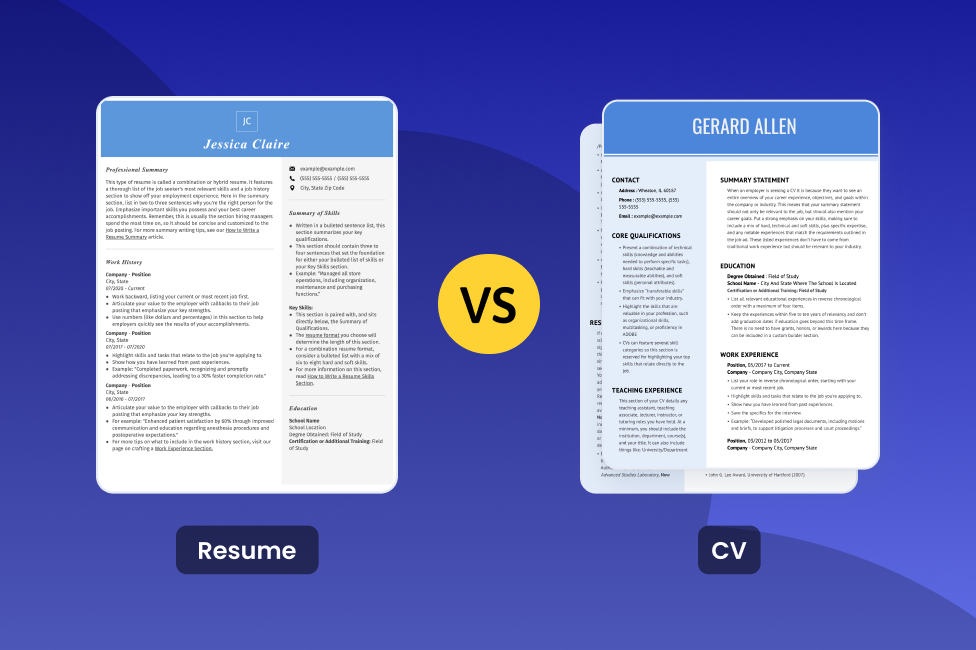
A resume is a concise document that highlights the skills, experience, and qualifications most relevant to a specific job. A CV (curriculum vitae) is a more comprehensive document that provides a detailed record of your academic background, professional experience, publications, research, certifications, and other achievements.
In the U.S. and Canada, resumes are the standard document for most private-sector jobs, while CVs are commonly used for academic, research, education, and medical roles. In many countries outside North America, however, the term “CV” is used to describe what Americans would consider a resume-style document.
The right choice depends on your field, the role you’re applying for, and the country’s hiring norms. Here’s an overview of the key differences between a CV vs a resume:
Feature
Resume
CV
Length
1–2 pages
2–10+ pages
Purpose
Most U.S. job applications
Academia, research, international jobs
Content
Relevant work and skills summary
Full academic and professional history
Location
Primarily U.S. and Canada
Europe, Asia, Africa, and more
Length
Resumes prioritize brevity, while CVs prioritize completeness. As a result, resumes are significantly shorter than CVs in most cases.
Resume: A resume is typically one to two pages long, designed to give a quick overview of your most relevant experience.
CV: A CV can span two pages or more, sometimes exceeding 10 pages for seasoned academics or researchers. A CV’s extended length allows for a detailed account of your full academic, professional, and research history.
Purpose
Purpose is where the difference between a CV and a resume becomes most important, as each is designed for a different type of hiring or evaluation process.
Resume: Resumes are ideal for private-sector jobs. They’re tailored to meet a specific job’s requirements, so it’s common to update your resume for each job application.
CV: CVs are the primary application document in academic, research, medical, or scientific roles and are also standard for grant or fellowship applications. They emphasize credentials, publications, and educational milestones.
Content
Resumes focus on job-specific highlights, while CVs provide a full record of academic and professional achievements.
Resume: A resume consists of five must-have sections: resume profile (summary or objective), work experience, skills, and education. Because resumes should be concise, each phrase must be tailored to match a specific role’s requirements.
CV: A CV format is much more customizable than a resume. It includes all resume sections plus sections for research, publications, teaching experience, grants, conferences, and professional affiliations, offering a comprehensive view of your career.
International Differences Between CVs & Resumes
The choice between a CV and a resume often depends on where you’re applying. The chart below shows which document is preferred in different parts of the world.
CV vs Resume Meaning & Usage by Location
North America
Resumes are the standard document for non-academic roles in the U.S. and Canada. In Mexico, they’re called “CVs,” but they’re the same one-page document as resumes.
South America
Most South American countries prefer to call the hiring document a “CV,” but it follows a basic North American resume format.
Europe
In Europe, CVs are more common, but some countries also use resumes. You should check which document each country prefers.
Australia & New Zealand
In Australia and New Zealand, the term “CV” is commonly used, but it typically refers to what would be called a resume in the U.S.—a concise, job-focused document tailored to each application.
Africa
In Africa, employers prefer CVs. Some countries may request a one-page CV, like a resume, and others may request a “Comprehensive CV,” which is a longer version.
Asia
In Asia, you’re often expected to submit a long-form CV rather than a resume when applying for jobs. It varies by country, however, so look up the specifics of where you’re applying.
What Is a CV?
A CV (curriculum vitae) is a detailed document that outlines your academic background, work experience, skills, and achievements. “Curriculum vitae” is Latin for “course of life.”
This document is used to provide a complete overview of your career history, often for academic, research, medical, or scientific roles where a comprehensive record of qualifications is required.
Unlike a resume, a CV isn’t limited in length and grows as you add new accomplishments, publications, certifications, and experience throughout your career.
What to Include in a CV
What you include in a CV depends on your target job and experience. A CV should be tailored to showcase your most relevant strengths. Learn how to write a CV to create a strong, targeted document.
For an even easier experience, try our CV Maker. It streamlines the writing process with industry-specific content and helps you customize your CV for any job. You can also add personalized sections to create a tailored, professional document.
What Is a Resume?
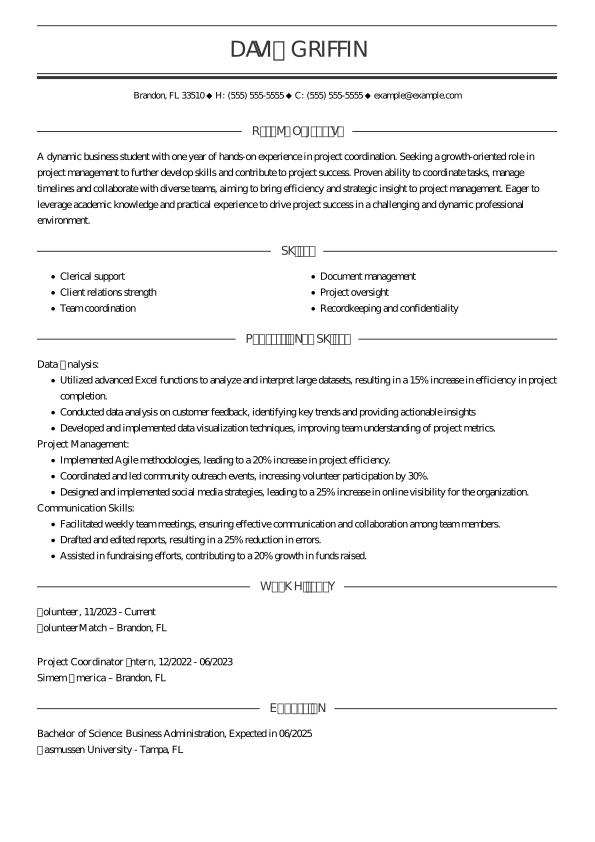
A resume is a concise document that summarizes your skills, work experience, education, and achievements as they relate to a specific job. It’s typically one to two pages long and tailored for each application, highlighting only the most relevant information for the role.
What to Include in a Resume
A resume should include only the most relevant information from your background that supports your fit for a specific job. Because space is limited, each section should be focused and tailored to the role you’re applying for.
A well-written resume should include the following information:
Name and contact information
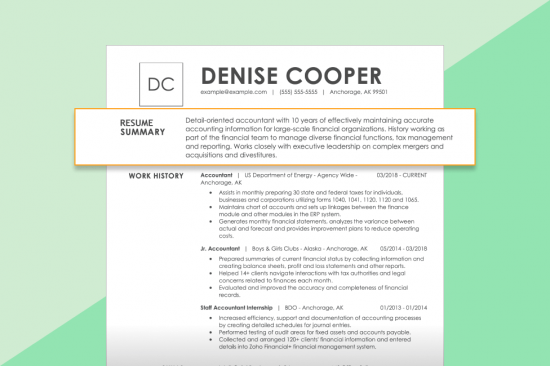
Resume summary or objective statement
Work experience
Skills
Education
Certifications (if relevant to the role)
Optional sections, such as volunteer work, projects, or languages
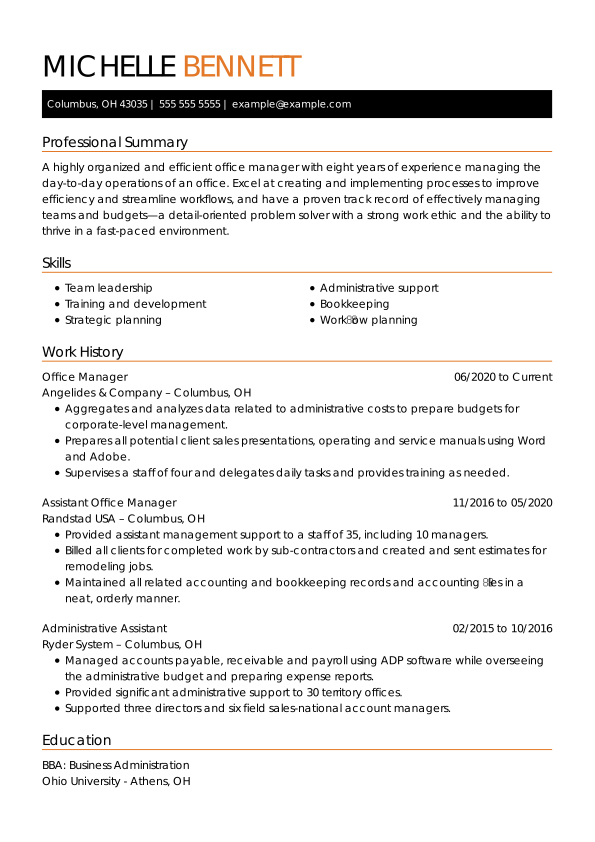
Resume Template
Review this resume template to see how the pieces fit together. You can also explore resume examples for more ideas and inspiration as you create your own.
For the most efficient and professional results, use our Resume Builder. It includes industry-specific content crafted by expert resume writers, helping you save time and create a polished resume in under 15 minutes.
CV & Resume Examples for Popular Jobs
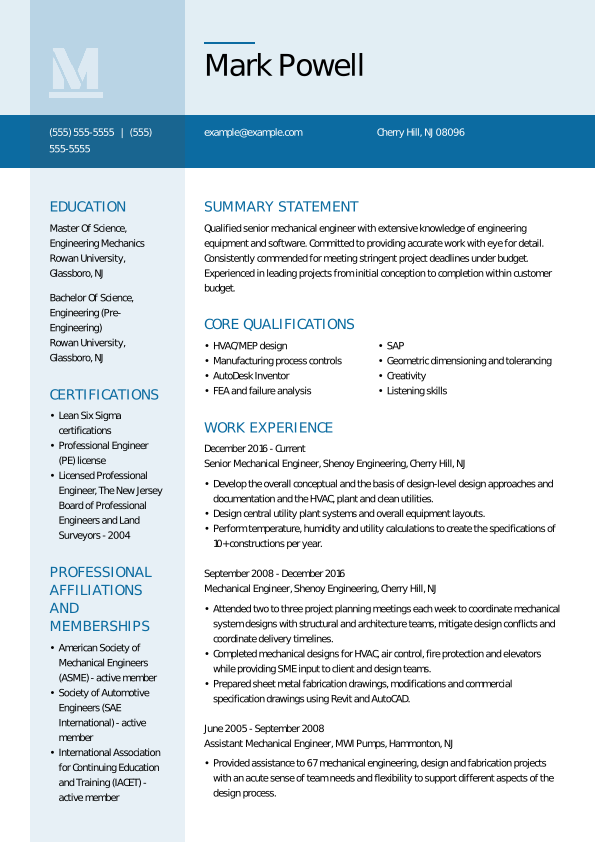
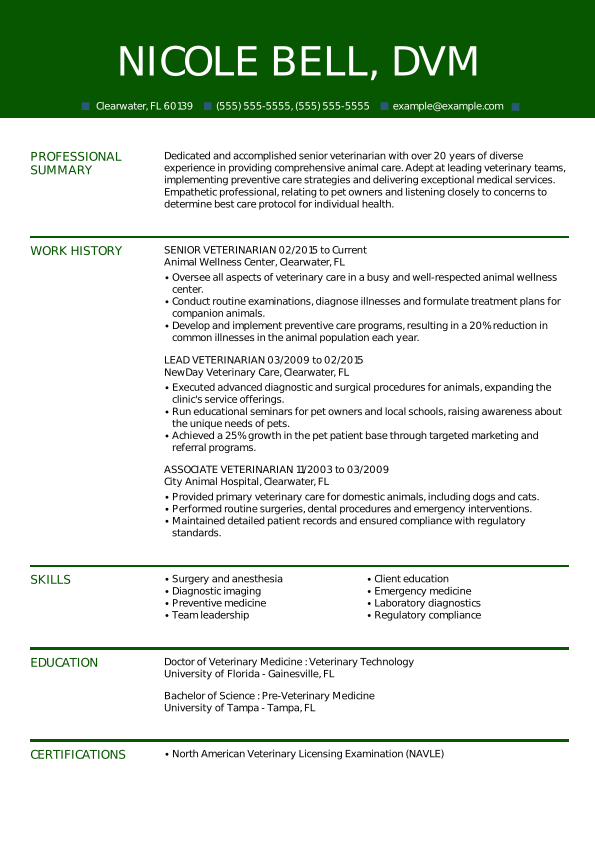
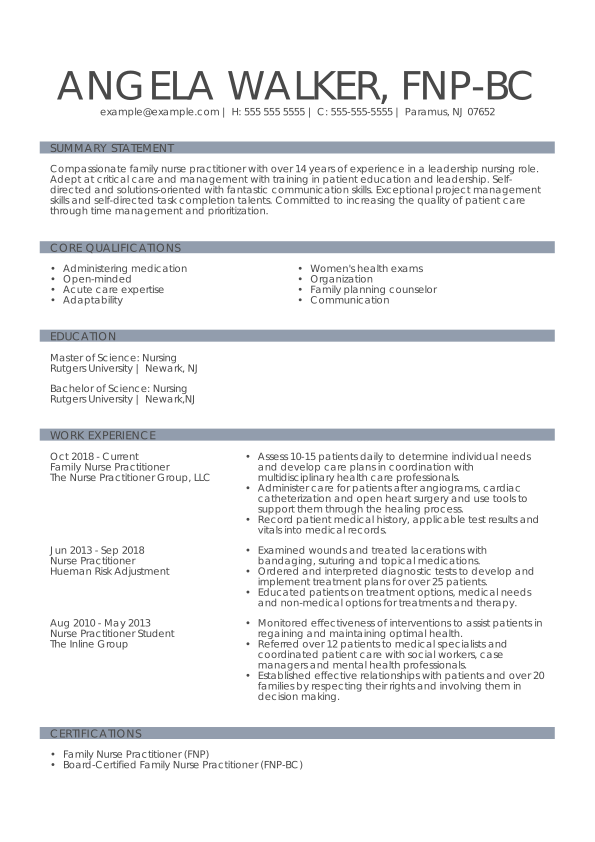
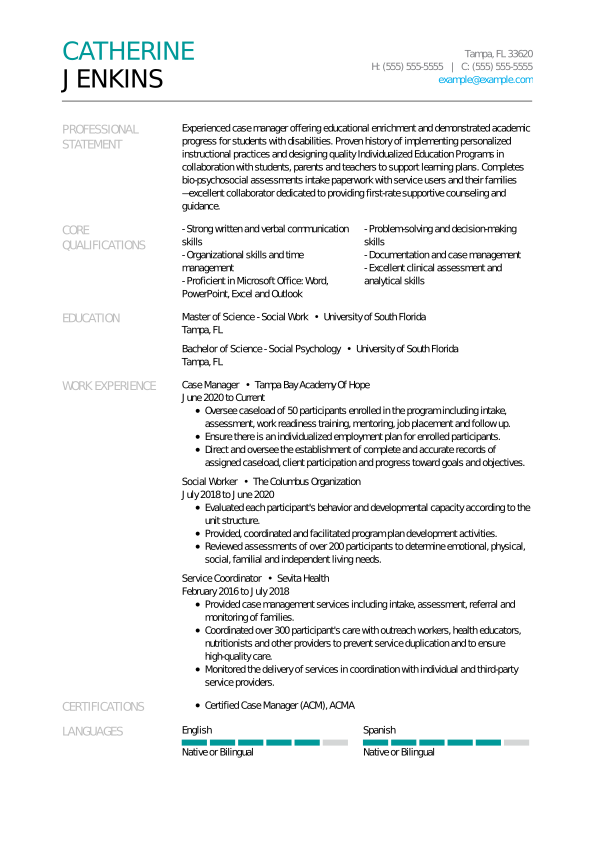
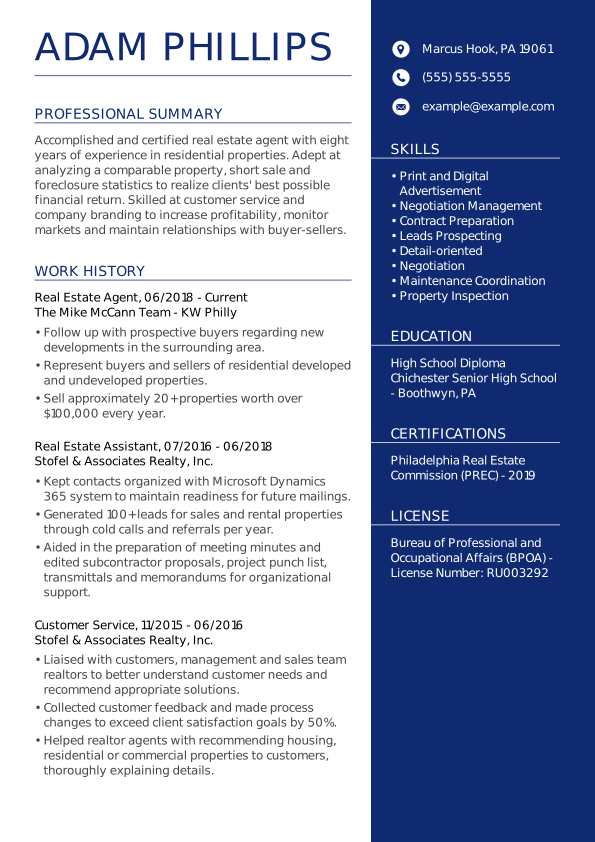
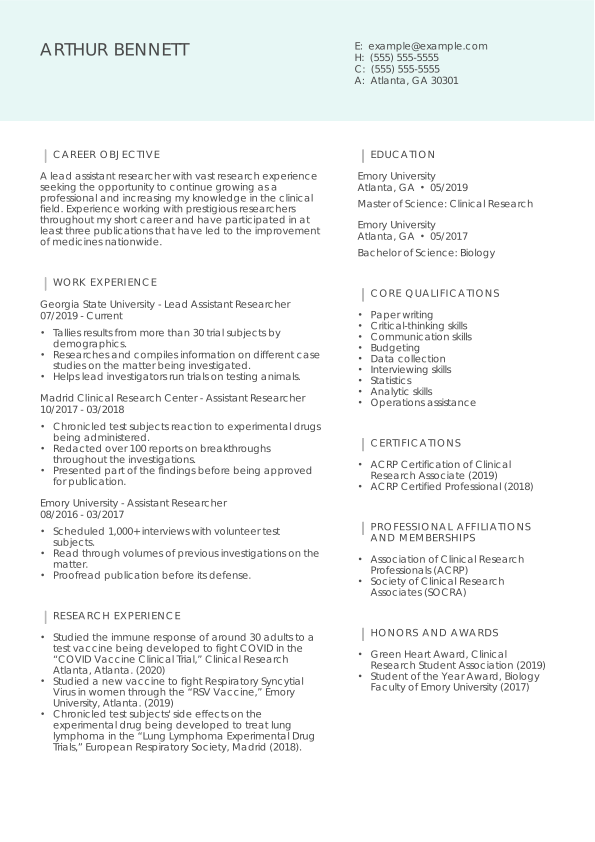
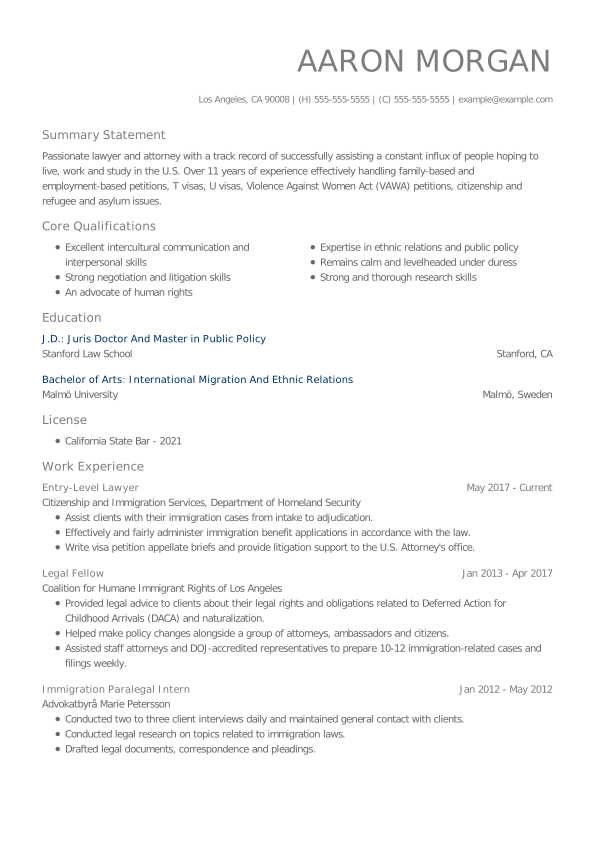
CVs and resumes are used differently depending on the job type and industry. The examples below show how each document is typically used across common career paths.
The choice between a CV and a resume depends on the role you’re applying for and the employer’s expectations. Each document serves a different purpose, so using the correct one helps ensure your application aligns with what hiring managers are looking for.
When to Use a CV
Use a CV when applying for academic, research, medical, or scientific roles that require a detailed record of your professional and academic history. These positions typically require information such as publications, teaching experience, research contributions, grants, certifications, and long-term academic achievements.
CVs are also commonly used for fellowships, scholarships, and funding applications where a comprehensive overview of your career is expected.
Outside of North America, particularly in Europe, Asia, Africa, and Oceania, CVs are often the standard application document across many industries. In these regions, a CV may be shorter and more similar to a resume, but it’s still tailored to the specific role and follows local expectations.
When to Use a Resume
Use a resume for most private-sector jobs, especially in business, marketing, technology, hospitality, and customer service. Employers in the U.S. and Canada typically prefer resumes because they provide a concise, targeted summary of your most relevant skills and experience.
Resumes are designed to be customized for each application, highlighting only the qualifications that best match the job description. This tailored approach helps you present the most relevant experience for each role and improves your chances of moving forward in the hiring process.
Which Is Better: A CV or a Resume?
Neither a CV nor a resume is better than the other—the right choice depends on the role and the expectations of the employer or institution. Each document serves a different purpose, so selecting the appropriate one is what matters most.
A CV is best for academic, research, medical, and scientific roles that require a detailed record of your full career, including publications and research experience.
A resume is best for most private-sector jobs, where employers want a concise, targeted summary of your most relevant skills and experience.
Pro Tip
No matter which document you submit, you should always write a cover letter to provide employers with the full picture of your professional history. Our cover letter examples will help you reinforce your resume or CV achievements and add valuable context. To save time and get expert guidance, try our Cover Letter Generator, which offers ready-to-use content you can add with a click.
Key Takeaways
Key points to remember about CVs vs resumes:
CVs and resumes are both application documents used to present your qualifications, but they differ in length, detail, structure, and purpose.
A resume is a concise, job-specific document (typically one to two pages) focused on relevant skills and experience for a particular role.
A CV is a comprehensive record of your academic and professional history, including publications, research, teaching experience, certifications, and achievements, with no strict length limit.
In the U.S. and Canada, resumes are the standard for most private-sector jobs, while CVs are mainly used for academic, research, medical, and scientific roles.
Internationally, the term “CV” is used more broadly and may refer to a resume-style document in many countries across Europe, Asia, Africa, South America, and Oceania.
CVs are commonly required for fellowships, grants, and academic applications, while resumes are tailored for job-specific applications in most industries.
Resumes highlight job-specific qualifications, while CVs provide a full record of academic and professional accomplishments.
Choosing between a CV and a resume depends on your industry, location, and employer expectations.
Frequently Asked Questions
Are a CV and a resume the same?
No, a CV and a resume are not the same. A CV is a detailed document that includes your full academic and professional history, such as publications, research, and achievements, and it usually has no strict length limit. A resume is shorter (one to two pages) and focuses only on the most relevant skills and experience for a specific job.
Can I use a resume as a CV?
In some cases, you can use a resume as a CV, but not always. In the U.S. and Canada, resumes are often accepted for most private-sector jobs. Academic, research, medical, and grant applications, however, typically require a full CV because it includes more detailed information about your education, publications, and professional history.
What are common CV mistakes?
Common CV mistakes include using a generic, one-size-fits-all document instead of tailoring it to the role. Other common mistakes are adding irrelevant information, failing to highlight key achievements (e.g., publications or research results), and making formatting or spelling errors that reduce clarity and professionalism.
Is there a difference between CV vs resume formats?
CVs and resumes follow similar formatting principles, including clear margins, professional fonts in readable sizes, and consistent spacing. Both should use a clean, easy-to-scan layout that prioritizes clarity and readability. Our CV vs resume templates demonstrate how to format each document effectively.
Does the section order matter on a CV?
Yes, the section order on a CV matters because it helps employers quickly find your most relevant qualifications. A CV should place the most important information first, such as education, research experience, or a personal statement, depending on your field, followed by supporting sections like skills, certifications, and affiliations.
What file format should I send my CV or resume as?
You should usually send your CV or resume as a PDF because it preserves formatting and ensures the document appears the same on any device. Some employers may request a Word document for applicant tracking systems (ATS) or editing, so always follow the job application instructions carefully.
Over the past 15 years, we’ve helped more than 10 million job seekers build stronger cover letters, discover their career paths, interview confidently, and boost their chances of finding the right job faster. Review our Editorial Policy to learn more about our process.
Eric is a Certified Professional Resume Writer (CPRW) and member of the Professional Association of Resume Writers & Career Coaches. He focused on helping job seekers improve their professional resumes to highlight their unique skills and experience. Eric holds a BA double major in creative writing and philosophy from Tulane University and brought more than five years of specialized experience to helping candidates navigate the complexities of the online job market, with a strong focus on resume optimization and effective self-presentation. His work has been featured on LiveCareer's Resume Builder, and his career background includes fields as diverse as education, hospitality, journalism, copywriting, and tech.



 Add LiveCareer as a preferred source on Google