When discussing hard skills, advanced clinical competencies such as anesthesia administration, patient monitoring, and understanding of pharmacology are essential for ensuring safe and effective care.
CRNA Resume Examples & Templates
Searching for your next career opportunity? Our CRNA resume examples help you showcase essential skills like anesthesia administration and patient assessment to stand out to employers.

by Gabriela Hernandez, Last Updated: January 18, 2026
Hired By:*

- Popular CRNA Resume Examples
- Resume Template—Easy to Copy & Paste
- Build Your Resume in Minutes
- How to Write a CRNA Resume Summary
- Showcasing Your Work Experience
- Top Skills to Include on Your Resume
- Resume Format Examples
- Related Nursing Resume Examples
- Frequently Asked Questions
- Should I include a cover letter with my CRNA resume?
- Can I use a resume if I’m applying internationally, or do I need a CV?
- What soft skills are important for CRNAs?
- I’m transitioning from another field. How should I highlight my experience?
- How should I format a cover letter for a CRNA job?
- Should I use a cover letter template?
Popular CRNA Resume Examples
Check out our top crna resume examples that emphasize critical skills like anesthesia administration, patient monitoring, and effective communication. These examples will guide you in showcasing your expertise to potential employers.
Looking to build your own impressive resume? Our Resume Builder offers user-friendly templates specifically designed for advanced practice nurses, helping you shine in your job search.
Recommended
 Customize This Resume
Entry-level crna resume
What this resume does well:
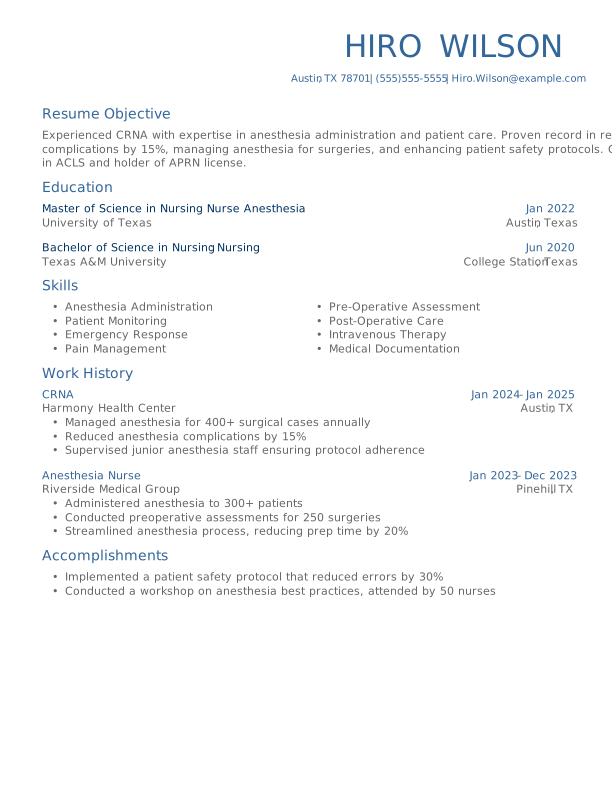
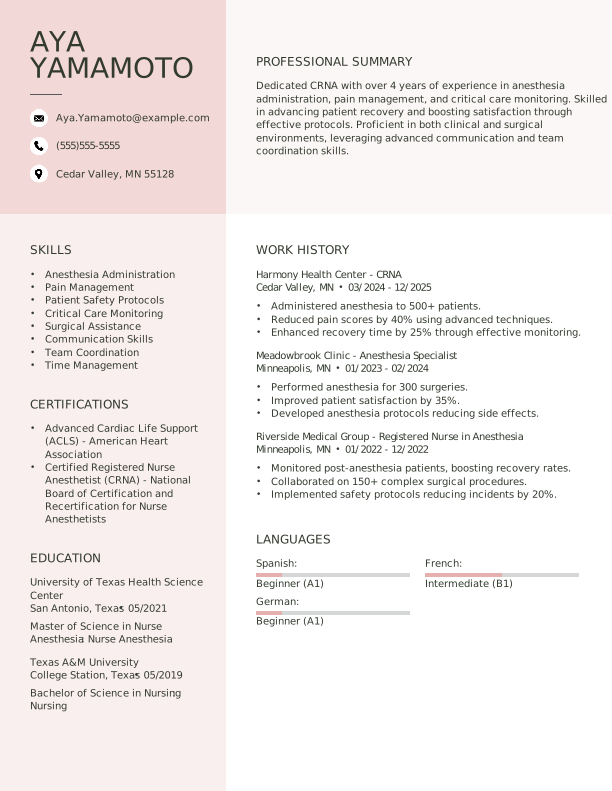
This entry-level resume for a CRNA highlights the applicant's extensive clinical experience, including managing anesthesia for over 400 surgical cases and implementing safety protocols that significantly reduced errors. New professionals must effectively showcase their competencies, certifications, and relevant educational achievements to reassure employers of their readiness despite limited direct work experience.
Mid-career crna resume
What this resume does well:
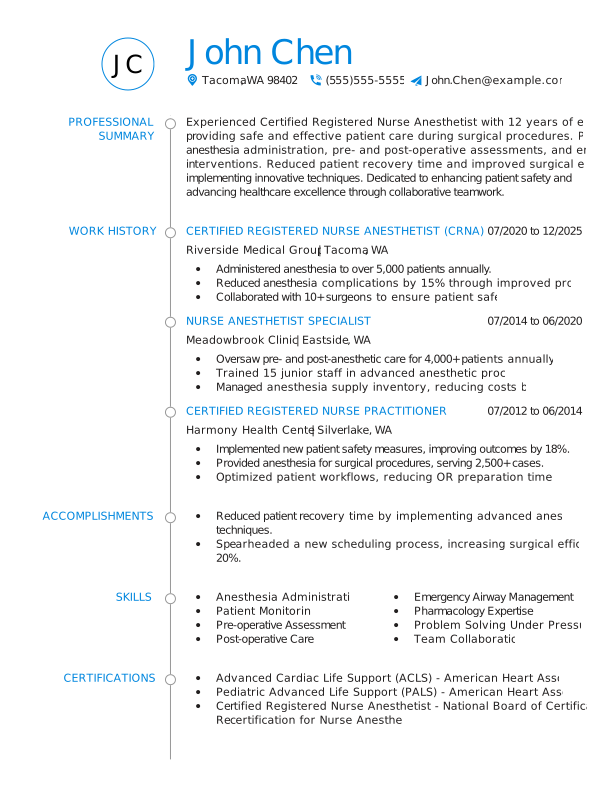
This resume effectively showcases the job seeker's extensive experience in anesthesia management and patient safety. By highlighting specific achievements and leadership roles, it illustrates a strong readiness for advanced responsibilities, demonstrating a commitment to excellence in clinical practice.
Experienced CRNA resume
What this resume does well:
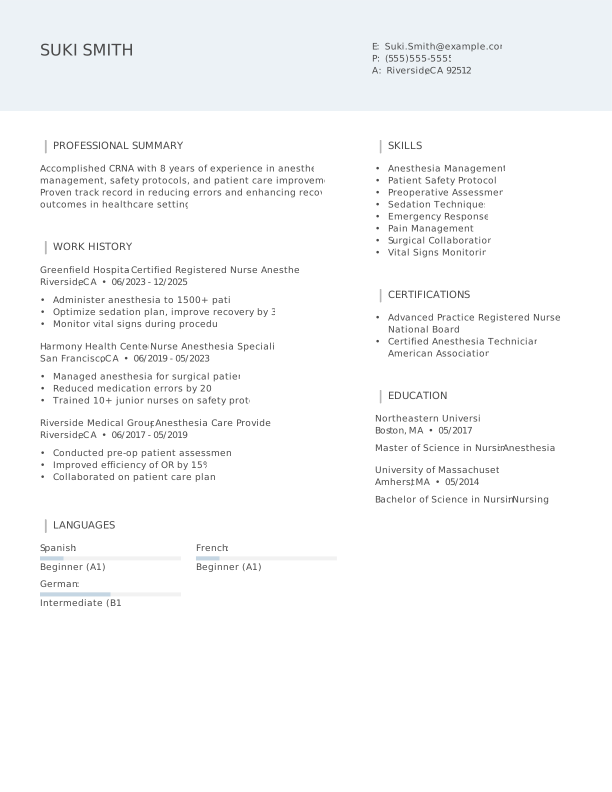
This work experience section demonstrates the applicant's extensive experience as a certified registered nurse anesthetist, highlighting their administration of anesthesia to over 5,000 patients annually and a 15% reduction in complications. The clear formatting allows hiring managers to quickly see the applicant's significant achievements.
Resume Template—Easy to Copy & Paste
Example
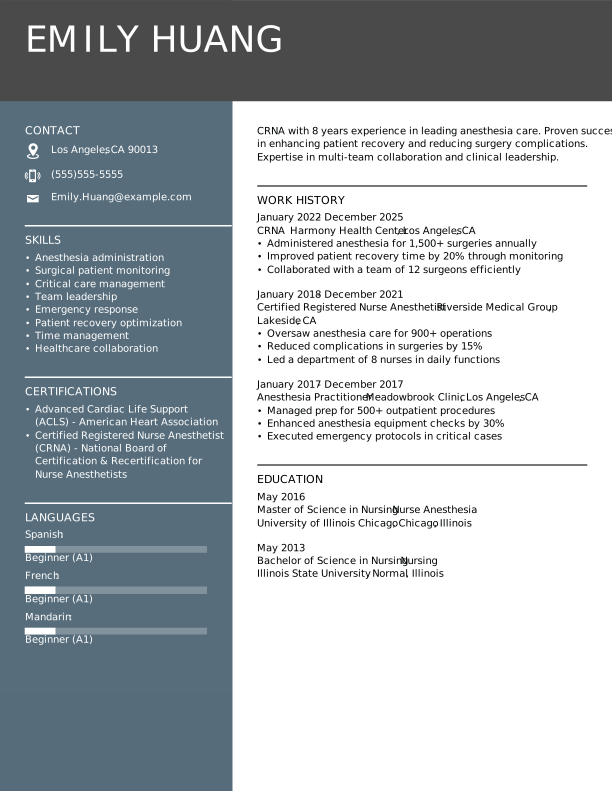
Emily Huang
Los Angeles, CA 90013
(555)555-5555
Emily.Huang@example.com
Skills
- Anesthesia administration
- Surgical patient monitoring
- Critical care management
- Team leadership
- Emergency response
- Patient recovery optimization
- Time management
- Healthcare collaboration
Certifications
- Advanced Cardiac Life Support (ACLS) - American Heart Association
- Certified Registered Nurse Anesthetist (CRNA) - National Board of Certification & Recertification for Nurse Anesthetists
Languages
- Spanish - Beginner (A1)
- French - Beginner (A1)
- Mandarin - Beginner (A1)
Professional Summary
CRNA with 8 years experience in leading anesthesia care. Proven success in enhancing patient recovery and reducing surgery complications. Expertise in multi-team collaboration and clinical leadership.
Work History
CRNA
Harmony Health Center - Los Angeles, CA
January 2022 - December 2025
- Administered anesthesia for 1,500+ surgeries annually
- Improved patient recovery time by 20% through monitoring
- Collaborated with a team of 12 surgeons efficiently
Certified Registered Nurse Anesthetist
Riverside Medical Group - Lakeside, CA
January 2018 - December 2021
- Oversaw anesthesia care for 900+ operations
- Reduced complications in surgeries by 15%
- Led a department of 8 nurses in daily functions
Anesthesia Practitioner
Meadowbrook Clinic - Los Angeles, CA
January 2017 - December 2017
- Managed prep for 500+ outpatient procedures
- Enhanced anesthesia equipment checks by 30%
- Executed emergency protocols in critical cases
Education
Master of Science in Nursing Nurse Anesthesia
University of Illinois Chicago Chicago, Illinois
May 2016
Bachelor of Science in Nursing Nursing
Illinois State University Normal, Illinois
May 2013
Build Your Resume in Minutes
Creating a custom resume is easier than ever with our Resume Builder!
How to Write a CRNA Resume Summary
Your resume summary is important as it’s the first thing employers will see. This section should immediately highlight your qualifications and set a positive tone for the rest of your application.
As a CRNA, you need to emphasize your clinical skills, critical thinking, and experience in anesthesia care. Showcasing these attributes will help you stand out in a competitive field.
To better understand how to craft an effective resume summary, take a look at the following examples. They’ll illustrate what resonates well with hiring managers and what pitfalls to avoid:
Weak Example
I am an experienced Certified Registered Nurse Anesthetist seeking a position where I can use my nursing skills effectively. I hope to find a supportive environment that values teamwork and offers good work-life balance. My goal is to contribute positively if given the chance.
Why this summary misses the mark:
- Lacks specific details about anesthesia experience and clinical skills, making it hard for employers to assess qualifications
- Relies heavily on personal desires rather than showcasing unique contributions or accomplishments in the field
- Uses generic phrases that do not highlight any specialized training or expertise related to CRNA
Strong Example
Compassionate Certified Registered Nurse Anesthetist (CRNA) with over 7 years of experience in delivering anesthesia care for a diverse range of surgical procedures. Achieved a 98% patient satisfaction rate through effective communication and tailored anesthesia plans, while maintaining a zero incident record for adverse reactions. Proficient in regional anesthesia techniques, advanced airway management, and electronic medical records.
Why this summary works:
- Begins with specific title and years of relevant experience
- Highlights quantifiable achievements that illustrate success in patient care and safety
- Mentions specialized skills that are critical for the CRNA role, improving job seeker's appeal to potential employers

Pro Tip
If you’re new to the field and don’t have extensive experience, consider using a career objective. This approach highlights your goals and enthusiasm. You can find tailored resume objective examples specifically for CRNA positions to guide you in crafting yours.
Showcasing Your Work Experience
The work experience section is the focal point of your resume as a crna. This area will contain the bulk of your content, and effective resume templates always prioritize this section.
It's essential to organize this part in reverse-chronological order, detailing your previous roles. For each position, include three to four bullet points that highlight your achievements and contributions in anesthesia care.
Now, let’s look at some examples that demonstrate best practices for showcasing your work history as a crna. These examples will illustrate what effectively captures attention and what pitfalls to avoid:
Weak Example
CRNA
General Hospital – Atlanta, GA
- Administered anesthesia to patients.
- Monitored patient vitals during surgery.
- Collaborated with the surgical team.
- Provided basic post-anesthesia care.
Why this work experience section misses the mark:
- Lacks specific employment dates to show timeline of experience
- Bullet points do not highlight unique skills or outcomes
- Describes routine duties instead of effective contributions or results
Strong Example
Certified Registered Nurse Anesthetist
St. Joseph's Hospital – Tampa, FL
March 2020 - Present
- Administer anesthesia for a diverse range of surgical procedures, ensuring patient safety and comfort, contributing to a 98% satisfaction rate.
- Monitor patient vital signs throughout surgeries, promptly addressing any complications which led to a 30% decrease in post-operative recovery times.
- Educate surgical teams on anesthesia protocols, improving team efficiency and reducing preparation time by 20%.
Why this work experience section works:
- Each bullet starts with a strong action verbs that clearly showcases the job seeker's contributions
- Quantifiable outcomes are included to demonstrate the impact of their work on patient care and team performance
- Relevant skills such as monitoring and education are highlighted through specific accomplishments
While your resume summary and work experience are important components, it's essential to focus on the other sections that contribute to a well-rounded presentation. For additional insights on crafting a standout resume, be sure to explore our comprehensive guide on how to write a resume.
Top Skills to Include on Your Resume
A skills section is important for any standout resume as it provides potential employers with a quick overview of your qualifications. This section can set you apart by showcasing your unique abilities that align with the job requirements. You can learn more about how to effectively highlight technical skills in your resume.
For a CRNA, focus on highlighting technical skills such as advanced airway management and anesthesia delivery systems. Additionally, include familiarity with electronic health records like Epic or Cerner to demonstrate your skill in essential tools used in this role.
In terms of soft skills, attributes like critical thinking, teamwork, and strong communication play a key role in fostering trust with patients and collaborating efficiently within healthcare teams.
Selecting the right resume skills is important for aligning with employer expectations and ensuring your application passes through automated screening systems. Many organizations use software to sift through applicants, making it essential to highlight relevant abilities that resonate with their needs.
To tailor your resume effectively, review job postings for insights on which skills to emphasize. These listings often reveal what recruiters prioritize, helping you craft a compelling narrative that attracts attention from both hiring managers and ATS filters.
Pro Tip
Ensure your resume shines through the ATS with our ATS Resume Checker. Spot and fix over 30 common errors to improve your chances of standing out.
10 skills that appear on successful CRNA resumes
Highlighting in-demand skills on your resume can significantly attract recruiters to your profile. You can see these valuable skills illustrated in our resume examples, which help you present yourself with the assurance that comes from a strong professional presentation.
Consider including these 10 essential skills in your resume if they align with your qualifications and job requirements:
Anesthesia administration
Patient assessment
Clinical judgment
Pain management
Team collaboration
Attention to detail
Emergency response
Patient education
Regulatory compliance knowledge
Time management
Based on analysis of 5,000+ nursing professional resumes from 2023-2024
Resume Format Examples
Choosing the right resume format is important for a CRNA, as it effectively highlights your specialized skills, relevant experience, and professional growth to potential employers.
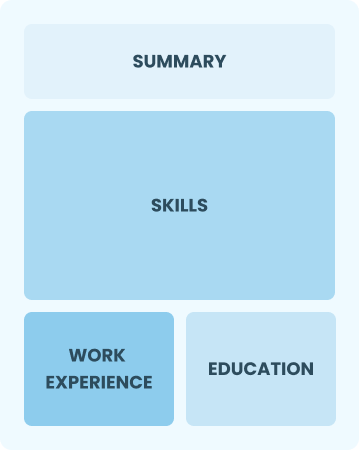
Entry-Level 0 - 2 years
Functional
Focuses on skills rather than previous jobs
Best for:
Recent graduates and career changers with limited experience in nursing.
Mid-Career 3 - 7 years
Combination
Balances skills and work history equally
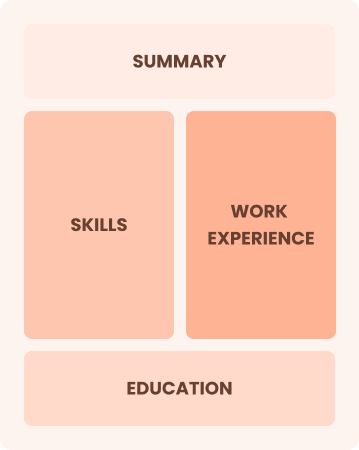
Best for:
Mid-career professionals focused on demonstrating their skills and growth potential.
Experienced 8+ years
Chronological
Emphasizes work history in reverse order
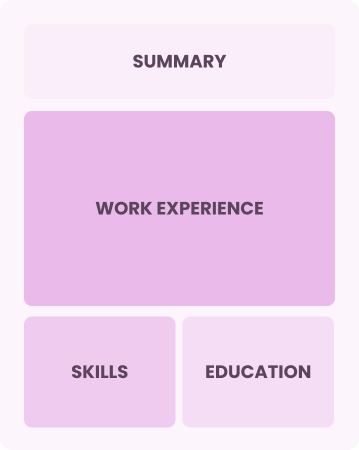
Best for:
Seasoned practitioners excelling in anesthesia leadership and advanced care.
Frequently Asked Questions
Should I include a cover letter with my CRNA resume?
Absolutely, including a cover letter can greatly improve your application. It allows you to highlight your skills and demonstrate your enthusiasm for the position. To make the process easier, check out our comprehensive guide on how to write a cover letter or get started quickly with our Cover Letter Generator. These resources will help you create a strong introduction to your candidacy.
Can I use a resume if I’m applying internationally, or do I need a CV?
When applying for jobs outside the U.S., use a CV instead of a resume. A CV is often required in many countries and provides a comprehensive overview of your qualifications. Explore our detailed guides on how to write a CV and review CV examples to master formatting and creation for international applications.
What soft skills are important for CRNAs?
Soft skills such as communication, critical thinking, and empathy are essential for crnas. These interpersonal skills foster trust with patients and enable effective collaboration with surgical teams, ensuring safe and efficient anesthesia care.
I’m transitioning from another field. How should I highlight my experience?
Highlight your transferable skills such as communication, teamwork, and critical thinking that you developed in previous roles. These attributes can be invaluable in a CRNA position, even if your clinical experience is limited. Use concrete examples from your background to illustrate how these skills can improve patient care and support anesthesia practices.
How should I format a cover letter for a CRNA job?
When you format a cover letter for a CRNA position, begin by including your contact details. Start with an engaging introduction and emphasize your qualifications and experience in anesthesia. Adapt each section to align with the job requirements, finishing with a confident call to action.
Should I use a cover letter template?
Yes, using a cover letter template designed specifically for CRNA roles helps you highlight your clinical skills, such as advanced anesthesia techniques and patient care expertise, in a structured format that attracts the attention of hiring managers.




Ready to land the job?
Join 28M+ others who've built a resume that works.