What are resume keywords?
Resume keywords are words or phrases, usually skills or qualifications, that recruiters identify as requirements for landing a job. You can find resume keywords on most job advertisements under the “Requirements” section. Resume keywords are mainly professional skills or qualifications; you should include them throughout all your sections when writing a resume.
If you haven’t added keywords to your resume, you can apply to jobs nonstop and not see results. Why? Automated recruiting might be to blame. Companies increasingly use AI recruiters and applicant tracking systems (ATS) to filter candidates, leaving job seekers in the dark about how to update a resume.
In this guide, you’ll learn:
To make you familiar with resume keywords, here are some examples:
- Project management
- Certified Professional Resume Writer (CPRW)
- Diversity and inclusion training
- Search engine optimization (SEO)
- Java, Python, C++
- Working knowledge of Microsoft Office
- Advanced Cardiovascular Life Support
- Excellent customer service
- Experienced in WAN/LAN routing
- Proficient in financial statement preparation and analysis
As you can see, resume keywords range from simple soft skills to highly technical hard skills. However, choosing the right ones requires paying particular attention to the job’s requirements.
Fortunately, our Builder saves you the time of perusing dozens of job descriptions by suggesting resume keywords uniquely selected for your desired job title. Access hundreds of industry-specific keywords for all your resume sections in our Resume Builder!
How to choose the right resume keywords
When choosing keywords for your resume, you should know that the right ones will vary depending on each job posting.
There isn’t a predetermined list of words to make you a super-candidate for any job you apply to. Like much of great resume writing, the key lies in customizing your resume to each role.
We’ve developed simple step-by-step instructions with practical examples to help you choose the right resume keywords. Let’s begin!
Step 1
Browse the job ad for resume keywords.
You should first carefully read the job ad and pinpoint the skills, qualifications and experiences the employer emphasizes.
As we mentioned, you��ll quickly find keywords under the job requirements section, but they can appear all over the job ad, so take your time with this.
Look for the two types of resume keywords: job-related skills or qualifications and action verbs—much different to the filler, trendy resume buzzwords that can hurt your resume.
Job-related keywords will include skills and qualifications such as web development, JavaScript, testing and debugging or Certified Scrum Master (CSM). You can easily add these keywords throughout various resume sections, particularly your skills or resume summary.
Action verbs can be equally valuable resume keywords because they provide information about your capabilities and achievements. For example, collaborating, training, managing, implementing, innovating. You should include these keywords in your work experience section describing your accomplishments.
Step 2
Identify resume keywords that apply to your experience.
Now that you understand the types of keywords you’re looking for, pinpoint the keywords that relate to your skills and experience.
Use this visual example to see how you can highlight potential resume keywords in any job advertisement.
Customer Service Representative
Axiom Solutions — Miami, FL
As a customer service representative, you will interact with customers via various communication channels to address inquiries, resolve issues and provide product information. This role requires a strong commitment to customer satisfaction, excellent communication skills and the ability to handle complex customer interactions.
Responsibilities:
- Provide courteous and professional customer support via phone, email, chat and in-person interactions.
- Identify and resolve customer inquiries, concerns, and issues promptly and efficiently, ensuring customer satisfaction.
- Gather and relay customer feedback to the appropriate teams for product/service improvement.
- Identify opportunities for streamlining and improving customer service processes.
Requirements:
- High school diploma or equivalent (Bachelor’s degree preferred).
- 2-4 years of prior experience in customer service or a related field.
- Excellent verbal and written communication skills.
- Strong problem-solving and decision-making abilities.
- Proficiency in using CRM software and other customer service tools.
- Ability to multitask and prioritize in a fast-paced environment.
- Strong interpersonal skills and a customer-centric attitude.
- Attention to detail and organizational skills.
- Ability to work independently and as part of a team.

Pro Tip
When selecting resume keywords, only pick the ones that most accurately reflect your knowledge and experience. Never lie about your qualifications for the sake of getting an interview.
How to add keywords to your resume
After identifying potential resume keywords, it’s time to add them to your resume sections.
Including keywords in the resume summary
Your resume summary serves as a brief personal introduction where you showcase your most relevant qualifications.
Here’s how to tie them all into a neat resume summary.
Including keywords in the work experience
Your work experience should showcase your most impressive and relevant accomplishments and include those action verb keywords.
The following keywords fit perfectly in a work experience section:
- Address inquiries
- Resolve issues
- Provide product information
- Customer support via phone, email, chat and in-person interactions
- Gather and relay customer feedback
- Ability to work independently
- Multitask
- Prioritize
- Fast-paced environment
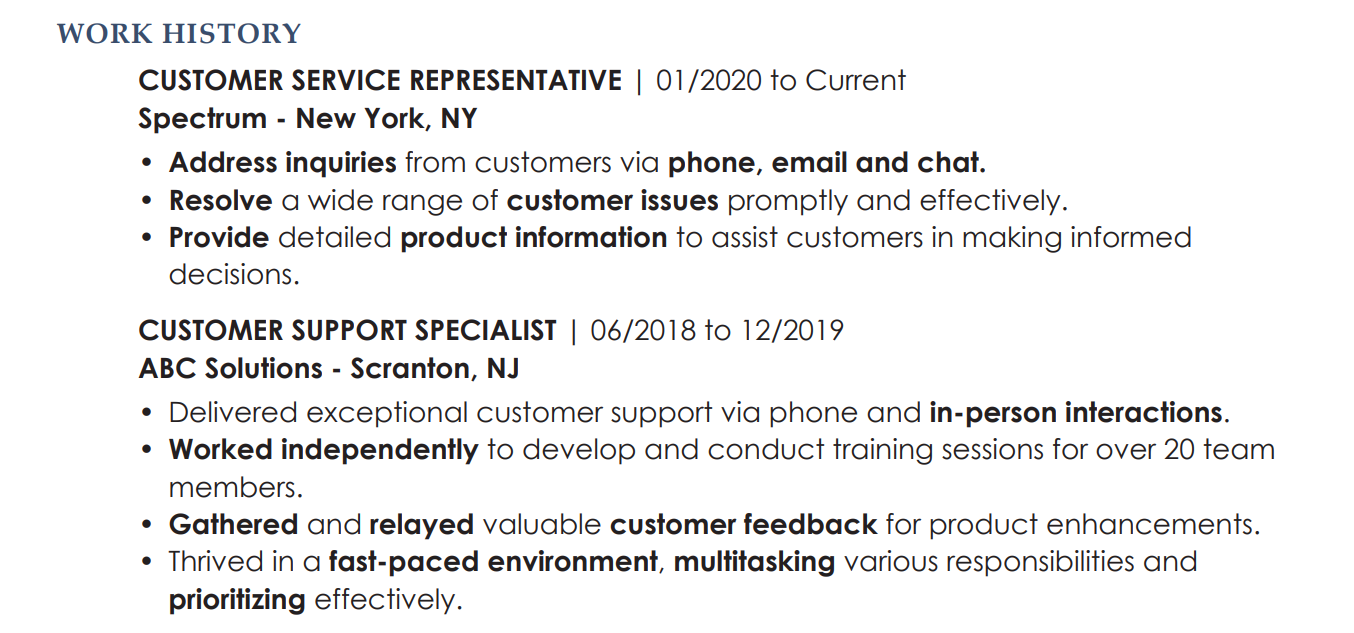
Here’s an example of a work experience section with these resume keywords:
Including keywords on the skills sections
A straightforward way to include keywords on a resume is by listing them in the skills section.
Those job-related keywords that consist of soft or hard skills should go in this section.
For example:
Including keywords in the education section
You can also include keywords in the education section, mainly whenever the employer requires specific educational achievements.
For example, this employer noted that a high school diploma was the only educational requirement but that a bachelor’s degree was preferred.
Including your high school diploma is perfectly acceptable if that is your highest level of education. However, if you possess a bachelor’s degree or are obtaining one, you should mention that keyword in your education section.
Pro Tip
When it comes to
how your resume should look like, don’t try to stuff it every possible keyword. Recruiters don’t want to see a copy-paste of the job description on your resume. Stick to the keywords that best represent your abilities.
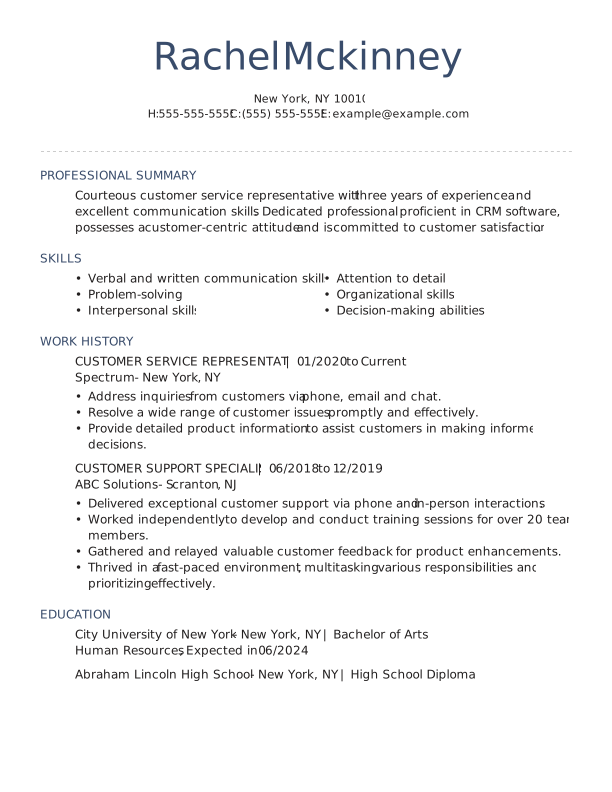
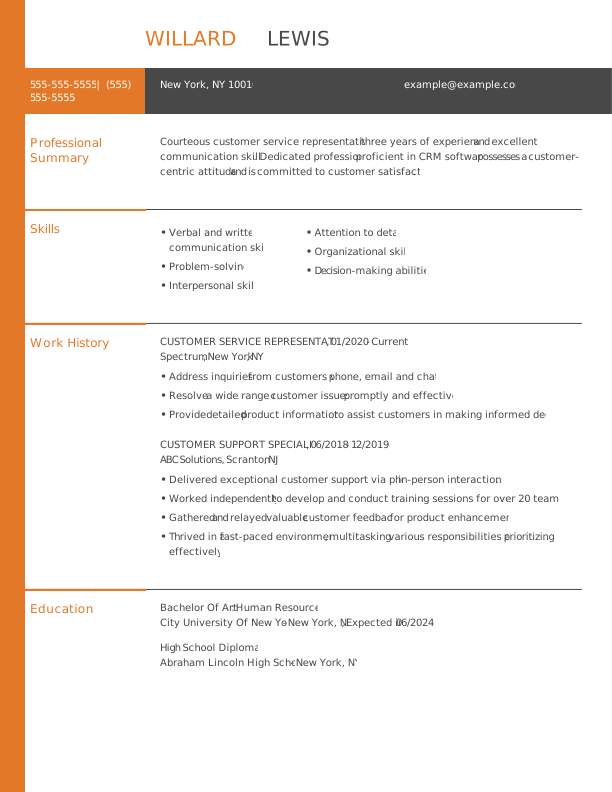
Once you’ve put everything together, you’ll have a keyword-optimized resume that looks like this:
510+ Resume keywords divided by industry
We’ve compiled a list of common resume keywords for various roles and industries. These keywords can help you draft strong resume sections by focusing on in-demand qualifications.
Find over 500 resume keywords for the following industries:
- Accounting
- Financial Reporting
- Budgeting
- Auditing
- Taxation
- Accounts Payable (AP)
- Accounts Receivable (AR)
- General Ledger
- Financial Analysis
- Financial Statements
- GAAP (Generally Accepted Accounting Principles)
- Cost Accounting
- Compliance
- Forecasting
- Reconciliation
- Payroll
- CPA (Certified Public Accountant)
- Sarbanes-Oxley (SOX) Compliance
- Internal Controls
- QuickBooks
- Excel (Advanced Excel, Excel Macros, Excel Formulas)
- ERP Systems (Enterprise Resource Planning)
- Financial Modeling
- Variance Analysis
- Cash Flow Management
- Financial Planning
- Revenue Recognition
- Asset Management
- Fixed Assets
- Risk Management
- Tax Planning
- Journal Entries
- Balance Sheet
- Income Statement
- ACCA (Association of Chartered Certified Accountants)
- CMA (Certified Management Accountant)
- Financial Software (mention specific software you’re proficient in, e.g., SAP, Oracle, NetSuite)
- Audit Procedures
- Forensic Accounting
- Cost Control
- Treasury Management
- Financial Compliance
- Financial Statement Analysis
- Financial Forecasting
- Financial Management
- Financial Audits
- Regulatory Compliance
- International Financial Reporting Standards (IFRS)
- Accounts Analysis
- Process Improvement
- Office Management
- Administrative Support
- Data Entry
- Calendar Management
- Communication Skills
- Organization
- Time Management
- Customer Service
- MS Office (Microsoft Office Suite)
- Email Correspondence
- Filing
- Scheduling
- Record Keeping
- Office Procedures
- Telephone Skills
- Problem-Solving
- Multitasking
- Attention to Detail
- Reception
- File Management
- Document Preparation
- Travel Arrangements
- Office Equipment (mention specific equipment you’re familiar with, e.g., copiers, scanners)
- Database Management
- Office Software (mention specific software you’re proficient in, e.g., Word, Excel, PowerPoint)
- Meeting Coordination
- Office Administration
- Vendor Management
- Inventory Control
- Report Generation
- Administrative Coordination
- Office Supplies Management
- Event Planning
- Problem Resolution
- Document Review
- Workflow Optimization
- Office Efficiency
- Confidentiality
- Teamwork
- Expense Management
- Project Support
- Mail Distribution
- Data Analysis
- Billing and Invoicing
- Policy Compliance
- Records Retention
- Proofreading
- Office Technology (mention specific technologies, e.g., VOIP, office intranet)
- Customer Support
- Communication Skills
- Problem-Solving
- Client Relations
- Interpersonal Skills
- Call Center
- Telephone Etiquette
- Active Listening
- Conflict Resolution
- Empathy
- Multitasking
- Complaint Handling
- Product Knowledge
- Relationship Building
- Customer Satisfaction
- Service Excellence
- Issue Resolution
- Client Assistance
- Order Processing
- Live Chat Support
- Email Correspondence
- Ticketing Systems
- CRM Software (Customer Relationship Management)
- Upselling/Cross-Selling
- Time Management
- Teamwork
- Problem Identification
- Follow-Up
- Service Recovery
- Knowledge Base
- Training and Development
- Quality Assurance
- Metrics Tracking
- Performance Evaluation
- Feedback Analysis
- Service Level Agreements (SLAs)
- Product Support
- Service Desk
- Customer Feedback
- Escalation Handling
- Billing Inquiries
- Order Tracking
- Technical Support
- Adaptability
- Client Retention
- Positive Attitude
- Bilingual
- Classroom Management
- Curriculum Development
- Lesson Planning
- Instruction
- Student Engagement
- Educational Technology
- Differentiated Instruction
- Assessment
- Classroom Assessment
- Student-Centered Learning
- Special Education
- Inclusive Education
- E-Learning
- Pedagogy
- Classroom Leadership
- Classroom Instruction
- Student Development
- Educational Materials
- Learning Objectives
- Educational Standards
- Tutoring
- Academic Support
- Academic Advising
- Student Progress
- Parent-Teacher Communication
- Classroom Environment
- Education Policy
- Behavior Management
- Classroom Adaptation
- Student Achievement
- ESL (English as a Second Language)
- Literacy
- STEM Education
- Arts Education
- Early Childhood Education
- Classroom Technology
- Blended Learning
- Curriculum Alignment
- Classroom Assessment Tools
- Classroom Resources
- Assessment Data Analysis
- Professional Development
- Classroom Supervision
- IEP (Individualized Education Program)
- Classroom Inclusion
- Educational Research
- Standardized Testing
- Classroom Engagement Strategies
- Teaching Certifications (mention relevant certifications, e.g., Teaching Certificate, ESL Certification)
- Culinary Skills
- Customer Service
- Menu Planning
- Food Preparation
- Cooking Techniques
- Food Safety
- Kitchen Management
- Menu Development
- Hospitality
- Sanitation
- Food Handling
- Health and Safety Regulations
- ServSafe Certification
- Culinary Arts
- Food Presentation
- Food Quality
- Culinary Creativity
- Recipe Development
- Front-of-House
- Back-of-House
- Food Orders
- Dietary Restrictions
- Special Diets
- Inventory Management
- Order Fulfillment
- Food Cost Control
- Time Management
- Teamwork
- POS Systems (Point of Sale)
- Wine Knowledge
- Beer Knowledge
- Beverage Service
- Catering
- Barista
- Bartending
- Cash Handling
- Table Service
- Fast-Paced Environment
- Food Presentation
- Food Pairing
- Plating
- Menu Knowledge
- Food Allergies
- Sustainable Practices
- Food Trends
- Guest Satisfaction
- Conflict Resolution
- Cross-Training
- Patient Care
- Medical Terminology
- Electronic Health Records (EHR)
- HIPAA Compliance
- Medical Billing
- Insurance Verification
- Phlebotomy
- Vital Signs
- Medical Assisting
- First Aid
- Infection Control
- Specimen Collection
- Patient Assessment
- Medical Office Procedures
- Front Office
- Back Office
- Medical Coding
- Health Care Administration
- Medical Equipment Operation
- Medical Imaging
- Radiology
- Laboratory Procedures
- Wound Care
- Home Health Care
- Nursing Assistant (CNA)
- Pharmacy Technician
- Sterile Processing
- Surgical Assisting
- Medical Reception
- Electronic Prescriptions
- Health Care Software (mention specific software you’re proficient in, e.g., Epic, Cerner)
- Care Coordination
- Emergency Response
- Patient Transport
- Bedside Assistance
- Occupational Health
- Physical Therapy
- Rehabilitation Services
- Medical Ethics
- Elderly Care
- Health Care Regulations
- Medical History Documentation
- Laboratory Testing
- IT Support
- Network Administration
- Systems Administration
- Cybersecurity
- IT Infrastructure
- Cloud Computing
- Database Management
- Software Development
- Programming Languages (e.g., Java, Python, C++)
- Web Development
- IT Project Management
- Troubleshooting
- Hardware Configuration
- Operating Systems (e.g., Windows, Linux, macOS)
- IT Security
- Network Security
- Data Analysis
- IT Architecture
- IT Strategy
- IT Governance
- IT Compliance
- IT Auditing
- IT Risk Management
- IT Consulting
- Virtualization
- Server Administration
- DevOps
- IT Automation
- IT Help Desk
- IT Documentation
- IT Budgeting
- IT Vendor Management
- IT Procurement
- IT Disaster Recovery
- IT Service Management (ITSM)
- ITIL (Information Technology Infrastructure Library)
- IT Certifications (e.g., CompTIA, Cisco, CISSP, PMP)
- IT Change Management
- IT Performance Metrics
- IT Networking
- Wireless Networks
- IT Troubleshooting
- IT Architecture Design
- IT Data Center
- IT Analytics
- IT Compliance Auditing
- IT User Support
- IT Training
- IT Documentation Tools (e.g., Confluence, Jira)
- Digital Marketing
- Social Media Marketing
- Content Marketing
- Email Marketing
- Marketing Strategy
- Marketing Campaigns
- SEO (Search Engine Optimization)
- SEM (Search Engine Marketing)
- PPC (Pay-Per-Click)
- Inbound Marketing
- Outbound Marketing
- Marketing Analytics
- Marketing Automation
- Competitive Analysis
- Brand Management
- Branding
- Advertising
- Public Relations
- Content Creation
- Copywriting
- Social Media Management
- Email Campaigns
- Customer Acquisition
- Customer Retention
- Market Segmentation
- Marketing Metrics
- Conversion Rate Optimization (CRO)
- A/B Testing
- Marketing Budgeting
- Marketing ROI
- Marketing Trends
- Marketing Planning
- Marketing Communications
- Marketing Collateral
- Marketing Channels
- Influencer Marketing
- Marketing Software (mention specific software you’re proficient in, e.g., HubSpot, Google Analytics)
- Marketing Funnel
- Content Strategy
- Brand Awareness
- Market Positioning
- Customer Personas
- Marketing Campaign Optimization
- Event Marketing
- Marketing Reporting
- Marketing Partnerships
Nursing resume keywords
- Registered Nurse (RN)
- Licensed Practical Nurse (LPN)
- Nurse Practitioner (NP)
- Clinical Nursing
- Health Care
- Medical Records
- Medication Administration
- Nursing Assessment
- Patient Education
- Care Planning
- Infection Control
- IV Therapy
- Critical Care
- Emergency Medicine
- Pediatrics
- Geriatrics
- Obstetrics
- Gynecology
- Surgical Nursing
- Operating Room (OR) Nurse
- Labor and Delivery
- Psychiatric Nursing
- Home Health Care
- Hospice Care
- Palliative Care
- Long-Term Care
- Acute Care
- Health Assessment
- Patient Advocacy
- Cultural Sensitivity
- CPR Certification
- BLS (Basic Life Support)
- ACLS (Advanced Cardiac Life Support)
- PALS (Pediatric Advanced Life Support)
- Telemetry Monitoring
- Nursing Documentation
- Nursing Ethics
- Care Coordination
- Medication Management
- Nursing Leadership
- Nursing Research
- Quality Assurance
- Team Collaboration
Retail resume keywords
- Customer Service
- Sales
- Cash Handling
- Point-of-Sale (POS) Systems
- Merchandising
- Inventory Management
- Visual Merchandising
- Loss Prevention
- Retail Operations
- Store Management
- Retail Sales Associate
- Customer Engagement
- Retail Marketing
- Customer Relations
- Teamwork
- Time Management
- Retail Management
- Inventory Control
- Store Layout
- Retail Analytics
- Retail Sales Strategy
- Product Display
- Shelf Stocking
- Retail Pricing
- Retail Security
- Retail Training
- Sales Targets
- Retail Trends
- Visual Presentation
- Retail Merchandise Planning
- Retail Branding
- Retail Promotions
- Customer Satisfaction
- Retail Scheduling
- Retail Promotions
- Customer Feedback
- Retail Compliance
- Retail Analytics
- Retail Supply Chain
- Retail Sales Metrics
- Cash Register
- Retail Audits
- Retail Checkout
- Retail Inventory Software
Sales resume keywords
- Sales Representative
- Account Executive
- Business Development
- Client Relationship Management
- Customer Acquisition
- Sales Strategies
- Lead Generation
- Prospecting
- Closing Deals
- Sales Cycles
- Consultative Selling
- Sales Presentations
- Cold Calling
- B2B Sales (Business-to-Business)
- B2C Sales (Business-to-Consumer)
- Negotiation
- Sales Metrics
- Sales Targets
- Sales Quotas
- Territory Management
- Sales Forecasting
- Sales Training
- Sales Team Leadership
- Sales Analytics
- Sales Process Improvement
- Sales Pitches
- Relationship Building
- Networking
- Client Retention
- Sales Conversion
- Market Research
- Sales Reports
- Sales Administration
- Sales Collateral
- Customer Engagement
- Solution Selling
- Sales Negotiation
- Sales Automation
- Sales Prospecting Tools
- Sales Technology
- Sales Communication
- Sales Funnel
- Sales Support
- Sales Closing Techniques
Find hundreds of keywords tailored to your desired job title when you use our industry-leading Resume Builder.
Key Takeaways
- Resume keywords are words or phrases that signal to the recruiter that you have specific requirements for the role.
- You can find resume keywords on any job ad under the “Responsibilities” or “Requirements” sections.
- You should include resume keywords across all your resume sections.
- Resume keywords are skills and qualifications but can also be action verbs.
- Only include resume keywords that truthfully represent your professional abilities.
- Don’t overstuff your resume with keywords to avoid plagiarism.
- Find resume keywords tailored to your unique job title in our Resume Builder!
Write my resume
How We Reviewed This Article
Over the past 15 years, we’ve helped more than 10 million job seekers build stronger cover letters, discover their career paths, interview confidently, and boost their chances of finding the right job faster. Review our Editorial Policy to learn more about our process.
About the Author
Gabriela Hernandez • CPRW, Career Advice Writer
Gabriela is a Certified Professional Resume Writer (CPRW) and member of the Professional Association of Resume Writers & Career Coaches. She focused on helping job seekers improve their professional resumes to highlight their unique skills and experience. Gabriela holds a BA in journalism from the University of Puerto Rico and brought more than four years of specialized experience to helping candidates navigate the complexities of the online job market, with a strong focus on resume optimization and effective self-presentation.
Ready to
land the job?
Join 28M+ others who’ve built a resume that works.



 Add LiveCareer as a preferred source on Google