
Hard skills, such as advanced patient monitoring, critical care protocols, and skill in life support systems, are all essential for managing complex cases in the ICU.
ICU Charge Nurse Resume Examples & Templates
Looking to advance your career as an ICU charge nurse? Our ICU charge nurse resume examples will help you showcase leadership, critical thinking, and patient advocacy skills that catch employers' attention.

by Gabriela Hernandez, Last Updated: February 10, 2026
Hired By:*

- Popular ICU Charge Nurse Resume Examples
- Resume Template—Easy to Copy & Paste
- Build Your Resume in Minutes
- How to Write an ICU Charge Nurse Resume Summary
- Showcasing Your Work Experience
- Top Skills to Include on Your Resume
- Resume Format Examples
- Related Nursing Resume Examples
- Frequently Asked Questions
- Should I include a cover letter with my ICU charge nurse resume?
- Can I use a resume if I’m applying internationally, or do I need a CV?
- What soft skills are important for ICU charge nurses?
- I’m transitioning from another field. How should I highlight my experience?
- How should I format a cover letter for an ICU charge nurse job?
- Should I use a cover letter template?
Popular ICU Charge Nurse Resume Examples
Check out our top ICU charge nurse resume examples that emphasize critical skills like leadership, patient advocacy, and effective communication. These resumes illustrate how to showcase your expertise in managing complex patient care situations.
Ready to build your own impressive resume? Our Resume Builder offers user-friendly templates specifically designed for healthcare professionals, making it easier than ever to highlight your unique qualifications.
Recommended
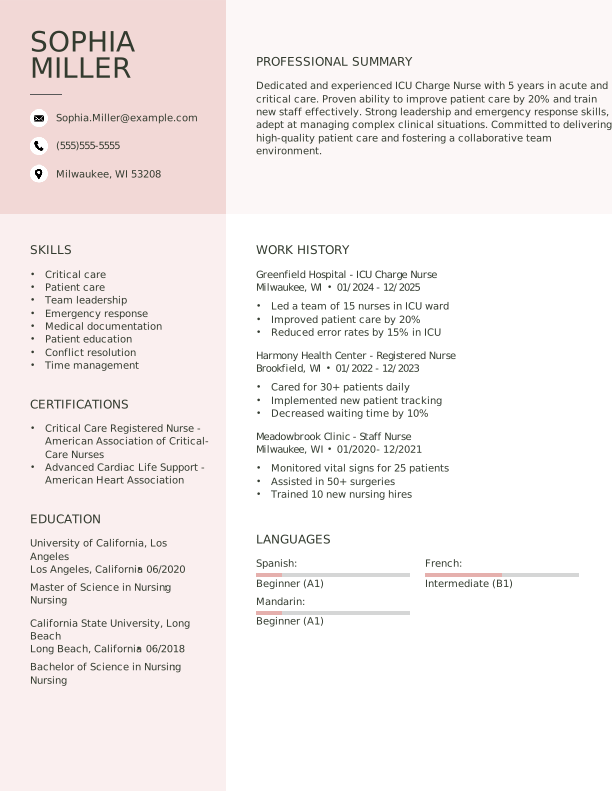 Customize This Resume
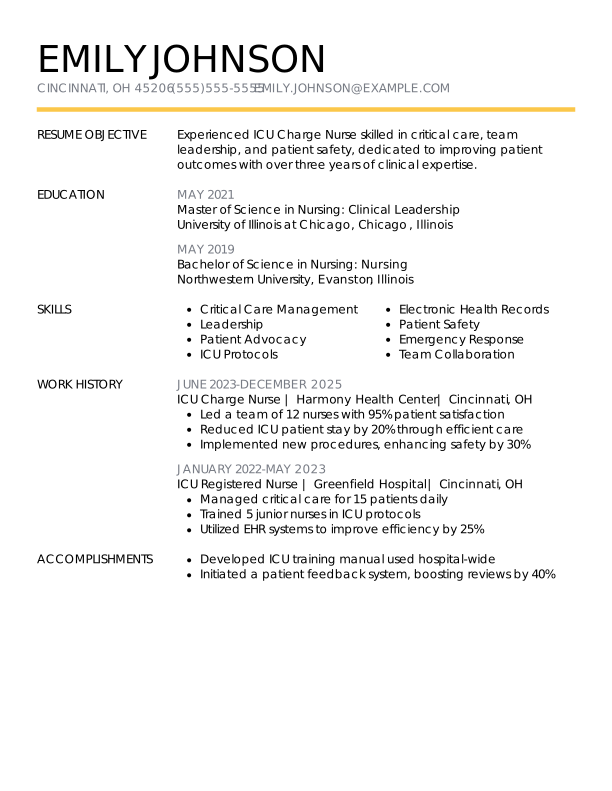
Entry-level ICU charge nurse resume
What this resume does well:
This entry-level resume effectively highlights the applicant’s leadership skills and critical care expertise, demonstrating a strong ability to manage both patients and nursing teams. New professionals must showcase relevant clinical competencies and any innovative contributions made during their training or early career to reassure employers of their readiness for challenging roles in the ICU.
Mid-career ICU charge nurse resume
What this resume does well:
This resume effectively showcases the applicant's leadership skills and advanced critical care expertise. The clear articulation of responsibilities highlights their capability to manage complex situations, demonstrating a strong trajectory toward higher-level nursing roles.
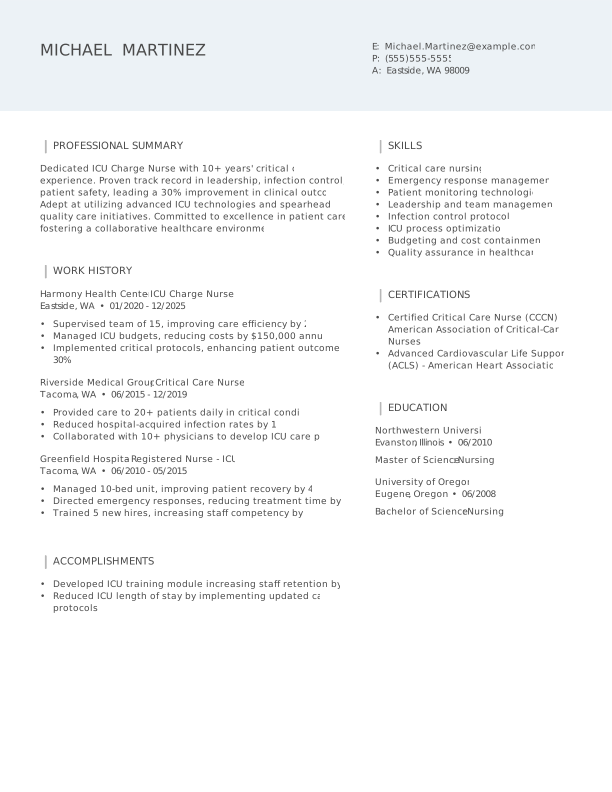
Experienced ICU charge nurse resume
What this resume does well:
The work history section illustrates the applicant's robust leadership as an ICU charge nurse, emphasizing their impact on patient care efficiency and budget management. Key achievements, such as a 30% enhancement in patient outcomes and $150,000 cost reduction, are clearly highlighted for easy reference by employers.
Resume Template—Easy to Copy & Paste
Example
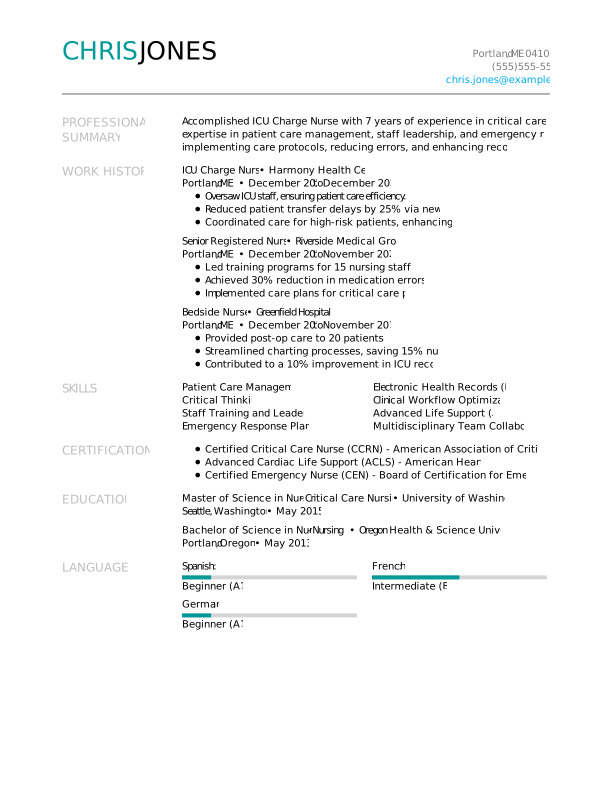
Chris Jones
Portland, ME 04105
(555)555-5555
Chris.Jones@example.com
Professional Summary
Accomplished ICU Charge Nurse with 7 years of experience in critical care settings. Proven expertise in patient care management, staff leadership, and emergency response. Adept at implementing care protocols, reducing errors, and enhancing recovery outcomes.
Work History
ICU Charge Nurse
Harmony Health Center - Portland, ME
December 2020 - December 2025
- Oversaw ICU staff, ensuring patient care efficiency.
- Reduced patient transfer delays by 25% via new protocols.
- Coordinated care for high-risk patients, enhancing outcomes.
Senior Registered Nurse
Riverside Medical Group - Portland, ME
December 2017 - November 2020
- Led training programs for 15 nursing staff monthly.
- Achieved 30% reduction in medication errors annually.
- Implemented care plans for critical care patients.
Bedside Nurse
Greenfield Hospital - Portland, ME
December 2015 - November 2017
- Provided post-op care to 20 patients weekly.
- Streamlined charting processes, saving 15% nursing time.
- Contributed to a 10% improvement in ICU recovery rates.
Skills
- Patient Care Management
- Critical Thinking
- Staff Training and Leadership
- Emergency Response Planning
- Electronic Health Records (EHR)
- Clinical Workflow Optimization
- Advanced Life Support (ALS)
- Multidisciplinary Team Collaboration
Certifications
- Certified Critical Care Nurse (CCRN) - American Association of Critical-Care Nurses
- Advanced Cardiac Life Support (ACLS) - American Heart Association
- Certified Emergency Nurse (CEN) - Board of Certification for Emergency Nursing
Education
Master of Science in Nursing Critical Care Nursing
University of Washington Seattle, Washington
May 2015
Bachelor of Science in Nursing Nursing
Oregon Health & Science University Portland, Oregon
May 2013
Languages
- Spanish - Beginner (A1)
- French - Intermediate (B1)
- German - Beginner (A1)
Build Your Resume in Minutes
Creating a custom resume is easier than ever with our Resume Builder!
How to Write an ICU Charge Nurse Resume Summary
Your resume summary is the first thing employers will notice, making it essential to create a compelling introduction that highlights your qualifications. As an ICU charge nurse, you need to emphasize your leadership skills and critical care expertise to stand out in this competitive field.
This profession should showcase your ability to manage patient care effectively while leading a dedicated team of nurses. Highlighting your clinical experience and decision-making capabilities is important for grabbing attention.
To assist you in crafting an compelling summary, consider these examples that illustrate what works well and what may fall short:
Weak Example
I am an experienced ICU charge nurse with a strong background in critical care environments. I am seeking a position where I can use my skills to help patients and support my team. A role that offers professional development and good working conditions is what I look for. I believe that I can be a valuable addition if given the chance.
Why this summary misses the mark:
- Lacks specific examples of achievements or skills relevant to the ICU role
- Emphasizes personal desires rather than showcasing how the job seeker adds value to potential employers
- Uses vague language, such as 'experienced' without detailing any particular competencies or experiences
Strong Example
Compassionate ICU Charge Nurse with over 6 years of experience in critical care, adept at overseeing nursing staff and patient care protocols. Successfully improved patient satisfaction scores by 20% through implementing evidence-based practices and improving interdisciplinary communication. Proficient in advanced life support techniques, ventilator management, and electronic health record systems.
Why this summary works:
- Starts with specific years of experience and highlights the charge nurse role
- Features a quantifiable achievement that showcases direct impact on patient satisfaction
- Mentions relevant technical skills that are essential for an ICU position

Pro Tip
If you're new to the nursing field, consider highlighting your aspirations with a career objective. This approach can showcase your passion and potential. There are plenty of resume objective examples available specifically for ICU charge nurses to guide you in crafting a compelling statement.
Showcasing Your Work Experience
The work experience section is important for your resume as an ICU charge nurse, and it will contain the bulk of your content. Good resume templates always emphasize this section to ensure it stands out.
This part of your resume should be organized in reverse-chronological order, listing your previous roles. Use bullet points to detail effectively your achievements and responsibilities in each position.
To guide you further, we will present a couple of examples that illustrate what makes a compelling work history entry for ICU charge nurses. These examples will clarify what works well and what should be avoided:
Weak Example
ICU Charge Nurse
City General Hospital – New York, NY
- Managed patient care in the ICU
- Coordinated with medical staff on patient treatment
- Oversaw nursing staff during shifts
- Maintained records and ensured compliance
Why this work experience section misses the mark:
- Lacks specific employment dates
- Bullet points do not highlight specific achievements or outcomes
- Describes duties without demonstrating impact or leadership skills
Strong Example
ICU Charge Nurse
City Hospital – Los Angeles, CA
March 2020 - Current
- Lead a team of 15 nurses in a busy 30-bed ICU, ensuring optimal patient care and safety protocols are followed
- Implement evidence-based practices that reduced ventilator-associated pneumonia rates by 30% within one year
- Mentor and train new nursing staff, fostering professional growth and maintaining high standards in patient care
Why this work experience section works:
- Uses powerful action verbs to convey leadership and responsibility effectively
- Demonstrates measurable impact through specific data on patient outcomes
- Highlights essential nursing skills relevant to the role through concrete examples
While your resume summary and work experience are important, remember that other sections also deserve careful consideration. Each part of your resume contributes to the overall impression you make. For detailed guidance, visit our comprehensive guide on how to write a resume.
Top Skills to Include on Your Resume
A well-structured skills section is essential for any resume, as it allows you to quickly demonstrate your qualifications to potential employers. This concise showcase can set you apart from other applicants by highlighting your capabilities relevant to the role.
For an ICU charge nurse, highlight both technical skills and interpersonal abilities. Emphasize expertise with monitoring systems, electronic health records (EHR) software, and ventilator management, while also showcasing leadership and communication skills essential for coordinating critical care effectively.
These hard skills ensure healthcare professionals can effectively handle demanding situations. Soft skills, including strong communication, teamwork, and leadership abilities, foster a supportive environment for patients and staff. Emphasizing soft skills ensures high-quality care and improves collaboration among team members.
Choosing the right resume skills is important for standing out to employers and passing automated screening systems. Tailoring your abilities to meet employer expectations can significantly improve your chances of getting noticed.
Reviewing job postings provides valuable insights into which resume skills are in demand. By aligning your resume with these key capabilities, you increase your chances of appealing to both recruiters and ATS systems alike.
Pro Tip
Ensure your resume stands out in the hiring process by using our ATS Resume Checker. This tool identifies over 30 common mistakes, helping you tailor your resume to navigate applicant tracking systems more effectively.
10 skills that appear on successful ICU charge nurse resumes
Highlighting in-demand skills on your resume is important for attracting the attention of recruiters looking for ICU charge nurses. Our resume examples showcase these essential competencies, allowing you to present yourself with confidence and professionalism.
By the way, consider incorporating relevant skills that align with your experience and job requirements:
Leadership
Team collaboration
Patient advocacy
Crisis management
Time management
In-depth knowledge of ICU protocols
Conflict resolution
Patient assessment
Data analysis
Medication administration
Based on analysis of 5,000+ nursing professional resumes from 2023-2024
Resume Format Examples
Choosing the right resume format is important because it highlights your essential nursing skills and experiences, ensuring your career advancements catch the attention of potential employers.
Entry-Level 0 - 2 years
Functional
Focuses on skills rather than previous jobs

Best for:
Best for recent graduates and career changers with limited nursing experience
Mid-Career 3 - 7 years
Combination
Balances skills and work history equally

Best for:
Mid-career professionals focused on demonstrating their skills and potential for growth
Experienced 8+ years
Chronological
Emphasizes work history in reverse order

Best for:
Seasoned leaders excelling in critical care and team management
Frequently Asked Questions
Should I include a cover letter with my ICU charge nurse resume?
Absolutely, including a cover letter is a great way to improve your application. It allows you to showcase your personality and explain how your skills align with the job. If you're looking for guidance, check out our resources on how to write a cover letter or use our Cover Letter Generator for quick support.
Can I use a resume if I’m applying internationally, or do I need a CV?
As an ICU charge nurse, showcasing your leadership and clinical skills is essential. Use a CV when applying for positions abroad, as it often highlights your extensive experience more effectively than a resume. Explore our resources on how to write a CV and view CV examples for tips on formatting to stand out in international applications.
What soft skills are important for ICU charge nurses?
Soft skills such as leadership, communication, and conflict resolution are essential for an ICU charge nurse. These interpersonal skills foster collaboration among team members and ensure effective patient care, ultimately leading to a more cohesive work environment and improved patient outcomes.
I’m transitioning from another field. How should I highlight my experience?
Highlight leadership, critical thinking, and communication skills from previous roles. These transferable skills are important in an ICU setting, showing your capability to manage high-pressure situations. Provide examples of how you've used these skills effectively elsewhere to reassure potential employers of your readiness to excel as an ICU charge nurse.
How should I format a cover letter for an ICU charge nurse job?
To format a cover letter, begin with your personal details and a professional greeting. Follow this by crafting an engaging introduction that highlights your interest in the ICU charge nurse role. Incorporate specific qualifications that align with the job description. Finish with a strong closing statement encouraging further discussion about your application. Tailoring your letter to the job requirements demonstrates genuine interest and commitment.
Should I use a cover letter template?
Yes, using a cover letter template for an ICU charge nurse position is advisable as it provides a structured format that allows you to effectively organize your experiences in critical care management and leadership skills, ensuring key achievements like successful patient outcomes are highlighted for hiring managers.




Ready to land the job?
Join 28M+ others who've built a resume that works.