Canada, known for its vibrant cities, diverse job opportunities and high quality of life, is an attractive destination for job seekers worldwide. Besides, as the world embraces remote work, this is the perfect time to explore and apply for positions in Canada.
However, standing out in the Canadian job market demands a well-crafted resume tailored to Canadian standards. That’s where we come in. Our comprehensive guide showcases exemplary Canadian resume examples and guides you through the intricacies of writing a resume that aligns with employers’ expectations.
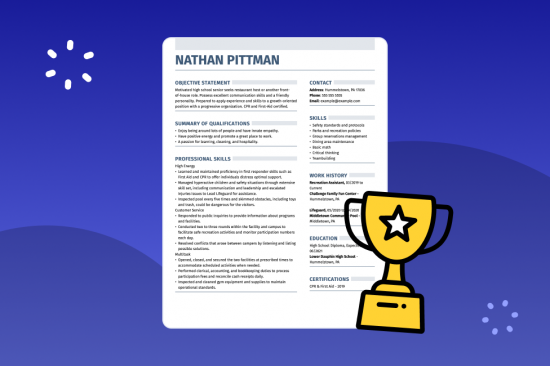
Canadian resume example
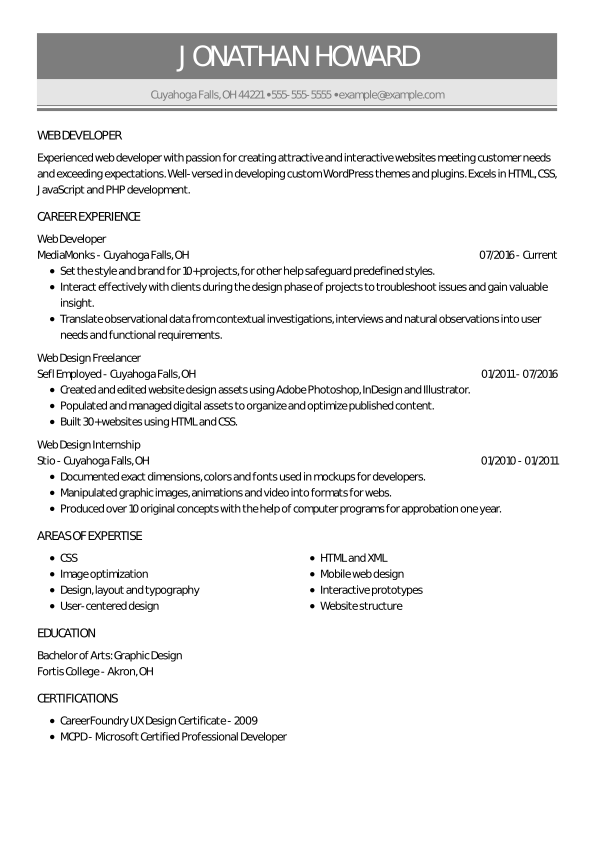
This example shows you what a Canadian-style resume looks like.
Why this resume works:
- Chronological format: This resume uses the reverse-chronological format, which is the most recognizable resume format for Canadian employers. It prioritizes the work history section by outlining the achievements most relevant to the position.
- Resume summary: Opens with a compelling resume summary that lists the job seekers’ most impressive skills and qualifications, capturing the recruiter’s attention.
- Action verbs: This resume utilizes action verbs and phrases that effectively and concisely communicate the applicant’s achievements.
- Customization: This resume is tailored with additional sections (Languages and Certifications) which provide added value to the applicant’s candidacy. Another way this resume achieves personalization is by adding keywords from the job description.
What’s the difference between a Canadian resume and a U.S. resume?
Canadian resumes and U.S. resumes are fundamentally the same. The main difference between a U.S. resume and a Canadian resume is the language.
Canada has two official languages: English and French. Therefore, if applying for a job in the province of Quebec (which includes major cities like Montreal and Quebec City), don’t be surprised if they expect you to submit a resume in French.
Also, although the Quebecois also speak English, you should still consider taking some French lessons if you’re considering applying for a job there. Being at least casually fluent in conversational French will significantly add value to your candidacy, especially when competing with other French-speaking Canadian applicants.
For everywhere else in Canada, English is the norm. But don’t think you can write your English resume as it is.
Before you hit submit, you should be mindful of spelling differences between the two countries. For example, they’ll use “colour” instead of “color” and “analyse” instead of “analyze.” When proofreading your resume, reference this list of common spelling differences between Canadian and American English.
How to write a Canadian resume
Canadian and U.S. resumes are fundamentally the same, so the following guide will serve as a quick refresher on how to write each resume section.
However, we’ll also include helpful tips to optimize your resume’s formatting and content to the Canadian job market and culture.
Let’s begin!
Step 1
Choose the right Canadian resume format
You can use three recruiter-approved resume formats to organize your resume: the chronological format, the functional format and the combination format.
Although you may find some of these formats in the Canadian job market, the chronological format is the best Canadian resume format since it’s the most popular and preferred by employers.
Paired with the fact that CVs are common in certain parts of Canada, like Quebec, the smartest choice is to opt for the reverse-chronological format most Canadian recruiters will be familiar with.
What is a chronological resume?
The chronological resume is the most common resume style there is. Its most important section is the work experience, which consists of a list of your jobs in reverse-chronological order. You’ll list your current job first, outline your main achievements, and continue backward to your first role.
The following steps will guide you through writing each section of your Canadian resume following the rules of the chronological format.
Step 2
Ensure your contact information has all the details a Canadian recruiter needs to know to contact you for a future interview.
Your contact information section should include:
- Your full name
- Email address
- Phone number
- Primary location (the city, state and country you reside)
- Portfolio, LinkedIn or professional social media accounts (optional)

Pro Tip
If you’re applying for a job intending to move to Canada, you should begin by focusing on remote jobs or those open to hiring foreign workers. Omitting your current location or lying about it won’t help you get the job if the company can legally only hire Canadian workers.
Example of a Canadian resume’s contact information:
Bertrand Ghesquière
example@example.com
555-555-5555
Buffalo, NY USA
Portfolio: www.ghesquieremarketingconsulting.com
Step 3
Introduce yourself in a resume summary
Following the contact information, you’ll want to include a resume summary that briefly introduces yourself to the employer by communicating your most relevant qualifications.
Some information you can include in your Canadian resume summary are:
- Job title
- Years of experience
- Required skills
- Unique achievements that demonstrate your expertise for the role
If you’re a non-Canadian aiming for relocation or applying for a remote position in Canada, you’d do well to explain your situation in a resume objective. You can find even more examples of job-specific resume objectives in our library.
Here’s an example of what to write if that’s your case:
“Results-driven IT specialist with six years of proven expertise in cybersecurity, bolstered company defenses, reducing cyber threats by 30%. Seeking a remote role in Canada to apply strategic cybersecurity skills and a track record of success in safeguarding digital assets.”
Pro Tip
Want to grab a recruiter’s attention quickly? Consider writing a punchy and brief
resume headline spotlighting your most job-relevant qualifications.
Step 4
Outline your achievements in the work experience section.
Your work experience will include a list of your current and previous roles in reverse-chronological order. This formatting allows recruiters to see your most relevant accomplishments first.
You must also outline your achievements for each job listed in your resume work experience section.
Some examples of accomplishments to list in your work experience include:
- Quantifiable achievements
- Projects and initiatives
- Instances where you exhibited leadership
- Successful deals with clients
- Training or development programs you imparted
In terms of formatting your Canadian work experience entries, ensure you mention the following:
- Job title
- Dates of employment
- Employer name
- Location of employment
Here’s an example of a work experience entry for a Canadian resume:
Pharmacy Technician
Walgreens Pharmacy | Toronto, ON
Jan 2020 – Present
- Process and dispense prescription medications accurately, maintaining high attention to detail and adherence to safety protocols.
- Assist in implementing a new inventory management system, resulting in a 15% reduction in dispensing errors and a more organized pharmacy workflow.
- Conduct patient education sessions on medication usage and provide friendly customer service, contributing to improved patient adherence rates and increased overall customer satisfaction.
Step 5
Carefully curate your resume skills
Your resume skills section will be a straightforward list of your most job-relevant soft and hard skills.
A Canadian resume skills section must be tailored to the job’s requirements.
Some of the most in-demand skills in the Canadian job market are:
- Project management
- Cloud Engineering
- Data analysis
- Cybersecurity
- Operations planning
- Business development
- Coding and Programming
- Digital Marketing
- Human resource management
- Accounting
Step 6
Showcase your educational background
A resume’s education section is your chance to list a relevant degree(s) and provide valuable context to potential Canadian employers.
If you’re an American-educated job seeker, Canadian employers might not be thoroughly familiar with your college or university. Therefore, you should expand your education section with additional details that provide more insight into the rigor of your studies.
For example, you can add:
- Your GPA
- Relevant coursework
- Research projects
- Your thesis project
Here’s an example of an education section for a Canadian resume:
Education
Master of Science in Computer Science | Ohio State University, Columbus, OH
GPA: 3.9/4.0
Relevant Coursework: Advanced Algorithms, Artificial Intelligence, Software Engineering, Machine Learning, Database Systems
Bachelor of Science in Computer Science | University of Cincinnati, Cincinnati, OH
GPA: 3.8/4.0
Relevant Coursework: Data Structures, Object-Oriented Programming, Web Development, Operating Systems, Software Testing and Quality Assurance
Step 7
Share more accomplishments with additional sections
You can further personalize your Canadian resume by including additional sections.
Enrich your resume by sharing achievements that demonstrate your tailor-made abilities for your desired role, even if they don’t strictly fit into the five original resume sections.
Some examples of additional sections you can include in your resume are:
Certifications and licenses
Adding a section for your certifications or licenses is a great way to validate your skill set to employers. For example, certain roles in health care require specific licenses, such as registered nurses or dental assistants. However, even if your role doesn’t require certifications, including yours in the resume shows commitment to the field and continuing education.
Honors and awards
A great way to stand out from other applicants, especially if you’re a student, is by highlighting honors and awards on your resume, such as being on the Dean’s List or receiving your department’s award for academic excellence.
Personal projects
If you have little formal work experience or are changing careers, including a section for personal projects will help you show employers that you’ve put your knowledge and skills to work.
For example, creating your professional website, starting a small business or developing an online class will demonstrate your technical skills to potential employers.
Publications
A publications section is mainly reserved for academics. If you’re applying for a teaching position in higher education or an academic research role, a list of your publications will show employers your peers deem your work highly relevant, which is something universities look for when hiring.
Volunteer work
Including volunteer work in your resume isn’t exclusive to job seekers in the nonprofit sector. This section can benefit you in demonstrating you’re a culture fit for the company.
If it comes down to you and another candidate with similar qualifications, showing you possess the same values as the company can sway hiring managers in your direction.
Languages
A language section in your resume is particularly relevant when applying for a job in Canada, where the two official languages are English and French.
While also being a country with a culturally diverse population, being multilingual can make you a valuable asset to many employers, especially in the health care sector.
Internships
Another way to beef up a lack of work experience is by featuring internships in a separate resume section. This strategy is great for recent graduates looking for their first job after school.
Remember to include one or two bullet points describing what you learned and accomplished in those experiences.
Now, you’re officially ready to write a Canadian resume and land your dream role! Although, instead of having to write it from scratch, you can use LiveCareer’s Resume Builder.
Our Builder will guide you through every step of the writing process and let you easily personalize each resume section. You’ll have a custom resume in the blink of an eye!
Canadian resume examples
Found your dream job in Canada and can’t wait to apply? Use these professional resume examples tailored for the most popular jobs in Canada. These Canadian resume samples already have the right skills, qualifications and experience. All you have to do is customize them with your details, and you’ll be landing an interview in no time.
Do’s and don’ts for a Canadian resume
Before submitting your resume, go through this checklist to ensure you’ve avoided common mistakes and included essential information for a successful Canadian resume.
Don’t use American-English spelling.Use “favour,” “colour” and “centre” instead of the American English version of these words. Embrace Canadian spelling preferences, such as “analyse” instead of “analyze” or “defence” instead of “defense.”
Don’t include a photo on your resume.Similar to U.S. standards, including a photo in your resume is discouraged in Canada. Avoid hiring bias because of gender, age or race by eliminating pictures and focusing only on your skills and qualifications.
Do use the metric system.Although this type of information rarely comes up when writing a resume, you should remember that Canada uses the metric system. In Canada, they use measurements in kilograms, meters and Celsius instead of pounds (lbs), feet (ft), ounces (oz) and Fahrenheit for temperature. This conversion chart references the equivalents between the metric and imperial systems.
Do change your date format to fit Canadian preferences.Canadian resumes adopt the day-month-year date format (DD/MM/YYYY), diverging from the month-day-year format prevalent in the U.S. Therefore, remember to change the date format when writing your work experience section or if you include graduation dates in your resume education.
Key takeaways
- When writing a Canadian resume, ensure you choose the best Canadian resume format: chronological. This format is the most familiar to Canadian recruiters.
- The first section you’ll include in your Canadian resume is the contact information, which should include your full name, phone number, email address and city, state and country of residence.
- Write a resume summary or objective statement where you introduce yourself with your top skills and qualifications. You can add a sentence explaining you’re a foreigner looking to relocate to Canada.
- Outline your most relevant achievements in your work experience section. List each job in reverse-chronological order and mention your job title, employer, employment dates, and location.
- Carefully choose your resume skills based on the job requirements. Ensure you’re showing skills that meet the employer’s needs for the role.
- Include an education with your degree(s) and university name. Feel free to add additional information, such as your GPA or relevant coursework, to provide more context to Canadian employers.
- Customize your resume with additional sections like certifications, publications, volunteer work, internships, hobbies and interests. Only add these sections if they provide value to the recruiter. Never overstuff your resume.
- Remember that Canadian English has different spelling rules than American English, which you should follow to make a good first impression. For example, use “favour” instead of “favor.”
- When listing dates in your resume, particularly in the work experience and education sections, remember to use the DD/MM/YYYY format instead of Americans’ month-day-year format.
Frequently Asked Questions
What not to include in a Canadian resume?
In a Canadian resume, it’s advisable to exclude personal details such as age, marital status and nationality. Focus on professional information and qualifications to present a concise and relevant document to potential employers.
Do Canadians use resumes or CVs?
In Canada, resumes are the standard document for job applications. While CVs (curriculum vitae) are used in academic and research settings, “resume” is more commonly employed for non-academic job applications. Tailoring your document to Canadian resume conventions is essential for an effective job search.
How can I write a Canadian resume as an international student?
When crafting a Canadian resume as an international student, adhere to Canadian spelling and language conventions, including British English preferences. Highlight relevant academic achievements, extracurricular activities and any work experience in Canada. Emphasize transferable skills and showcase your adaptability and cultural awareness.
How can I explain that I’m a foreigner in my Canadian resume?
Applying for a job in Canada (or any other country, for that matter) comes with a unique set of challenges. Although you can use your resume summary or objective statement to briefly mention you’re applying for a job in Canada as a foreigner, it’s better to utilize a cover letter to explain your current situation.
Because of the resume’s brevity, you might not be able to explain fully your motives for applying for a particular job. However, with the help of our cover letter examples, you can easily share more details about your plans after landing this job, whether your goal is relocating or transitioning to a fully remote work life.
What are co-op programs for students in Canada?
Co-op programs in Canada provide students with valuable hands-on work experience related to their field. These programs typically alternate periods of academic study with paid work terms. Co-op experiences allow students to apply theoretical knowledge in real-world settings, build industry connections, and enhance employability upon graduation.
How We Reviewed This Article
Over the past 15 years, we’ve helped more than 10 million job seekers build stronger cover letters, discover their career paths, interview confidently, and boost their chances of finding the right job faster. Review our Editorial Policy to learn more about our process.
About the Author
Gabriela Hernandez • CPRW, Career Advice Writer
Gabriela is a Certified Professional Resume Writer (CPRW) and member of the Professional Association of Resume Writers & Career Coaches. She focused on helping job seekers improve their professional resumes to highlight their unique skills and experience. Gabriela holds a BA in journalism from the University of Puerto Rico and brought more than four years of specialized experience to helping candidates navigate the complexities of the online job market, with a strong focus on resume optimization and effective self-presentation.
Ready to
land the job?
Join 28M+ others who’ve built a resume that works.



 Add LiveCareer as a preferred source on Google