Hard skills are specific, quantifiable abilities like data analysis, regulatory compliance, and fraud detection techniques that a fraud specialist must master.
Fraud Specialist Resume Examples & Templates
Ready to boost your career? Our fraud specialist resume examples highlight critical skills like investigation techniques and analytical abilities that will help you stand out to employers.

by Gabriela Hernandez, Last Updated: January 29, 2026
Hired By:*

- Popular Fraud Specialist Resume Examples
- Resume Template—Easy to Copy & Paste
- Build Your Resume in Minutes
- How to Write a Fraud Specialist Resume Summary
- Showcasing Your Work Experience
- Top Skills to Include on Your Resume
- Resume Format Examples
- Related Management Resume Examples
- Frequently Asked Questions
- Should I include a cover letter with my fraud specialist resume?
- Can I use a resume if I’m applying internationally, or do I need a CV?
- What soft skills are important for fraud specialists?
- I’m transitioning from another field. How should I highlight my experience?
- Where can I find inspiration for writing my cover letter as a fraud specialist?
- Should I include a personal mission statement on my fraud specialist resume?
Popular Fraud Specialist Resume Examples
Check out our top fraud specialist resume examples that emphasize key skills like analytical thinking, attention to detail, and investigative expertise. These examples illustrate how to effectively showcase your accomplishments in the field.
Ready to build your own impressive resume? Our Resume Builder offers user-friendly templates specifically designed for fraud specialists, helping you make a strong impression on potential employers.
Recommended
 Customize This Resume
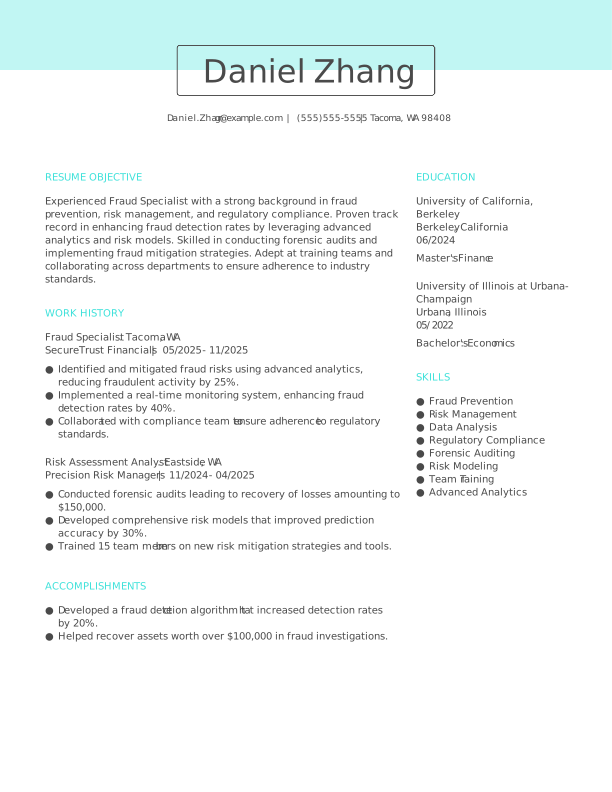
Entry-level fraud specialist resume
What this resume does well:
This entry-level resume for a fraud specialist effectively highlights the job seeker's expertise in fraud prevention and risk management. It showcases tangible achievements such as reducing fraudulent activity by 25% and improving fraud detection rates by 40%. New professionals in this field must demonstrate analytical skills, relevant certifications, and a proactive approach to risk assessment to appeal to potential employers despite limited experience.
Mid-career fraud specialist resume
What this resume does well:
This resume effectively showcases qualifications that demonstrate the applicant's expertise in fraud prevention and risk management. Clear metrics illustrate their accomplishments, indicating readiness for leadership roles and more complex challenges in fraud analysis.
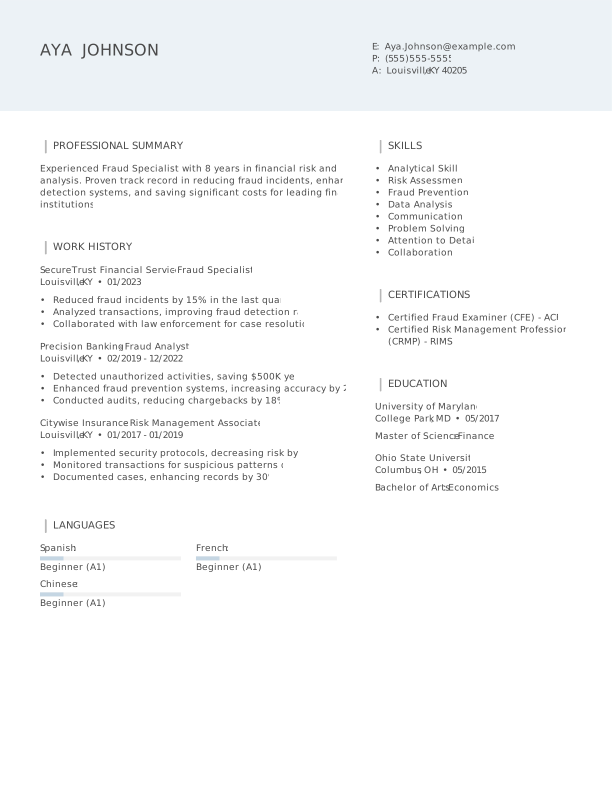
Experienced fraud specialist resume
What this resume does well:
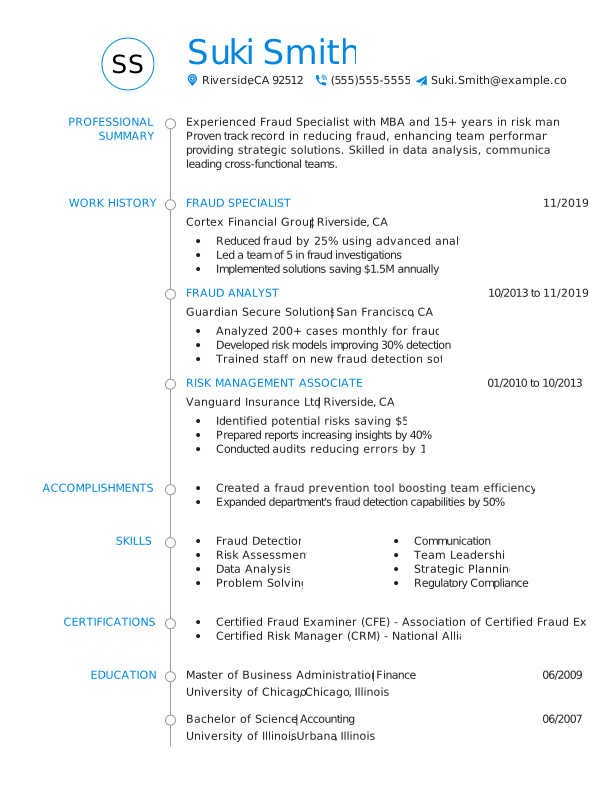
The work history section showcases the applicant's extensive expertise as a fraud specialist, emphasizing their impact by reducing fraud by 25% and implementing solutions that saved $1.5M annually. The bullet point format improves readability, making it easy for hiring managers to identify key accomplishments quickly.
Resume Template—Easy to Copy & Paste
Example
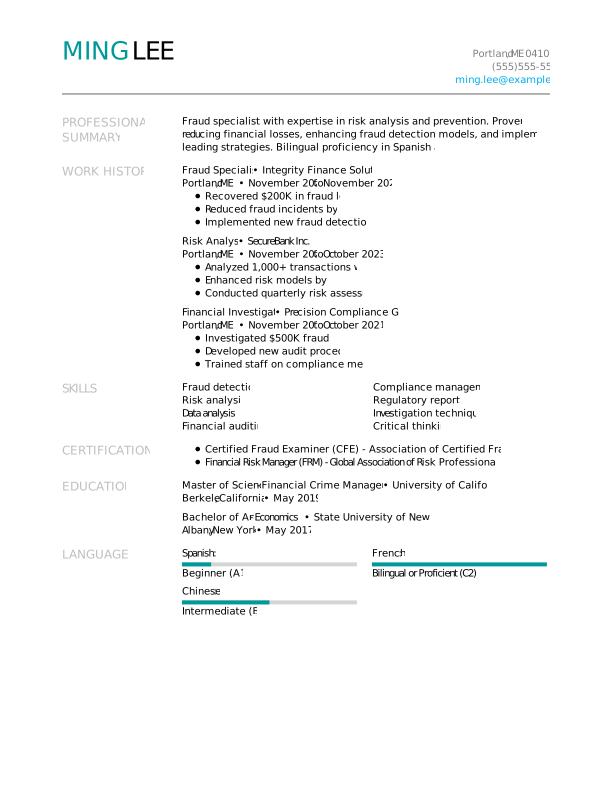
Ming Lee
Portland, ME 04106
(555)555-5555
Ming.Lee@example.com
Professional Summary
Fraud specialist with expertise in risk analysis and prevention. Proven track record of reducing financial losses, enhancing fraud detection models, and implementing industry-leading strategies. Bilingual proficiency in Spanish and French.
Work History
Fraud Specialist
Integrity Finance Solutions - Portland, ME
November 2023 - November 2025
- Recovered 200K in fraud losses
- Reduced fraud incidents by 30%
- Implemented new fraud detection tools
Risk Analyst
SecureBank Inc. - Portland, ME
November 2021 - October 2023
- Analyzed 1,000+ transactions weekly
- Enhanced risk models by 15%
- Conducted quarterly risk assessments
Financial Investigator
Precision Compliance Group - Portland, ME
November 2019 - October 2021
- Investigated 0K fraud case
- Developed new audit procedures
- Trained staff on compliance measures
Skills
- Fraud detection
- Risk analysis
- Data analysis
- Financial auditing
- Compliance management
- Regulatory reporting
- Investigation techniques
- Critical thinking
Certifications
- Certified Fraud Examiner (CFE) - Association of Certified Fraud Examiners
- Financial Risk Manager (FRM) - Global Association of Risk Professionals
Education
Master of Science Financial Crime Management
University of California Berkeley, California
May 2019
Bachelor of Arts Economics
State University of New York Albany, New York
May 2017
Languages
- Spanish - Beginner (A1)
- French - Bilingual or Proficient (C2)
- Chinese - Intermediate (B1)
Build Your Resume in Minutes
Creating a custom resume is easier than ever with our Resume Builder!
How to Write a Fraud Specialist Resume Summary
Your resume summary is the first thing employers will see, making it important for creating a lasting impression. This section should effectively showcase your qualifications and highlight your expertise in detecting and preventing fraudulent activities.
As a fraud specialist, you need to emphasize your analytical skills, attention to detail, and knowledge of regulatory compliance. Employers are looking for applicants who can demonstrate their ability to mitigate risks and protect company assets.
To help you craft a powerful summary, consider these examples that illustrate what works well and what may fall short:
Weak Example
I am a dedicated fraud specialist with years of experience and skills in detecting fraudulent activities. I aim to find a position where I can use my expertise to help the company succeed. A role that offers personal development and flexibility is greatly appreciated. I believe I would be an asset to the team if given the chance.
Why this summary misses the mark:
- Lacks specific examples of achievements or skills relevant to fraud detection, making it vague
- Overuses personal language, which detracts from professionalism and effectiveness
- Emphasizes what the job seeker seeks instead of highlighting their unique contributions to potential employers
Strong Example
Detail-oriented fraud specialist with 7+ years of experience in financial crime investigation and risk assessment. Successfully identified and reduced fraudulent transactions by 30% through the implementation of advanced data analytics and fraud detection systems. Proficient in forensic accounting, regulatory compliance, and using software tools such as ACL and SAS for comprehensive analysis.
Why this summary works:
- Starts with precise experience duration and area of expertise
- Includes measurable achievements that reflect significant contributions to fraud prevention
- Highlights relevant technical skills that are important for success in the role

Pro Tip
If you're entering the fraud specialist field without extensive experience, consider using a career objective. This approach highlights your goals and enthusiasm. Many resume objective examples are available to help you craft a compelling statement that stands out.
Showcasing Your Work Experience
The work experience section is important for your resume as a fraud specialist and will contain the bulk of your content. A good resume template always emphasizes this area to highlight your relevant experience.
This section should be organized in reverse-chronological order, detailing your previous roles. Use bullet points to showcase your accomplishments and specific contributions in each position.
Now, let’s look at some examples that illustrate effective work history entries for fraud specialists. These examples will help you identify what works well and what should be avoided:
Weak Example
Fraud Specialist
XYZ Financial Services – New York, NY
- Reviewed transactions for potential fraud.
- Documented findings and reported to management.
- Collaborated with team members on investigations.
- Maintained records of suspicious activities.
Why this work experience section misses the mark:
- No specifics about the types of fraud investigated
- Bullet points lack measurable achievements or results
- Focus is on routine tasks rather than compelling contributions
Strong Example
Fraud Specialist
Secure Finance Inc. – Austin, TX
March 2020 - Current
- Investigate fraudulent activities, leading to a recovery of over $500,000 in losses through careful analysis and reporting.
- Develop and implement fraud detection strategies that reduced false positive alerts by 30%, improving operational efficiency.
- Train and mentor new team members on best practices for fraud prevention, fostering a culture of vigilance and compliance.
Why this work experience section works:
- Each bullet starts with a powerful action verb that clearly communicates the job seeker's impact
- Incorporates specific financial metrics to quantify achievements, showcasing value to the employer
- Highlights relevant skills such as investigation and training, aligning with the responsibilities of a fraud specialist
While your resume summary and work experience are important, don’t overlook other important sections. Each part of your resume plays a role in showcasing your skills and qualifications. For more detailed guidance, be sure to check out our comprehensive guide on how to write a resume.
Top Skills to Include on Your Resume
A well-defined skills section is important for any effective resume. It allows you to effectively showcase your qualifications and immediately catch the attention of potential employers.
As a fraud specialist, highlight hard skills, soft skills, and technical skills. Emphasize your skill with tools like SQL, data analysis software, and fraud detection systems to demonstrate your capability in the field.
Soft skills, such as critical thinking, attention to detail, and effective communication, are essential for identifying fraudulent activities and collaborating with teams to implement preventive measures.
When selecting skills for your resume, it's important to align them with what employers expect from an ideal job seeker. Many organizations use automated screening systems that filter out applicants lacking essential resume skills.
To improve your chances of being noticed, carefully review job postings for insights on the specific skills recruiters are seeking. This approach will help you tailor your resume effectively, ensuring it resonates with both hiring managers and ATS filters.
Pro Tip
To ensure your resume stands out to employers, use our ATS Resume Checker. It can identify over 30 common mistakes, helping you navigate applicant tracking software with ease.
10 skills that appear on successful fraud specialist resumes
Highlighting key skills on your resume can significantly increase your chances of attracting the attention of recruiters in the fraud prevention field. Our resume examples showcase these essential skills, showing you how to present yourself confidently to potential employers.
Here are 10 valuable skills you should consider incorporating into your resume if they align with your experience and job specifications:
Analytical thinking
Attention to detail
Problem-solving
Communication skills
Technical skill in data analysis tools
Risk assessment abilities
Fraud detection techniques
Knowledge of compliance regulations
Team collaboration
Adaptability
Based on analysis of 5,000+ management professional resumes from 2023-2024
Resume Format Examples
Selecting the appropriate resume format is important for a fraud specialist, as it showcases your analytical skills, relevant experience, and professional growth in combating fraudulent activities.
Entry-Level 0 - 2 years
Functional
Focuses on skills rather than previous jobs

Best for:
Recent graduates and career changers with up to two years of experience
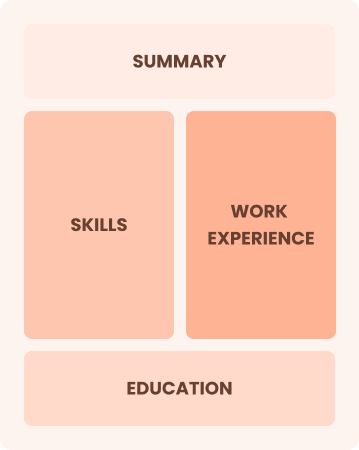
Mid-Career 3 - 7 years
Combination
Balances skills and work history equally
Best for:
Mid-career professionals focused on advancing their careers
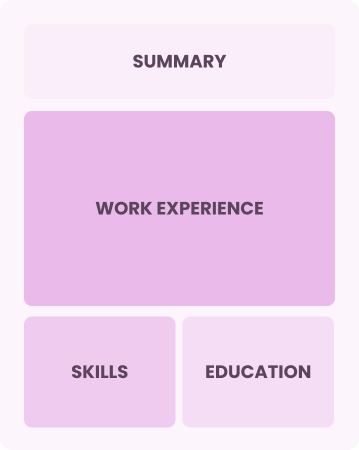
Experienced 8+ years
Chronological
Emphasizes work history in reverse order
Best for:
Experts in detecting and preventing complex financial fraud
Frequently Asked Questions
Should I include a cover letter with my fraud specialist resume?
Absolutely, including a cover letter is a great way to improve your application. It allows you to showcase your unique qualifications and convey your enthusiasm for the position. If you're looking for assistance, our comprehensive guide on how to write a cover letter can be incredibly beneficial. Additionally, consider using our Cover Letter Generator for a quick and effective way to create one tailored to the job you want.
Can I use a resume if I’m applying internationally, or do I need a CV?
When applying for jobs abroad, a CV is often required instead of a resume. A CV provides a comprehensive overview of your academic and professional history. For guidance on how to write a CV, explore our detailed resources. Additionally, you can review various CV examples to help you craft an effective document.
What soft skills are important for fraud specialists?
Soft skills like critical thinking, communication, and attention to detail are essential for fraud specialists. These interpersonal skills enable effective collaboration with colleagues and clients, fostering trust and improving investigations that prevent fraudulent activities.
I’m transitioning from another field. How should I highlight my experience?
When applying for fraud specialist positions, highlight transferable skills such as analytical thinking, attention to detail, and effective communication. These abilities illustrate your potential value even if you lack direct experience in fraud analysis. Use concrete examples from previous roles to show how your problem-solving skills can effectively address challenges in this field.
Where can I find inspiration for writing my cover letter as a fraud specialist?
For those applying for fraud specialist positions, exploring professional cover letter examples can be invaluable. These samples offer inspiration for content ideas and formatting tips, helping you effectively showcase your qualifications and tell your unique career story in a compelling way.
Should I include a personal mission statement on my fraud specialist resume?
Yes, including a personal mission statement on your resume is advisable. It effectively showcases your values and dedication to combating fraud. This approach works especially well for organizations that prioritize integrity and compliance within their company culture.




Ready to land the job?
Join 28M+ others who've built a resume that works.