What to Know
- Resume action verbs describe accomplishments, contributions, and skills, using words such as “led,” “developed,” and “improved.”
- Strong resume bullet points pair an accurate action verb with a specific contribution and, when possible, a measurable result.
- Action verbs can demonstrate skills such as leadership, communication, problem-solving, technical expertise, and customer service.
- The best action verbs reflect actual responsibilities and achievements rather than simply sounding impressive.
The difference between “responsible for managing projects” and “led five projects to completion ahead of schedule” comes down to more than a few words. One describes a responsibility; the other shows what you accomplished.
Strong action verbs help employers understand your contributions, skills, and results without having to read between the lines. But choosing the right verb isn't always easy. Should you say you managed, coordinated, or supervised a project?
This guide goes beyond a list of synonyms, organizing 200+ action verbs by accomplishments and skills. You'll also find practical examples and tips for writing clear, specific, accomplishment-focused resume bullet points.
What Are Action Verbs for a Resume?
Action verbs for a resume are specific words that describe your work, achievements, and contributions. Words like “led,” “developed,” “resolved,” and “increased” show employers what you did, rather than simply listing the tasks you were assigned.
Unlike vague phrases such as “responsible for,” “worked on,” or “helped with,” action verbs clarify your contribution and demonstrate skills through your experience.
For example, compare these resume bullet points:
- Weak: Responsible for customer satisfaction issues.
- Strong: Resolved 50+ customer inquiries daily, improving satisfaction scores by 18%.
The stronger example identifies a specific contribution, shows the scope of the work, and highlights a measurable result.
Also called resume power words, action verbs should make your achievements clearer and more specific—not more dramatic than they were.
A strong bullet point typically follows this simple structure:
Action verb + specific contribution + measurable result
Not every accomplishment needs a number, but every bullet should help employers understand the value of your work.
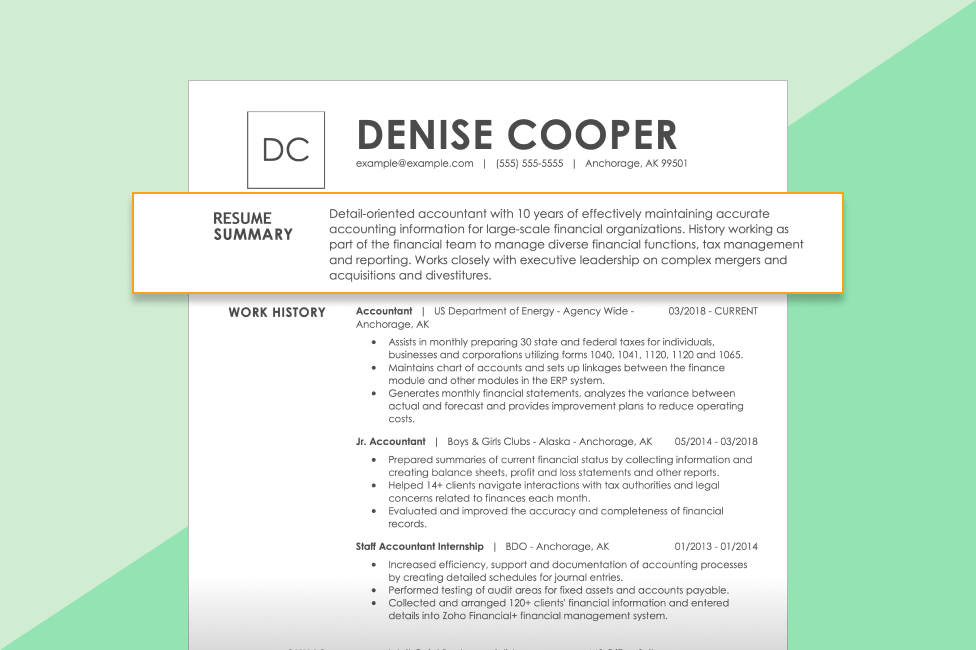
Choose action words that reflect what you did and the skills most relevant to your target role. While they're most useful in work experience bullet points, action verbs can also strengthen your professional summary, resume headline, and objective statement by highlighting specific contributions.
Action Verbs for Resume Accomplishments
The best action verbs for resume accomplishments describe what you achieved, from leading a team to increasing revenue or solving a problem. Choose verbs that match your contribution and add details that show its impact.
Led a Project or Team
Leadership action verbs describe how you’ve guided people, managed resources, or taken responsibility for completing important work. Words such as “led,” “supervised,” “coordinated,” and “mentored” can demonstrate different levels of leadership. They’re useful for managers and team leaders, but also for employees who have directed projects without holding formal management titles.
Examples of action verbs:
Led, directed, spearheaded, coordinated, supervised, delegated, mentored, orchestrated, oversaw, guided, chaired, facilitated, organized, assigned, coached, motivated, mobilized, administered, managed, headed
Resume examples:
- Led a team of eight employees to complete a department-wide software transition two weeks ahead of schedule.
- Coordinated five cross-functional projects, ensuring all deliverables met quality standards and deadlines.
Started or Created Something
Action verbs for creating or launching something highlight your initiative, innovation, and ability to turn ideas into results. Words such as “launched,” “developed,” and “established” can describe new products, programs, systems, or processes. Choose the verb that reflects whether you originated an idea, built something new, or introduced it to others.
Examples of action verbs:
Launched, developed, founded, designed, created, pioneered, established, initiated, introduced, originated, invented, formulated, built, constructed, instituted, conceived, devised, generated, produced, assembled
Resume examples:
- Launched an employee onboarding program that reduced new-hire training time by 25%.
- Developed a customer feedback system that collected more than 500 responses in its first quarter.
Increased Sales, Revenue, or Growth
When you’ve contributed to business growth, choose verbs that describe how you generated revenue, attracted customers, or expanded operations. These words work especially well for marketing, business development, and sales resumes, where you can often measure results through revenue, conversions, or customer acquisition.
Examples of action verbs:
Increased, generated, accelerated, expanded, grew, boosted, converted, secured, acquired, maximized, exceeded, captured, promoted, upsold, retained, cultivated, attracted, advanced, elevated, multiplied
Resume examples:
- Generated $250,000 in new annual revenue by securing 15 business accounts.
- Increased email conversion rates by 22% through targeted campaigns and audience segmentation.
Reduced Costs or Improved Efficiency
Action verbs for reducing costs or improving efficiency show how you’ve saved time, lowered expenses, or made better use of resources. Words such as “streamlined,” “consolidated,” and “automated” demonstrate your ability to improve operations. Pair them with specific results, such as reduced processing time, lower operating costs, or increased productivity.
Examples of action verbs:
Reduced, streamlined, optimized, consolidated, automated, eliminated, expedited, minimized, simplified, standardized, shortened, conserved, economized, integrated, systematized, reorganized, accelerated, prioritized, centralized, upgraded
Resume examples:
- Streamlined inventory tracking procedures, reducing weekly administrative work by six hours.
- Consolidated vendor contracts, cutting annual operating expenses by $35,000.
Changed or Improved a Process
Process improvement action verbs describe how you’ve made an existing system, workflow, or procedure more effective. Words such as “streamlined,” “modernized,” and “redesigned” help employers understand the changes you introduced. Pair them with details about improved accuracy, reduced delays, better performance, or other meaningful results.
Examples of action verbs:
Improved, revamped, restructured, modernized, transformed, refined, redesigned, enhanced, updated, revised, adapted, rebuilt, reengineered, revitalized, modified, strengthened, overhauled, refreshed, reconfigured, reconstructed
Resume examples:
- Redesigned the employee scheduling process, reducing shift conflicts by 40%.
- Modernized recordkeeping procedures to improve data accuracy and simplify monthly reporting.
Solved a Problem or Overcame a Challenge
Problem-solving action verbs describe how you’ve identified challenges, investigated issues, and implemented solutions. Words such as “resolved,” “diagnosed,” “corrected,” and “prevented” can demonstrate analytical thinking and sound judgment. They’re particularly useful for technical, customer-facing, and operational roles where troubleshooting and effective decision-making are essential.
Examples of action verbs:
Resolved, diagnosed, addressed, identified, corrected, mitigated, prevented, troubleshot, investigated, repaired, reconciled, restored, uncovered, detected, remedied, debugged, rectified, fixed, contained, safeguarded
Resume examples:
- Diagnosed recurring network connectivity issues and implemented a solution that reduced system downtime by 30%.
- Resolved an average of 45 customer complaints weekly while maintaining a 96% satisfaction rating.
Communicated, Negotiated, or Built Relationships
Action verbs for communication and relationship-building show how you’ve shared information, influenced decisions, or collaborated with others. Words such as “presented,” “negotiated,” “advised,” and “mediated” demonstrate valuable soft skills, including persuasion, teamwork, and conflict resolution. Choose verbs that reflect your contribution to professional relationships, discussions, or negotiations.
Examples of action verbs:
Negotiated, presented, persuaded, advised, collaborated, briefed, mediated, facilitated, consulted, advocated, communicated, influenced, represented, articulated, conveyed, liaised, counseled, informed, corresponded, engaged
Resume examples:
- Negotiated revised supplier agreements, securing a 15% discount on annual purchasing costs.
- Presented quarterly performance reports to senior leadership, helping guide department budgeting decisions.
Strong Action Verbs by Resume Skill
Action verbs can demonstrate skills such as leadership, communication, problem-solving, and technical expertise. Use this skill-based list to find words that reflect how you’ve applied those skills in practice.
Management & Leadership Skills
Management resumes with leadership verbs show how you guided employees, organized resources, or supported team performance. Choose words that reflect your actual responsibilities, from supervising staff to managing projects or coaching colleagues.
Examples of action verbs:
Directed, managed, coached, delegated, motivated, supervised, mentored, empowered, trained, assigned, organized, administered, guided, oversaw, instructed, inspired, monitored, recruited, evaluated, facilitated
Resume example:
- Coached six new employees on customer service procedures, helping reduce onboarding errors by 20%.
Communication & Interpersonal Skills
Communication and interpersonal skills can be demonstrated through verbs that show how you shared information, collaborated, and built relationships. Words such as “presented,” “negotiated,” and “mediated” can demonstrate public speaking, persuasion, and conflict resolution. Choose verbs that reflect your role and the outcome.
Examples of action verbs:
Communicated, presented, negotiated, advocated, consulted, collaborated, articulated, conveyed, persuaded, mediated, corresponded, clarified, briefed, interviewed, reported, counseled, translated, influenced, documented, summarized
Resume example:
- Presented monthly project updates to 25 stakeholders, improving communication across three departments.
Analytical, Research, & Problem-Solving Skills
Analytical and research verbs show how you gathered information, evaluated evidence, and solved problems. Words such as “analyzed,” “investigated,” “assessed,” and “verified” demonstrate critical thinking and attention to detail, particularly in roles that require evidence-based decisions.
Examples of action verbs:
Analyzed, evaluated, investigated, interpreted, assessed, diagnosed, researched, examined, verified, tested, measured, forecasted, modeled, calculated, compared, audited, inspected, quantified, validated, synthesized
Resume example:
- Analyzed customer purchasing patterns to identify three opportunities for improving product availability.
Technical & Operational Skills
Technical and operational verbs show how you applied specialized skills, managed systems, or completed technical tasks. Pair them with relevant tools and results to demonstrate your expertise.
Examples of action verbs:
Programmed, engineered, configured, automated, implemented, maintained, installed, deployed, integrated, upgraded, debugged, troubleshot, calibrated, operated, repaired, assembled, secured, tested, coded, customized
Resume example:
- Automated weekly data reporting using Python, reducing manual processing time by four hours per week.
Creative & Innovation Skills
Creative action verbs show how you developed ideas, produced original work, or introduced new approaches. Words such as “designed,” “conceptualized,” “created,” and “innovated” demonstrate creativity and initiative in fields such as design, marketing, writing, and product development.
Examples of action verbs:
Designed, conceptualized, developed, created, pioneered, transformed, illustrated, drafted, produced, visualized, rendered, prototyped, crafted, composed, edited, reimagined, branded, storyboarded, animated, innovated
Resume example:
- Designed a new series of digital advertisements that increased campaign engagement by 28%.
Customer Service & Support
Demonstrate customer service skills with verbs that show how you answered questions, resolved concerns, and improved customer experiences in retail, hospitality, healthcare, administrative, and other client-facing roles.
Examples of action verbs:
Assisted, advised, resolved, guided, supported, educated, accommodated, reassured, responded, recommended, escalated, clarified, anticipated, welcomed, listened, informed, explained, counseled, served, followed up, advocated, addressed, delivered, retained, satisfied
Resume example:
- Guided 30+ customers daily through product selection, contributing to a 15% increase in repeat purchases.
Action Verbs for Different Resume Situations
You can use strong action verbs even without extensive professional experience or a management title. School projects, internships, volunteer work, and everyday responsibilities can all demonstrate valuable skills.
Career Changers
Career changers can highlight transferable skills with verbs such as “coordinated,” “analyzed,” “trained,” and “managed.” Focus on contributions relevant to the target role, even when they come from a different industry.
Resume example:
- Coordinated daily schedules for 20 employees, demonstrating organizational and project management skills.
Entry-Level & Student Resumes
Entry-level candidates and students can use verbs such as “researched,” “presented,” “organized,” and “developed” to highlight accomplishments from internships, coursework, extracurricular activities, and school projects in their education section. Include the scope of your work and its results when possible.
Resume example:
- Analyzed consumer trends for a semester-long marketing project and presented three recommendations to a class of 30 students.
Volunteer & Nonprofit Experience
Volunteer experience can demonstrate leadership, organization, communication, and teamwork. Verbs such as “organized,” “recruited,” “coordinated,” and “supported” help describe your contribution. Include specific activities, people served, or measurable outcomes when possible.
Resume example:
- Organized a community donation drive that collected 500 school supplies for local families.
Resumes With Limited Professional Experience
If you have limited professional experience, use verbs such as “managed,” “organized,” “created,” and “maintained” to highlight contributions from part-time work, personal projects, family businesses, or other responsibilities. Describe your actual accomplishments without exaggerating your role.
Resume example:
- Managed weekly inventory and customer transactions for a family-owned retail business.
How to Choose & Use Action Verbs in Resume Bullet Points
Start each resume bullet with an accurate action verb, explain your contribution, and add context and measurable results when possible. Prioritize clarity and accuracy over impressive-sounding language.
Start With a Strong, Accurate Verb
Begin each work experience bullet with a verb that describes your contribution. Replace vague openings such as “responsible for,” “worked on,” or “helped with” when a more precise description is possible.
For example:
- Before: Responsible for training new employees.
- After: Trained 12 new employees on company procedures and customer service standards.
Here's another example:
- Before: Helped organize the company’s annual fundraising event.
- After: Coordinated volunteer schedules and outreach for an annual fundraising event attended by 200 guests.
The revised versions immediately show what you did and provide useful context.
Add Context & Results
Strong resume bullets combine an action verb with context and results. Explain what you did, who or what benefited, and what changed. Quantify achievements such as revenue increases, time savings, or customer satisfaction when possible. If exact numbers aren't available, describe the outcome without inventing metrics.
Use this formula when writing your bullet points:
Action verb + what you did + measurable result
For example:
- Before: Worked on improving customer service.
- After: Implemented a new customer feedback process, increasing satisfaction scores by 15%.
Choose Precise Verbs That Match Your Contribution
Choose verbs that accurately reflect your responsibilities and level of involvement. “Managed” can describe overseeing a project or budget, while “supervised” suggests direct oversight of people. “Created” emphasizes producing something new, “developed” suggests building or improving it, and “optimized” implies improving efficiency or performance.
Use the Right Tense & Job-Specific Language
Use past-tense action verbs for previous positions and completed accomplishments. For current roles, use present tense for ongoing responsibilities and past tense for completed projects.
Compare these examples:
- Current responsibility: Manage scheduling for a team of 15 employees.
- Completed achievement: Redesigned the scheduling system, reducing overtime costs by 12%.
Review the job description for relevant skills and resume keywords. For instance, if an employer emphasizes data analysis, project coordination, or customer retention, highlight matching experience using accurate language.
Using terms from the job description helps your resume reflect the qualifications employers seek and can also improve parsing by applicant tracking systems (ATS). But remember, the strongest action verbs for resume bullet points are the ones that describe your actual contributions clearly.
Ready to put these action verbs to work? LiveCareer's Resume Builder can help you create a resume with content suggestions tailored to your experience. Once you’ve updated your bullet points, use our Resume Checker to review your resume for potential issues with formatting, wording, and other common mistakes.
Key Takeaways
- Start resume bullet points with strong, accurate action verbs.
- Focus on your accomplishments and contributions, not just your responsibilities.
- Choose verbs that reflect the skills or results you want to highlight.
- Add specific context and measurable results whenever possible.
- Use relevant keywords from the job description naturally.
- Keep verb tense consistent across your work history.
- Replace vague phrases such as “responsible for,” “worked on,” and “helped” with more precise descriptions of your contributions.
- Prioritize accuracy and clarity over flashy language or unusual synonyms.
Frequently Asked Questions
What are the best action verbs for a resume?
The best action verbs for a resume accurately describe your accomplishments, skills, and contributions. Examples include “led,” “developed,” “increased,” “improved,” “analyzed,” and “resolved.” Choose verbs that fit your experience and target role. For example, use “led” for directing a project, “analyzed” for evaluating information, or “streamlined” for improving a process. Pair each verb with details that demonstrate what you accomplished.
How many action words should be on a resume?
There’s no required number of action words for a resume. Start most work experience bullet points with a strong verb that describes your contribution. You don't need a different verb in every bullet, but varying your wording helps avoid repetition. Focus on quality over quantity, ensuring each bullet communicates a meaningful responsibility, contribution, or achievement relevant to the job you're targeting.
What is a stronger word for “responsible for” on a resume?
Stronger alternatives to “responsible for” on a resume include “managed,” “led,” “coordinated,” “supervised,” “developed,” and “maintained.” Choose a verb that reflects your actual contribution. Instead of writing “Responsible for employee schedules,” for example, write “Coordinated weekly schedules for 20 employees.” This wording clarifies your role and shows the scope of your work.
What are strong action verbs for leadership on a resume?
Strong leadership action verbs for a resume include “led,” “directed,” “managed,” “supervised,” “mentored,” “coached,” “delegated,” “motivated,” “coordinated,” and “spearheaded.” Choose verbs that match your responsibilities. “Supervised a team of six employees” shows direct oversight, while “Coordinated a cross-functional project” demonstrates leadership without implying formal management authority. Add measurable results when possible to show your impact.
What can I say instead of “helped” or “assisted” on a resume?
Alternatives to “helped” or “assisted” on a resume include “supported,” “collaborated,” “coordinated,” “facilitated,” “contributed,” “guided,” and “advised.” Choose a verb that reflects your actual role. Instead of “Helped with a fundraising event,” write “Coordinated volunteer schedules for a fundraising event attended by 200 guests” if that accurately describes your contribution. If you played a supporting role, “assisted” may be the most appropriate choice.
How We Reviewed This Article
Over the past 15 years, we’ve helped more than 10 million job seekers build stronger cover letters, discover their career paths, interview confidently, and boost their chances of finding the right job faster. Review our Editorial Policy to learn more about our process.
About the Author
Megan Dawkins • Career Advice Editor
Megan is a career advice editor. She focuses on helping job seekers improve their professional resumes to highlight their unique skills and experience. Megan holds a BA in film studies with a minor in English and brings nine years of specialized experience to helping candidates navigate the complexities of the online job market, with a strong focus on resume optimization and effective self-presentation.
Follow 
Ready to
land the job?
Join 28M+ others who’ve built a resume that works.



 Add LiveCareer as a preferred source on Google