Hard skills are technical abilities such as evidence collection, forensic analysis, and skill in laboratory techniques essential for accurate crime scene investigation.
Forensic Scientist Resume Examples & Templates
Ready to boost your career? Our forensic scientist resume examples showcase key skills like evidence analysis and attention to detail, helping you stand out to employers in this exciting field.

by Gabriela Hernandez, Last Updated: January 18, 2026
Hired By:*

- Popular Forensic Scientist Resume Examples
- Resume Template—Easy to Copy & Paste
- Build Your Resume in Minutes
- How to Write a Forensic Scientist Resume Summary
- Showcasing Your Work Experience
- Top Skills to Include on Your Resume
- Resume Format Examples
- Related Sciences Resume Examples
- Frequently Asked Questions
- Should I include a cover letter with my forensic scientist resume?
- Can I use a resume if I’m applying internationally, or do I need a CV?
- What soft skills are important for forensic scientists?
- I’m transitioning from another field. How should I highlight my experience?
- How should I format a cover letter for a forensic scientist job?
- Should I include a personal mission statement on my forensic scientist resume?
Popular Forensic Scientist Resume Examples
Discover our top forensic scientist resume examples that emphasize critical skills such as evidence analysis, laboratory techniques, and attention to detail. These samples illustrate how to effectively showcase your accomplishments in the field.
Ready to build a remarkable resume? Our Resume Builder offers user-friendly templates specifically designed for forensic professionals, helping you make a strong impression on potential employers.
Recommended
 Customize This Resume
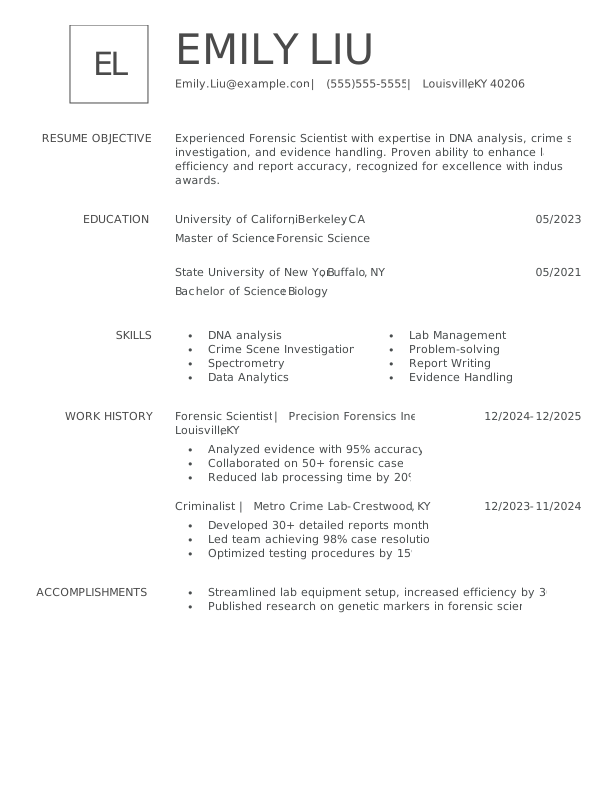
Entry-level forensic scientist resume
What this resume does well:
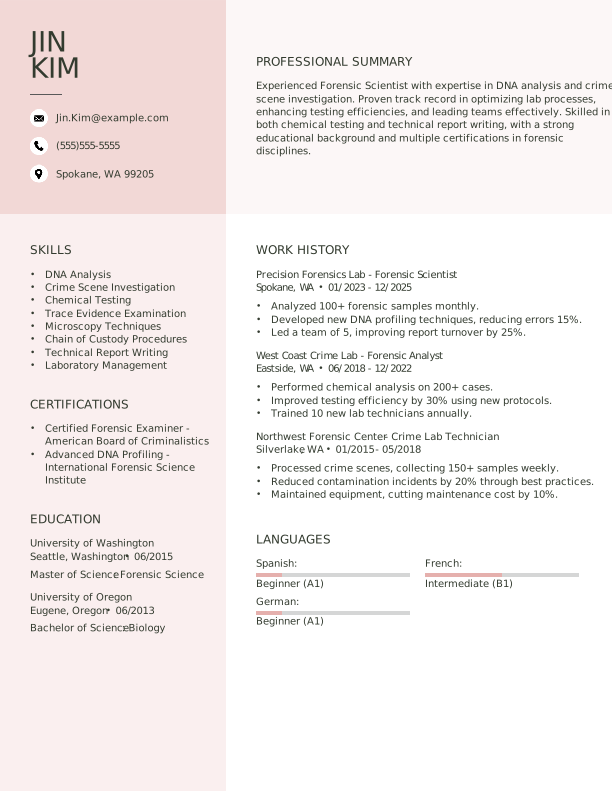
This entry-level resume for a forensic scientist effectively highlights the job seeker's analytical skills and contributions to significant forensic projects, showcasing their expertise in evidence analysis and lab management.
New professionals in this field must convey their technical abilities and relevant academic achievements to appeal to employers, even when they have limited direct work experience.
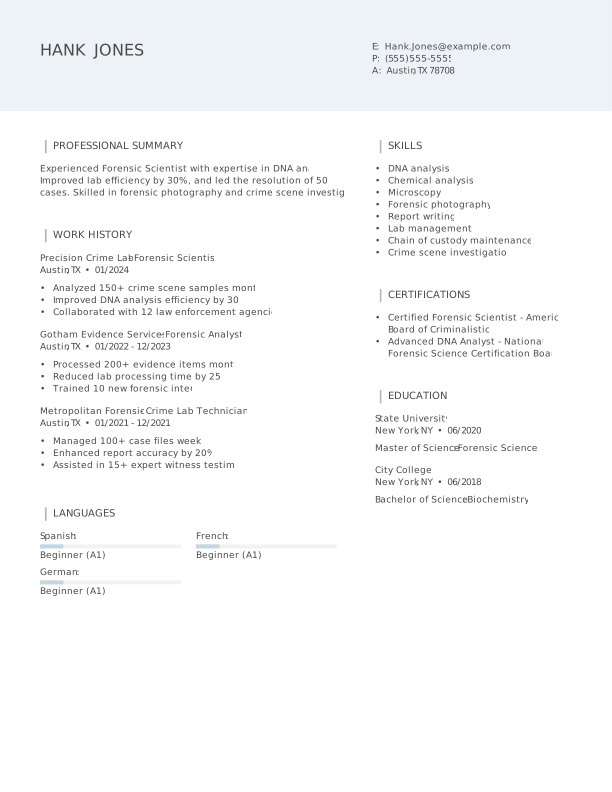
Mid-career forensic scientist resume
What this resume does well:
This resume effectively showcases key qualifications, emphasizing the applicant's analytical expertise and leadership in forensic science. The clear progression from technician to scientist illustrates readiness for complex challenges and advanced responsibilities in the field.
Experienced forensic scientist resume
What this resume does well:
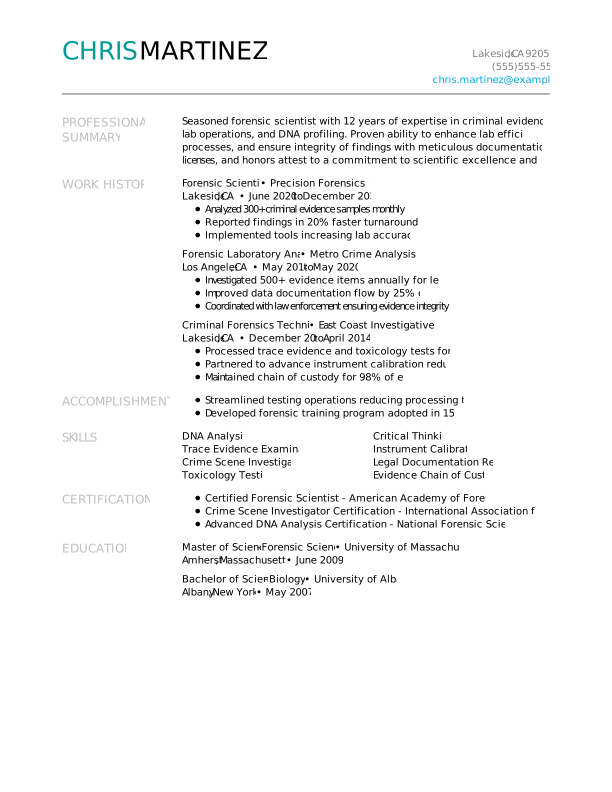
This work experience section illustrates the applicant's robust experience as a forensic scientist, showcasing their ability to analyze over 300 evidence samples monthly and achieve a 20% increase in lab efficiency. The clear formatting emphasizes accomplishments, making it accessible for hiring managers in the field.
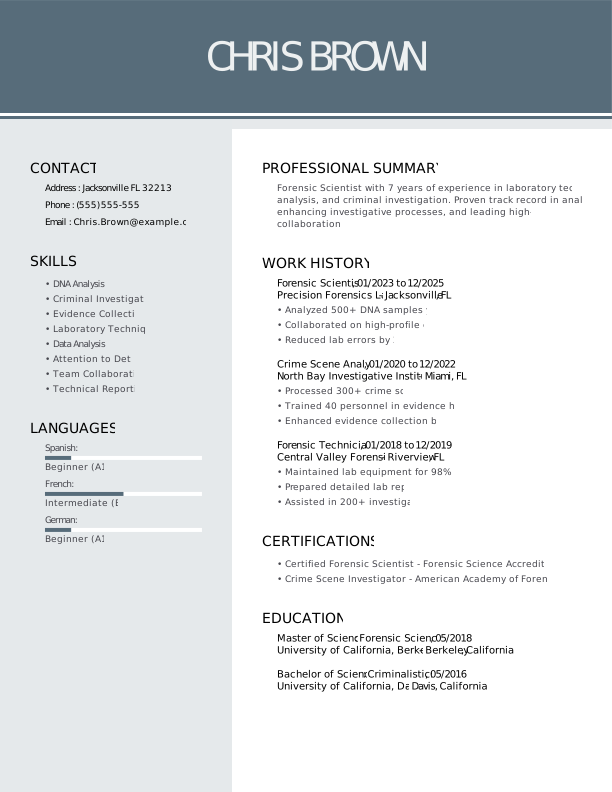
Resume Template—Easy to Copy & Paste
Example
Chris Brown
Jacksonville, FL 32213
(555)555-5555
Chris.Brown@example.com
Skills
- DNA Analysis
- Criminal Investigation
- Evidence Collection
- Laboratory Techniques
- Data Analysis
- Attention to Detail
- Team Collaboration
- Technical Reporting
Languages
- Spanish - Beginner (A1)
- French - Intermediate (B1)
- German - Beginner (A1)
Professional Summary
Forensic Scientist with 7 years of experience in laboratory techniques, DNA analysis, and criminal investigation. Proven track record in analyzing samples, enhancing investigative processes, and leading high-profile case collaborations.
Work History
Forensic Scientist
Precision Forensics Lab - Jacksonville, FL
January 2023 - December 2025
- Analyzed 500+ DNA samples yearly
- Collaborated on high-profile cases
- Reduced lab errors by 20%
Crime Scene Analyst
North Bay Investigative Institute - Miami, FL
January 2020 - December 2022
- Processed 300+ crime scenes
- Trained 40 personnel in evidence handling
- Enhanced evidence collection by 15%
Forensic Technician
Central Valley Forensics - Riverview, FL
January 2018 - December 2019
- Maintained lab equipment for 98% uptime
- Prepared detailed lab reports
- Assisted in 200+ investigations
Certifications
- Certified Forensic Scientist - Forensic Science Accreditation Board
- Crime Scene Investigator - American Academy of Forensic Sciences
Education
Master of Science Forensic Science
University of California, Berkeley Berkeley, California
May 2018
Bachelor of Science Criminalistics
University of California, Davis Davis, California
May 2016
Build Your Resume in Minutes
Creating a custom resume is easier than ever with our Resume Builder!
How to Write a Forensic Scientist Resume Summary
Your resume summary is the first thing employers will notice, so it’s important to make a lasting impression that showcases your qualifications. As a forensic scientist, you should emphasize your analytical skills, attention to detail, and experience in crime scene investigation.
Highlight your expertise in evidence collection, lab analysis, and report writing to stand out in this competitive field. This section should reflect your technical knowledge and ability to support legal processes with scientific rigor.
To further illustrate effective strategies for crafting this key section, consider the following resume summary examples:
Weak Example
I am a dedicated forensic scientist with years of experience in various crime labs. I want to find a position that allows me to use my knowledge and skills effectively. Working in an environment that values teamwork and development is very important to me. I believe I can contribute positively if given the chance.
Why this summary misses the mark:
- Uses vague terms like "years of experience" without specifying expertise or achievements
- Focuses on personal preferences for work culture instead of highlighting unique contributions to potential employers
- Relies heavily on generic language and lacks strong details about specific skills relevant to forensic science
Strong Example
Detail-oriented forensic scientist with over 7 years of experience in crime scene investigation and evidence analysis. Successfully contributed to over 150 criminal cases, leading to a conviction rate increase of 20% through careful evidence collection and expert testimony. Proficient in DNA analysis, toxicology, and microscopy techniques, ensuring reliable results that aid law enforcement agencies.
Why this summary works:
- Begins with specific years of experience and areas of expertise relevant to forensic science
- Highlights quantifiable achievements that demonstrate the job seeker's impact on criminal investigations
- Includes relevant technical skills that align with industry standards and employer needs

Pro Tip
If you're new to the forensic science field and lack formal experience, adding a career objective to your resume can be beneficial. This approach highlights your enthusiasm and relevant skills.
You can find resume objective examples tailored to guide you in crafting a compelling statement.
You can find resume objective examples tailored to guide you in crafting a compelling statement.
Showcasing Your Work Experience
The work experience section is the cornerstone of your resume as a forensic scientist. This area will contain the bulk of your content, and effective resume templates always prioritize showcasing this section.
Organize this part of your resume in reverse-chronological order, detailing your previous roles. Include bullet points highlighting key achievements and specific contributions you’ve made in each position.
To illustrate what works well, we’ll provide examples that demonstrate effective entries for forensic scientists. These examples will help clarify what stands out and what to avoid:
Weak Example
Forensic Scientist
City Crime Lab – New York, NY
- Analyzed evidence from crime scenes.
- Worked with law enforcement agencies.
- Maintained lab equipment and supplies.
- Prepared reports for court cases.
Why this work experience section misses the mark:
- Lacks specific details about the types of evidence analyzed
- Bullet points do not highlight any successful outcomes or contributions
- Focuses on general duties rather than showcasing expertise or results in forensic science
Strong Example
Forensic Scientist
City Crime Lab – Los Angeles, CA
March 2020 - Current
- Analyze complex crime scene evidence using advanced forensic techniques, leading to a 30% increase in case resolution rates.
- Develop comprehensive reports detailing findings for law enforcement and legal teams, improving clarity and communication during trials.
- Conduct training sessions for new staff on best practices in forensic analysis, improving team efficiency by 20%.
Why this work experience section works:
- Starts each bullet with effective action verbs that clearly convey the job seeker’s contributions
- Incorporates specific metrics to illustrate the effectiveness of the applicant’s efforts
- Highlights relevant skills essential for forensic science while showcasing accomplishments
While your resume summary and work experience are important, don't overlook the value of other sections that improve your overall presentation. Each part contributes to a compelling narrative of your qualifications. For more detailed guidance, refer to our comprehensive guide on how to write a resume.
Top Skills to Include on Your Resume
A skills section is important for any resume, as it allows you to showcase your abilities at a glance. It helps potential employers quickly identify that you possess the necessary qualifications for the forensic scientist role.
Every resume should have a mix of hard skills and soft skills. Including a diverse range of relevant skills will make your application much stronger.
Soft skills, including critical thinking, attention to detail, and effective communication, foster collaboration with law enforcement and ensure justice is served effectively.
Choosing the right resume skills is important for standing out to employers and meeting their expectations. Many organizations rely on automated systems to screen applicants, so aligning your skills with what they seek can significantly improve your chances of getting noticed.
To effectively identify which skills to highlight, take time to review job postings in your field. These listings often reveal key competencies that recruiters prioritize, ensuring your resume resonates with both hiring teams and ATS algorithms.
Pro Tip
Ensure your resume stands out in the digital crowd by using our ATS Resume Checker to spot more than 30 common errors and navigate applicant tracking systems with ease.
10 skills that appear on successful forensic scientist resumes
Highlighting essential skills on your resume can grab the attention of recruiters looking for forensic scientists. You can see these important skills illustrated in our resume examples, which help you apply with greater confidence.
Here are 10 key skills you should consider adding to your resume if they match your qualifications and job requirements:
Analytical thinking
Attention to detail
Problem-solving
Data analysis
Report writing
Knowledge of legal regulations
Laboratory techniques
Interpersonal communication
Time management
Ethical judgment
Based on analysis of 5,000+ sciences professional resumes from 2023-2024
Resume Format Examples
Selecting the appropriate resume format is important for forensic scientists as it showcases their specialized skills, relevant experience, and career advancements in a clear and compelling manner.
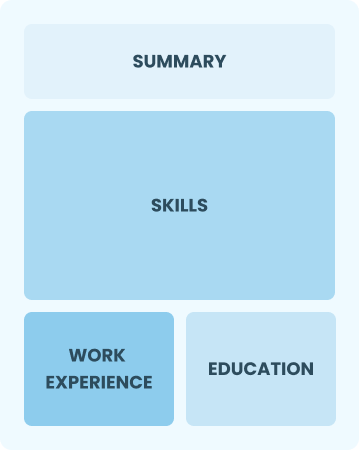
Entry-Level 0 - 2 years
Functional
Focuses on skills rather than previous jobs
Best for:
Recent graduates and career changers with limited experience in forensic science
Mid-Career 3 - 7 years
Combination
Balances skills and work history equally
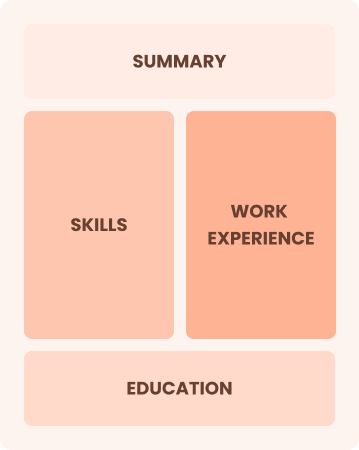
Best for:
Mid-career professionals focused on demonstrating their skills and potential for growth
Experienced 8+ years
Chronological
Emphasizes work history in reverse order

Best for:
Experienced leaders specializing in complex forensic analysis and evidence management
Frequently Asked Questions
Should I include a cover letter with my forensic scientist resume?
Absolutely, including a cover letter is essential for making a strong impression on employers. A well-crafted cover letter allows you to highlight your skills and passion for forensic science.
If you need assistance, our guide on how to write a cover letter offers valuable tips, or you can use our Cover Letter Generator for quick creation. Don't miss this opportunity to improve your application!
Can I use a resume if I’m applying internationally, or do I need a CV?
When applying for jobs abroad, use a CV instead of a resume as many countries prefer this format. A CV provides a comprehensive overview of your qualifications. Explore our resources on how to write a CV and take advantage of CV examples to ensure your application meets international expectations.
What soft skills are important for forensic scientists?
Soft skills such as analytical thinking, attention to detail, and interpersonal skills are essential for forensic scientists. These skills enable effective collaboration with law enforcement and legal teams while ensuring accurate analysis and clear reporting of findings.
I’m transitioning from another field. How should I highlight my experience?
Emphasize your transferable skills like analytical thinking, attention to detail, and teamwork from prior roles in various industries. These attributes are important for a forensic scientist and highlight your adaptability.
Use concrete examples from past experiences to demonstrate how these skills will improve your contributions in forensic analysis and investigation.
How should I format a cover letter for a forensic scientist job?
To format a cover letter for forensic scientist positions, begin with your contact details. Follow this with a professional salutation and an engaging introduction that highlights your passion for forensic science.
Include key qualifications relevant to the specific job requirements. Conclude with a strong closing statement inviting further discussion about your application.
Should I include a personal mission statement on my forensic scientist resume?
Certainly, adding a personal mission statement can highlight your commitment to justice and scientific integrity. This approach is particularly effective when applying to agencies or labs that focus on ethical research practices.




Ready to land the job?
Join 28M+ others who've built a resume that works.