

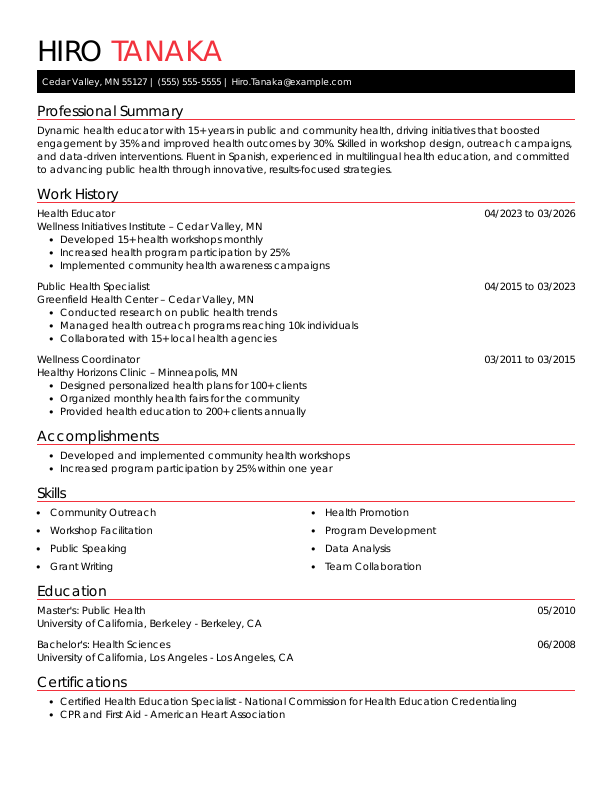
Hard skills include developing educational materials, conducting health assessments, and analyzing health data to inform community programs.
Health Educator Resume Examples & Templates
Looking to make a positive impact in health education? Our health educator resume examples showcase skills like communication, program development, and community outreach to help you stand out to employers.

by Gabriela Hernandez, Last Updated: March 17, 2026
Hired By:*

- Popular Health Educator Resume Examples
- Resume Template—Easy to Copy & Paste
- Build Your Resume in Minutes
- How to Write a Health Educator Resume Summary
- Showcasing Your Work Experience
- Top Skills to Include on Your Resume
- Resume Format Examples
- Related Teaching Resume Examples
- Frequently Asked Questions
- Should I include a cover letter with my health educator resume?
- Can I use a resume if I’m applying internationally, or do I need a CV?
- What soft skills are important for health educators?
- I’m transitioning from another field. How should I highlight my experience?
- Where can I find inspiration for writing my cover letter as a health educator?
- Should I include a personal mission statement on my health educator resume?
Popular Health Educator Resume Examples
Check out our top health educator resume examples that emphasize essential skills such as community outreach, program development, and health literacy. These resumes highlight how to effectively showcase your impact in promoting wellness and education.
Ready to build your ideal resume? Our Resume Builder offers user-friendly templates designed specifically for health educators, making it simple to present your qualifications attractively.
Recommended
 Customize This Resume
Entry-level health educator resume
What this resume does well:
This entry-level resume for a health educator effectively highlights the job seeker's experience in developing community health programs and facilitating workshops, showcasing their ability to drive engagement and improve wellness metrics. New professionals in this field must demonstrate relevant skills, certifications, and strong contributions to public health initiatives even if their work history is limited.
Mid-career health educator resume
What this resume does well:
This resume effectively showcases key qualifications by highlighting effective achievements and leadership in health education. The clear presentation of results-oriented responsibilities illustrates the applicant's readiness for advanced roles, emphasizing their ability to drive community health initiatives successfully.
Experienced health educator resume
What this resume does well:
The work history section demonstrates the applicant's extensive experience as a health educator, with notable achievements such as developing 15 workshops monthly and boosting client health by 30%. The clear bullet-point format allows hiring managers to quickly grasp the applicant's impact on community health initiatives.
Resume Template—Easy to Copy & Paste
Example
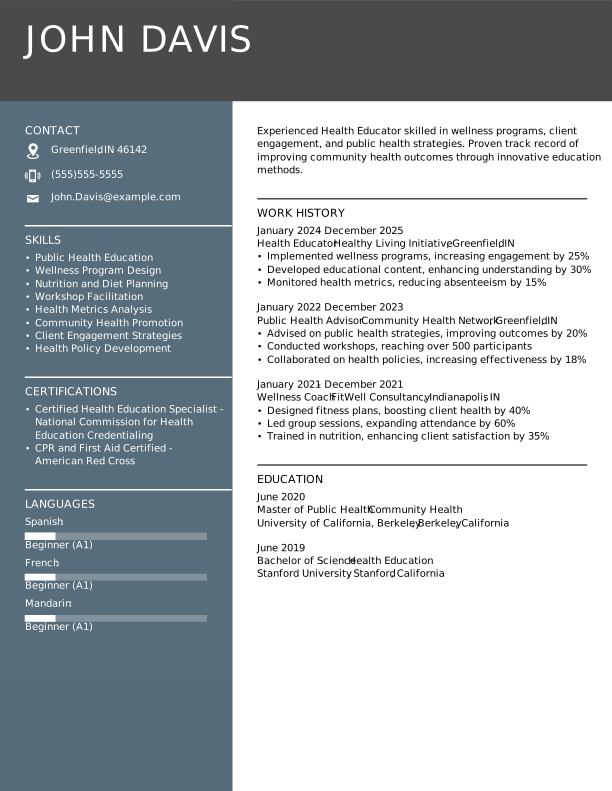
John Davis
Greenfield, IN 46142
(555)555-5555
John.Davis@example.com
Skills
- Public Health Education
- Wellness Program Design
- Nutrition and Diet Planning
- Workshop Facilitation
- Health Metrics Analysis
- Community Health Promotion
- Client Engagement Strategies
- Health Policy Development
Certifications
- Certified Health Education Specialist - National Commission for Health Education Credentialing
- CPR and First Aid Certified - American Red Cross
Languages
- Spanish - Beginner (A1)
- French - Beginner (A1)
- Mandarin - Beginner (A1)
Professional Summary
Experienced Health Educator skilled in wellness programs, client engagement, and public health strategies. Proven track record of improving community health outcomes through innovative education methods.
Work History
Health Educator
Healthy Living Initiative - Greenfield, IN
January 2024 - December 2025
- Implemented wellness programs, increasing engagement by 25%
- Developed educational content, enhancing understanding by 30%
- Monitored health metrics, reducing absenteeism by 15%
Public Health Advisor
Community Health Network - Greenfield, IN
January 2022 - December 2023
- Advised on public health strategies, improving outcomes by 20%
- Conducted workshops, reaching over 500 participants
- Collaborated on health policies, increasing effectiveness by 18%
Wellness Coach
FitWell Consultancy - Indianapolis, IN
January 2021 - December 2021
- Designed fitness plans, boosting client health by 40%
- Led group sessions, expanding attendance by 60%
- Trained in nutrition, enhancing client satisfaction by 35%
Education
Master of Public Health Community Health
University of California, Berkeley Berkeley, California
June 2020
Bachelor of Science Health Education
Stanford University Stanford, California
June 2019
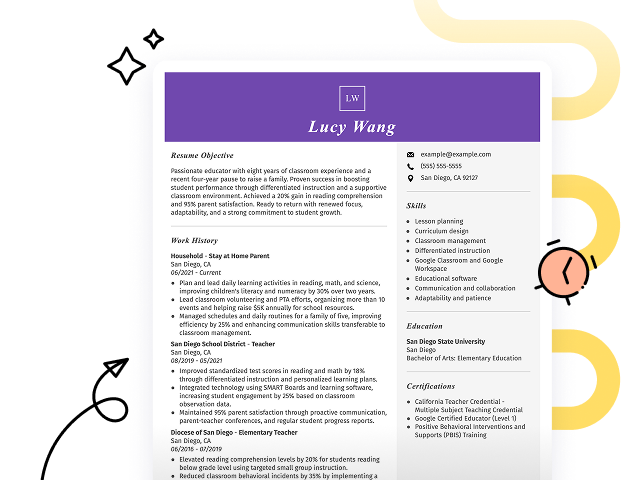
Build Your Resume in Minutes
Creating a custom resume is easier than ever with our Resume Builder!
How to Write a Health Educator Resume Summary
Your resume summary is the first opportunity to capture an employer's attention, so it's important to make a strong impression. As a health educator, you should highlight your ability to communicate health information effectively and inspire individuals towards healthier choices.
This profession demands showcasing your knowledge in public health, educational methodologies, and community outreach efforts. Your skills in delivering engaging presentations and developing informative materials are key points that employers will look for.
To help clarify what makes a successful resume summary, here are some examples that illustrate effective strategies and common pitfalls:
Weak Example
I am a health educator with many years of experience in the field. I seek a position where I can use my knowledge and skills to help others. A job that offers flexibility and chances to advance is what I hope for. I believe I would be a great addition to any team.
Why this summary misses the mark:
- Lacks specific examples of skills or achievements, making it too general
- Overuses personal language, which detracts from professionalism
- Emphasizes the job seeker's desires rather than showcasing how they can contribute to an organization
Strong Example
Motivated health educator with 7+ years of experience in community health promotion and disease prevention. Developed and implemented educational programs that increased participant knowledge by 40% and improved vaccination rates by 25% in underserved populations. Proficient in health assessment, program evaluation, and leveraging social media for outreach.
Why this summary works:
- Begins with a clear statement of experience level and focus area within health education
- Contains quantifiable achievements showcasing a measurable impact on community health outcomes
- Highlights relevant skills that demonstrate expertise in program development and communication strategies

Pro Tip
If you’re new to the field of health education and feel short on experience, consider using a career objective to stand out. This approach allows you to clearly express your goals and passion. Many tailored resume objective examples are available to guide you.
Showcasing Your Work Experience
The work experience section is important for your resume as a health educator, where you'll present most of your information. Good resume templates are designed to emphasize this critical component effectively.
This section should be organized in reverse-chronological order, listing your previous positions. Use bullet points to clearly highlight your achievements and contributions in each role.
To illustrate effective entries, we have prepared a couple of examples that showcase what works and what doesn’t work in this section.
Weak Example
Health Educator
Community Health Center – Phoenix, AZ
- Taught health classes.
- Created materials for patients.
- Worked with community groups.
- Helped people learn about health.
Why this work experience section misses the mark:
- No details about the employment dates
- Bullet points lack specific achievements and metrics
- Focuses on general responsibilities instead of effective contributions
Strong Example
Health Educator
Community Health Initiative – Chicago, IL
March 2020 - Current
- Develop and deliver health education programs to diverse populations, increasing community engagement by 40% within one year.
- Conduct assessments to identify health risks and create tailored educational materials that resulted in a 30% increase in participant knowledge retention.
- Collaborate with local organizations to host workshops and health fairs, improving access to preventive care services for over 500 residents.
Why this work experience section works:
- Starts each bullet with powerful action verbs that highlight the applicant's achievements
- Incorporates specific metrics to demonstrate the impact of education initiatives on community health
- Showcases relevant skills such as program development and community collaboration that are critical for a health educator
While your resume summary and work experience are important components, don’t overlook the importance of other sections. Each part plays a role in showcasing your qualifications. For detailed guidance on crafting each section effectively, refer to our comprehensive guide on how to write a resume.
Top Skills to Include on Your Resume
A skills section is important for a compelling resume as it allows you to quickly demonstrate your qualifications to potential employers. This section highlights your abilities, making it easier for hiring managers to identify if you fit the role.
For a health educator, emphasize hard and soft skills alongside technical skills. Include relevant tools like health education software like SPSS or Qualtrics, alongside systems for managing community outreach programs effectively.
Soft skills like communication, empathy, and adaptability are important for fostering trust and effectively engaging with diverse populations in health education initiatives.
When crafting your resume skills, it's essential to align them with what employers expect. Many organizations use automated systems to filter out applicants who lack the necessary qualifications for the position.
To improve your chances of getting noticed, review job postings closely for insights on which skills are in demand. This will not only appeal to recruiters but also ensure that your resume meets the criteria set by ATS systems.
Pro Tip
Ensure your resume is ready to shine by using our ATS Resume Checker. It helps you uncover over 30 common mistakes, improving your chances of making it past applicant tracking systems.
10 skills that appear on successful health educator resumes
To catch recruiters' attention, it's essential to emphasize high-demand skills relevant to health educator roles. Our resume examples show how these skills can be showcased effectively, helping you apply with a standout application.
By the way, consider incorporating any of these 10 skills into your resume if they align with your experience and job requirements:
Health literacy promotion
Communication skills
Program planning
Data analysis
Public speaking
Cultural competence
Team collaboration
Behavior change strategies
Assessment and evaluation
Resource management
Based on analysis of 5,000+ teaching professional resumes from 2023-2024
Resume Format Examples
Choosing the right resume format is important for a health educator because it emphasizes key qualifications, highlights relevant experiences, and showcases your journey in effectively promoting community health.
Entry-Level 0 - 2 years
Functional
Focuses on skills rather than previous jobs
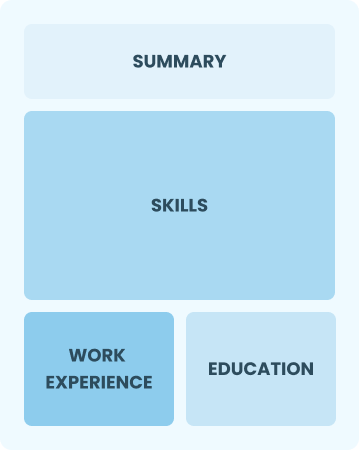
Best for:
Recent graduates and career changers with up to two years of experience
Mid-Career 3 - 7 years
Combination
Balances skills and work history equally
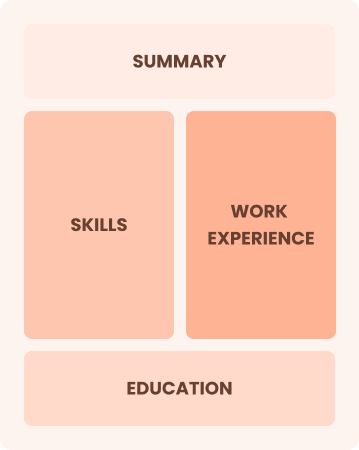
Best for:
Mid-career professionals focused on demonstrating their skills and growth potential
Experienced 8+ years
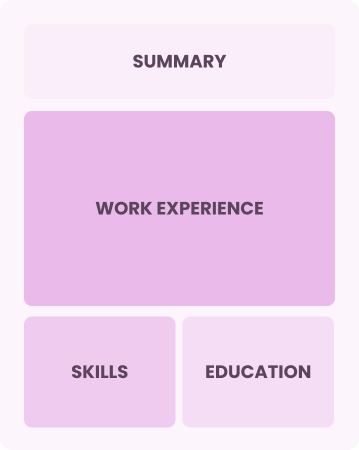
Chronological
Emphasizes work history in reverse order
Best for:
Experienced leaders in health education and program development
Frequently Asked Questions
Should I include a cover letter with my health educator resume?
Absolutely, including a cover letter is essential for making a strong impression on employers. A well-crafted cover letter highlights your qualifications and shows your enthusiasm for the position. If you need assistance, explore our resources on how to write a cover letter or use our Cover Letter Generator to simplify the process.
Can I use a resume if I’m applying internationally, or do I need a CV?
A CV is typically used for international job applications, especially in Europe, where detailed academic and professional history is valued. To assist you in meeting regional expectations, we offer various resources that include CV examples along with guidance on how to write a CV, ensuring your application is well-formatted.
What soft skills are important for health educators?
Soft skills like communication, empathy, and active listening are important for health educators. These interpersonal skills build trust with clients and support open dialogue, which helps provide effective education on health topics and improves community health outcomes.
I’m transitioning from another field. How should I highlight my experience?
Highlight your transferable skills such as communication, organization, and teamwork that you've gained from previous roles. These abilities showcase your potential to excel in health education, even if you lack direct experience. Provide concrete examples from your past that relate to educating others or promoting wellness, demonstrating your readiness for this strong field.
Where can I find inspiration for writing my cover letter as a health educator?
For aspiring health educators, exploring our collection of professional cover letter examples can be invaluable. These samples offer inspiration for content ideas, formatting tips, and effective ways to showcase your qualifications. Use them as a guide to craft your own unique story and stand out in the application process.
Should I include a personal mission statement on my health educator resume?
Yes, adding a personal mission statement to your resume is advisable. It effectively showcases your commitment to health education and aligns your values with the organization's goals. This tactic works particularly well for nonprofits and companies that emphasize community health and wellness initiatives.




Ready to land the job?
Join 28M+ others who've built a resume that works.