Hard skills are technical, measurable abilities such as laboratory testing, data analysis, and equipment calibration that ensure accurate diagnostic results.
Clinical Laboratory Scientist Resume Examples & Templates
Ready to boost your career? Our clinical laboratory scientist resume examples showcase key skills like analytical thinking and attention to detail, helping you stand out to employers in the healthcare field.

by Gabriela Hernandez, Last Updated: January 18, 2026
Hired By:*

- Popular Clinical Laboratory Scientist Resume Examples
- Resume Template—Easy to Copy & Paste
- Build Your Resume in Minutes
- How to Write a Clinical Laboratory Scientist Resume Summary
- Showcasing Your Work Experience
- Top Skills to Include on Your Resume
- Resume Format Examples
- Related Sciences Resume Examples
- Frequently Asked Questions
- Should I include a cover letter with my clinical laboratory scientist resume?
- Can I use a resume if I’m applying internationally, or do I need a CV?
- What soft skills are important for clinical laboratory scientists?
- I’m transitioning from another field. How should I highlight my experience?
- How should I format a cover letter for a clinical laboratory scientist job?
- How do I write a resume with no experience?
Popular Clinical Laboratory Scientist Resume Examples
Discover our top clinical laboratory scientist resume examples that emphasize critical skills such as analytical thinking, attention to detail, and skill in lab technologies. These examples illustrate how to effectively showcase your qualifications to potential employers.
Ready to build a standout resume? Our Resume Builder offers user-friendly templates specifically designed for laboratory professionals, making it simple to highlight your expertise.
Recommended
 Customize This Resume
Entry-level clinical laboratory scientist resume
What this resume does well:
This entry-level resume for a clinical laboratory scientist effectively highlights the applicant's analytical skills and successful contributions to laboratory operations through roles in various healthcare settings.
New professionals should showcase their technical competencies, educational achievements, and any relevant hands-on experiences to demonstrate their readiness for a demanding clinical environment.
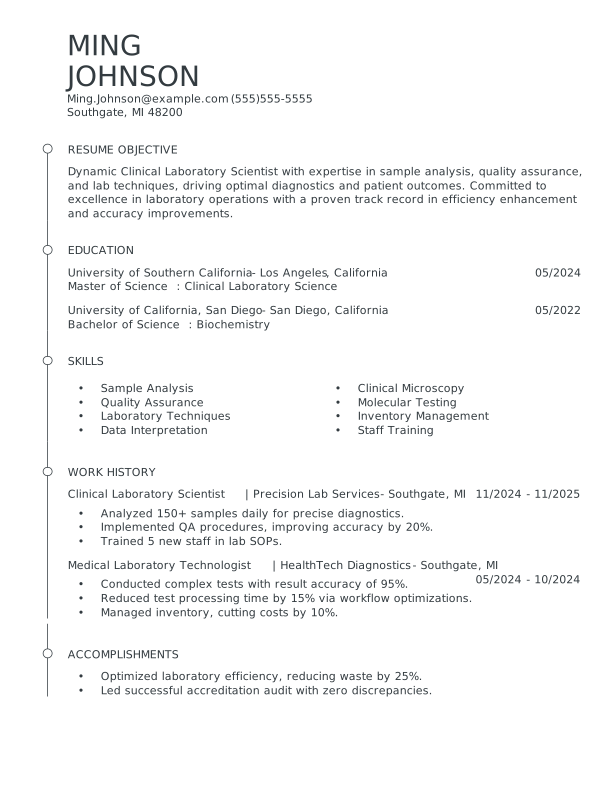
Mid-career clinical laboratory scientist resume
What this resume does well:
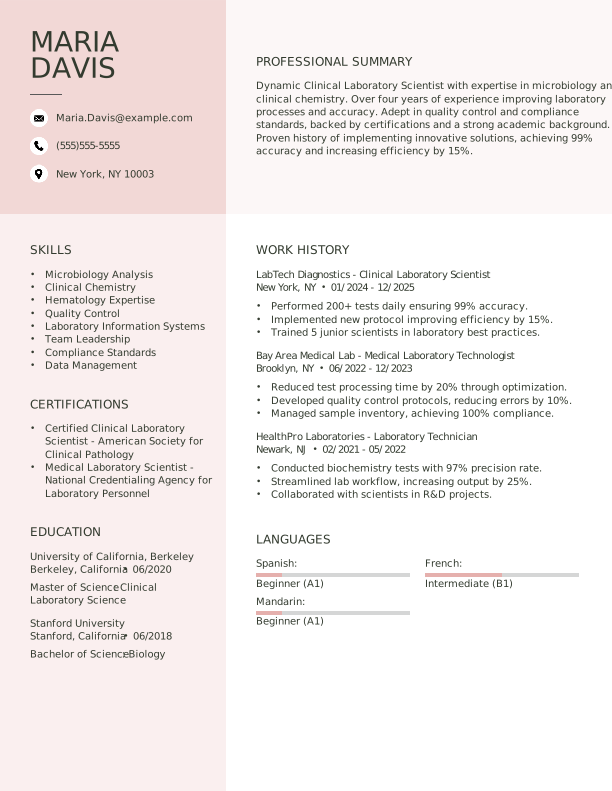
This resume clearly outlines key qualifications, showcasing the job seeker's expertise and progressive experience in laboratory science. The impressive accomplishments and certifications position them as a strong applicant ready for advanced responsibilities and leadership roles in clinical settings.
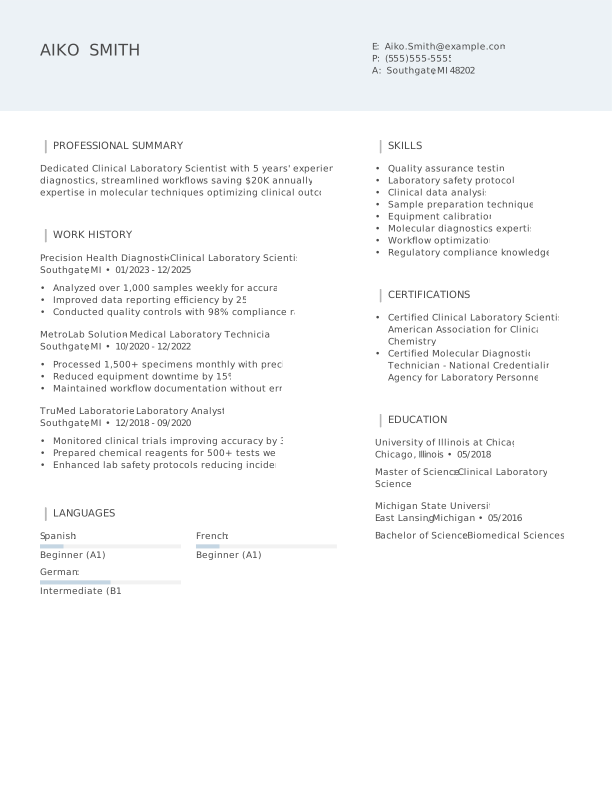
Experienced clinical laboratory scientist resume
What this resume does well:
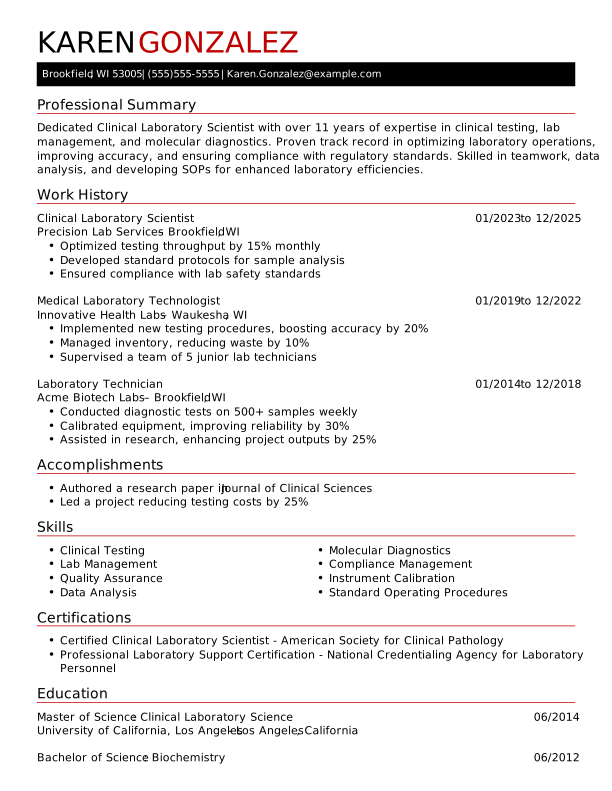
This section illustrates the applicant's strong qualifications as a clinical laboratory scientist, emphasizing their ability to optimize testing throughput by 15% and boost accuracy by 20%. The bullet point format improves readability, making key achievements easily identifiable for hiring managers.
Resume Template—Easy to Copy & Paste
Example
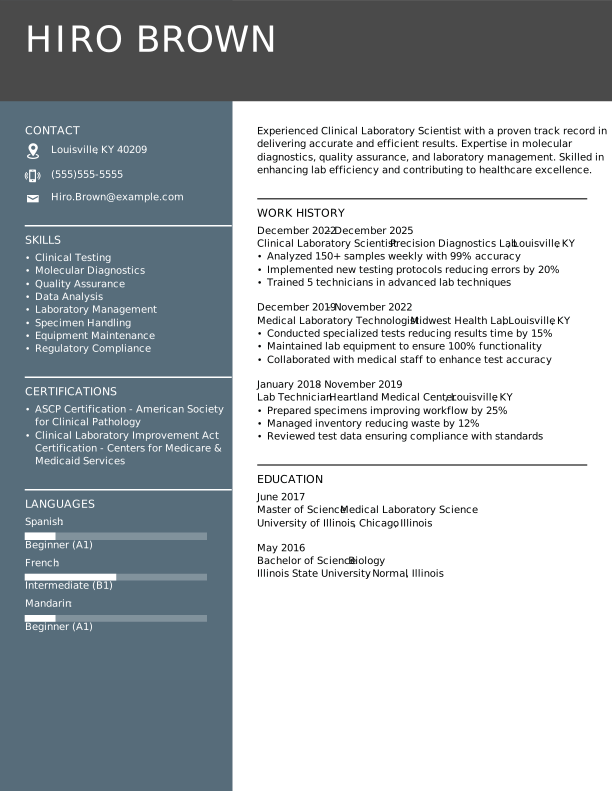
Hiro Brown
Louisville, KY 40209
(555)555-5555
Hiro.Brown@example.com
Skills
- Clinical Testing
- Molecular Diagnostics
- Quality Assurance
- Data Analysis
- Laboratory Management
- Specimen Handling
- Equipment Maintenance
- Regulatory Compliance
Certifications
- ASCP Certification - American Society for Clinical Pathology
- Clinical Laboratory Improvement Act Certification - Centers for Medicare & Medicaid Services
Languages
- Spanish - Beginner (A1)
- French - Intermediate (B1)
- Mandarin - Beginner (A1)
Professional Summary
Experienced Clinical Laboratory Scientist with a proven track record in delivering accurate and efficient results. Expertise in molecular diagnostics, quality assurance, and laboratory management. Skilled in enhancing lab efficiency and contributing to healthcare excellence.
Work History
Clinical Laboratory Scientist
Precision Diagnostics Lab - Louisville, KY
December 2022 - December 2025
- Analyzed 150+ samples weekly with 99% accuracy
- Implemented new testing protocols reducing errors by 20%
- Trained 5 technicians in advanced lab techniques
Medical Laboratory Technologist
Midwest Health Lab - Louisville, KY
December 2019 - November 2022
- Conducted specialized tests reducing results time by 15%
- Maintained lab equipment to ensure 100% functionality
- Collaborated with medical staff to enhance test accuracy
Lab Technician
Heartland Medical Center - Louisville, KY
January 2018 - November 2019
- Prepared specimens improving workflow by 25%
- Managed inventory reducing waste by 12%
- Reviewed test data ensuring compliance with standards
Education
Master of Science Medical Laboratory Science
University of Illinois Chicago, Illinois
June 2017
Bachelor of Science Biology
Illinois State University Normal, Illinois
May 2016
Build Your Resume in Minutes
Creating a custom resume is easier than ever with our Resume Builder!
How to Write a Clinical Laboratory Scientist Resume Summary
Your resume summary is your opportunity to make a lasting impression on hiring managers. This section sets the tone for your application by showing how you meet and exceed the expectations of a clinical laboratory scientist.
As a clinical laboratory scientist, it’s essential to highlight your technical expertise, attention to detail, and ability to work collaboratively in a fast-paced environment. These qualities demonstrate your value and readiness for the role.
To guide you in crafting an effective summary, we’ll provide examples that illustrate what works well and what doesn’t in this critical section:
Weak Example
I am a dedicated clinical laboratory scientist with extensive experience. I seek a position where my skills can flourish and contribute to the success of the team. A supportive environment with growth opportunities would be ideal for me. I'm eager to bring value if provided the chance.
Why this summary misses the mark:
- Lacks specific details about areas of expertise or achievements in the field
- Relies heavily on personal aspirations without highlighting unique contributions
- Uses general and non-specific language, failing to distinguish from other applicants
Strong Example
Detail-oriented clinical laboratory scientist with over 6 years of experience in diagnostic testing and quality control. Achieved a 20% reduction in turnaround time for lab results by streamlining processes and implementing new software solutions. Proficient in PCR, ELISA, and flow cytometry, with a strong commitment to maintaining compliance with CLIA regulations.
Why this summary works:
- Begins with specific years of experience and areas of expertise relevant to clinical laboratory science
- Includes quantifiable achievement that highlights a measurable impact on laboratory efficiency
- Lists technical skills that are critical for the role, demonstrating industry-specific knowledge

Pro Tip
If you're new to the field of clinical laboratory science, consider using a career objective on your resume. This approach can effectively highlight your goals and enthusiasm. Plus, there are plenty of tailored resume objective examples available to guide you.
Showcasing Your Work Experience
The work experience section is important on your resume as a clinical laboratory scientist, and it will contain the bulk of your content. Good resume templates always prioritize this area to help you stand out.
This section should be organized in reverse-chronological order, featuring your previous positions. Use bullet points to succinctly highlight your key achievements and skills in each role.
Now, let’s look at some examples that illustrate effective work experience entries for clinical laboratory scientists. These examples will clarify what works well and what pitfalls to avoid:
Weak Example
Clinical Laboratory Scientist
City Medical Lab – San Francisco, CA
- Performed lab tests on samples.
- Maintained equipment and supplies.
- Worked with other staff in the lab.
- Documented results and followed protocols.
Why this work experience section misses the mark:
- Lacks specific details about the types of tests conducted
- Bullet points are overly general and do not highlight any achievements
- Does not mention any collaboration outcomes or improvements made
Strong Example
Clinical Laboratory Scientist
City Medical Center – Los Angeles, CA
March 2020 - Current
- Conduct complex laboratory tests on patient specimens, ensuring accuracy and reliability in results for over 100 daily samples.
- Implement quality control measures that reduced error rates by 30%, improving overall lab efficiency.
- Train and mentor new laboratory personnel, fostering a collaborative environment that improved team performance and skill skill.
Why this work experience section works:
- Starts each bullet with strong action verbs that clearly convey the applicant's contributions
- Incorporates specific metrics to highlight achievements related to productivity and quality improvements
- Demonstrates relevant skills such as training and quality assurance which are essential in clinical laboratory settings
While your resume summary and work experience are important for showcasing your expertise as a clinical laboratory scientist, don’t overlook the importance of other sections. Each part contributes to a comprehensive picture of your qualifications.
For more tips on crafting an effective resume, refer to our detailed guide on how to write a resume.
Top Skills to Include on Your Resume
A skills section is important for any effective resume because it helps employers quickly evaluate your qualifications.
Every resume should have a mix of hard skills and soft skills. Including a diverse range of relevant skills will make your application much stronger.
Soft skills, like attention to detail, teamwork, and effective communication, foster collaboration with healthcare teams and improve the quality of patient care.
Selecting the right resume skills is important for aligning with what employers expect from applicants. Many organizations employ automated screening systems that filter out applicants lacking essential qualifications.
To improve your chances, take time to review job postings carefully. They often highlight the key skills that recruiters and ATS systems are looking for, allowing you to tailor your resume effectively.
Pro Tip
To ensure your resume stands out, consider using our ATS Resume Checker. This tool highlights over 30 common errors, helping you tailor your application to get past applicant tracking systems effortlessly.
10 skills that appear on successful clinical laboratory scientist resumes
Improve your resume to catch the eye of recruiters by highlighting key skills in demand for clinical laboratory scientists. You can find examples of these essential skills and qualifications showcased in our resume examples, which will help you approach job applications with greater confidence.
Consider incorporating these 10 skills into your resume if they align with your experience and the requirements of the roles you're targeting:
Analytical skills
Attention to detail
Team collaboration
Technical skill
Laboratory safety practices
Quality control expertise
Data analysis
Problem-solving abilities
Time management
Adaptability
Based on analysis of 5,000+ sciences professional resumes from 2023-2024
Resume Format Examples
Selecting the proper resume format is important for showcasing your laboratory expertise, experience, and career development as a clinical laboratory scientist.
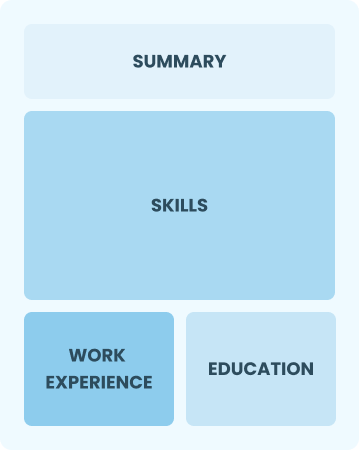
Entry-Level 0 - 2 years
Functional
Focuses on skills rather than previous jobs
Best for:
Recent graduates and career changers with up to two years of experience
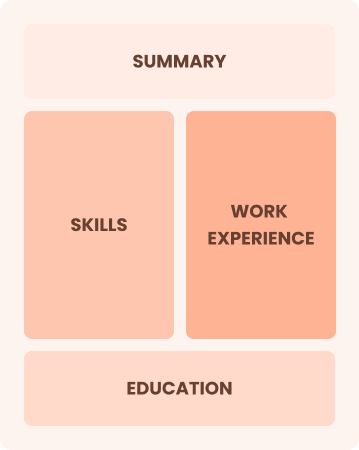
Mid-Career 3 - 7 years
Combination
Balances skills and work history equally
Best for:
Mid-career professionals focused on demonstrating their skills and potential for growth
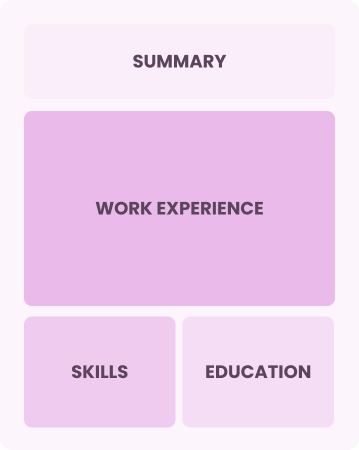
Experienced 8+ years
Chronological
Emphasizes work history in reverse order
Best for:
Experienced leaders excelling in specialized laboratory techniques and innovations
Frequently Asked Questions
Should I include a cover letter with my clinical laboratory scientist resume?
Absolutely. Including a cover letter can significantly improve your application by highlighting your qualifications and demonstrating your enthusiasm for the position. It provides an opportunity to showcase your personality beyond your resume.
If you need assistance, check out our tips on how to write a cover letter or use our Cover Letter Generator to simplify the process.
Can I use a resume if I’m applying internationally, or do I need a CV?
When applying for jobs outside the U.S., it's important to use a CV instead of a resume. A CV is typically more detailed and preferred in many countries. To learn about formatting and crafting an effective CV that meets international standards, explore our CV examples and discover insights on how to write a CV.
What soft skills are important for clinical laboratory scientists?
Soft skills such as communication, attention to detail, and teamwork are essential for clinical laboratory scientists. These interpersonal skills foster collaboration with healthcare professionals and ensure accurate test results, ultimately supporting patient care and improving workplace efficiency.
I’m transitioning from another field. How should I highlight my experience?
Highlight your transferable skills, such as analytical thinking, attention to detail, and teamwork. These abilities showcase your potential to excel in clinical laboratory roles even if you have limited direct experience.
Use concrete examples from previous jobs to illustrate how your strengths align with the tasks you'll face in this field, reinforcing your readiness to contribute effectively.
How should I format a cover letter for a clinical laboratory scientist job?
When you're ready to format a cover letter for clinical laboratory scientist positions, start with your contact details and follow up with a respectful greeting. Craft an engaging introduction that highlights your interest in the role. Include a concise summary of your relevant skills and experiences tailored to the job description.
Finally, wrap up with a strong closing statement that encourages further discussion about your application.
How do I write a resume with no experience?
If you're pursuing a clinical laboratory scientist position with limited experience, it's helpful to highlight your relevant coursework, internships, and any lab skills you possess. For insights on how to craft a resume with no experience, emphasize your attention to detail, analytical thinking, and teamwork abilities.
Remember, your passion for science and commitment to quality work can truly set you apart in the eyes of employers.




Ready to land the job?
Join 28M+ others who've built a resume that works.