

Hard skills encompass data analysis, database management, and knowledge of health information systems, all essential for entry-level health informatics professionals.
Entry Level Health Informatics Resume Examples & Templates
Looking to kickstart your career in health informatics? Check out our entry level health informatics resume examples to showcase your data analysis, technical skills, and attention to detail that employers love.

by Gabriela Hernandez, Last Updated: February 03, 2026
Hired By:*

- Popular Entry Level Health Informatics Resume Examples
- Resume Template—Easy to Copy & Paste
- Build Your Resume in Minutes
- How to Write an Entry Level Health Informatics Resume Summary
- Showcasing Your Work Experience
- Top Skills to Include on Your Resume
- Resume Format Examples
- Related Medical Resume Examples
- Frequently Asked Questions
- Should I include a cover letter with my entry-level health informatics resume?
- Can I use a resume if I’m applying internationally, or do I need a CV?
- What soft skills are important for entry-level health informatics?
- I’m transitioning from another field. How should I highlight my experience?
- Where can I find inspiration for writing my cover letter as a entry level health informatics?
- Should I include a personal mission statement on my entry-level health informatics resume?
Popular Entry Level Health Informatics Resume Examples
Check out our top entry level health informatics resume examples that emphasize key skills such as data analysis, information technology, and healthcare management. These resumes will guide you in showcasing your qualifications effectively to potential employers.
Ready to build your perfect resume? Our Resume Builder offers user-friendly templates specifically designed for those entering the health informatics field, making your application process smoother.
Recommended
 Customize This Resume
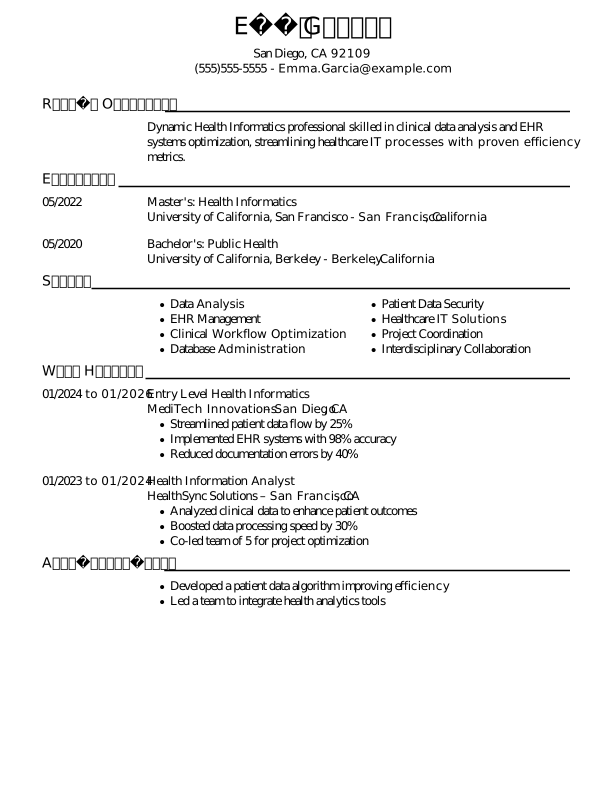
Entry level health informatics resume
What this resume does well:
The resume features streamlined formatting and a clear resume fonts choice that improves readability, making it easier for hiring managers to quickly assess qualifications. These design elements not only reflect the applicant's professionalism but also showcase their ability to present complex information effectively, leaving a positive impression on potential employers.
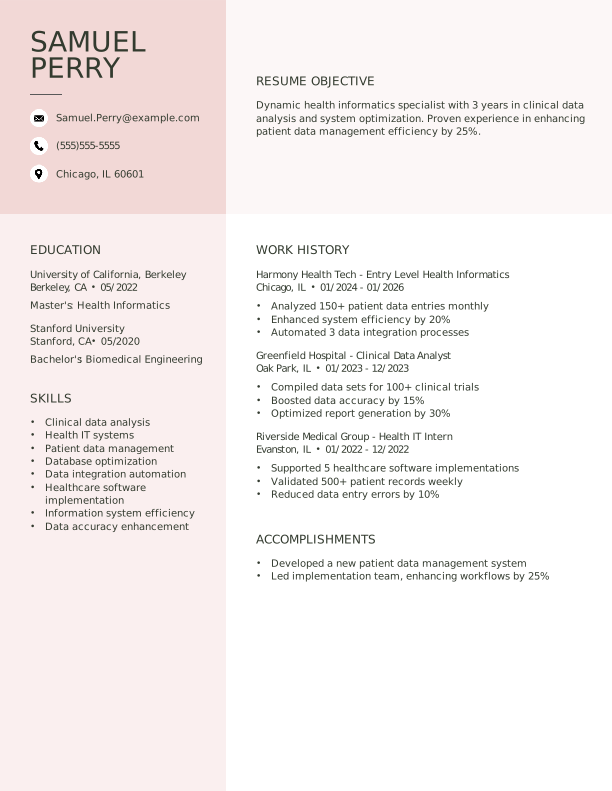
Health information technician resume
What this resume does well:
This resume effectively showcases the balance between skills and work experience, highlighting electronic health records and data management as essential competencies. By demonstrating how these skills were applied in various roles, employers gain insight into the applicant's practical abilities to improve healthcare data systems.
Medical records coordinator resume
What this resume does well:
This resume effectively uses clear bullet points and well-defined sections to present a wealth of experience in health informatics on a single page. The strategic use of spacing allows hiring managers to quickly identify key accomplishments, such as improving records accessibility by 40%, making it easy to assess qualifications at a glance.
Resume Template—Easy to Copy & Paste
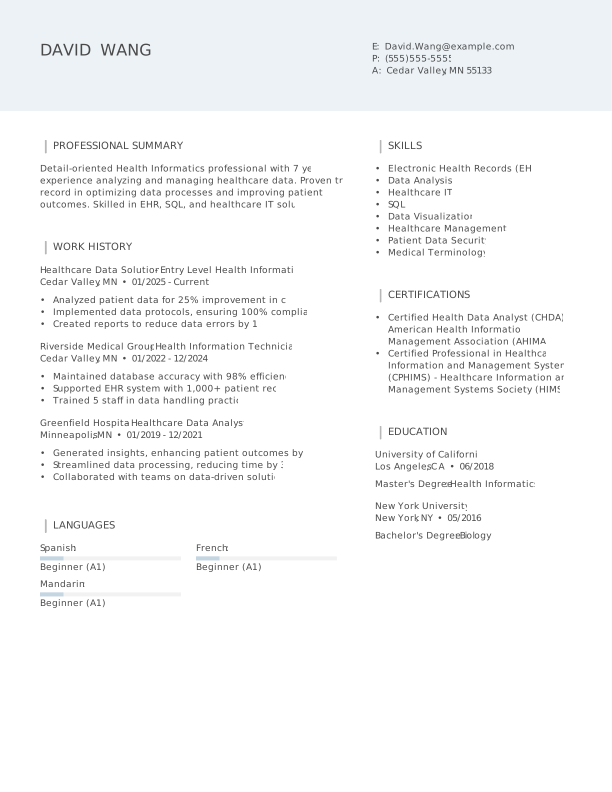
Example
David Wang
Cedar Valley, MN 55133
(555)555-5555
David.Wang@example.com
Professional Summary
Detail-oriented Health Informatics professional with 7 years of experience analyzing and managing healthcare data. Proven track record in optimizing data processes and improving patient care outcomes. Skilled in EHR, SQL, and healthcare IT solutions.
Work History
Entry Level Health Informatics
Healthcare Data Solutions - Cedar Valley, MN
January 2025 - Current
- Analyzed patient data for 25% improvement in care
- Implemented data protocols, ensuring 100% compliance
- Created reports to reduce data errors by 15%
Health Information Technician
Riverside Medical Group - Cedar Valley, MN
January 2022 - December 2024
- Maintained database accuracy with 98% efficiency
- Supported EHR system with 1,000+ patient records
- Trained 5 staff in data handling practices
Healthcare Data Analyst
Greenfield Hospital - Minneapolis, MN
January 2019 - December 2021
- Generated insights, enhancing patient outcomes by 10%
- Streamlined data processing, reducing time by 30%
- Collaborated with teams on data-driven solutions
Languages
- Spanish - Beginner (A1)
- French - Beginner (A1)
- Mandarin - Beginner (A1)
Skills
- Electronic Health Records (EHR)
- Data Analysis
- Healthcare IT
- SQL
- Data Visualization
- Healthcare Management
- Patient Data Security
- Medical Terminology
Certifications
- Certified Health Data Analyst (CHDA) - American Health Information Management Association (AHIMA)
- Certified Professional in Healthcare Information and Management Systems (CPHIMS) - Healthcare Information and Management Systems Society (HIMSS)
Education
Master's Degree Health Informatics
University of California Los Angeles, CA
June 2018
Bachelor's Degree Biology
New York University New York, NY
May 2016
Build Your Resume in Minutes
Creating a custom resume is easier than ever with our Resume Builder!
How to Write an Entry Level Health Informatics Resume Summary
Your resume summary is the first thing employers see, making it essential to create a lasting impression. This section should reflect your unique skills and qualifications in health informatics, demonstrating your readiness for the role.
As someone entering this field, you’ll want to emphasize your analytical abilities and familiarity with healthcare systems. Highlight any relevant coursework or internships that showcase your potential as an entry-level professional.
To guide you in crafting an effective summary, consider these examples. They will illustrate what components resonate well with hiring managers and what pitfalls to avoid:
Weak Example
I am a recent graduate with a degree in health informatics. I am eager to find a job where I can use my knowledge and skills. I hope to contribute positively to the team and learn more about the field. A position that offers training and development is what I'm looking for.
Why this summary misses the mark:
- Lacks specific details about relevant skills or experiences that would benefit an employer
- Focuses excessively on personal goals instead of highlighting how the job seeker can add value to the organization
- Uses generic phrases like 'eager' and 'hope to contribute' which do not convey confidence or strong qualifications
Strong Example
Enthusiastic health informatics graduate with over 2 years of hands-on experience in data analysis and healthcare technology implementations. Improved patient data retrieval times by 30% through the development of efficient electronic health record systems. Proficient in SQL, data visualization tools, and understanding of HIPAA regulations to ensure compliance and security.
Why this summary works:
- Starts with a clear indication of educational background and relevant experience level
- Highlights a quantifiable achievement that showcases a direct impact on operational efficiency
- Mentions specific technical skills that are essential for success in health informatics roles

Pro Tip
If you’re just starting out in health informatics, consider using a career objective to showcase your passion and goals. This approach can highlight your enthusiasm despite limited experience. For inspiration, check out these resume objective examples tailored for entry-level positions in your field.
Showcasing Your Work Experience
The work experience section is important for your resume as an entry-level health informatics professional. This area will contain most of your content, and good resume templates always emphasize its importance.
Organize this section in reverse-chronological order to highlight your relevant experiences. Use bullet points to detail your achievements and key responsibilities in each position listed.
To illustrate effective entries, we’ll provide a couple of examples that demonstrate what makes a strong work history and what pitfalls to avoid:
Weak Example
Health Informatics Assistant
City Hospital – Los Angeles, CA
- Entered data into systems.
- Helped with computer tasks.
- Coordinated with healthcare team.
- Performed duties as assigned.
Why this work experience section misses the mark:
- Lacks detailed employment dates
- Bullet points are overly simplistic and don't highlight specific skills
- Concentrates on routine tasks instead of demonstrating achievements or impacts
Strong Example
Health Informatics Analyst
MedTech Solutions – Austin, TX
June 2021 - Present
- Analyze patient data to optimize electronic health record (EHR) systems, improving data retrieval speeds by 30%.
- Collaborate with IT teams to develop training programs for staff, improving user engagement and compliance by 40%.
- Conduct regular audits of health informatics processes, identifying areas for improvement that resulted in a 20% reduction in data entry errors.
Why this work experience section works:
- Starts each bullet with strong action verbs that convey the analyst's contributions
- Includes quantifiable metrics to demonstrate the effectiveness of initiatives undertaken
- Showcases relevant skills such as data analysis and collaboration essential for health informatics roles
While your resume summary and work experience are key components, don't overlook other important sections. Each part contributes to a well-rounded presentation of your skills and qualifications. For an in-depth look at crafting your resume, be sure to explore our comprehensive guide on how to write a resume.
Top Skills to Include on Your Resume
Including a skills section on your resume is important as it provides a snapshot of your abilities that can attract the attention of employers. This section serves as a practical tool for job seekers to showcase their qualifications relevant to the positions they are applying for.
Add both hard and soft skills to create a well-rounded resume.
Soft skills play a important role for entry-level health informatics professionals, as they improve effective communication and collaboration with healthcare teams to ensure better patient outcomes and system improvements.
Selecting the right resume skills is important as it aligns your qualifications with what employers expect from job seekers. Many organizations employ automated systems to filter out applicants lacking essential skills for the position.
To improve your chances, carefully review job postings to identify which skills are most valued. This approach helps you tailor your resume to meet both recruiter expectations and ATS requirements effectively.
Pro Tip
Ensure your resume is optimized to get noticed by hiring managers. Use our ATS Resume Checker to find and fix over 30 common mistakes, making it easier for your application to shine through automated filters.
10 skills that appear on successful entry-level health informatics resumes
To attract recruiters' attention, emphasize high-demand skills relevant to entry-level health informatics positions. You can find these skills illustrated in our resume examples, allowing you to approach job applications with improved confidence.
Here are 10 essential skills you should consider adding to your resume if they align with your experience and the job requirements:
Data analysis
Attention to detail
Health information management
Communication skills
Problem-solving
Knowledge of coding systems (ICD-10, CPT)
Skill in data visualization tools
Team collaboration
Technical skill in healthcare software
Understanding of HIPAA regulations
Based on analysis of 5,000+ medical professional resumes from 2023-2024
Resume Format Examples
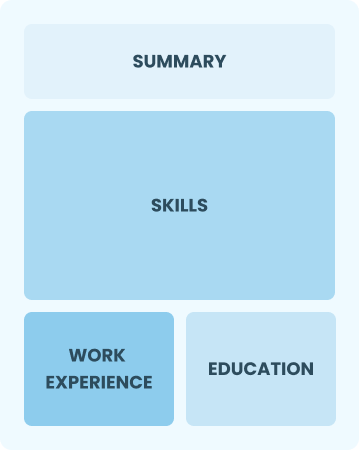
Choosing the appropriate resume format is important because it highlights your relevant skills, experiences, and growth in health informatics, helping you stand out to potential employers.
Entry-Level 0 - 2 years
Functional
Focuses on skills rather than previous jobs
Best for:
Recent graduates and career changers with limited experience in health informatics
Mid-Career 3 - 7 years
Combination
Balances skills and work history equally
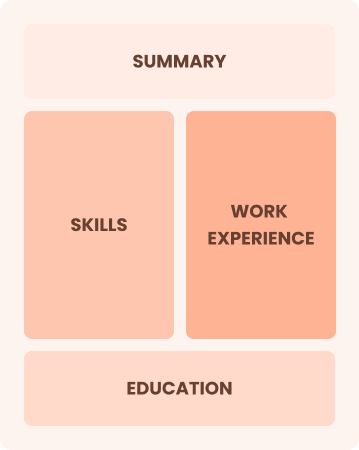
Best for:
Mid-career professionals focused on demonstrating their skills and pursuing growth opportunities
Experienced 8+ years
Chronological
Emphasizes work history in reverse order
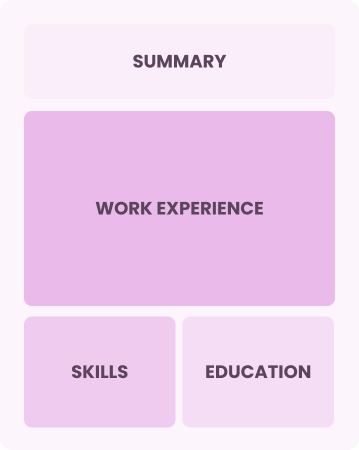
Best for:
Experienced leaders excelling in complex healthcare informatics solutions
Frequently Asked Questions
Should I include a cover letter with my entry-level health informatics resume?
Absolutely, including a cover letter is essential for making a memorable impression on employers. It allows you to highlight your passion for health informatics and elaborate on your relevant skills. For tips on crafting an effective cover letter, explore our guide on how to write a cover letter or use our Cover Letter Generator to simplify the process and improve your application.
Can I use a resume if I’m applying internationally, or do I need a CV?
When applying for jobs abroad, use a CV instead of a resume to align with international standards. A CV provides a comprehensive overview of your academic and professional history. Explore our resources on how to write a CV and take advantage of various CV examples to ensure your application meets global expectations.
What soft skills are important for entry-level health informatics?
In entry level health informatics, soft skills such as interpersonal skills, problem-solving, collaboration, and adaptability are important. These skills improve team dynamics and improve communication with stakeholders, facilitating effective data management and patient care.
I’m transitioning from another field. How should I highlight my experience?
Highlight transferable skills such as data analysis, communication, and project management that you gained from past jobs. Demonstrating these abilities shows you're capable of making an impact in health informatics. Share stories illustrating how you've successfully used these skills to solve problems or improve processes, and connect them to tasks you’ll tackle in this new role.
Where can I find inspiration for writing my cover letter as a entry level health informatics?
For those seeking entry-level health informatics positions, exploring professional cover letter examples can be invaluable. These samples provide inspiration for content ideas, showcase effective formatting, and demonstrate how to present your qualifications in a compelling way. Use them as a guide to elevate your application materials.
Should I include a personal mission statement on my entry-level health informatics resume?
Yes, adding a personal mission statement to your resume is advisable. It effectively showcases your values and aspirations in health informatics, resonating well with organizations that prioritize patient-centered care or have a mission-driven ethos.




Ready to land the job?
Join 28M+ others who've built a resume that works.