Technical abilities, such as data analysis, emergency management protocols, and effective communication of complex information, are hard skills essential for a FEMA analyst.
FEMA Analyst Resume Examples & Templates
Looking to stand out as a FEMA analyst? Our FEMA analyst resume examples showcase how to emphasize your analytical skills, disaster response experience, and teamwork abilities to catch employers' attention.

by Gabriela Hernandez, Last Updated: January 18, 2026
Hired By:*

- Popular FEMA Analyst Resume Examples
- Resume Template—Easy to Copy & Paste
- Build Your Resume in Minutes
- How to Write a FEMA Analyst Resume Summary
- Showcasing Your Work Experience
- Top Skills to Include on Your Resume
- Resume Format Examples
- Related Government Resume Examples
- Frequently Asked Questions
- Should I include a cover letter with my fema analyst resume?
- Can I use a resume if I’m applying internationally, or do I need a CV?
- What soft skills are important for fema analysts?
- I’m transitioning from another field. How should I highlight my experience?
- Where can I find inspiration for writing my cover letter as a fema analyst?
- How do I write a resume with no experience?
Popular FEMA Analyst Resume Examples
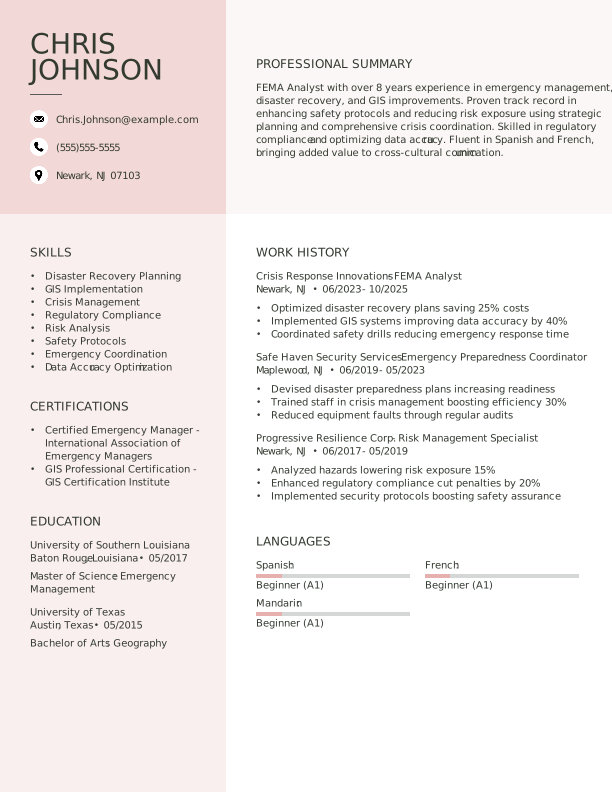
Discover our top FEMA analyst resume examples that emphasize critical skills such as disaster response coordination, data analysis, and policy development. Use these examples to confidently highlight your achievements for potential employers.
Ready to build your standout resume? With the Resume Builder, you can access user-friendly templates tailored specifically for emergency management professionals, streamlining the process and helping you craft an impressive application.
Recommended
 Customize This Resume
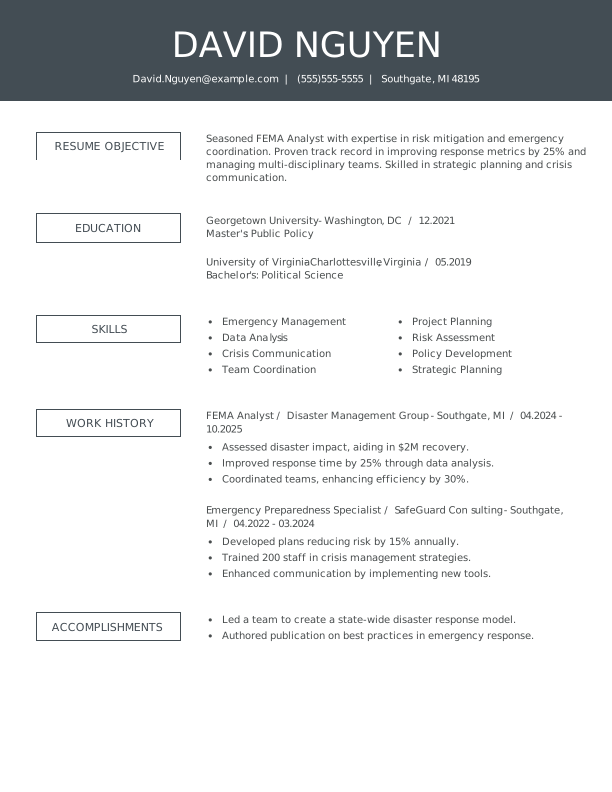
Entry-level FEMA analyst resume
What this resume does well:
This entry-level resume for a FEMA Analyst effectively highlights the applicant's relevant experiences and skills in emergency management, showcasing their ability to assess disaster impacts and improve response strategies. New professionals in this field must demonstrate their competencies in crisis management and data analysis through concrete examples, even when they have limited work history.
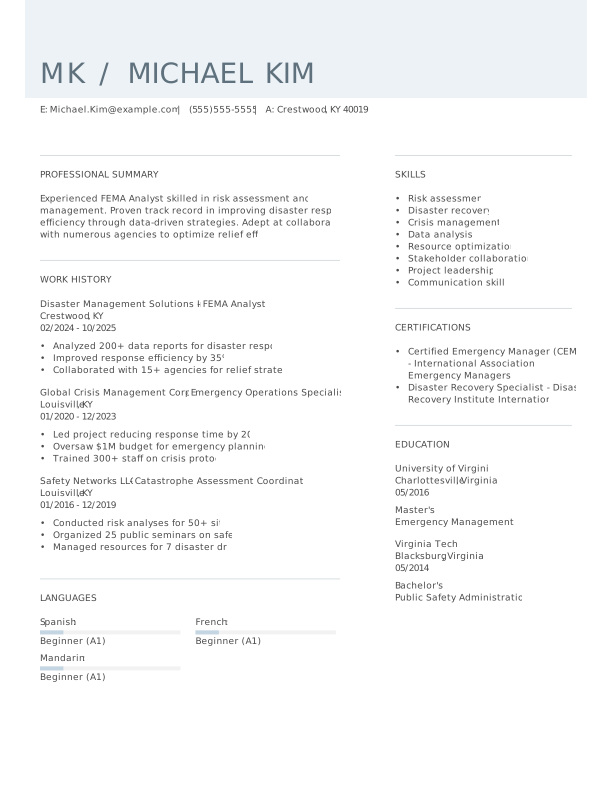
Mid-career fema analyst resume
What this resume does well:
This resume showcases the applicant's extensive qualifications with a strong emphasis on leadership and data-driven strategies. By detailing powerful responsibilities and achievements, it clearly positions them as ready for advanced roles in disaster management and crisis response.
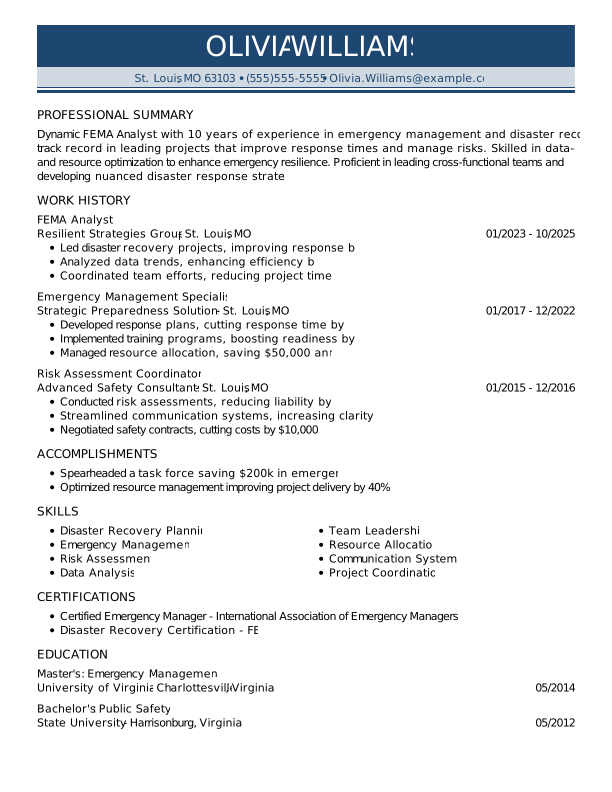
Experienced fema analyst resume
What this resume does well:
The work experience section illustrates the applicant's extensive expertise as a FEMA analyst, highlighting achievements such as improving response efficiency by 25% and reducing project time by 35%. The clear formatting improves readability, making it easy for hiring managers to quickly recognize key accomplishments.
Resume Template—Easy to Copy & Paste
Example
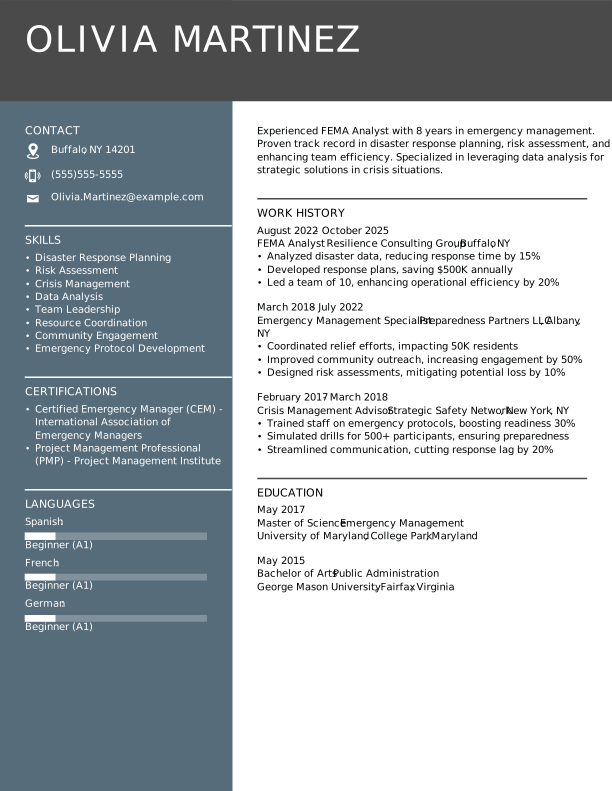
Olivia Martinez
Buffalo, NY 14201
(555)555-5555
Olivia.Martinez@example.com
Skills
- Disaster Response Planning
- Risk Assessment
- Crisis Management
- Data Analysis
- Team Leadership
- Resource Coordination
- Community Engagement
- Emergency Protocol Development
Certifications
- Certified Emergency Manager (CEM) - International Association of Emergency Managers
- Project Management Professional (PMP) - Project Management Institute
Languages
- Spanish - Beginner (A1)
- French - Beginner (A1)
- German - Beginner (A1)
Professional Summary
Experienced FEMA Analyst with 8 years in emergency management. Proven track record in disaster response planning, risk assessment, and enhancing team efficiency. Specialized in leveraging data analysis for strategic solutions in crisis situations.
Work History
FEMA Analyst
Resilience Consulting Group - Buffalo, NY
August 2022 - October 2025
- Analyzed disaster data, reducing response time by 15%
- Developed response plans, saving 0K annually
- Led a team of 10, enhancing operational efficiency by 20%
Emergency Management Specialist
Preparedness Partners LLC - Albany, NY
March 2018 - July 2022
- Coordinated relief efforts, impacting 50K residents
- Improved community outreach, increasing engagement by 50%
- Designed risk assessments, mitigating potential loss by 10%
Crisis Management Advisor
Strategic Safety Network - New York, NY
February 2017 - March 2018
- Trained staff on emergency protocols, boosting readiness 30%
- Simulated drills for 500+ participants, ensuring preparedness
- Streamlined communication, cutting response lag by 20%
Education
Master of Science Emergency Management
University of Maryland College Park, Maryland
May 2017
Bachelor of Arts Public Administration
George Mason University Fairfax, Virginia
May 2015
Build Your Resume in Minutes
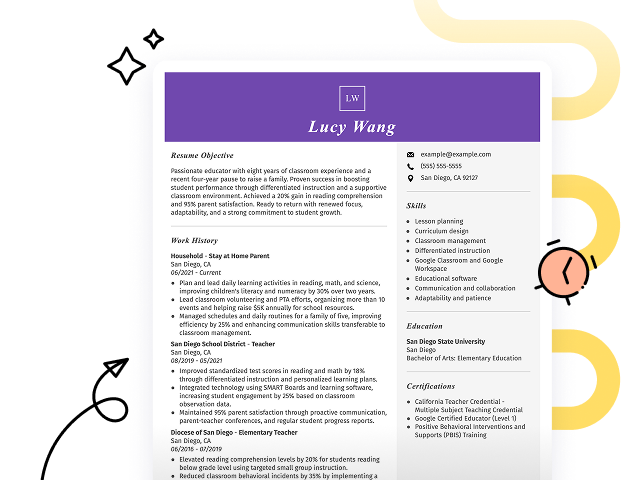
Creating a custom resume is easier than ever with our Resume Builder!
How to Write a FEMA Analyst Resume Summary
Your resume summary is the first opportunity to capture an employer's attention, making it important to present a compelling introduction. As a FEMA analyst, showcasing your analytical skills and disaster management experience is essential in this section. To better understand how to craft an strong summary, review the following examples that demonstrate both effective and ineffective approaches:
Weak Example
I am a dedicated FEMA analyst with experience in disaster response and recovery. I aim to find a position where I can use my skills effectively and contribute positively to the agency. A challenging role that offers stability and growth is what I’m looking for. I believe my background could be beneficial if given the chance.
Why this summary misses the mark:
- Lacks specific examples of skills or achievements related to FEMA analysis
- Overemphasizes personal desires rather than showcasing what value the job seeker brings to an employer
- Uses generic language that does not distinguish the applicant from others in similar roles
Strong Example
Detail-oriented FEMA analyst with 7+ years of experience in disaster response and recovery operations. Successfully managed the allocation of over $10 million in federal disaster relief funds, ensuring timely assistance to affected communities. Proficient in hazard mitigation planning, crisis communication, and using GIS technology for data analysis and mapping.
Why this summary works:
- Begins with specific years of experience and relevant field expertise
- Highlights a significant quantifiable achievement that showcases effective resource management
- Mentions relevant technical skills that align with the requirements for a FEMA analyst role

Pro Tip
If you're new to the job market and feel your experience is limited, consider using a career objective. This approach can effectively showcase your enthusiasm and goals. There are plenty of tailored resume objective examples available to help you stand out in your field.
Showcasing Your Work Experience
The work experience section is the cornerstone of your resume as a fema analyst, where you will present the bulk of your content. Good resume templates consistently include this essential section to highlight your relevant employment history.
This part should be organized in reverse-chronological order, detailing your previous roles. Use bullet points to effectively showcase your achievements and contributions in each position you've held.
To help illustrate effective strategies for this section, we’ve prepared a couple of examples that demonstrate what works well and what may fall short:
Weak Example
FEMA Analyst
Federal Emergency Management Agency – Washington, DC
- Reviewed disaster response plans.
- Attended meetings and took notes.
- Collaborated with team members on projects.
- Performed data entry and updated files.
Why this work experience section misses the mark:
- No details about the employment dates
- Bullet points lack specifics on contributions or results
- Focuses on routine tasks rather than highlighting key achievements or skills
Strong Example
FEMA Analyst
Federal Emergency Management Agency – Washington, DC
March 2020 - Present
- Analyze disaster response data to identify trends and improve operational efficiency, leading to a 30% reduction in response time.
- Develop comprehensive reports for stakeholders that inform policy adjustments and resource allocation strategies, improving community resilience.
- Collaborate with state and local agencies to assess emergency management practices, resulting in the implementation of new training programs that improved preparedness by 40%.
Why this work experience section works:
- Uses strong action verbs at the start of each bullet point to highlight achievements clearly
- Incorporates specific metrics and results to illustrate the impact of the applicant’s contributions
- Showcases relevant skills such as collaboration and analysis tailored to FEMA’s mission
While your resume summary and work experience are important components, don't overlook the significance of other sections that improve your candidacy. For detailed insights on crafting a standout resume, be sure to explore our comprehensive guide on how to write a resume.
Top Skills to Include on Your Resume
A skills section is important on your resume as it provides a snapshot of your qualifications and capabilities. It helps employers quickly assess if you have the technical skills needed for the FEMA analyst role.
For this position, highlight both technical and analytical skills. Include skill in tools like GIS software, data analysis platforms, and emergency management systems to showcase your expertise in disaster response and recovery efforts.
Interpersonal qualities like teamwork, adaptability, and problem-solving are soft skills that are important for collaboration in high-pressure situations and ensuring community resilience during disasters.
When selecting skills for your resume, it's essential to align with what employers expect from job seekers. Many organizations use automated screening systems that filter out applicants lacking key resume skills, making it important to present the right qualifications.
To determine which skills to emphasize, carefully review job postings relevant to your field. These listings often highlight specific abilities sought by recruiters and can help ensure your resume stands out in both human reviews and ATS scans.
Pro Tip
Ensure your resume stands out to hiring managers by using our ATS Resume Checker. It highlights over 30 common issues, helping you tailor your application to successfully navigate applicant tracking systems.
10 skills that appear on successful FEMA analyst resumes
Highlighting essential skills on your resume can significantly increase your chances of catching a recruiter's eye. These in-demand skills are often featured in our resume examples, empowering you to apply with the confidence that comes from a polished application.
Here are 10 skills you should consider including in your resume if they fit your qualifications and role requirements:
Analytical thinking
Interpersonal communication
Problem-solving abilities
Project management
Attention to detail
Data analysis skill
Risk assessment skills
Technical writing
Collaboration and teamwork
Adaptability and flexibility
Based on analysis of 5,000+ government professional resumes from 2023-2024
Resume Format Examples
Selecting the appropriate resume format is important for a FEMA analyst, as it highlights your analytical skills, relevant experiences, and career advancements in emergency management.
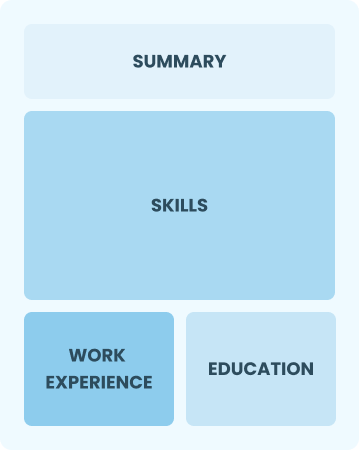
Entry-Level 0 - 2 years
Functional
Focuses on skills rather than previous jobs
Best for:
Recent graduates and career changers with up to two years of experience
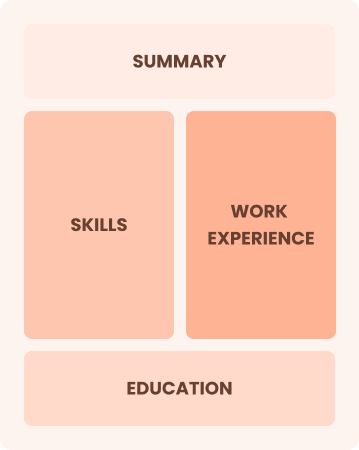
Mid-Career 3 - 7 years
Combination
Balances skills and work history equally
Best for:
Mid-career professionals focused on highlighting their skills and growth potential
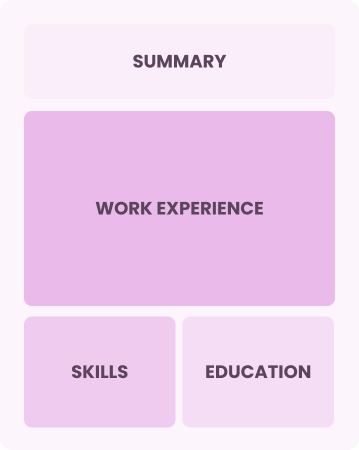
Experienced 8+ years
Chronological
Emphasizes work history in reverse order
Best for:
Experts leading disaster response and recovery efforts
Frequently Asked Questions
Should I include a cover letter with my fema analyst resume?
Absolutely! Including a cover letter can significantly improve your application by showcasing your enthusiasm and clarifying your qualifications. It allows you to connect your experience directly to the job requirements. If you’re looking for guidance, check out our resources on how to write a cover letter or try our Cover Letter Generator for a quick start.
Can I use a resume if I’m applying internationally, or do I need a CV?
When applying for jobs outside the U.S., use a CV instead of a resume to provide a comprehensive overview of your academic and professional history. For guidance on formatting and crafting an effective CV, explore our detailed resources on how to write a CV along with several CV examples designed specifically for international job seekers.
What soft skills are important for fema analysts?
Soft skills like communication, critical thinking, and adaptability are essential for a fema analyst. These interpersonal skills foster collaboration among team members and improve the ability to effectively respond to emergencies, ultimately leading to more efficient disaster management and support for affected communities.
I’m transitioning from another field. How should I highlight my experience?
When applying for FEMA analyst positions, highlight your transferable skills such as analytical thinking, communication, and project management. These attributes illustrate your capacity to adapt and succeed in emergency management roles. Share specific instances from your previous work that align with the demands of disaster response and recovery efforts to showcase your readiness.
Where can I find inspiration for writing my cover letter as a fema analyst?
As a job seeker in the FEMA analyst field, consider exploring professional cover letter examples to find inspiration. These samples provide valuable insights into formatting tips, content ideas, and effective ways to showcase your qualifications. Using them can help improve your application materials and boost your chances of securing an interview.
How do I write a resume with no experience?
If you're pursuing a FEMA analyst role with limited experience, highlight relevant coursework, internships, and any volunteer work related to emergency management or public safety. For more guidance, consider checking out this resume with no experience resource. Emphasize skills like analytical thinking, problem-solving, and teamwork. Your passion for disaster response and your ability to learn quickly can truly set you apart from other applicants.




Ready to land the job?
Join 28M+ others who've built a resume that works.