A cover letter ending is your final opportunity to reinforce your skills, express enthusiasm for the role, and leave a confident impression on the hiring manager. When done right, it can set you apart from other candidates by ending with purpose instead of a generic sign-off.
In this guide, you’ll learn how to end a cover letter effectively, what to include in your final paragraph, and see strong closing examples you can copy and tailor for your own application.
Why the Ending of Your Cover Letter Matters
A strong cover letter ending reinforces your qualifications, shows enthusiasm for the role, and encourages the hiring manager to take the next step. It also shapes the final impression you leave and can help distinguish your application from other candidates.
A strong concluding paragraph can help you:
- Stand out from other applicants. Hiring managers often skim dozens of applications in minutes. A concise, compelling closing helps your letter stick in their memory.
- Address gaps or resume limitations. If your experience isn't a perfect match, your closing can highlight transferable skills or unique achievements that make you a strong fit.
- Demonstrate cultural fit. Employers increasingly value candidates who align with their mission and values. Your closing can subtly show enthusiasm for the company's purpose beyond just the job description.
- Show confidence without overselling. A thoughtful closing demonstrates confidence in your abilities while maintaining a professional tone.
- Encourage the next step. A polite call to action can prompt the hiring manager to schedule an interview, review your portfolio, or continue the conversation.

Pro Tip
Did you know a LiveCareer study revealed that
37% of recruiters admitted to ghosting candidates due to losing interest in their application? Combat candidate ghosting by focusing your cover letter on job-relevant skills and specific experiences that clearly show why you’re a strong match for the role.
How Do You Conclude a Cover Letter?
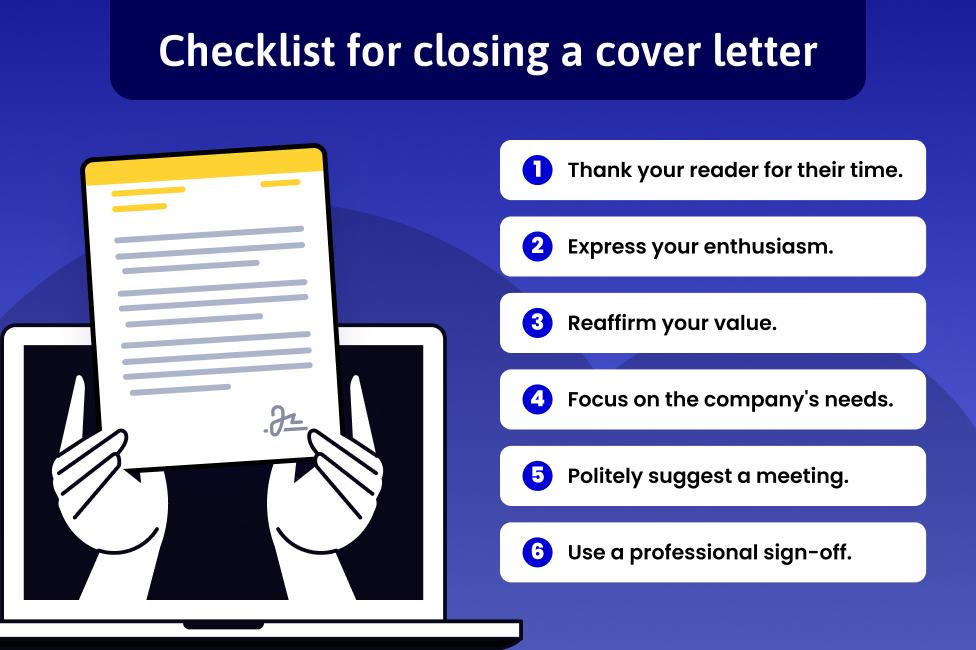
The best way to conclude a cover letter is to thank the employer for their time, briefly reiterate why you’re a strong fit for the role, and express interest in the next steps. Your cover letter conclusion should include a polite call to action, followed by a professional sign-off.
At a glance, a strong cover letter ending should:
- Thank the hiring manager for reviewing your application.
- Reaffirm your value and enthusiasm for the role.
- Politely suggest next steps (such as an interview).
- End with a professional closing (e.g., “Sincerely” or “Kind regards”).
Follow the steps below to learn how to close a cover letter with a confident, professional ending tailored to the specific job you’re applying for.
1. Show Gratitude
Thank the reader for their time and consideration. A sincere thank-you shows professionalism, respect for their time, and communicates that you value the opportunity.
Example:
Thank you for taking the time to review my application. I truly appreciate the opportunity to be considered for this role.
2. Express Enthusiasm & Reaffirm Your Value
Share why this role excites you and why you want to work for the company. Genuine enthusiasm helps employers see that you’re motivated and likely to contribute positively to the team.
Example:
I’m genuinely excited about the opportunity to join SuperDuper Creatives and contribute to your upcoming multichannel campaigns. Your focus on innovative storytelling and audience engagement aligns perfectly with my passion for creating content that drives results.
Briefly remind the employer of the professional skills, experience, or accomplishments you bring, and how you can help the company achieve its goals. Focus on what you can do for them, not just what the role means for your career.
Example:
With my three years of experience managing cross-functional product launches, I can help SuperDuper Creatives streamline campaigns and drive measurable engagement across social media platforms. I’m confident my skills in project management and data-driven strategy will help achieve your team’s growth goals.
3. Suggest Next Steps
Politely indicate your interest in continuing the conversation, such as scheduling an interview or discussing your qualifications further. This subtle call to action increases the chances of a follow-up.
Example:
I would welcome the opportunity to discuss how my experience in project management and team leadership can support SuperDuper Creatives’ upcoming campaigns. Please feel free to contact me at your convenience to schedule a conversation.
4. Use a Professional Sign-Off
A professional sign-off reinforces your credibility and leaves a polished, lasting impression. End with a formal closing.
Example:
- Sincerely
- Kind regards
- With gratitude
- Thank you
- Respectfully
Avoid overly casual or informal closings that can weaken your professionalism, such as “Cheers,” “Thanks a bunch,” or “Talk soon.” Emojis, slang, or playful language should also be avoided in cover letters, as they can make your application feel less credible.
A strong ending works best when it supports the overall structure, tone, and messaging of the document. Understanding how to write a cover letter from start to finish helps ensure your closing reinforces your qualifications rather than repeating them or sounding disconnected.
Pro Tip
Cover Letter Closing Paragraph Examples
Use the following cover letter closing paragraph examples as a starting point, then customize them to reflect your experience, the position, and the company you're applying to.
If you're looking for a quick closing sentence, here are a few examples:
- I would welcome the opportunity to discuss how my skills can benefit your team.
- Thank you for your time and consideration. I look forward to hearing from you.
- I appreciate your consideration and hope to discuss my qualifications further.
- I look forward to the opportunity to explain how I can contribute to your organization.
- Thank you for considering my application. I would be grateful for the opportunity to speak with you.
Reinforcing Relevant Qualifications
A cover letter closing that reinforces your qualifications briefly reminds the hiring manager of the skills, experience, or accomplishments that make you a strong fit for the role.
Here’s a cover letter closing example for a marketing specialist cover letter:
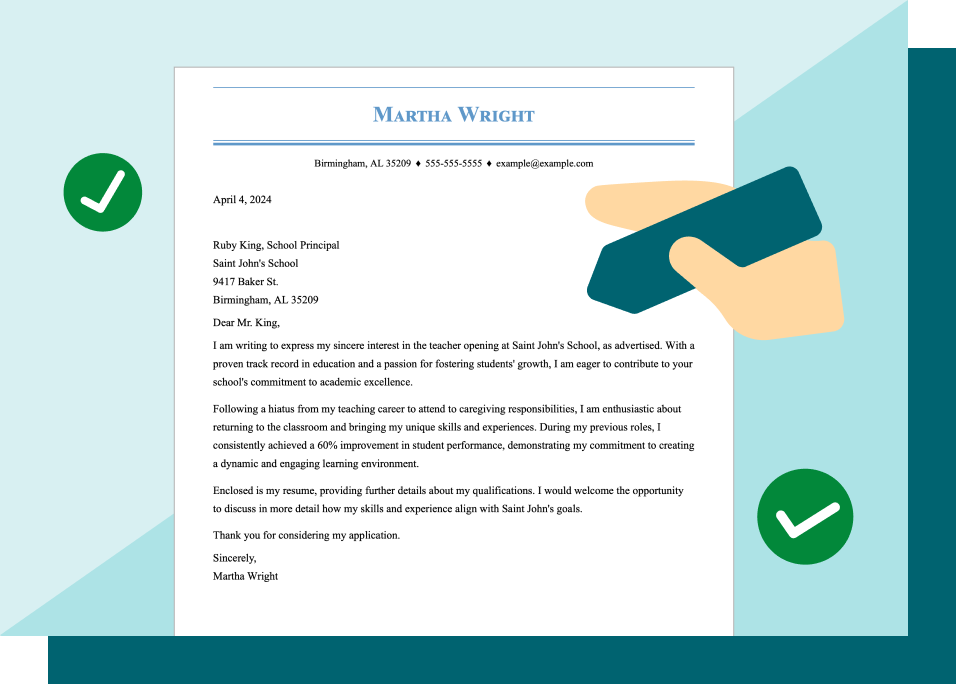
Thank you for taking the time to review my application. I’m excited about the opportunity to bring my experience in multichannel campaign management and audience engagement to Peterson & Smith Marketing. I would welcome the chance to discuss how my skills can support your upcoming initiatives.
Sincerely,
[Your Name]
Connecting Key Skills to the Employer’s Needs
A cover letter closing that connects your skills to the employer's needs shows how your experience can help the company achieve its goals. Highlight your relevant strengths, reference the value you can bring, and end with a polite expression of interest in discussing the role further.
Here’s a cover letter closing example for a software engineer cover letter:
I appreciate your time and consideration. With hands-on experience in building scalable web applications and optimizing backend performance, I’m confident I can contribute to Meta’s innovative efforts. I’d be happy to discuss how my technical expertise can help your team reach its goals.
Kind regards,
[Your Name]
Expressing Enthusiasm for the Opportunity
A cover letter closing that expresses enthusiasm leaves a positive final impression by showing genuine interest in the role and company. Briefly communicate your excitement about the opportunity and mention how you hope to contribute to the company or specific team.
Here’s a cover letter closing example for an entry-level business analyst:
Thank you for reviewing my application. I’m eager to apply my skills in data analysis, financial modeling, and reporting insights to support Peak Consulting’s strategic objectives. I would love the opportunity to discuss how I can contribute to your team’s success.
Sincerely,
[Your Name]
Highlighting Transferable Skills
A cover letter closing that highlights transferable skills helps employers see how your previous experience applies to a new role or industry. Emphasize the skills that carry over, connect them to the employer’s needs, and end with a confident, professional expression of interest in discussing your qualifications.
Here’s a cover letter closing example for a career changer:
Thank you for considering my application. My background in project management and team leadership in nonprofit organizations has prepared me to contribute to GreenTech Solutions. I would welcome a conversation to explore how my experience can support your company’s mission.
Respectfully,
[Your Name]
Emphasizing Leadership & Results
A cover letter closing that emphasizes leadership and results showcases your ability to drive outcomes and lead teams effectively. Highlight your leadership experience, connect it to the employer's goals, and close by expressing the value you can bring to the organization.
Here’s a cover letter closing example for a leadership role:
I appreciate your time and consideration. With extensive experience leading cross-functional teams and driving strategic growth initiatives, I’m confident I can help SummitCorp achieve its business objectives. I would welcome the chance to discuss how my leadership experience can benefit your organization.
Sincerely,
[Your Name]
Showcasing Creative Fit
A cover letter closing that showcases your creative fit demonstrates how your ideas, design skills, or artistic approach align with the employer's brand and goals. Highlight your creative strengths and express enthusiasm for contributing to the team.
Here’s a cover letter closing example for a creative role:
Thank you for taking the time to review my application. I’m enthusiastic about the opportunity to bring my graphic design and branding expertise to Artist Craftroom. I would love to discuss how my creative strategies and design techniques can help your team deliver compelling campaigns.
Kind regards,
[Your Name]
Indicating Flexibility for Remote Roles
A cover letter closing for a remote or flexible role should emphasize your ability to collaborate effectively across distributed teams. Briefly highlight relevant remote work skills, express enthusiasm for contributing from any location, and end with a professional invitation to discuss how you can support the team.
Here’s a cover letter closing example for a remote project management role:
Thank you for your time and consideration. I’m excited about the opportunity to contribute to CloudWorks using my experience in virtual team collaboration and remote project management. I would welcome a conversation about how I can support your distributed team’s success.
With gratitude,
[Your Name]
Reinforcing Readiness for an Entry-Level Role
A cover letter closing for an entry-level role should highlight your readiness to learn and contribute. Mention relevant coursework, internships, or transferable skills, express enthusiasm, and end with a professional invitation to discuss how you can add value to the team.
Here’s a cover letter closing example for a digital marketing internship:
Thank you for reviewing my application materials. I’m eager to bring my academic knowledge in digital marketing and hands-on internship experience to BrightWave Marketing. I would love the chance to discuss how I can contribute to your team while continuing to grow professionally.
Sincerely,
[Your Name]
Common Cover Letter Ending Mistakes to Avoid
Even a strong cover letter can stumble at the end if your closing paragraph contains common errors or misses the right tone. Here are some tips on cover letter mistakes to avoid:
- Being generic: A simple “Thank you for your time” or “I look forward to an interview” isn’t enough. Make your closing memorable by briefly summarizing your key skills and including the company name to show you’ve tailored the letter specifically to them.
- Using overly long or repetitive paragraphs: Avoid repeating the same words from the body of your cover letter. Provide a general summary of what you have to offer, and take advantage of keywords from the job ad to communicate your most relevant qualities for the job. Keep your final paragraph concise, focused on gratitude, value, and next steps.
- Focusing only on yourself: Don’t end by talking only about your career goals or what you want. Writing a cover letter closing paragraph that focuses only on what you can gain from the job comes off as self-centered and can put recruiters off.
- Being too casual or informal: Avoid humor, slang, or overly casual phrases, as this conveys a lack of professionalism. Your closing should be confident yet polite, and it should match the tone of the rest of your letter.
- Forgetting a clear call to action: Forgetting to ask the employer about next steps or to express interest in an interview is a missed opportunity and may seem like a lack of confidence.
- Using an unprofessional sign-off: Avoid anything too casual, like “Cheers” or “Best wishes.” A sign-off phrase that misses the mark can be the reason a recruiter decides you’re not their ideal candidate.
Key Takeaways
When ending a cover letter, keep these best practices in mind:
- Your closing paragraph is your final chance to stand out and influence whether a recruiter moves forward with your application.
- A professional cover letter ending is concise, confident, and tailored to the specific role and company.
- Use the closing to reinforce your value, not to repeat your resume or introduce new information.
- Express genuine enthusiasm for the position and the organization without sounding generic or over-the-top.
- Include a polite call to action, such as expressing interest in an interview or a follow-up conversation.
- Always proofread your closing carefully. Clear, error-free writing signals professionalism and strong communication skills.
Need help putting these best practices into action? Our cover letter examples make it easier to write a polished cover letter in just a few steps.
Frequently Asked Questions
What is a good closing sentence for a cover letter?
A good closing sentence for a cover letter expresses enthusiasm for the role while inviting the hiring manager to continue the conversation. Keep your closing confident, professional, and tailored to the position. For example: “I would welcome the opportunity to discuss how my skills and experience can contribute to your team. Thank you for your time and consideration.”
How do you end a cover letter instead of “sincerely”?
Instead of “Sincerely,” you can close a cover letter with other professional sign-offs, such as “Best regards,” “Kind regards,” “Respectfully,” “Thank you,” or “With appreciation.” Choose a closing that matches the tone of your letter and the company culture while remaining polite and professional.
How do you include a call to action in a cover letter conclusion?
To include a call to action in a cover letter conclusion, politely invite the employer to take the next step, such as scheduling an interview or discussing your qualifications further. Keep it confident, direct, and professional. For example: “I would welcome the opportunity to discuss how my experience aligns with your needs and am available at your convenience for an interview.”
Should you ask for an interview at the end of a cover letter?
Yes, you should ask for an interview at the end of a cover letter, but do so politely. A subtle call to action, such as expressing interest in discussing the role further, is more effective than demanding an interview or stating that you'll contact the employer regardless.
How long should a cover letter closing be?
A cover letter closing should be brief—usually two to four sentences. Keep the cover letter closing paragraph concise, thank the reader for taking their time to review your cover letter, summarize your key value for the job, and express interest in discussing the role further.
How We Reviewed This Article
Over the past 15 years, we’ve helped more than 10 million job seekers build stronger resumes, discover their career paths, interview confidently, and boost their chances of finding the right job faster. Review our Editorial Policy to learn more about our process.
About the Author
Gabriela Hernandez • CPRW, Career Advice Writer
Gabriela is a Certified Professional Resume Writer (CPRW) and member of the Professional Association of Resume Writers & Career Coaches. She focused on helping job seekers improve their professional resumes to highlight their unique skills and experience. Gabriela holds a BA in journalism from the University of Puerto Rico and brought more than four years of specialized experience to helping candidates navigate the complexities of the online job market, with a strong focus on resume optimization and effective self-presentation.
Ace your
job search!
We’ve helped job seekers create strong applications for 15+ years.


 Add LiveCareer as a preferred source on Google