Hard skills, such as expertise in health information management systems, data analysis, and understanding of coding procedures necessary for accurate patient records, are important. These hard skills play a significant role in maintaining efficient healthcare operations.
Health Information Specialist Resume Examples & Templates
Looking to boost your job search? Our health information specialist resume examples showcase essential skills like data management and patient privacy, helping you stand out to potential employers.

by Gabriela Hernandez, Last Updated: January 18, 2026
Hired By:*

- Popular Health Information Specialist Resume Examples
- Resume Template—Easy to Copy & Paste
- Build Your Resume in Minutes
- How to Write a Health Information Specialist Resume Summary
- Showcasing Your Work Experience
- Top Skills to Include on Your Resume
- Resume Format Examples
- Related Medical Resume Examples
- Frequently Asked Questions
- Should I include a cover letter with my health information specialist resume?
- Can I use a resume if I’m applying internationally, or do I need a CV?
- What soft skills are important for health information specialists?
- I’m transitioning from another field. How should I highlight my experience?
- How should I format a cover letter for a health information specialist job?
- Should I include a personal mission statement on my health information specialist resume?
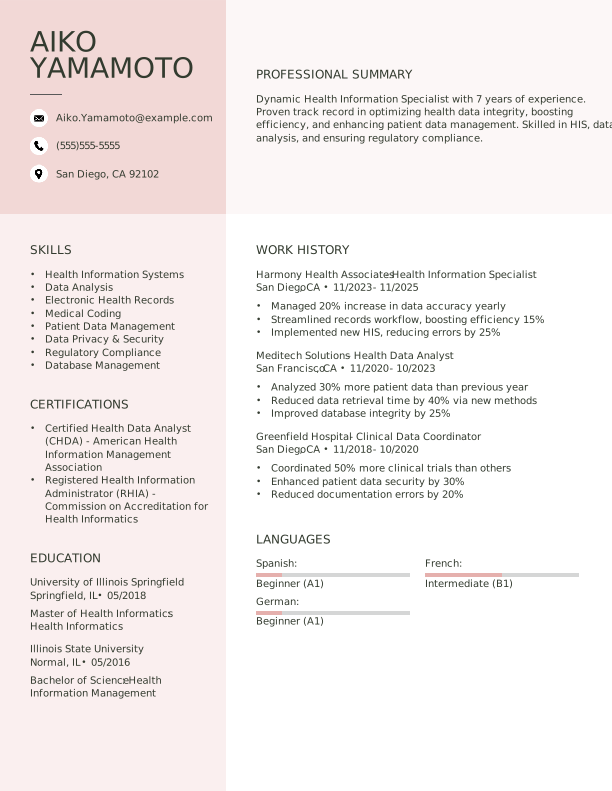
Popular Health Information Specialist Resume Examples
Check out our top health information specialist resume examples that emphasize key skills such as data management, coding accuracy, and compliance knowledge. These Resume Builder examples will help you effectively showcase your qualifications to potential employers.
Ready to build your standout resume? Our Resume Builder offers user-friendly templates specifically designed for professionals in the health information field, making your application process simpler.
Recommended
 Customize This Resume
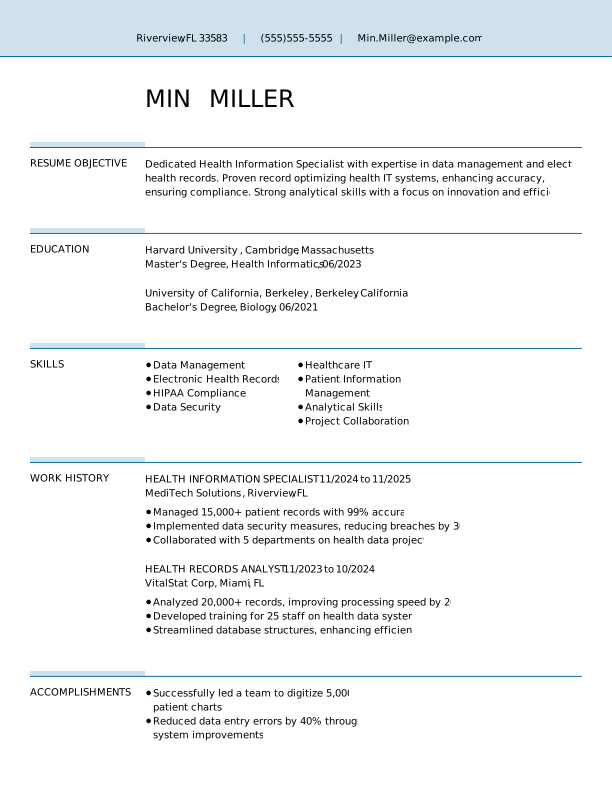
Entry-level health information specialist resume
What this resume does well:
This entry-level resume effectively highlights the applicant's technical competencies in data management and electronic health records, demonstrating a strong foundation through education and relevant certifications. New professionals in this field must showcase their analytical skills, compliance knowledge, and ability to improve efficiency even with limited direct work experience.
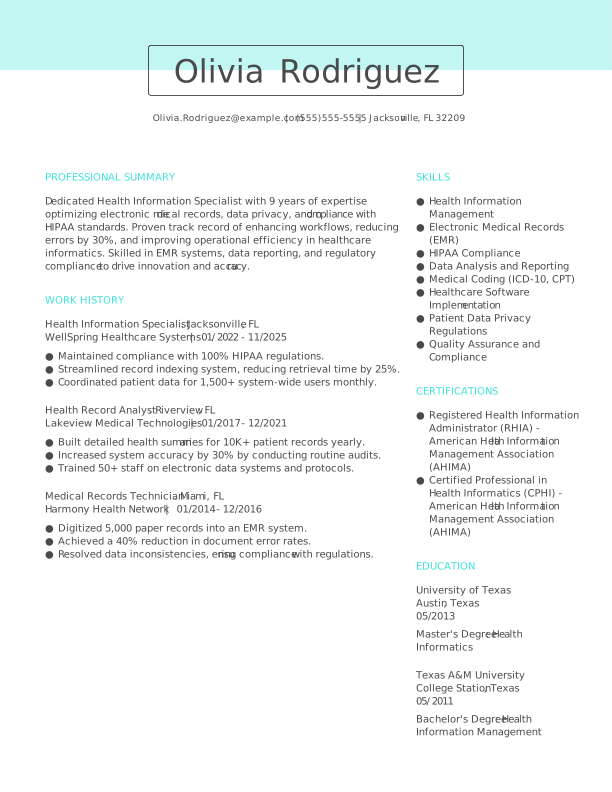
Mid-career health information specialist resume
What this resume does well:
This resume effectively presents the job seeker’s qualifications by highlighting achievements in compliance, data management, and system optimization. It showcases a clear trajectory of growth, preparing them for leadership roles and complex challenges within health information management.
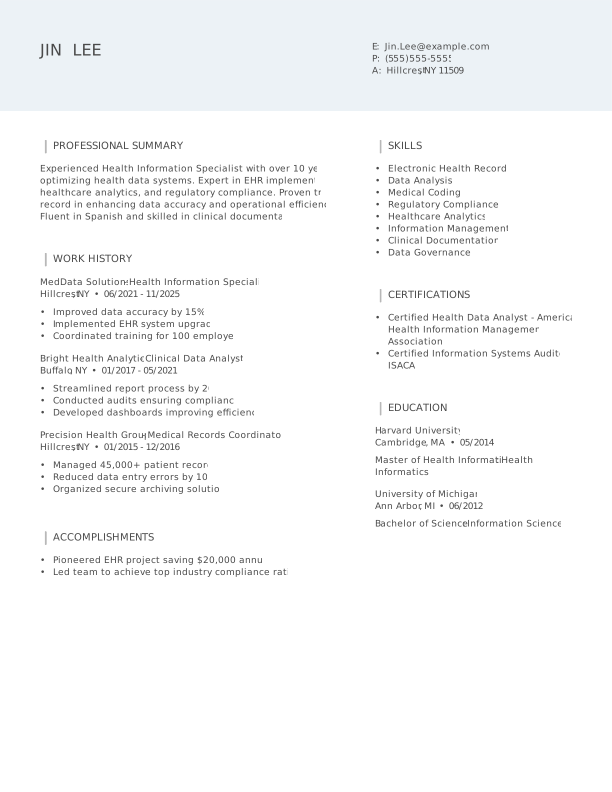
Experienced health information specialist resume
What this resume does well:
This resume showcases the applicant's extensive experience as a health information specialist, highlighting their success in improving data accuracy by 15% and coordinating training for over 100 employees. The clear bullet points improve readability, making it easy for hiring managers to identify key achievements quickly.
Resume Template—Easy to Copy & Paste
Example
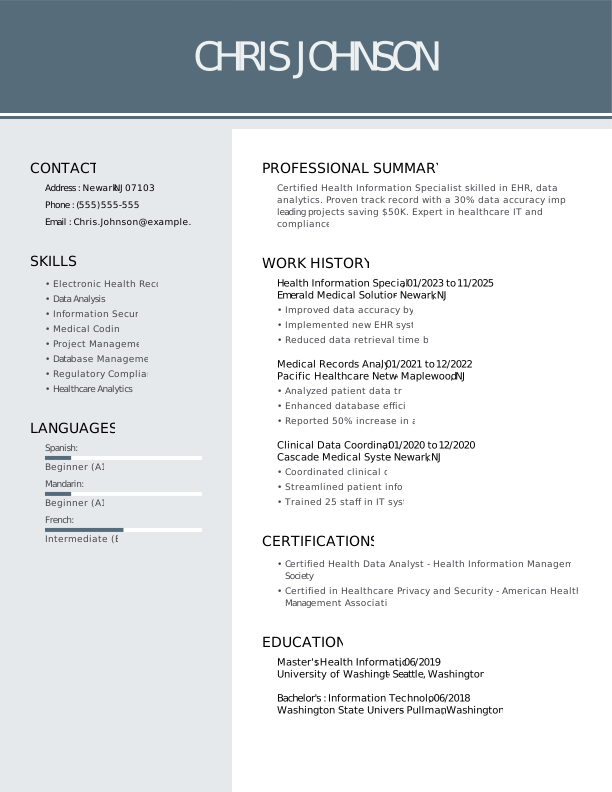
Chris Johnson
Newark, NJ 07103
(555)555-5555
Chris.Johnson@example.com
Skills
- Electronic Health Records
- Data Analysis
- Information Security
- Medical Coding
- Project Management
- Database Management
- Regulatory Compliance
- Healthcare Analytics
Languages
- Spanish - Beginner (A1)
- Mandarin - Beginner (A1)
- French - Intermediate (B1)
Professional Summary
Certified Health Information Specialist skilled in EHR, data security, and analytics. Proven track record with a 30% data accuracy improvement and leading projects saving $50K. Expert in healthcare IT and regulatory compliance.
Work History
Health Information Specialist
Emerald Medical Solutions - Newark, NJ
January 2023 - November 2025
- Improved data accuracy by 30%
- Implemented new EHR systems
- Reduced data retrieval time by 20%
Medical Records Analyst
Pacific Healthcare Network - Maplewood, NJ
January 2021 - December 2022
- Analyzed patient data trends
- Enhanced database efficiency
- Reported 50% increase in audits
Clinical Data Coordinator
Cascade Medical Systems - Newark, NJ
January 2020 - December 2020
- Coordinated clinical data
- Streamlined patient info flow
- Trained 25 staff in IT systems
Certifications
- Certified Health Data Analyst - Health Information Management Systems Society
- Certified in Healthcare Privacy and Security - American Health Information Management Association
Education
Master's Health Informatics
University of Washington Seattle, Washington
June 2019
Bachelor's Information Technology
Washington State University Pullman, Washington
June 2018
Build Your Resume in Minutes
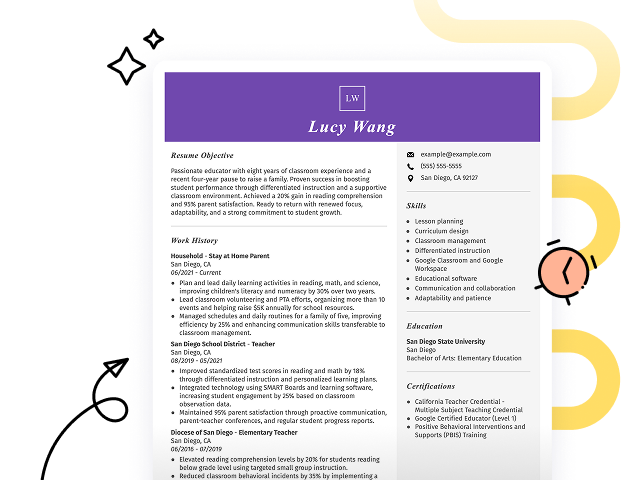
Creating a custom resume is easier than ever with our Resume Builder!
How to Write a Health Information Specialist Resume Summary
Your resume summary is the first thing employers will see, making it important to grab their attention right away. This section sets the tone for your application, so ensure it showcases your unique qualifications.
As a health information specialist, you should focus on your analytical skills and knowledge of healthcare data management. Highlight relevant certifications, software skills, and your ability to ensure compliance with regulations.
To better understand how to craft an effective summary, let’s examine some examples that illustrate what makes a strong introduction and what pitfalls to avoid:
Weak Example
I am a dedicated health information specialist with extensive experience in managing patient data and ensuring compliance. I seek a position that allows me to use my skills while also providing opportunities for advancement. I believe I can contribute positively to any team if given the chance.
Why this summary misses the mark:
- Lacks specific examples of relevant skills or accomplishments that showcase expertise in health information management
- Overuses personal pronouns, making it sound self-centered rather than focusing on potential value to the employer
- Emphasizes what the job seeker desires from the job instead of highlighting what they can deliver to the organization
Strong Example
Detail-oriented health information specialist with over 6 years of experience in managing and analyzing patient data to improve healthcare delivery. Achieved a 20% improvement in data accuracy through the implementation of standardized coding practices, ensuring compliance with HIPAA regulations. Proficient in electronic health records (EHR), data analysis software, and medical coding systems, contributing to streamlined operations and improved patient care outcomes.
Why this summary works:
- Starts with specific years of experience and area of expertise
- Highlights quantifiable achievement that demonstrates impact on data management accuracy
- Showcases relevant technical skills that are critical for success in health information roles

Pro Tip
If you're new to the job market, consider using a career objective on your resume instead of a summary. This approach lets you highlight your goals and enthusiasm more effectively. You can find plenty of tailored resume objective examples for health information specialists to guide you in crafting your own.
Showcasing Your Work Experience
The work experience section is important for your resume as a health information specialist, containing the bulk of your content. Good resume templates emphasize this section to highlight your professional journey.
This portion should be laid out in reverse-chronological order, featuring your previous roles. Use bullet points to detail specific achievements and contributions in each position you held.
We’ll now look at a couple of examples that showcase effective work history entries for health information specialists. These examples will illustrate what works well and what pitfalls to avoid.
Weak Example
Health Information Specialist
City Medical Center – New York, NY
- Entered patient data into the system.
- Ensured records were complete.
- Communicated with medical staff.
- Handled routine office tasks.
Why this work experience section misses the mark:
- Lacks specific employment dates for context
- Bullet points are generic and do not highlight unique skills or contributions
- Focuses on routine duties rather than highlighting any achievements or improvements made
Strong Example
Health Information Specialist
HealthFirst Solutions – Orlando, FL
March 2020 - Present
- Manage patient health records and ensure compliance with regulatory standards, improving data accuracy by 30% within one year.
- Develop training programs for staff on health information management systems, improving operational efficiency and reducing errors by 20%.
- Conduct regular audits of medical records to identify and rectify discrepancies, leading to a 15% decrease in audit findings.
Why this work experience section works:
- Starts each bullet with proactive action verbs that highlight achievements
- Incorporates specific metrics to showcase quantifiable improvements made by the job seeker
- Demonstrates relevant skills essential for health information management through practical examples
While your resume summary and work experience are important, don't overlook the importance of other sections. Each part contributes to a complete picture of your qualifications. For more detailed guidance on crafting an effective resume, be sure to explore our comprehensive guide on how to write a resume.
Top Skills to Include on Your Resume
A skills section is an important part of your resume because it quickly highlights your qualifications to potential employers. This section gives insight into your capabilities and helps you stand out in a competitive job market.
As a health information specialist, emphasize both technical skills and interpersonal abilities. Include specific examples such as expertise in electronic health record systems, data analysis software, and coding systems like ICD-10 or CPT.
Additionally, soft skills like attention to detail, communication, and problem-solving abilities are essential for collaborating with healthcare teams and ensuring quality patient care.
Selecting the right resume skills is important for aligning with what employers expect from applicants. Many organizations use automated screening tools that may overlook resumes lacking essential skills relevant to the role.
To effectively tailor your application, examine job postings closely. They often highlight key skills you should emphasize to attract recruiters' attention and ensure your resume successfully navigates ATS filters.
Pro Tip
To increase your chances of landing that interview, make sure your resume stands out and passes through applicant tracking systems by using our ATS Resume Checker. This tool identifies over 30 common mistakes.
10 skills that appear on successful health information specialist resumes
Improve your resume to capture recruiters' interest by highlighting important skills that are highly sought after in health information specialist roles. Our resume examples showcase these and other essential skills, allowing you to approach job applications with confidence.
Here are 10 skills you should consider including in your resume if they align with your qualifications and the job requirements:
Attention to detail
Data analysis
Health informatics knowledge
Regulatory compliance understanding
Strong communication abilities
Problem-solving mindset
Organizational expertise
Familiarity with coding and classification systems
Project management skills
Technical skill in healthcare software
Based on analysis of 5,000+ medical professional resumes from 2023-2024
Resume Format Examples
Choosing the right resume format is important because it allows health information specialists to effectively showcase their key skills, relevant experience, and professional growth.
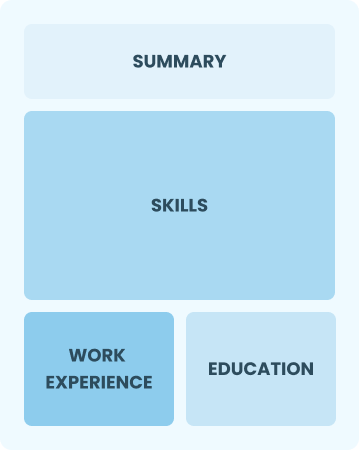
Entry-Level 0 - 2 years
Functional
Focuses on skills rather than previous jobs
Best for:
Recent graduates and career changers with up to two years of experience
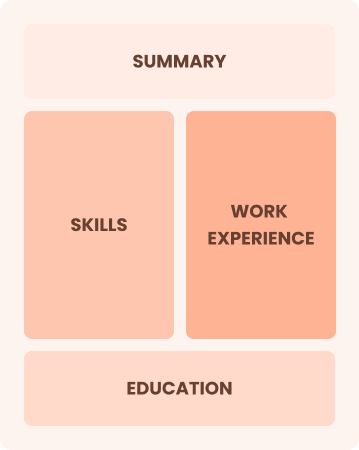
Mid-Career 3 - 7 years
Combination
Balances skills and work history equally
Best for:
Mid-career professionals focused on demonstrating their skills and potential for growth
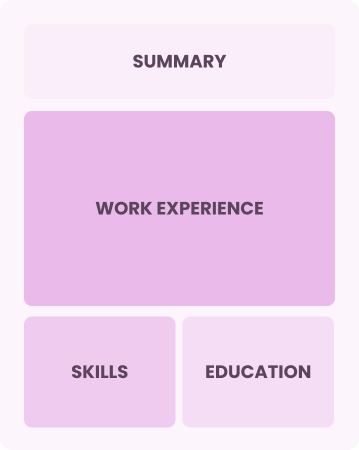
Experienced 8+ years
Chronological
Emphasizes work history in reverse order
Best for:
Seasoned experts leading health information management initiatives
Frequently Asked Questions
Should I include a cover letter with my health information specialist resume?
Absolutely. Including a cover letter is a great way to showcase your personality and highlight your key achievements. It can set you apart from other job seekers by providing deeper insight into your qualifications. If you need assistance, check out our resources on how to write a cover letter or use our Cover Letter Generator for quick and easy options.
Can I use a resume if I’m applying internationally, or do I need a CV?
When applying for jobs abroad, you should use a CV instead of a resume if the employer specifies it or if you are in fields like academia. Explore our CV examples to see how others have formatted their qualifications effectively. Additionally, learn more about how to write a CV with our comprehensive resources that offer tips on creating an impressive document.
What soft skills are important for health information specialists?
Soft skills like communication, attention to detail, and problem-solving are essential for health information specialists. These interpersonal skills allow effective collaboration with healthcare teams and ensure accurate data management, ultimately supporting patient care and organizational efficiency.
I’m transitioning from another field. How should I highlight my experience?
Highlight your transferable skills such as communication, analytical thinking, and teamwork from previous roles. These abilities illustrate your capacity to thrive in a health information specialist position, even if you lack direct experience. Share concrete examples that relate your past successes to key responsibilities in data management and patient information systems.
How should I format a cover letter for a health information specialist job?
When you format a cover letter, start by including your name and contact details. Afterward, use a professional greeting and craft an engaging introduction that captures attention. Provide a concise summary of relevant experience, ensuring the content matches the job requirements. Finish with a strong closing statement to encourage further discussion about your application.
Should I include a personal mission statement on my health information specialist resume?
Yes, including a personal mission statement on your resume is recommended because it showcases your values and career aspirations. This method works especially well when applying to organizations that focus on community health or emphasize a mission-driven culture.




Ready to land the job?
Join 28M+ others who've built a resume that works.