Skills essential for processing claims efficiently include hard skills like medical coding, understanding insurance policies, and data entry accuracy.
Medical Claims Processor Resume Examples & Templates
Looking to stand out in your job search? Our medical claims processor resume examples showcase key skills like attention to detail and claims analysis to help you catch employers' eyes.

by Gabriela Hernandez, Last Updated: January 18, 2026
Hired By:*

- Popular Medical Claims Processor Resume Examples
- Resume Template—Easy to Copy & Paste
- Build Your Resume in Minutes
- How to Write a Medical Claims Processor Resume Summary
- Showcasing Your Work Experience
- Top Skills to Include on Your Resume
- Resume Format Examples
- Related Medical Resume Examples
- Frequently Asked Questions
- Should I include a cover letter with my medical claims processor resume?
- Can I use a resume if I’m applying internationally, or do I need a CV?
- What soft skills are important for medical claims processors?
- I’m transitioning from another field. How should I highlight my experience?
- How should I format a cover letter for a medical claims processor job?
- Should I include a personal mission statement on my medical claims processor resume?
Popular Medical Claims Processor Resume Examples
Check out our top medical claims processor resume examples that emphasize important skills such as accuracy in processing claims, attention to detail, and strong communication abilities. These Resume Builder samples will guide you in showcasing your qualifications effectively.
Ready to build a remarkable resume? Our tool offers user-friendly templates specifically designed for professionals in the healthcare industry, making your job application process smoother with the help of Resume Builder.
Recommended
 Customize This Resume
Entry-level medical claims processor resume
What this resume does well:
This entry-level resume effectively highlights the job seeker's skill in claims processing and their ability to improve efficiency, showcasing their strong analytical skills and attention to detail. New professionals seeking a medical claims processor position must convey their understanding of healthcare systems and relevant certifications, even with limited prior experience.
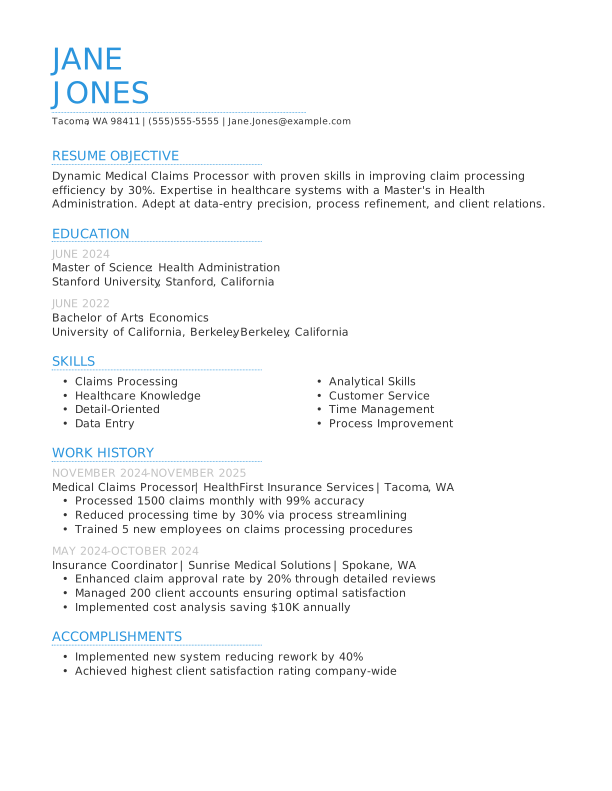
Mid-career medical claims processor resume
What this resume does well:
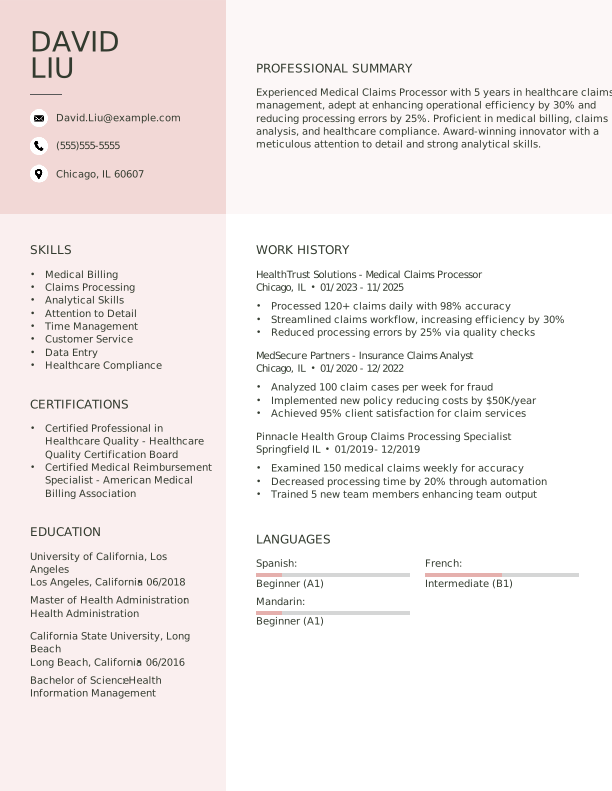
This resume showcases the applicant's extensive experience and achievements in medical claims processing, highlighting their ability to improve efficiencies and lead teams. The strategic presentation of qualifications indicates readiness for advanced roles in the healthcare billing sector.
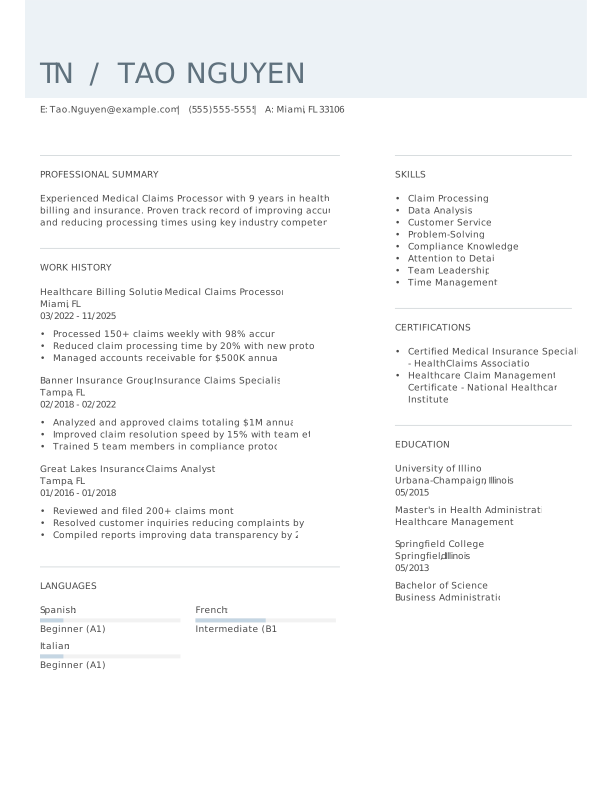
Experienced medical claims processor resume
What this resume does well:
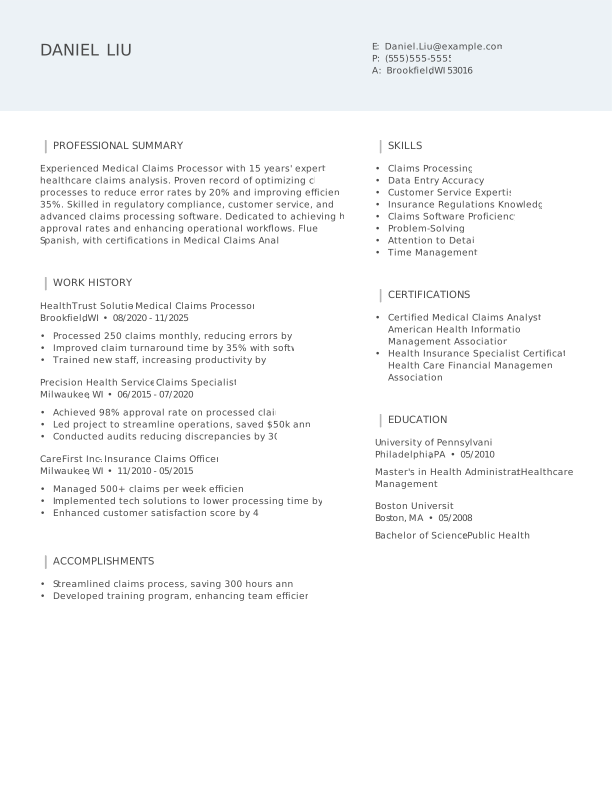
This resume's work history section illustrates the applicant's extensive experience as a medical claims processor, emphasizing their success in reducing errors by 20% and improving claim turnaround time by 35%. The clear formatting allows hiring managers to quickly recognize key achievements, making it effective for showcasing results-oriented professionals.
Resume Template—Easy to Copy & Paste
Example
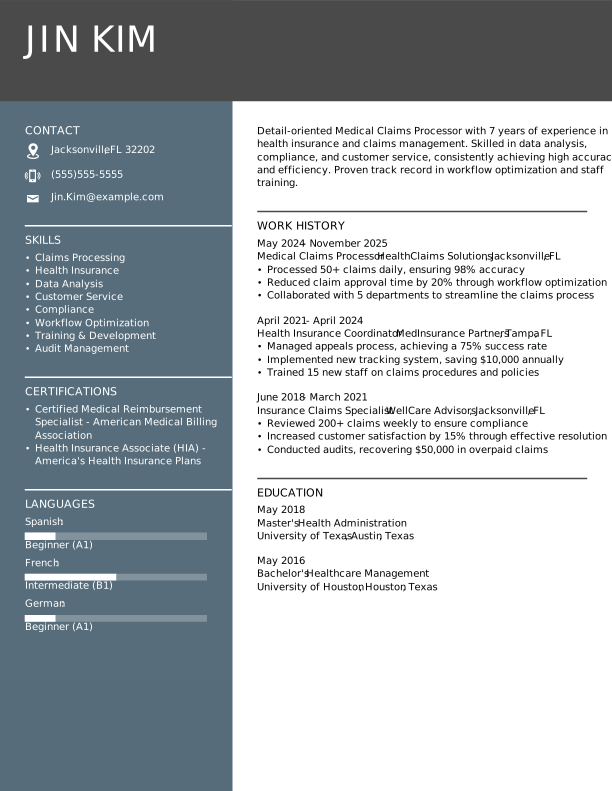
Jin Kim
Jacksonville, FL 32202
(555)555-5555
Jin.Kim@example.com
Skills
- Claims Processing
- Health Insurance
- Data Analysis
- Customer Service
- Compliance
- Workflow Optimization
- Training & Development
- Audit Management
Certifications
- Certified Medical Reimbursement Specialist - American Medical Billing Association
- Health Insurance Associate (HIA) - America's Health Insurance Plans
Languages
- Spanish - Beginner (A1)
- French - Intermediate (B1)
- German - Beginner (A1)
Professional Summary
Detail-oriented Medical Claims Processor with 7 years of experience in health insurance and claims management. Skilled in data analysis, compliance, and customer service, consistently achieving high accuracy and efficiency. Proven track record in workflow optimization and staff training.
Work History
Medical Claims Processor
HealthClaims Solutions - Jacksonville, FL
May 2024 - November 2025
- Processed 50+ claims daily, ensuring 98% accuracy
- Reduced claim approval time by 20% through workflow optimization
- Collaborated with 5 departments to streamline the claims process
Health Insurance Coordinator
MedInsurance Partners - Tampa, FL
April 2021 - April 2024
- Managed appeals process, achieving a 75% success rate
- Implemented new tracking system, saving 10,000 annually
- Trained 15 new staff on claims procedures and policies
Insurance Claims Specialist
WellCare Advisors - Jacksonville, FL
June 2018 - March 2021
- Reviewed 200+ claims weekly to ensure compliance
- Increased customer satisfaction by 15% through effective resolution
- Conducted audits, recovering ,000 in overpaid claims
Education
Master's Health Administration
University of Texas Austin, Texas
May 2018
Bachelor's Healthcare Management
University of Houston Houston, Texas
May 2016
Build Your Resume in Minutes
Creating a custom resume is easier than ever with our Resume Builder!
How to Write a Medical Claims Processor Resume Summary
Your resume summary is the first opportunity to grab an employer's attention, making it essential to showcase your qualifications effectively. As a medical claims processor, you should highlight your attention to detail, analytical skills, and knowledge of healthcare regulations.
This profession demands a clear demonstration of your ability to manage complex claims and resolve issues efficiently. By emphasizing these competencies in your summary, you set yourself apart from other job seekers.
To assist you in crafting a compelling summary, the following examples will illustrate effective strategies and common pitfalls:
Weak Example
I am an experienced medical claims processor looking for a new job where I can use my skills and make a difference. I have worked in various roles and want to find a position that allows me to grow. I believe I would be a great asset if given the chance.
Why this summary misses the mark:
- Lacks specific details about the applicant’s experience or accomplishments, making it vague
- Overemphasizes personal desires rather than showcasing unique skills or contributions
- Uses generic phrases that do not highlight the value the applicant could bring to potential employers
Strong Example
Detail-oriented medical claims processor with over 4 years of experience in managing and adjudicating insurance claims. Achieved a 98% accuracy rate in claim processing while reducing average processing time by 20%, leading to improved cash flow for the organization. Proficient in ICD-10 coding, HIPAA regulations, and various medical billing software systems.
Why this summary works:
- Begins with specific experience level and role focus
- Highlights quantifiable achievements that showcase efficiency and accuracy improvements
- Mentions relevant technical skills that are essential for success in medical claims processing

Pro Tip
If you’re new to the workforce, consider using a career objective on your resume. This allows you to highlight your enthusiasm and skills instead of focusing solely on experience. There are many tailored resume objective examples available to help you shine in the medical claims processing field.
Showcasing Your Work Experience
The work experience section is important for your resume as a medical claims processor, serving as the main focus where you'll present most of your content. Good resume templates always highlight this important section.
Organize this area in reverse-chronological order, detailing your previous positions. Use bullet points to effectively communicate your achievements and responsibilities in each role you’ve held.
To provide clarity on what makes a strong work history section, we’ll share a couple of examples that illustrate effective strategies and common pitfalls:
Weak Example
Medical Claims Processor
Health First Insurance – Orlando, FL
- Reviewed medical claims
- Processed payments and denials
- Communicated with healthcare providers
- Maintained records and documentation
Why this work experience section misses the mark:
- Lacks specific details about the role's impact or achievements
- Bullet points are generic and do not highlight unique skills or contributions
- Does not provide any measurable results to demonstrate effectiveness in the position
Strong Example
Medical Claims Processor
HealthFirst Insurance – Orlando, FL
March 2020 - Present
- Review and process medical claims for accuracy and compliance, achieving a 98% approval rate on first submissions
- Collaborate with healthcare providers to resolve discrepancies, improving claim resolution times by 30%
- Train new staff on best practices in claims processing, improving team efficiency and reducing errors by 15%
Why this work experience section works:
- Starts each bullet point with dynamic action verbs that highlight the job seeker's contributions
- Incorporates specific metrics that demonstrate the impact of the job seeker’s work
- Showcases relevant industry skills while detailing accomplishments
While your resume summary and work experience are important, don't overlook the significance of other sections. Each part contributes to a well-rounded presentation of your skills and qualifications. For detailed guidance on crafting a complete resume, explore our comprehensive guide on how to write a resume.
Top Skills to Include on Your Resume
A skills section is an important part of your resume, showcasing your competencies and making it easier for hiring managers to see if you fit the role. It acts as a quick reference to highlight your qualifications concisely.
For medical claims processors, focus on both technical skills and interpersonal abilities. Include expertise in tools like billing software, coding systems such as ICD-10, and familiarity with electronic health records (EHR) systems to demonstrate your readiness for the job.
Additionally, soft skills such as attention to detail, problem-solving abilities, and effective communication are important as they foster collaboration with healthcare providers and ensure timely resolution of claims issues.
When crafting your resume skills, it's important to align them with what employers expect from the ideal applicant. Many organizations implement automated screening systems that filter out job seekers who lack essential skills for the position.
To highlight your qualifications effectively, review job postings closely for insights on which skills to emphasize. This practice appeals to recruiters while also ensuring your resume adheres to the criteria set by ATS systems.
Pro Tip
Ensure your resume stands out and gets noticed by applicant tracking systems. Use our ATS Resume Checker to uncover over 30 common pitfalls and boost your chances of landing that interview.
10 skills that appear on successful medical claims processor resumes
Improving your resume with sought-after skills can significantly attract the attention of recruiters looking for medical claims processors. You'll find these essential skills highlighted in our resume examples, allowing you to approach job applications with confidence and professionalism.
By the way, consider incorporating relevant skills from the following list into your resume if they align with your background and job needs:
Attention to detail
Analytical thinking
Knowledge of medical terminology
Familiarity with billing software
Communication skills
Problem-solving abilities
Time management
Data entry
Regulatory compliance knowledge
Team collaboration
Based on analysis of 5,000+ medical professional resumes from 2023-2024
Resume Format Examples
Selecting the appropriate resume format is important for a medical claims processor because it showcases your relevant skills, experience, and career growth in a clear and organized manner.
Entry-Level 0 - 2 years
Functional
Focuses on skills rather than previous jobs

Best for:
Recent graduates and career changers with up to two years of experience
Mid-Career 3 - 7 years
Combination
Balances skills and work history equally

Best for:
Mid-career professionals focused on demonstrating their skills and potential for growth
Experienced 8+ years
Chronological
Emphasizes work history in reverse order

Best for:
Seasoned experts adept in complex claims management and oversight
Frequently Asked Questions
Should I include a cover letter with my medical claims processor resume?
Absolutely, including a cover letter is a great way to differentiate yourself from other job seekers. It allows you to highlight your relevant skills and show genuine interest in the position. For tips on crafting an effective cover letter, check out our comprehensive guide on how to write a cover letter. Alternatively, you can use our user-friendly Cover Letter Generator for quick assistance.
Can I use a resume if I’m applying internationally, or do I need a CV?
When applying for jobs abroad, use a CV instead of a resume as it is often the preferred format. To assist you in this process, we provide resources that guide you on how to write a CV that aligns with international expectations. Additionally, explore our CV examples to see how your document can be structured effectively.
What soft skills are important for medical claims processors?
Soft skills like attention to detail, communication, interpersonal skills, and problem-solving are essential for medical claims processors. These abilities facilitate clear interactions with healthcare providers and insurers, ensuring accurate claims processing and fostering positive professional relationships.
I’m transitioning from another field. How should I highlight my experience?
Emphasize your transferable skills, including attention to detail, analytical abilities, and communication. These qualities are essential in processing medical claims and can be developed through a variety of past experiences. Share specific situations where you have successfully navigated challenges or improved processes to demonstrate how your background fits the demands of this role.
How should I format a cover letter for a medical claims processor job?
To format a cover letter for a medical claims processor role, start with your contact details, then a warm greeting. Include an opening that highlights your enthusiasm and relevant qualifications. Clearly outline your experience in claims processing and tailor examples to the job specifications. End with a positive closing statement inviting further discussion.
Should I include a personal mission statement on my medical claims processor resume?
Yes, adding a personal mission statement to your resume is beneficial. It effectively conveys your core values and career aspirations. This strategy is especially powerful when targeting organizations that prioritize cultural fit or have a commitment to specific healthcare missions.




Ready to land the job?
Join 28M+ others who've built a resume that works.