Hard skills include expertise in healthcare regulations, patient rights advocacy, and effective documentation practices that ensure compliance and support patients' needs.
Patient Advocate Resume Examples & Templates
Looking for a way to shine in your job search? Our patient advocate resume examples showcase essential skills like communication and empathy, helping you stand out to potential employers.

by Gabriela Hernandez, Last Updated: January 18, 2026
Hired By:*

- Popular Patient Advocate Resume Examples
- Resume Template—Easy to Copy & Paste
- Build Your Resume in Minutes
- How to Write a Patient Advocate Resume Summary
- Showcasing Your Work Experience
- Top Skills to Include on Your Resume
- Resume Format Examples
- Related Medical Resume Examples
- Frequently Asked Questions
- Should I include a cover letter with my patient advocate resume?
- Can I use a resume if I’m applying internationally, or do I need a CV?
- What soft skills are important for patient advocates?
- I’m transitioning from another field. How should I highlight my experience?
- How do I write a resume with no experience?
- How do I add my resume to LinkedIn?
Popular Patient Advocate Resume Examples
Discover our top patient advocate resume examples that emphasize key skills such as communication, empathy, and problem-solving. These examples will help you effectively showcase your dedication to improving patient care and support.
Looking to build a standout resume? Our Resume Builder offers user-friendly templates specifically designed for advocates in healthcare, making the process simple and efficient.
Recommended
 Customize This Resume
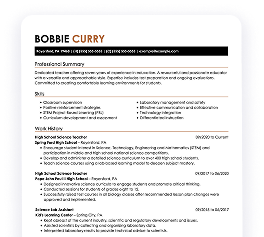
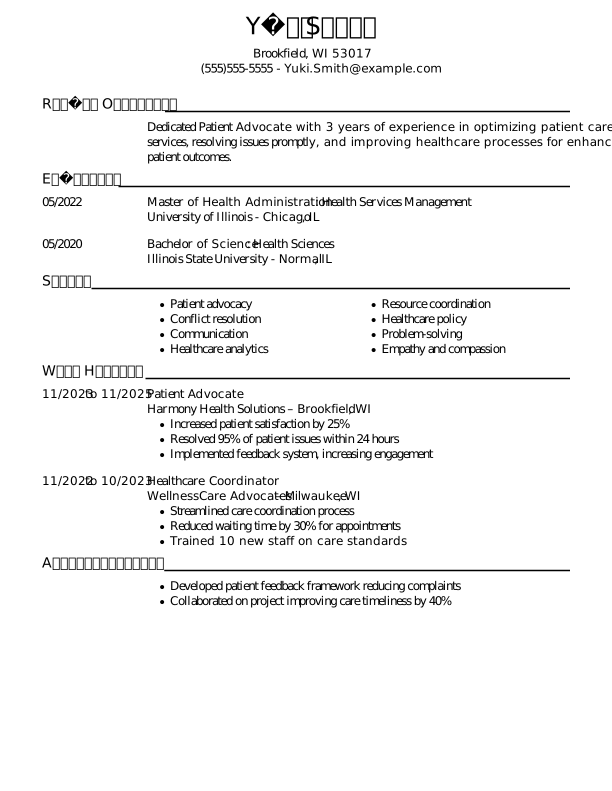
Entry-level patient advocate resume
What this resume does well:
This entry-level resume effectively highlights the applicant's strengths in patient advocacy and conflict resolution, showcasing significant achievements in improving patient satisfaction and care coordination. New professionals must demonstrate their commitment to improving patient experiences and their ability to navigate complex healthcare environments through relevant skills and accomplishments, even if they possess limited direct work experience.
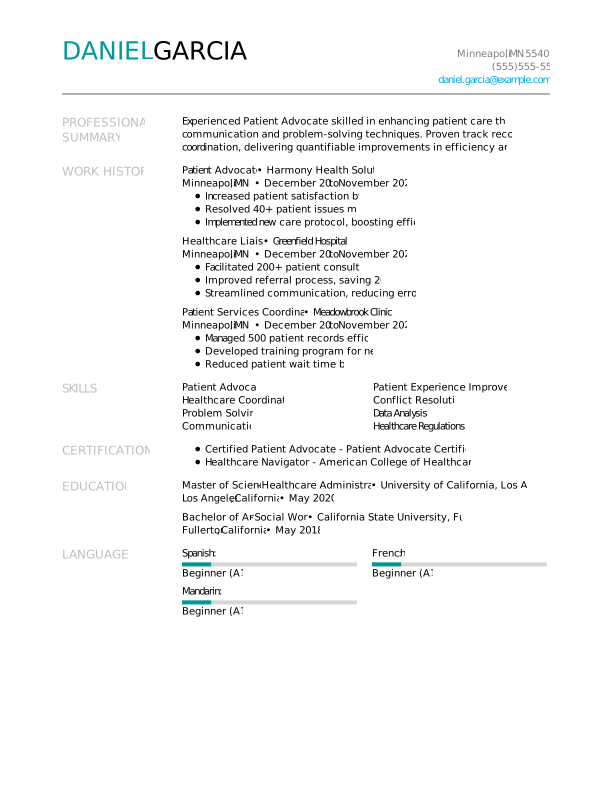
Mid-career patient advocate resume
What this resume does well:
This resume effectively showcases the job seeker's qualifications by detailing powerful achievements and leadership roles. The structured presentation of experiences demonstrates a strong background in patient advocacy, signaling readiness for advanced responsibilities and greater challenges in healthcare.
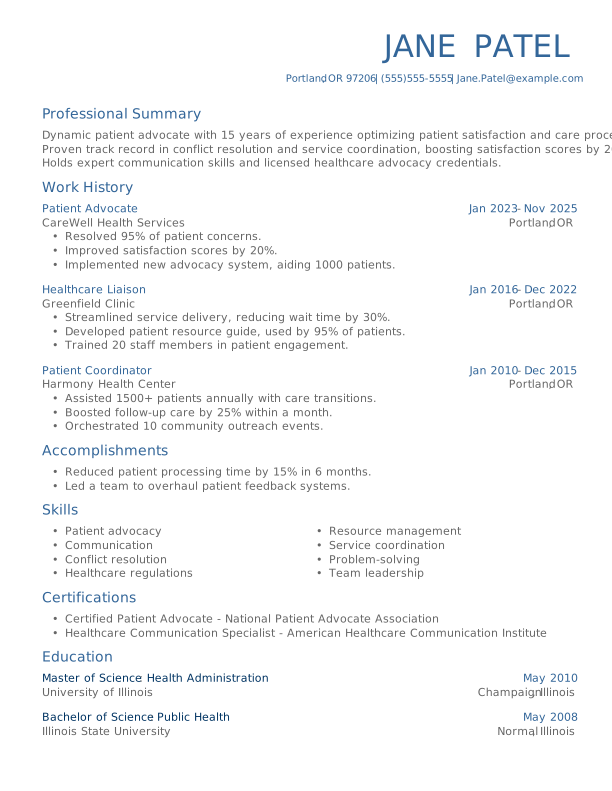
Experienced patient advocate resume
What this resume does well:
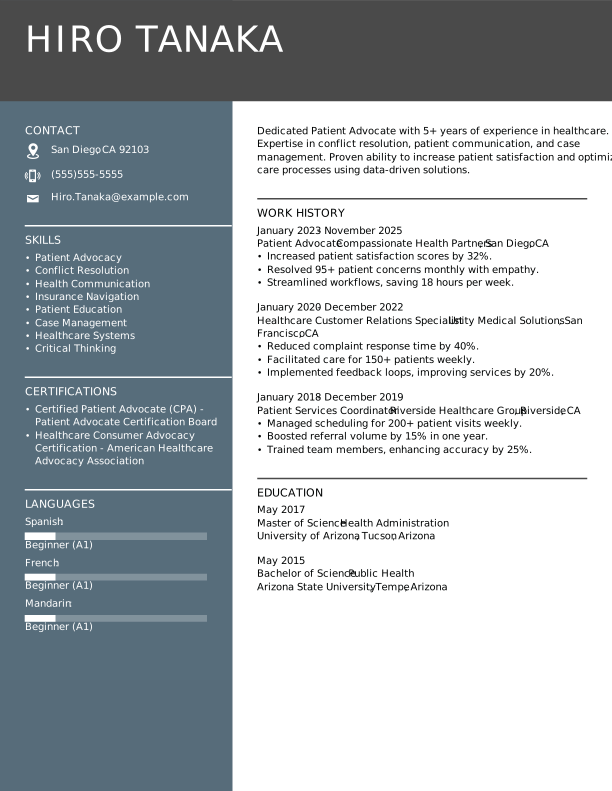
This resume's work history section illustrates the applicant's strong advocacy skills, highlighting their success in resolving 95% of patient concerns and improving satisfaction scores by 20%. The clear formatting allows hiring managers to quickly assess key achievements and contributions, making it effective for showcasing compelling results.
Resume Template—Easy to Copy & Paste
Example
Hiro Tanaka
San Diego, CA 92103
(555)555-5555
Hiro.Tanaka@example.com
Skills
- Patient Advocacy
- Conflict Resolution
- Health Communication
- Insurance Navigation
- Patient Education
- Case Management
- Healthcare Systems
- Critical Thinking
Certifications
- Certified Patient Advocate (CPA) - Patient Advocate Certification Board
- Healthcare Consumer Advocacy Certification - American Healthcare Advocacy Association
Languages
- Spanish - Beginner (A1)
- French - Beginner (A1)
- Mandarin - Beginner (A1)
Professional Summary
Dedicated Patient Advocate with 5+ years of experience in healthcare. Expertise in conflict resolution, patient communication, and case management. Proven ability to increase patient satisfaction and optimize care processes using data-driven solutions.
Work History
Patient Advocate
Compassionate Health Partners - San Diego, CA
January 2023 - November 2025
- Increased patient satisfaction scores by 32%.
- Resolved 95+ patient concerns monthly with empathy.
- Streamlined workflows, saving 18 hours per week.
Healthcare Customer Relations Specialist
Unity Medical Solutions - San Francisco, CA
January 2020 - December 2022
- Reduced complaint response time by 40%.
- Facilitated care for 150+ patients weekly.
- Implemented feedback loops, improving services by 20%.
Patient Services Coordinator
Riverside Healthcare Group - Riverside, CA
January 2018 - December 2019
- Managed scheduling for 200+ patient visits weekly.
- Boosted referral volume by 15% in one year.
- Trained team members, enhancing accuracy by 25%.
Education
Master of Science Health Administration
University of Arizona Tucson, Arizona
May 2017
Bachelor of Science Public Health
Arizona State University Tempe, Arizona
May 2015
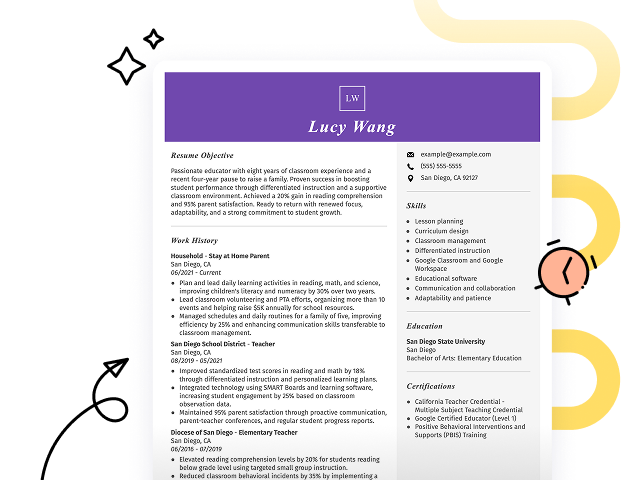
Build Your Resume in Minutes
Creating a custom resume is easier than ever with our Resume Builder!
How to Write a Patient Advocate Resume Summary
Your resume summary is the first impression you make on hiring managers, making it important to craft a compelling introduction. As a patient advocate, you should emphasize your communication skills, empathy, and ability to navigate healthcare systems effectively. To illustrate what works best in this key section, take a look at the following summary examples that will guide you in showcasing your qualifications:
Weak Example
I am a dedicated patient advocate with years of experience helping individuals navigate the healthcare system. I am seeking a position that allows me to use my background and make a positive impact on patients" lives. A supportive work environment that values collaboration is very important to me.
Why this summary misses the mark:
- Lacks specific examples of skills or achievements, making it vague
- Overly focuses on personal desires rather than demonstrating how the applicant can benefit the employer
- Uses generic phrases that fail to highlight unique qualifications or contributions
Strong Example
Compassionate patient advocate with over 6 years of experience in healthcare environments, focusing on improving patient satisfaction and access to care. Successfully increased patient engagement scores by 20% through implementing targeted outreach programs and personalized support initiatives. Proficient in healthcare policy advocacy, patient navigation systems, and effective communication strategies with diverse populations.
Why this summary works:
- Begins with specific experience level and focus area relevant to patient advocacy
- Highlights a measurable achievement that demonstrates direct impact on patient satisfaction
- Lists essential skills that are critical for effective advocacy in healthcare settings

Pro Tip
If formal work experience isn't in your favor, consider using a career objective to showcase your passion and goals. There are plenty of tailored resume objective examples available that can help you shine in the patient advocacy field.
Showcasing Your Work Experience
The work experience section is important for your resume as a patient advocate, where you'll detail the majority of your professional history. Good resume templates ensure this section is prominently featured.
Organize this part in reverse-chronological order, listing your previous positions and using bullet points to highlight key achievements in each role. This format allows hiring managers to quickly grasp your impact and contributions.
To further illustrate what makes a compelling work history, we’ll provide examples that demonstrate effective practices and common pitfalls in presenting your experience.
Weak Example
Patient Advocate
City Hospital – New York, NY
- Assisted patients with concerns
- Communicated with healthcare staff
- Helped patients understand medical processes
- Filed paperwork and scheduled appointments
Why this work experience section misses the mark:
- Lacks specific employment dates for context
- Vague bullet points do not highlight unique skills or contributions
- Emphasizes routine tasks instead of powerful results or patient outcomes
Strong Example
Patient Advocate
Community Health Center – Los Angeles, CA
March 2020 - Current
- Facilitate communication between patients and healthcare providers, ensuring that patient needs and concerns are addressed promptly
- Implement feedback mechanisms that led to a 30% increase in patient satisfaction scores over one year
- Conduct outreach programs to educate patients about their rights and available resources, improving community awareness and engagement
Why this work experience section works:
- Starts each bullet with strong action verbs that highlight the applicant’s contributions
- Incorporates specific metrics to illustrate improvements in patient satisfaction and engagement
- Demonstrates relevant skills such as communication, problem-solving, and advocacy through tangible accomplishments
While your resume summary and work experience are important components, don't overlook the other sections that also deserve careful attention. For more in-depth guidance on crafting a well-rounded resume, be sure to explore our comprehensive guide on how to write a resume.
Top Skills to Include on Your Resume
A well-defined skills section on your resume is important for showcasing your qualifications to potential employers. This area allows you to quickly highlight the abilities that make you an excellent fit for the patient advocate role.
Employers look for candidates who offer both the technical abilities their industry demands and the people skills that help teams succeed. As you build your resume, showcase a balanced blend of hard and soft skills to reflect your broader strengths.
Soft skills encompass strong communication, empathy, and problem-solving abilities that foster trust, improve patient experiences, and promote collaborative care among healthcare teams.
Choosing the appropriate resume skills is important for aligning with employer expectations. Many organizations use automated systems to filter applicants who lack essential skills, so showcasing relevant ones is key to getting noticed for a job.
Carefully reviewing job postings will help you identify which skills to highlight. They often offer clear insights into the qualifications that recruiters prioritize, ensuring your resume stands out in both human and digital screenings.
Pro Tip
Ensure your resume stands out in the digital crowd. Use our ATS Resume Checker to find and fix over 30 common mistakes, giving your application the best chance to shine through applicant tracking software.
10 skills that appear on successful patient advocate resumes
Improve your resume to capture the attention of hiring managers by highlighting essential skills for patient advocates. These in-demand abilities can be spotted in our resume examples, giving you the assurance needed to apply confidently.
Here are 10 skills worth considering for your resume if they align with your qualifications and job expectations:
Advocacy
Empathy
Conflict resolution
Communication skills
Cultural competence
Patient education
Resourcefulness
Attention to detail
Case management
Interpersonal skills
Based on analysis of 5,000+ medical professional resumes from 2023-2024
Resume Format Examples
Choosing the right resume format is important for a patient advocate, as it highlights essential skills and experiences that match patients' needs while effectively illustrating career growth.
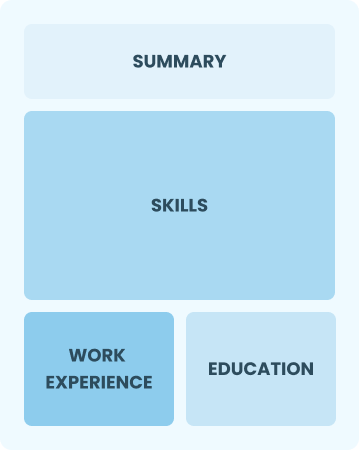
Entry-Level 0 - 2 years
Functional
Focuses on skills rather than previous jobs
Best for:
Recent graduates and career changers with limited experience in healthcare advocacy
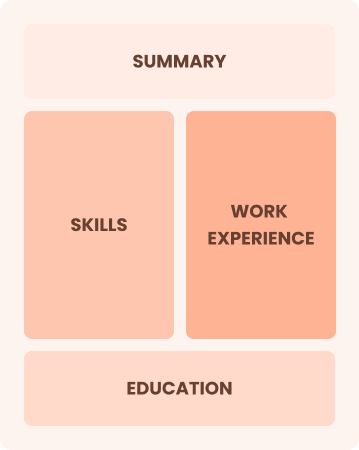
Mid-Career 3 - 7 years
Combination
Balances skills and work history equally
Best for:
Mid-career professionals highlighting advocacy skills and career progression
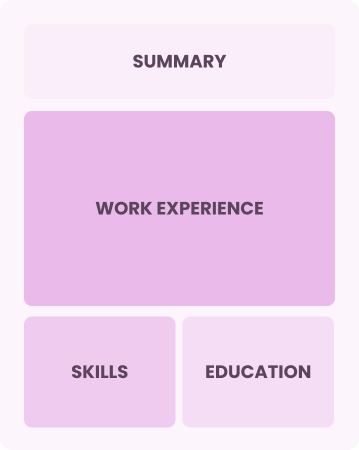
Experienced 8+ years
Chronological
Emphasizes work history in reverse order
Best for:
Seasoned advocates skilled in navigating complex healthcare systems
Frequently Asked Questions
Should I include a cover letter with my patient advocate resume?
Absolutely, including a cover letter is important for making your application memorable. It allows you to elaborate on your qualifications and demonstrate your enthusiasm for the position. If you need assistance, explore our comprehensive guide on how to write a cover letter or use our Cover Letter Generator for quick support.
Can I use a resume if I’m applying internationally, or do I need a CV?
When applying for international positions, a CV is often required instead of a resume. This document provides a comprehensive overview of your career and qualifications. Explore CV examples to see different formatting styles and layouts, or review our guide on how to write a CV for tips tailored to various countries' standards.
What soft skills are important for patient advocates?
Soft skills such as active listening, empathy, and effective communication are essential for patient advocates. These interpersonal skills foster trust and understanding between patients and healthcare providers, ensuring that patients' needs and preferences are prioritized in their care.
I’m transitioning from another field. How should I highlight my experience?
When applying for patient advocate roles, highlight your transferable skills like communication, empathy, and critical thinking. These abilities illustrate your potential to improve patient experiences, even if you lack direct healthcare experience. Share specific instances from previous jobs where you successfully supported others or resolved conflicts to demonstrate your readiness for this compelling position.
How do I write a resume with no experience?
For those seeking patient advocate roles with limited experience, highlight any volunteer work, internships, or educational projects that showcase your advocacy skills. Emphasizing qualities like empathy and communication abilities can help demonstrate your commitment to assisting patients in navigating their healthcare journeys. If you're crafting a resume with no experience, showcasing your passion and dedication can leave a strong impression on potential employers.
How do I add my resume to LinkedIn?
To increase your resume's visibility on LinkedIn, add your resume to LinkedIn by uploading it to your profile or highlighting important qualifications in the "About" and "Experience" sections. This approach helps healthcare recruiters easily identify qualified patient advocates, making networking more effective.




Ready to land the job?
Join 28M+ others who've built a resume that works.