

Having hard skills such as medical terminology, electronic health record documentation, and understanding ophthalmic procedures is essential for accurate patient information management.
Ophthalmic Scribe Resume Examples & Templates
Looking to advance your career? Our ophthalmic scribe resume examples will help you showcase your attention to detail, documentation skills, and patient communication to stand out to employers.

by Gabriela Hernandez, Last Updated: February 23, 2026
Hired By:*

- Popular Ophthalmic Scribe Resume Examples
- Resume Template—Easy to Copy & Paste
- Build Your Resume in Minutes
- How to Write an Ophthalmic Scribe Resume Summary
- Showcasing Your Work Experience
- Top Skills to Include on Your Resume
- Resume Format Examples
- Related Medical Resume Examples
- Frequently Asked Questions
- Should I include a cover letter with my ophthalmic scribe resume?
- Can I use a resume if I’m applying internationally, or do I need a CV?
- What soft skills are important for ophthalmic scribes?
- I’m transitioning from another field. How should I highlight my experience?
- How do I write a resume with no experience?
- Should I include a personal mission statement on my ophthalmic scribe resume?
Popular Ophthalmic Scribe Resume Examples
Check out our top ophthalmic scribe resume examples that showcase key skills such as patient documentation, attention to detail, and familiarity with ophthalmic terminology. These examples will help you effectively demonstrate your qualifications.
Ready to design your standout resume? Our Resume Builder offers user-friendly templates specifically created for professionals in the healthcare field, making it simple to highlight your expertise.
Recommended
 Customize This Resume
Entry-level ophthalmic scribe resume
What this resume does well:
This entry-level resume for an ophthalmic scribe effectively highlights the job seeker's extensive experience in patient documentation and their ability to improve data accuracy, showcasing their valuable contributions in clinical settings. New professionals need to demonstrate strong organizational skills and a commitment to patient care through their resumes, even when they have limited direct work history.
Mid-career ophthalmic scribe resume
What this resume does well:
This resume effectively outlines key qualifications by showcasing a strong background in patient documentation and EHR management. The job seeker's progression through roles highlights readiness for greater responsibilities, emphasizing their commitment to accuracy and efficiency in ophthalmic care.
Experienced ophthalmic scribe resume
What this resume does well:
The work history section illustrates the applicant's expertise as an ophthalmic scribe, highlighting a 30% reduction in patient wait times and the successful documentation of 95% of patient records. The bullet-point format improves readability, making it easy for hiring managers to quickly assess key achievements.
Resume Template—Easy to Copy & Paste
Example
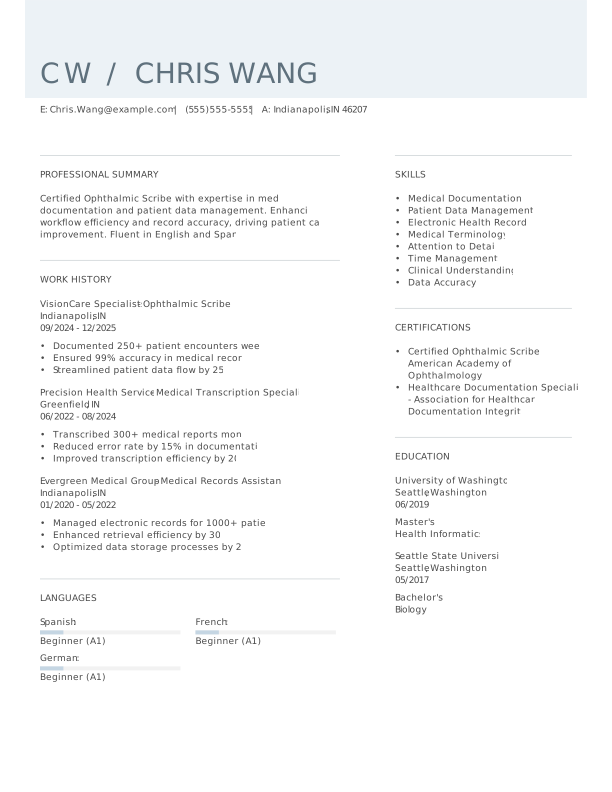
Chris Wang
Indianapolis, IN 46207
(555)555-5555
Chris.Wang@example.com
Professional Summary
Certified Ophthalmic Scribe with expertise in medical documentation and patient data management. Enhancing workflow efficiency and record accuracy, driving patient care improvement. Fluent in English and Spanish.
Work History
Ophthalmic Scribe
VisionCare Specialists - Indianapolis, IN
September 2024 - December 2025
- Documented 250+ patient encounters weekly
- Ensured 99% accuracy in medical records
- Streamlined patient data flow by 25%
Medical Transcription Specialist
Precision Health Services - Greenfield, IN
June 2022 - August 2024
- Transcribed 300+ medical reports monthly
- Reduced error rate by 15% in documentation
- Improved transcription efficiency by 20%
Medical Records Assistant
Evergreen Medical Group - Indianapolis, IN
January 2020 - May 2022
- Managed electronic records for 1000+ patients
- Enhanced retrieval efficiency by 30%
- Optimized data storage processes by 25%
Languages
- Spanish - Beginner (A1)
- French - Beginner (A1)
- German - Beginner (A1)
Skills
- Medical Documentation
- Patient Data Management
- Electronic Health Records
- Medical Terminology
- Attention to Detail
- Time Management
- Clinical Understanding
- Data Accuracy
Certifications
- Certified Ophthalmic Scribe - American Academy of Ophthalmology
- Healthcare Documentation Specialist - Association for Healthcare Documentation Integrity
Education
Master's Health Informatics
University of Washington Seattle, Washington
June 2019
Bachelor's Biology
Seattle State University Seattle, Washington
May 2017
Build Your Resume in Minutes
Creating a custom resume is easier than ever with our Resume Builder!
How to Write an Ophthalmic Scribe Resume Summary
Your resume summary is the first opportunity to leave a lasting impression on hiring managers. It's vital that this section clearly showcases your skills and experience as an ophthalmic scribe, setting the tone for the rest of your application.
In this role, you should highlight your attention to detail and familiarity with ophthalmic terminology, as these qualities are essential for supporting healthcare professionals effectively.
To illustrate what makes a standout resume summary, we’ll provide examples that will help you identify effective strategies and common pitfalls:
Weak Example
I am a dedicated ophthalmic scribe with experience in various clinical settings. I hope to find a position where I can use my skills to help the team and improve patient care. A supportive environment that values professional growth is important to me.
Why this summary misses the mark:
- Lacks details about specific skills and experiences relevant to the role of an ophthalmic scribe
- Uses vague language that does not clearly convey how the job seeker adds value to potential employers
- Emphasizes personal desires rather than showcasing unique contributions or strengths that benefit the organization
Strong Example
Detail-oriented ophthalmic scribe with over 3 years of experience supporting ophthalmologists in fast-paced clinical environments. Improved patient documentation accuracy by 25% through careful charting and real-time data entry during examinations. Proficient in electronic medical records (EMR), ocular imaging technologies, and assisting in surgical procedures to ensure optimal patient care.
Why this summary works:
- Begins with a clear statement of experience level and role specificity
- Highlights a quantifiable achievement that reflects direct impact on operational efficiency
- Demonstrates relevant technical skills and knowledge specific to the ophthalmic field

Pro Tip
If you're starting out and lack formal experience, consider using a career objective to highlight your ambitions instead of a resume summary. For aspiring ophthalmic scribes, there are many tailored resume objective examples available to guide you in showcasing your passion and potential.
Showcasing Your Work Experience
The work experience section is important for your resume as an ophthalmic scribe, where you'll detail most of your professional background. Good resume templates always prioritize this section to ensure clarity and impact.
This part should be organized in reverse-chronological order, listing your roles clearly. Use bullet points to highlight specific achievements and contributions made in each position, making it easy for employers to recognize your skills.
To guide you further, we'll present a couple of examples that showcase effective work history entries for ophthalmic scribes. These examples will illustrate what stands out and what should be avoided:
Weak Example
Ophthalmic Scribe
Vision Care Clinic – Los Angeles, CA
- Assisted the doctor during eye exams.
- Documented patient information.
- Coordinated with staff for patient care.
- Handled administrative tasks as needed.
Why this work experience section misses the mark:
- Lacks specific employment dates to establish timeline
- Bullet points are overly simplistic and do not highlight skills or achievements
- Emphasizes routine duties rather than effective contributions or outcomes
Strong Example
Ophthalmic Scribe
Visionary Eye Clinic – San Diego, CA
March 2020 - Current
- Accurately document patient histories and examination findings for over 30 patients daily, ensuring a smooth workflow in a busy clinical setting.
- Improve communication between ophthalmologists and patients by summarizing key points from consultations, leading to a 15% increase in patient satisfaction scores.
- Assist with the preparation of diagnostic tests and procedures, streamlining operations which reduced average appointment times by 20%.
Why this work experience section works:
- Starts each bullet with powerful action verbs that highlight specific achievements
- Incorporates metrics to demonstrate improvements in efficiency and patient care
- Focuses on relevant skills that are important for the role of an ophthalmic scribe
While your resume summary and work experience are important components, don’t overlook the significance of other sections. Each part plays a important role in showcasing your qualifications. To gain detailed guidance on crafting a standout resume, explore our comprehensive guide on how to write a resume.
Top Skills to Include on Your Resume
A well-defined skills section is important for your resume as it allows you to showcase your qualifications at a glance. This helps potential employers quickly identify if you have the expertise necessary for the ophthalmic scribe role.
In this profession, emphasize technical skills such as skill in electronic health records (EHR) systems and medical terminology, and soft skills like attention to detail and organization. Highlighting tools like Optovue and Zeiss imaging software will further demonstrate your readiness for the job.
Meanwhile, soft skills, including strong communication, attention to detail, and teamwork abilities, foster effective collaboration with healthcare providers and improve patient care experiences.
Selecting the appropriate resume skills is important to align with employer expectations and navigate automated screening systems. Many organizations implement software that filters out applicants lacking essential skills, making it important to highlight your relevant abilities.
To tailor your resume effectively, thoroughly review job postings that capture your interest. These listings often offer insight into the specific skills recruiters prioritize, ensuring your application stands out and successfully passes ATS scans.
Pro Tip
Ensure your resume stands out by using our ATS Resume Checker. It identifies over 30 common errors, helping you navigate applicant tracking software with ease and take the guesswork out of your job application!
10 skills that appear on successful ophthalmic scribe resumes
Highlighting essential skills on your resume can significantly increase your chances of catching a recruiter’s eye. These in-demand abilities can set you apart from other applicants, and you can view these skills in action through resume examples, which provide insights into effective presentation. Showcasing relevant competencies is key to demonstrating your fit for the role.
Consider incorporating these 10 valuable skills into your resume if they align with your background and job expectations:
Attention to detail
Medical terminology knowledge
Patient interaction
Data entry accuracy
Chart preparation
Time management
Multitasking abilities
Team collaboration
Problem-solving skills
Adaptability
Based on analysis of 5,000+ medical professional resumes from 2023-2024
Resume Format Examples
Selecting the appropriate resume format is important for an ophthalmic scribe, as it showcases relevant skills and experience, improving your chances of catching a potential employer's attention.
Entry-Level 0 - 2 years
Functional
Focuses on skills rather than previous jobs

Best for:
Recent graduates and career changers with up to two years of experience
Mid-Career 3 - 7 years
Combination
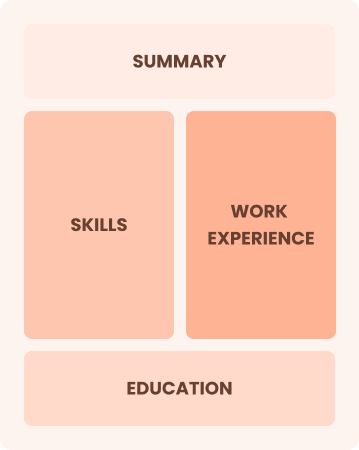
Balances skills and work history equally
Best for:
Mid-career professionals focused on demonstrating their skills and potential for growth
Experienced 8+ years
Chronological
Emphasizes work history in reverse order
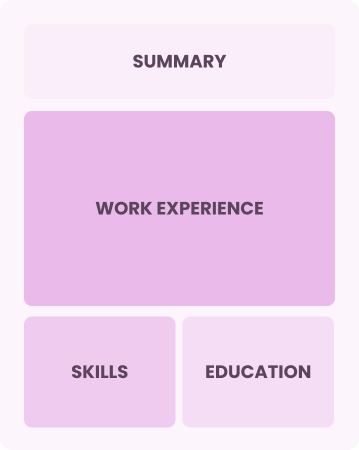
Best for:
Experienced leaders excelling in advanced ophthalmic practices
Frequently Asked Questions
Should I include a cover letter with my ophthalmic scribe resume?
Absolutely, including a cover letter can make a significant difference in your application. It allows you to showcase your personality and clarify how your experiences align with the job. For tips on crafting an effective cover letter, check out our comprehensive guide on how to write a cover letter or try our Cover Letter Generator for quick assistance.
Can I use a resume if I’m applying internationally, or do I need a CV?
When applying for jobs internationally, use a CV instead of a resume to provide a comprehensive overview of your academic and professional history. For guidance on formatting and how to write a CV, check out our resources that offer examples and tips tailored for global job applications. Additionally, you can look at CV examples to help structure your own document effectively.
What soft skills are important for ophthalmic scribes?
Soft skills, such as attention to detail, communication, and teamwork are essential for ophthalmic scribes. These interpersonal skills foster effective collaboration with healthcare professionals and ensure patient information is accurately recorded, ultimately improving the quality of care provided to patients.
I’m transitioning from another field. How should I highlight my experience?
Highlight your transferable skills such as attention to detail, communication, and organization. These abilities are important for an ophthalmic scribe role and showcase your readiness to thrive in a clinical environment. Share specific examples from past jobs that illustrate how these strengths have prepared you for handling patient records and assisting with eye care tasks.
How do I write a resume with no experience?
If you're writing a resume with no experience for an ophthalmic scribe position, consider focusing on relevant skills such as attention to detail and strong communication. Highlight any internships, volunteer roles, or coursework related to healthcare. Your enthusiasm and willingness to learn can truly resonate with employers by showcasing your potential to thrive in this role.
Should I include a personal mission statement on my ophthalmic scribe resume?
Yes, incorporating a personal mission statement in your resume is advisable. It effectively conveys your core values and career aspirations. This strategy shines when applying to organizations that prioritize patient-centered care or have a strong commitment to their mission and culture.




Ready to land the job?
Join 28M+ others who've built a resume that works.