Understanding hard skills is important, as they include technical abilities like crisis intervention, mental health assessment, and knowledge of therapeutic techniques essential for supporting individuals in distress.
Mental Health Support Worker Resume Examples & Templates
Searching for your next role? Our mental health support worker resume examples will help you showcase your empathy, communication, and crisis intervention skills to grab employers' attention.

by Gabriela Hernandez, Last Updated: January 18, 2026
Hired By:*

Popular Mental Health Support Worker Resume Examples
Check out our top mental health support worker resume examples that emphasize key skills such as empathy, communication, and crisis intervention. These examples will help you effectively showcase your qualifications to potential employers.
Ready to build your ideal resume? Our Resume Builder offers user-friendly templates specifically designed for those in the mental health field, making your application stand out.
Recommended
 Customize This Resume
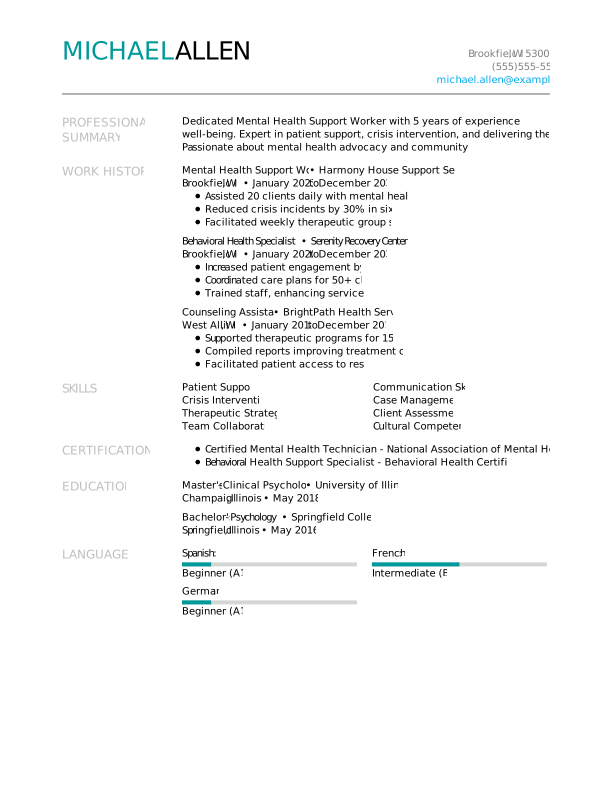
Entry-level mental health support worker resume
What this resume does well:
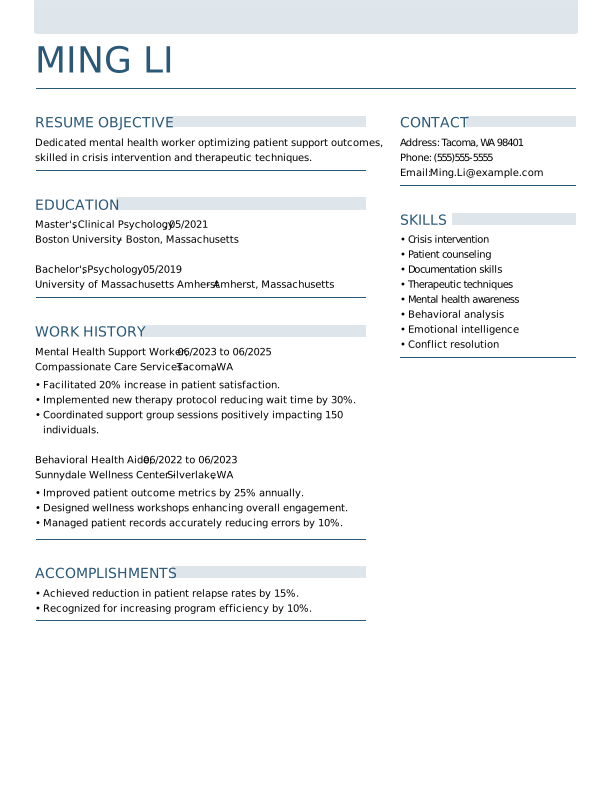
This entry-level resume effectively highlights the job seeker's practical experience in improving patient outcomes and facilitating support initiatives. New professionals must clearly illustrate their clinical skills, relevant certifications, and community involvement to capture the attention of employers despite a limited work history.
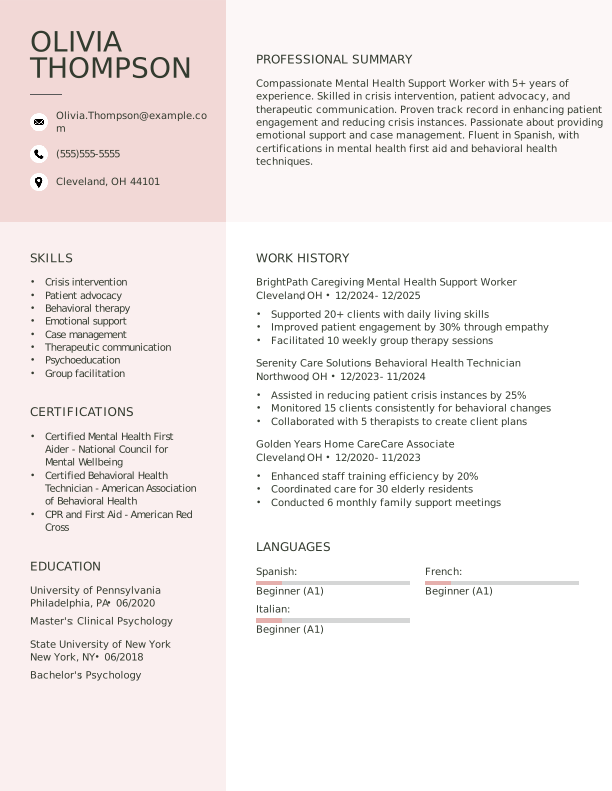
Mid-career mental health support worker resume
What this resume does well:
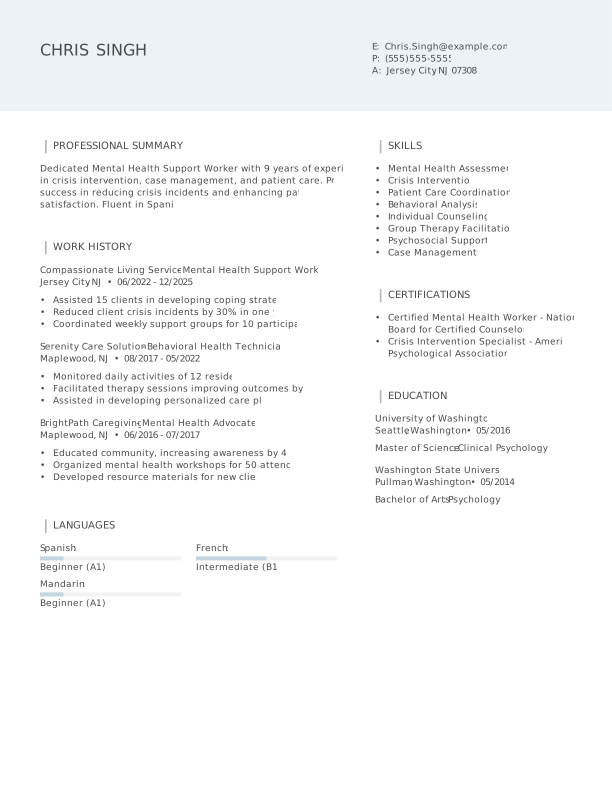
This resume effectively showcases qualifications, emphasizing crisis intervention experience and client engagement successes. The structured presentation illustrates the job seeker's growth in mental health roles, demonstrating their preparedness for advanced responsibilities and leadership opportunities.
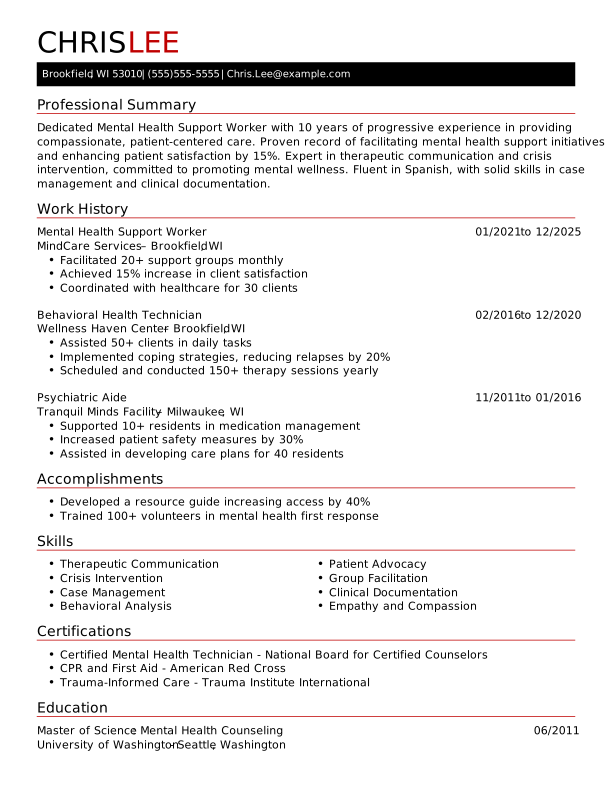
Experienced mental health support worker resume
What this resume does well:
The work experience section highlights the applicant's ability to improve client satisfaction by 15% and reduce relapses by 20%. The use of bullet points aids readability, making it ideal for busy hiring managers.
Resume Template—Easy to Copy & Paste
Example
Chris Singh
Jersey City, NJ 07308
(555)555-5555
Chris.Singh@example.com
Professional Summary
Dedicated Mental Health Support Worker with 9 years of experience in crisis intervention, case management, and patient care. Proven success in reducing crisis incidents and enhancing patient satisfaction. Fluent in Spanish.
Work History
Mental Health Support Worker
Compassionate Living Services - Jersey City, NJ
June 2022 - December 2025
- Assisted 15 clients in developing coping strategies
- Reduced client crisis incidents by 30% in one year
- Coordinated weekly support groups for 10 participants
Behavioral Health Technician
Serenity Care Solutions - Maplewood, NJ
August 2017 - May 2022
- Monitored daily activities of 12 residents
- Facilitated therapy sessions improving outcomes by 25%
- Assisted in developing personalized care plans
Mental Health Advocate
BrightPath Caregiving - Maplewood, NJ
June 2016 - July 2017
- Educated community, increasing awareness by 40%
- Organized mental health workshops for 50 attendees
- Developed resource materials for new clients
Languages
- Spanish - Beginner (A1)
- French - Intermediate (B1)
- Mandarin - Beginner (A1)
Skills
- Mental Health Assessment
- Crisis Intervention
- Patient Care Coordination
- Behavioral Analysis
- Individual Counseling
- Group Therapy Facilitation
- Psychosocial Support
- Case Management
Certifications
- Certified Mental Health Worker - National Board for Certified Counselors
- Crisis Intervention Specialist - American Psychological Association
Education
Master of Science Clinical Psychology
University of Washington Seattle, Washington
May 2016
Bachelor of Arts Psychology
Washington State University Pullman, Washington
May 2014
Build Your Resume in Minutes
Creating a custom resume is easier than ever with our Resume Builder!
How to Write a Mental Health Support Worker Resume Summary
Your resume summary is the first thing employers will see, making it important for creating a strong impression. As a mental health support worker, you should highlight your compassion, communication skills, and experience in supporting individuals with mental health challenges.
This profession requires showcasing your ability to build rapport with clients and work collaboratively within a team. Focus on your relevant qualifications that demonstrate your commitment to promoting well-being.
To better grasp what makes an effective summary, review the following examples. They will clarify what elements resonate with hiring managers and what pitfalls to avoid:
Weak Example
I am a dedicated mental health support worker with several years of experience. I hope to find a position where I can use my skills to make a difference and work in an environment that values employee well-being. I believe I can contribute positively to your team if given the chance.
Why this summary misses the mark:
- Lacks specific details about the job seeker’s relevant skills and accomplishments, making it unclear what they bring to the table
- Focuses heavily on personal aspirations rather than highlighting how they can benefit the employer or clients
- Uses generic terms like "make a difference" without concrete examples of past successes or contributions
Strong Example
Compassionate mental health support worker with over 4 years of experience in providing emotional and psychological support to individuals facing mental health challenges. Successfully implemented a peer support program that improved client engagement by 30%, leading to improved treatment compliance. Proficient in crisis intervention techniques, therapeutic communication, and maintaining accurate case records.
Why this summary works:
- Begins with specific years of experience and highlights the focus on mental health
- Includes quantifiable achievements that show direct impact on client outcomes
- Demonstrates relevant skills essential for the role, improving appeal to potential employers

Pro Tip
If you’re new to the field of mental health support, consider crafting a strong career objective. This is a great way to showcase your passion and goals. You can find plenty of resume objective examples that will guide you in making your application stand out.
Showcasing Your Work Experience
The work experience section is important for your resume as a mental health support worker, containing the bulk of your content. Good resume templates always feature this key area prominently.
This section should be organized in reverse-chronological order, listing your previous roles clearly. Use bullet points to highlight specific achievements and responsibilities in each position you've held.
To help you understand what makes a strong work history entry, we’ll present a couple of examples that illustrate effective practices and common pitfalls:
Weak Example
Mental Health Support Worker
Community Wellness Center – Springfield, IL
- Assisted clients with daily activities
- Documented client progress and needs
- Collaborated with therapists and staff
- Provided emotional support when needed
Why this work experience section misses the mark:
- Lacks employment dates which are important for context
- Bullet points describe basic responsibilities without showcasing specific skills or achievements
- Does not highlight measurable outcomes or improvements related to client care
Strong Example
Mental Health Support Worker
Oakwood Mental Health Services – Seattle, WA
March 2020 - Present
- Assist clients in developing coping strategies for anxiety and depression, resulting in a 30% increase in clients reporting improved emotional well-being
- Facilitate group therapy sessions that promote peer support, leading to a 40% reduction in client dropout rates
- Conduct regular assessments to monitor client progress, using feedback to improve personalized care plans
Why this work experience section works:
- Uses strong action verbs at the beginning of each bullet point to clearly convey accomplishments
- Includes quantifiable results that demonstrate the impact of the applicant's work on clients' mental health
- Highlights relevant skills such as assessment and facilitation that are critical for success in the role
While your resume summary and work experience sections are important, don’t overlook other important areas that also need careful formatting. For detailed guidance on crafting a well-rounded resume, be sure to explore our in-depth guide on how to write a resume.
Top Skills to Include on Your Resume
A skills section is important for any resume because it allows you to quickly demonstrate your qualifications to potential employers. This section provides a snapshot of your abilities, making it easier for hiring managers to see how you fit the role.
Organizations seek candidates who pair deep expertise with strong interpersonal and collaboration abilities. Showcasing both hard and soft skills on your resume demonstrates your versatility and effectiveness in any role.
Meanwhile, soft skills encompass interpersonal qualities such as active listening, empathy, and patience—key for building trust and fostering a supportive environment for clients.
Choosing the resume skills that match employer expectations is important for passing automated screening systems. Many organizations use software to filter out applicants who don't possess the essential skills specific to the job.
To boost your chances, thoroughly review job postings for insights on which skills are prioritized by recruiters. Emphasize these key abilities in your resume to ensure you stand out and align with both recruiter preferences and ATS requirements.
Pro Tip
Elevate your job application by using our ATS Resume Checker. It highlights over 30 common mistakes, ensuring your resume stands out and successfully navigates applicant tracking systems.
10 skills that appear on successful mental health support worker resumes
To catch the eye of recruiters, highlight your high-demand skills as a mental health support worker. These essential abilities are showcased in our tailored resume examples, helping you apply with confidence and stand out from the competition.
Here are 10 critical skills to consider adding to your resume, ensuring they align with your qualifications and job requirements:
Empathy
Active listening
Crisis intervention
Behavioral observation
Team collaboration
Cultural competency
Record keeping
Supportive counseling techniques
Patience
Problem-solving
Based on analysis of 5,000+ mental health professional resumes from 2023-2024
Resume Format Examples
Selecting the ideal resume format as a mental health support worker ensures your compassionate skills, relevant experiences, and career growth are effectively showcased.
Entry-Level 0 - 2 years
Functional
Focuses on skills rather than previous jobs
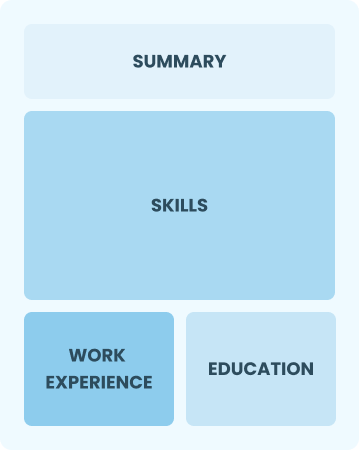
Best for:
Recent graduates and career changers with limited experience in mental health support
Mid-Career 3 - 7 years
Combination
Balances skills and work history equally
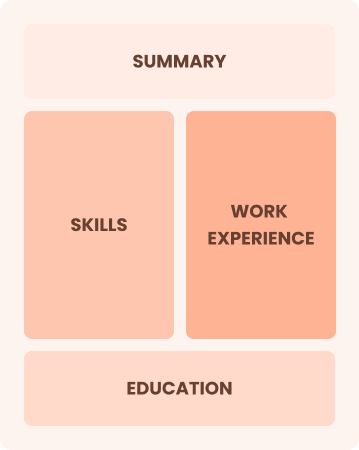
Best for:
Mid-career professionals focused on demonstrating their skills and pursuing growth opportunities
Experienced 8+ years
Chronological
Emphasizes work history in reverse order
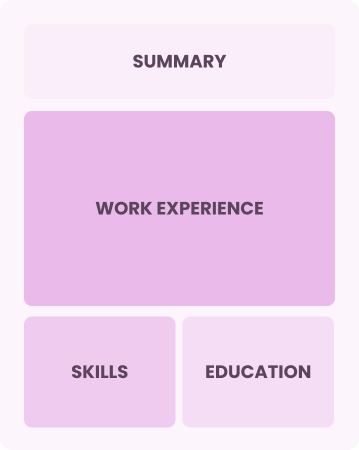
Best for:
Seasoned experts leading innovative mental health initiatives
Frequently Asked Questions
Should I include a cover letter with my mental health support worker resume?
Absolutely, including a cover letter is essential for job seekers. It allows you to showcase your personality and enthusiasm for the position while highlighting relevant experiences. If you're looking for guidance, our resources on how to write a cover letter can help you get started quickly. You can also consider using our Cover Letter Generator to streamline the process and create a compelling introduction to your application.
Can I use a resume if I’m applying internationally, or do I need a CV?
When applying for jobs abroad, opt for a CV instead of a resume as it provides a comprehensive view of your academic and professional history. To assist you in crafting your CV, explore our resources on how to write a CV that offer templates and tips on effective formatting tailored to international standards. Additionally, reviewing CV examples can provide valuable insight into what makes an powerful document.
What soft skills are important for mental health support workers?
Soft skills like empathy, active listening, and patience are essential for mental health support workers. These interpersonal skills help foster trust and rapport with clients, enabling effective communication and collaboration that leads to improved mental health outcomes.
I’m transitioning from another field. How should I highlight my experience?
When applying for mental health support worker roles, highlight your transferable skills such as empathy, communication, and teamwork. These abilities demonstrate your readiness to help others, even if you lack direct experience. Use specific examples from previous jobs to illustrate how your strengths can improve patient care and support within the mental health field.
How should I format a cover letter for a mental health support worker job?
To format a cover letter, start by including your contact details at the top. Follow this with a warm greeting and an engaging introduction that highlights your passion for mental health support. Make sure to summarize your relevant experiences and skills in relation to the job requirements. Always customize each letter to reflect the specific position you are applying for, and end with a strong closing statement inviting further discussion.
How do I add my resume to LinkedIn?
To increase your resume's visibility on LinkedIn, add your resume to LinkedIn, upload it to your profile or highlight key skills and experiences in the "About" and "Experience" sections. This approach allows mental health recruiters to easily find qualified job seekers who match their needs.


Ready to land the job?
Join 28M+ others who've built a resume that works.