Hard skills for a medical interpreter include skill in multiple languages, familiarity with medical terminology, and the ability to accurately translate spoken information during patient interactions.
Medical Interpreter Resume Examples & Templates
Looking for a rewarding career as a medical interpreter? Our medical interpreter resume examples will help you showcase your language skill and cultural competency to stand out to employers.

by Gabriela Hernandez, Last Updated: January 18, 2026
Hired By:*

- Popular Medical Interpreter Resume Examples
- Resume Template—Easy to Copy & Paste
- Build Your Resume in Minutes
- How to Write a Medical Interpreter Resume Summary
- Showcasing Your Work Experience
- Top Skills to Include on Your Resume
- Resume Format Examples
- Related Medical Resume Examples
- Frequently Asked Questions
- Should I include a cover letter with my medical interpreter resume?
- Can I use a resume if I’m applying internationally, or do I need a CV?
- What soft skills are important for medical interpreters?
- I’m transitioning from another field. How should I highlight my experience?
- Should I use a cover letter template?
- Should I include a personal mission statement on my medical interpreter resume?
Popular Medical Interpreter Resume Examples
Check out our top medical interpreter resume examples that showcase critical skills such as bilingual communication, cultural sensitivity, and precise translation. These examples will help you effectively highlight your qualifications to potential employers.
Looking to build your own impressive resume? Our Resume Builder offers user-friendly templates specifically designed for professionals in the healthcare field, making your application stand out.
Recommended
 Customize This Resume
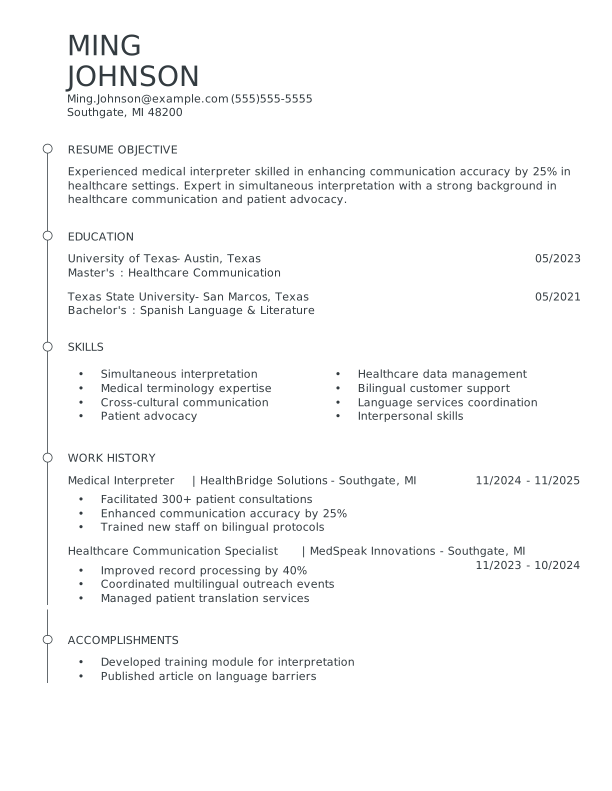
Entry-level medical interpreter resume
What this resume does well:
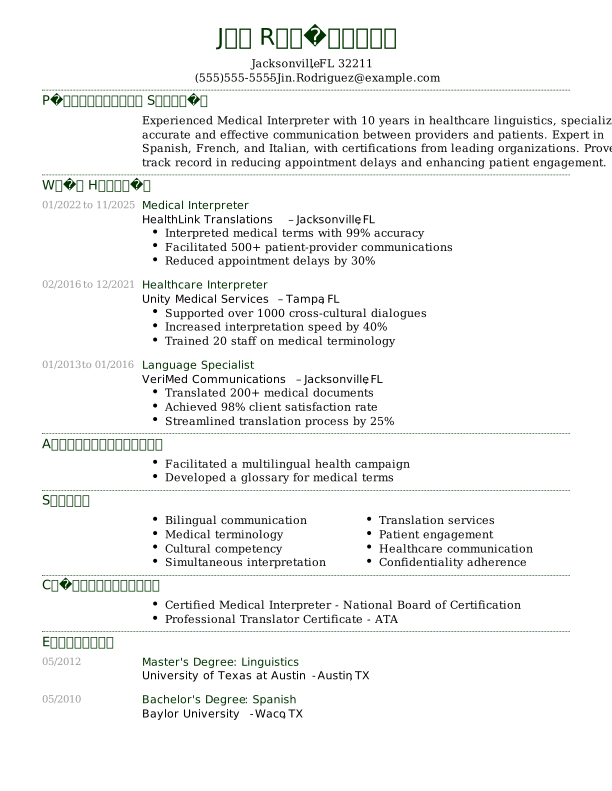
This entry-level resume effectively showcases the applicant's bilingual skills, relevant work experience, and commitment to improving communication in healthcare settings. New professionals in this field must demonstrate their language skill and ability to facilitate clear communication among patients and healthcare providers, even with limited direct experience.
Mid-career medical interpreter resume
What this resume does well:
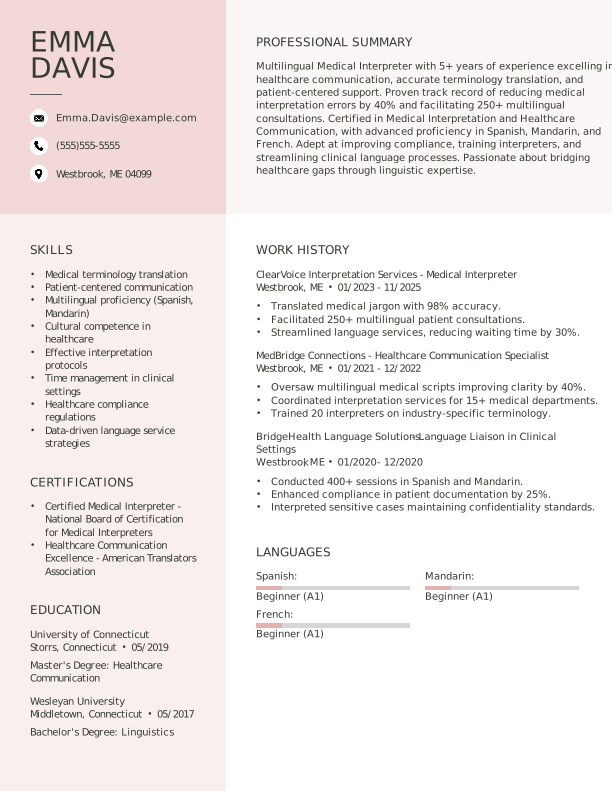
This resume effectively showcases qualifications by detailing extensive experience in medical interpretation and patient advocacy. The structured presentation highlights the job seeker's readiness for advanced roles, demonstrating a commitment to quality care and leadership within healthcare settings.
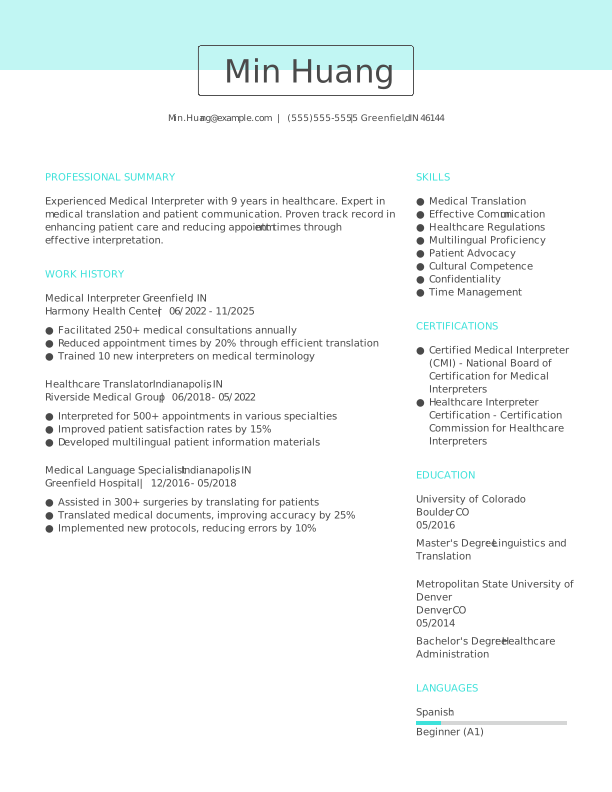
Experienced medical interpreter resume
What this resume does well:
This resume's work history section illustrates the applicant's extensive experience as a medical interpreter, emphasizing their ability to facilitate over 500 patient-provider communications with 99% accuracy. The use of bullet points improves clarity, making it easy for hiring managers to quickly recognize key accomplishments.
Resume Template—Easy to Copy & Paste
Example
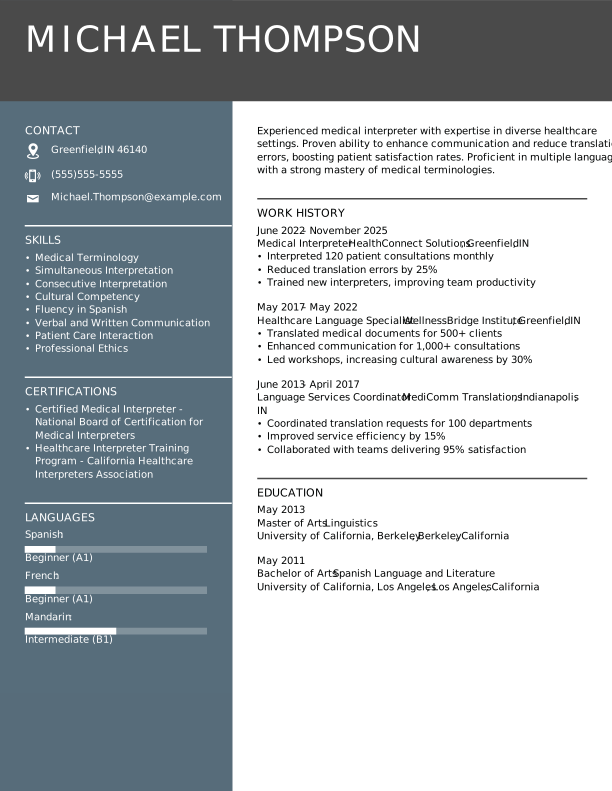
Michael Thompson
Greenfield, IN 46140
(555)555-5555
Michael.Thompson@example.com
Skills
- Medical Terminology
- Simultaneous Interpretation
- Consecutive Interpretation
- Cultural Competency
- Fluency in Spanish
- Verbal and Written Communication
- Patient Care Interaction
- Professional Ethics
Certifications
- Certified Medical Interpreter - National Board of Certification for Medical Interpreters
- Healthcare Interpreter Training Program - California Healthcare Interpreters Association
Languages
- Spanish - Beginner (A1)
- French - Beginner (A1)
- Mandarin - Intermediate (B1)
Professional Summary
Experienced medical interpreter with expertise in diverse healthcare settings. Proven ability to enhance communication and reduce translation errors, boosting patient satisfaction rates. Proficient in multiple languages with a strong mastery of medical terminologies.
Work History
Medical Interpreter
HealthConnect Solutions - Greenfield, IN
June 2022 - November 2025
- Interpreted 120 patient consultations monthly
- Reduced translation errors by 25%
- Trained new interpreters, improving team productivity
Healthcare Language Specialist
WellnessBridge Institute - Greenfield, IN
May 2017 - May 2022
- Translated medical documents for 500+ clients
- Enhanced communication for 1,000+ consultations
- Led workshops, increasing cultural awareness by 30%
Language Services Coordinator
MediComm Translations - Indianapolis, IN
June 2013 - April 2017
- Coordinated translation requests for 100 departments
- Improved service efficiency by 15%
- Collaborated with teams delivering 95% satisfaction
Education
Master of Arts Linguistics
University of California, Berkeley Berkeley, California
May 2013
Bachelor of Arts Spanish Language and Literature
University of California, Los Angeles Los Angeles, California
May 2011
Build Your Resume in Minutes
Creating a custom resume is easier than ever with our Resume Builder!
How to Write a Medical Interpreter Resume Summary
Your resume summary is the first chance you have to capture an employer's attention, making it important to showcase your qualifications effectively. As a medical interpreter, you should emphasize your linguistic skills and cultural competence, which are vital in facilitating communication in healthcare settings.
Highlight your ability to accurately convey medical terminology while ensuring understanding between patients and providers. This role requires not only language skill but also empathy and professionalism to support patient care.
To guide you in crafting a compelling summary, consider the following examples that illustrate effective strategies for presenting your strengths and experiences:
Weak Example
I am a dedicated medical interpreter with several years of experience. I seek a position where I can use my language skills and help patients communicate effectively. A job that offers good benefits and a supportive environment would be great for me. I believe my background will allow me to contribute positively to the team.
Why this summary misses the mark:
- Lacks specific details about interpreting expertise, languages spoken, or relevant certifications
- Overuses personal pronouns and fails to highlight how the applicant’s skills benefit potential employers
- Emphasizes personal desires instead of showcasing what unique value the applicant brings to the role
Strong Example
Bilingual medical interpreter with over 4 years of experience facilitating communication between healthcare providers and patients in diverse clinical settings. Improved patient satisfaction scores by 20% through effective interpretation during critical consultations and follow-up appointments. Proficient in medical terminology, HIPAA regulations, and using interpretation technology to ensure accurate information exchange.
Why this summary works:
- Starts with specific years of experience and the bilingual skill set relevant for the role
- Highlights a quantifiable achievement that shows impact on patient satisfaction and care quality
- Mentions key skills related to medical interpretation that employers prioritize, improving the job seeker's appeal

Pro Tip
If you're new to the medical interpreting field, a career objective can showcase your enthusiasm and goals. Consider using a tailored objective instead of a summary. There are plenty of resume objective examples available to inspire you as you craft your own.
Showcasing Your Work Experience
The work experience section is important for your resume as a medical interpreter. This is where you will provide most of your content, and resume templates always emphasize this important area.
Organize this section in reverse-chronological order to clearly display your past positions. Use bullet points to effectively outline your key achievements and contributions in each role.
To illustrate what makes a compelling work history, we’ll share a couple of examples that highlight best practices. These examples will clarify what works well and what should be avoided:
Weak Example
Medical Interpreter
Community Health Center – San Diego, CA
- Translated conversations between patients and providers
- Assisted with paperwork
- Helped patients understand their treatment plans
- Worked during appointments as needed
Why this work experience section misses the mark:
- Lacks specifics about the types of interpretations provided
- Bullet points are overly simplistic and do not highlight skills or impact
- Does not mention any measurable outcomes or improvements resulting from the role
Strong Example
Medical Interpreter
Global Health Services – Los Angeles, CA
March 2020 - Current
- Facilitate communication between healthcare providers and patients in over 10 languages, ensuring accurate understanding of medical procedures and diagnoses
- Achieved a 95% patient satisfaction rate through effective interpretation during consultations, improving patient comfort and trust
- Develop training materials for new interpreters that improved onboarding efficiency by 30%, streamlining the integration process
Why this work experience section works:
- Each bullet point starts with action verbs to clearly showcase the applicant's contributions
- Incorporates measurable outcomes like satisfaction rates to highlight effectiveness
- Demonstrates relevant skills such as multilingual skill and training development, which are essential for medical interpreters
While your resume summary and work experience are important components, don’t overlook the importance of other sections that need careful attention. Each element contributes to showcasing your qualifications effectively. For more detailed guidance, explore our comprehensive guide on how to write a resume.
Top Skills to Include on Your Resume
A well-defined skills section is important for any effective resume. It allows you to demonstrate your qualifications at a glance, making it easier for employers to see if you fit their needs.
Employers seek professionals who pair practical experience with strong communication and teamwork skills. Showcasing both technical knowledge and interpersonal abilities on your resume demonstrates your ability to collaborate effectively and achieve results.
Soft skills, such as active listening, cultural sensitivity, and effective communication, are essential as they foster trust and collaboration between healthcare providers and patients.
Selecting the right resume skills is important for standing out to potential employers and passing automated screening systems. By aligning your skills with what employers expect in a job seeker, you increase your chances of being noticed.
To effectively prioritize your skills, review the job postings relevant to your field. These advertisements often highlight key competencies that both recruiters and ATS systems are looking for, helping you tailor your resume accordingly.
Pro Tip
Ensure your resume stands out to hiring managers by using our ATS Resume Checker. It identifies over 30 common errors, helping you navigate applicant tracking systems effectively and increase your chances of landing that interview.
10 skills that appear on successful medical interpreter resumes
Improve your resume to capture the attention of recruiters by highlighting essential skills that are in high demand for medical interpreters. You can observe these skills effectively showcased in our resume examples, empowering you to apply with confidence and professionalism.
Here are 10 key skills that should be included in your resume if they align with your qualifications and job expectations:
Bilingual skills
Cultural competency
Active listening
Attention to detail
Medical terminology knowledge
Interpersonal communication
Time management
Problem-solving abilities
Conflict resolution
Adaptability
Based on analysis of 5,000+ medical professional resumes from 2023-2024
Resume Format Examples
Selecting an appropriate resume format is important for medical interpreters as it showcases essential language skills and relevant experiences, making a strong impression on potential employers.
Entry-Level 0 - 2 years
Functional
Focuses on skills rather than previous jobs
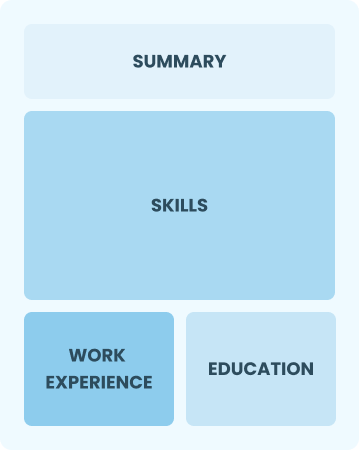
Best for:
Recent graduates and career changers with limited experience in medical interpreting
Mid-Career 3 - 7 years
Combination
Balances skills and work history equally
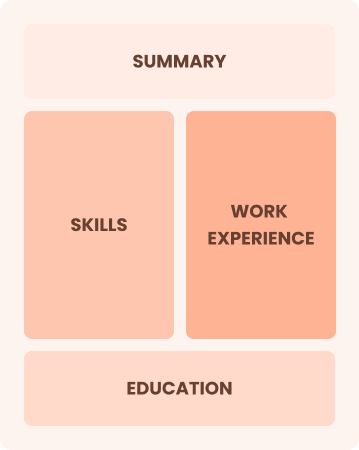
Best for:
Mid-career professionals focused on demonstrating their skills and seeking growth opportunities
Experienced 8+ years
Chronological
Emphasizes work history in reverse order
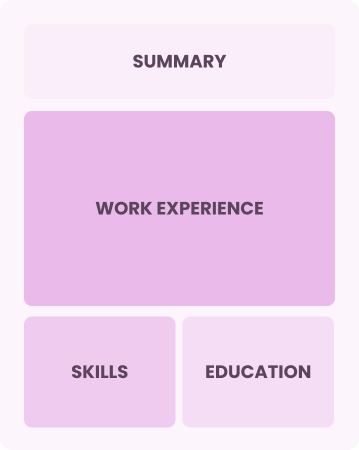
Best for:
Seasoned interpreters excelling in complex medical communications
Frequently Asked Questions
Should I include a cover letter with my medical interpreter resume?
Absolutely, including a cover letter is essential for showcasing your unique qualifications and enthusiasm for the position. It allows you to elaborate on your skills and make a personal connection with potential employers. For tips on crafting an effective cover letter, explore our comprehensive guide on how to write a cover letter or use our Cover Letter Generator to simplify the process.
Can I use a resume if I’m applying internationally, or do I need a CV?
When applying for jobs abroad, a CV is often more suitable than a resume, especially in Europe and Asia. To craft an effective CV, explore our comprehensive CV examples and guides that detail proper formatting and essential content to include. Additionally, learn how to write a CV to ensure your application stands out.
What soft skills are important for medical interpreters?
Soft skills like cultural sensitivity, active listening, and clear communication are essential for medical interpreters. These interpersonal skills foster trust between patients and healthcare providers, ensuring accurate understanding and improving overall care quality.
I’m transitioning from another field. How should I highlight my experience?
Highlight your transferable skills such as communication, cultural awareness, and adaptability. These attributes are essential for a medical interpreter and demonstrate you can excel even with limited direct experience. Share concrete examples from past roles where you've successfully navigated language barriers or facilitated understanding to illustrate your relevant strengths.
Should I use a cover letter template?
Yes, using a cover letter template for medical interpreters ensures a clear structure and helps highlight important skills like bilingual skill and prior healthcare experience, allowing hiring managers to identify your qualifications more easily.
Should I include a personal mission statement on my medical interpreter resume?
Yes, including a personal mission statement on your resume is advisable. It effectively showcases your values and career aspirations. This approach is particularly compelling when applying to organizations that prioritize cultural alignment and have a strong commitment to community service or patient-centered care.




Ready to land the job?
Join 28M+ others who've built a resume that works.