Hard skills include advanced clinical knowledge, diagnostic skill, and the ability to manage complex patient care in a hospital setting.
Hospitalist Resume Examples & Templates
Looking for your ideal position? Our hospitalist resume examples showcase how to emphasize diagnostic skills, patient management, and collaborative care that will make you stand out to employers.

by Gabriela Hernandez, Last Updated: January 18, 2026
Hired By:*

- Popular Hospitalist Resume Examples
- Resume Template—Easy to Copy & Paste
- Build Your Resume in Minutes
- How to Write a Hospitalist Resume Summary
- Showcasing Your Work Experience
- Top Skills to Include on Your Resume
- Resume Format Examples
- Related Medical Resume Examples
- Frequently Asked Questions
- Should I include a cover letter with my hospitalist resume?
- Can I use a resume if I’m applying internationally, or do I need a CV?
- What soft skills are important for hospitalists?
- I’m transitioning from another field. How should I highlight my experience?
- How should I format a cover letter for a hospitalist job?
- Should I include a personal mission statement on my hospitalist resume?
Popular Hospitalist Resume Examples
Check out our top hospitalist resume examples that emphasize important skills like patient management, diagnostic expertise, and interdisciplinary collaboration. These examples can guide you in effectively showcasing your qualifications to potential employers.
If you're ready to develop your ideal resume, our Resume Builder offers user-friendly templates specifically designed for healthcare professionals, helping you make a memorable impression.
Recommended
 Customize This Resume
Entry-level hospitalist resume
What this resume does well:
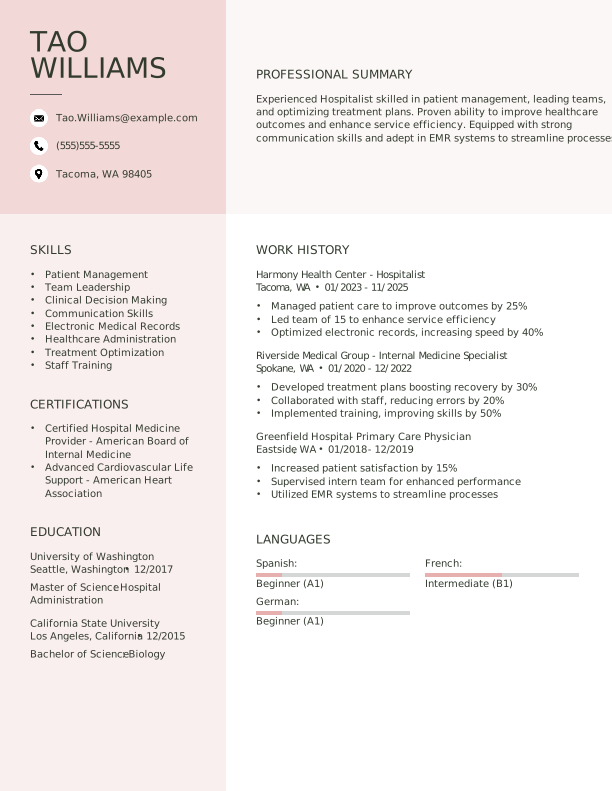
This entry-level resume effectively highlights the job seeker's clinical skills and patient management experience as a hospitalist, showcasing significant achievements such as improving patient satisfaction and reducing hospital stays. New professionals must demonstrate their commitment to quality care and ability to improve healthcare delivery through relevant skills and experiences, even with limited work history.
Mid-career hospitalist resume
What this resume does well:
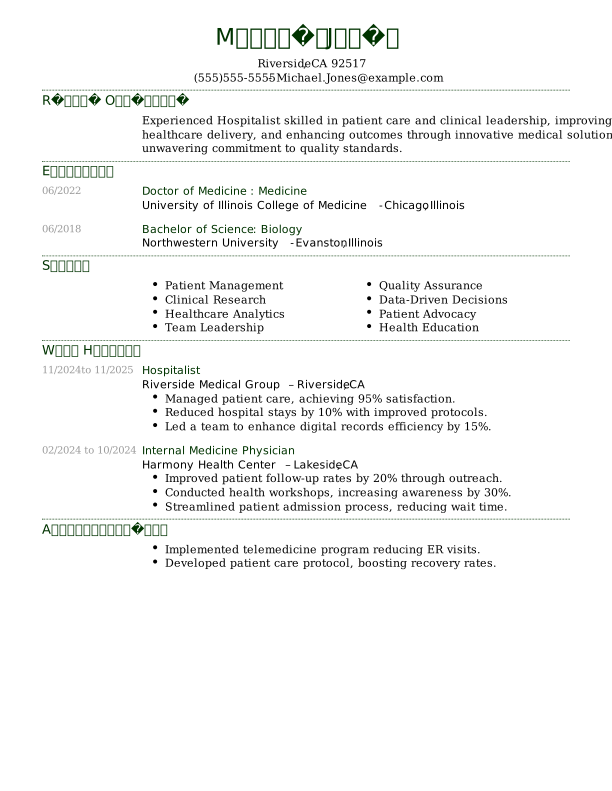
This resume effectively showcases the applicant's extensive experience and compelling accomplishments in hospital medicine. By emphasizing leadership in patient care initiatives and proven results, it positions them as a capable professional ready for more complex responsibilities in the healthcare field.
Experienced hospitalist resume
What this resume does well:
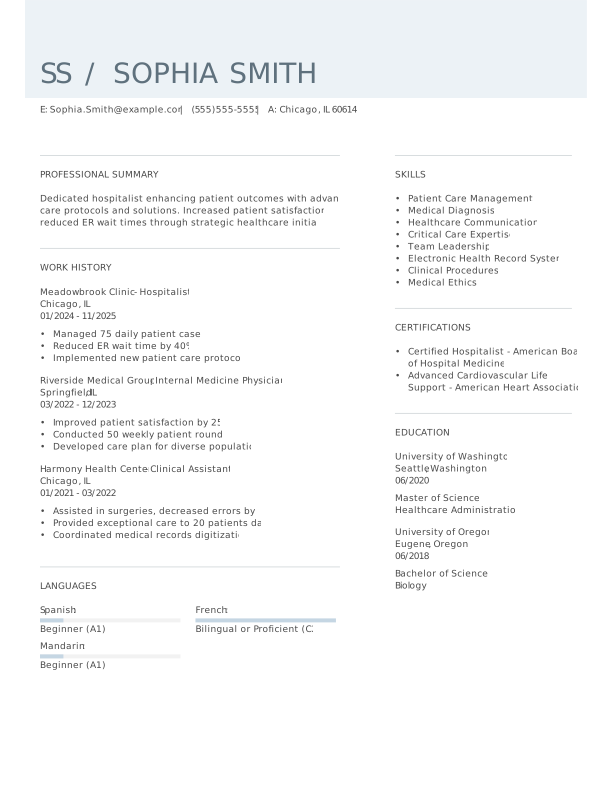
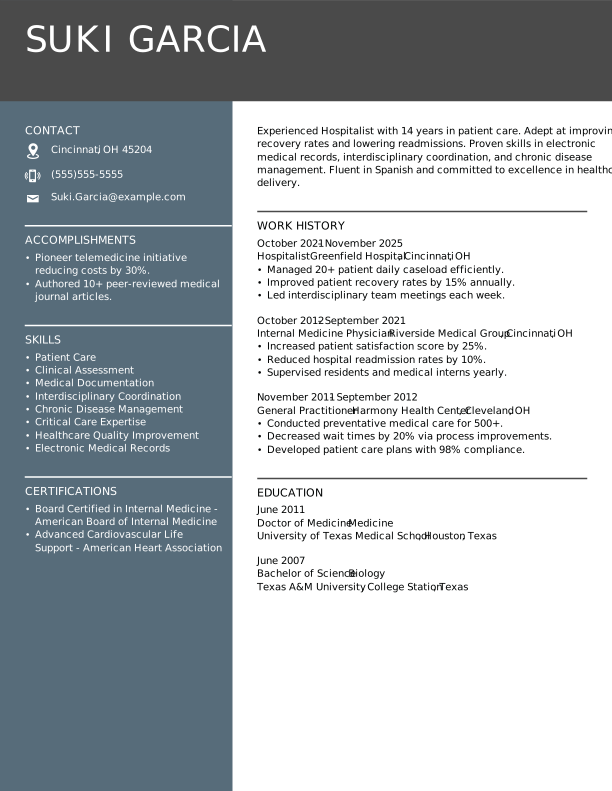
This resume demonstrates the applicant's robust experience as a hospitalist, effectively managing a high patient caseload and improving recovery rates by 15% annually. The clear formatting highlights these accomplishments for quick reference, making it ideal for busy hiring managers in healthcare.
Resume Template—Easy to Copy & Paste
Example
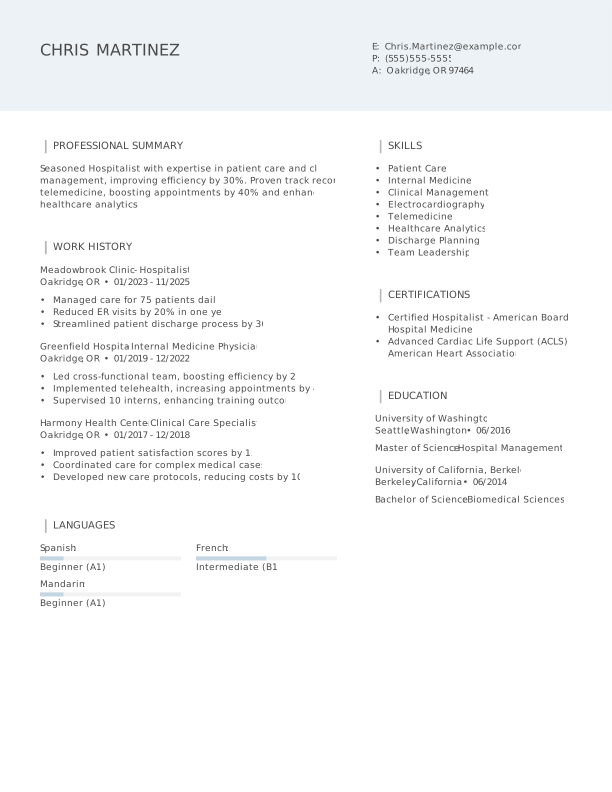
Chris Martinez
Oakridge, OR 97464
(555)555-5555
Chris.Martinez@example.com
Professional Summary
Seasoned Hospitalist with expertise in patient care and clinical management, improving efficiency by 30%. Proven track record in telemedicine, boosting appointments by 40% and enhancing healthcare analytics.
Work History
Hospitalist
Meadowbrook Clinic - Oakridge, OR
January 2023 - November 2025
- Managed care for 75 patients daily.
- Reduced ER visits by 20% in one year.
- Streamlined patient discharge process by 30%.
Internal Medicine Physician
Greenfield Hospital - Oakridge, OR
January 2019 - December 2022
- Led cross-functional team, boosting efficiency by 25%.
- Implemented telehealth, increasing appointments by 40%.
- Supervised 10 interns, enhancing training outcomes.
Clinical Care Specialist
Harmony Health Center - Oakridge, OR
January 2017 - December 2018
- Improved patient satisfaction scores by 15%.
- Coordinated care for complex medical cases.
- Developed new care protocols, reducing costs by 10%.
Languages
- Spanish - Beginner (A1)
- French - Intermediate (B1)
- Mandarin - Beginner (A1)
Skills
- Patient Care
- Internal Medicine
- Clinical Management
- Electrocardiography
- Telemedicine
- Healthcare Analytics
- Discharge Planning
- Team Leadership
Certifications
- Certified Hospitalist - American Board of Hospital Medicine
- Advanced Cardiac Life Support (ACLS) - American Heart Association
Education
Master of Science Hospital Management
University of Washington Seattle, Washington
June 2016
Bachelor of Science Biomedical Sciences
University of California, Berkeley Berkeley, California
June 2014
Build Your Resume in Minutes
Creating a custom resume is easier than ever with our Resume Builder!
How to Write a Hospitalist Resume Summary
Your resume summary is the first opportunity to grab the attention of hiring managers, so it's essential to make it powerful. As a hospitalist, you should highlight your clinical skills, patient management experience, and ability to work collaboratively in a fast-paced environment. The following summary examples will illustrate effective strategies for showcasing your qualifications and standing out in this competitive field:
Weak Example
I am a dedicated hospitalist with extensive experience and skills in patient care. I seek a position where I can use my knowledge and make a positive impact on patient outcomes. A role that offers good hours and the chance to advance is what I’m looking for. I believe my contributions could be beneficial to your team if you consider me.
Why this summary misses the mark:
- Lacks specific examples of achievements or skills related to the hospitalist role
- Relies heavily on personal statements instead of demonstrating value to potential employers
- Emphasizes what the job seeker desires from the job rather than highlighting their unique qualifications and strengths
Strong Example
Compassionate hospitalist with 7 years of experience managing diverse patient populations in inpatient settings. Achieved a 20% decrease in average length of stay by implementing evidence-based protocols and improving care coordination among teams. Proficient in electronic medical records, patient assessment, and chronic disease management.
Why this summary works:
- Begins with specific years of experience and role specificity
- Highlights a quantifiable achievement that illustrates effectiveness in improving hospital operations
- Showcases relevant technical skills that align with the expectations for a hospitalist position

Pro Tip
Don't fret if your work experience is sparse! A career objective can be your best ally. Find resume objective examples tailored for hospitalists to craft a compelling introduction.
Showcasing Your Work Experience
The work experience section is important for your resume as a hospitalist, containing the bulk of your content. Resume templates always feature this essential section to highlight your relevant experience.
This area should be organized in reverse-chronological order, detailing your previous positions. Use bullet points to succinctly describe your key achievements and responsibilities in each role.
To help you create an effective work history section, we’ll share a couple of examples that illustrate effective entries for hospitalists. These examples will clarify what works well and what to avoid:
Weak Example
Hospitalist
General Medical Center – Los Angeles, CA
- Managed patient care.
- Collaborated with healthcare teams.
- Conducted rounds and assessments.
- Documented medical histories and treatments.
Why this work experience section misses the mark:
- Lacks specific details about patient outcomes or improvements
- Bullet points are vague and do not highlight unique skills or contributions
- Focuses on routine tasks rather than strong achievements
Strong Example
Hospitalist
Mercy General Hospital – Sacramento, CA
March 2020 - Present
- Manage the care of up to 15 patients per shift, optimizing treatment plans for acute and chronic conditions.
- Implement evidence-based protocols, decreasing patient readmission rates by 30% over a year.
- Lead interdisciplinary rounds, improving communication and collaboration among healthcare teams.
Why this work experience section works:
- Starts with dynamic action verbs that clearly convey achievements
- Incorporates quantifiable outcomes showcasing professional impact
- Highlights important skills relevant to hospital medicine
While your resume summary and work experience are important, don’t overlook the significance of other sections. Each part plays a key role in presenting your qualifications effectively. For detailed guidance on crafting a standout resume, refer to our comprehensive guide on how to write a resume.
Top Skills to Include on Your Resume
A well-defined skills section is important for a hospitalist's resume. It allows you to quickly demonstrate your qualifications and abilities, making it easier for hiring managers to see why you're the right fit.
For this role, focus on highlighting both clinical and technical skills. Examples include skill in electronic health records (EHR) systems like Epic, diagnostic tools, and patient management software that improve your effectiveness in delivering quality care.
Soft skills encompass strong communication, teamwork, and adaptability, which are essential for fostering trust with patients and collaborating effectively with healthcare teams.
When selecting your resume skills, it's important to align them with what the employer seeks. Many organizations use automated systems to filter out applicants who lack essential skills for the position.
To ensure you highlight the right abilities, carefully examine job postings for insights on which skills are most valued. This will help you craft a targeted resume that appeals to both recruiters and ATS systems alike.
Pro Tip
Ensure your resume stands out in the hiring process. Use our ATS Resume Checker to pinpoint over 30 common errors, making it easier for your application to pass through applicant tracking software.
10 skills that appear on successful hospitalist resumes
Highlighting essential skills on your resume can significantly increase your visibility to recruiters in the hospitalist field. Our resume examples showcase these in-demand skills, providing you with a solid foundation to craft a powerful application.
Here are 10 skills you should consider including in your resume if they align with your qualifications and job expectations:
Patient assessment
Clinical decision-making
Team collaboration
Time management
Crisis intervention
Knowledge of evidence-based practice
Patient education
Quality improvement initiatives
Data analysis
Multidisciplinary teamwork
Based on analysis of 5,000+ medical professional resumes from 2023-2024
Resume Format Examples
Choosing the right resume format is important for hospitalists to effectively showcase their clinical expertise, patient care experience, and professional development.
Entry-Level 0 - 2 years
Functional
Focuses on skills rather than previous jobs

Best for:
Recent graduates and career changers with up to two years of experience
Mid-Career 3 - 7 years
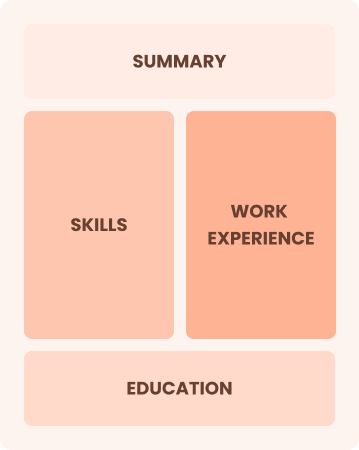
Combination
Balances skills and work history equally
Best for:
Mid-career professionals focused on demonstrating skills and seeking growth opportunities
Experienced 8+ years
Chronological
Emphasizes work history in reverse order
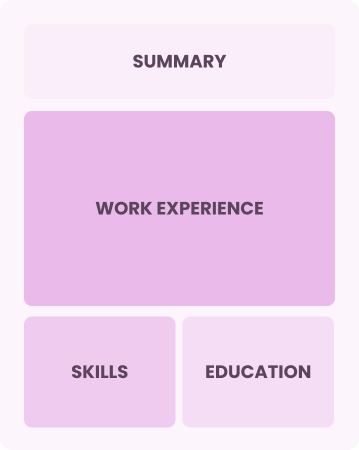
Best for:
Experienced leaders in complex patient management and care coordination
Frequently Asked Questions
Should I include a cover letter with my hospitalist resume?
Absolutely, including a cover letter can significantly improve your application. It allows you to highlight your unique qualifications and demonstrate genuine interest in the position. For tips on crafting an effective cover letter, explore our comprehensive guide on how to write a cover letter. Alternatively, use our Cover Letter Generator for a quick start.
Can I use a resume if I’m applying internationally, or do I need a CV?
When applying for jobs abroad, a CV is often preferred over a resume, especially in Europe and Asia. To create an effective CV that meets international standards, explore our CV examples for inspiration and detailed guidance on how to write a CV, including proper formatting and content creation.
What soft skills are important for hospitalists?
Soft skills like communication, empathy, and collaboration are essential for hospitalists. These interpersonal skills foster strong relationships with patients and their families, ensuring effective information exchange and teamwork among healthcare providers. This ultimately leads to improved patient care and satisfaction.
I’m transitioning from another field. How should I highlight my experience?
Highlight your transferable skills in communication, critical thinking, and teamwork from previous roles. These abilities are important for hospitalists and show you're prepared to excel despite limited direct experience. Use concrete examples to illustrate how these strengths align with overseeing patient care and collaborating with medical teams.
How should I format a cover letter for a hospitalist job?
To format a cover letter for hospitalist positions, start with your contact details. Follow this with a professional greeting and an engaging opening paragraph that highlights your passion for patient care. Include a concise summary of your qualifications and experiences relevant to the job. Tailoring the content to match the specific requirements is essential. Conclude with a strong call to action inviting further discussion.
Should I include a personal mission statement on my hospitalist resume?
Including a personal mission statement on your resume is beneficial. It effectively conveys your values and career aspirations, making it especially powerful when you are applying to healthcare organizations that prioritize patient-centered care or have a strong commitment to their mission.




Ready to land the job?
Join 28M+ others who've built a resume that works.