Hard skills in music include instrument performance, a solid understanding of music theory, and composition techniques that demonstrate technical expertise.
Music Resume Examples & Templates
Kickstart your music career with our music resume examples. Showcase your creativity, collaboration, and performance skills to capture the attention of employers in this vibrant industry.

by Gabriela Hernandez, Last Updated: January 18, 2026
Hired By:*

- Popular Music Resume Examples
- Resume Template—Easy to Copy & Paste
- Build Your Resume in Minutes
- How to Write a Music Resume Summary
- Showcasing Your Work Experience
- Top Skills to Include on Your Resume
- Resume Format Examples
- Music Salaries in the Highest-Paid States
- Related Music Resume Examples
- Frequently Asked Questions
- Should I include a cover letter with my music resume?
- Can I use a resume if I’m applying internationally, or do I need a CV?
- What soft skills are important for musics?
- I’m transitioning from another field. How should I highlight my experience?
- Where can I find inspiration for writing my cover letter as a music?
- How do I write a resume with no experience?
Popular Music Resume Examples
Discover our top music resume examples that highlight key skills such as composition, performance, and collaboration. These examples provide a great foundation for showcasing your unique talents and accomplishments in the music industry.
Ready to build your ideal resume? Our Resume Builder offers user-friendly templates designed specifically for musicians, helping you present your best self to potential employers.
Recommended
 Customize This Resume
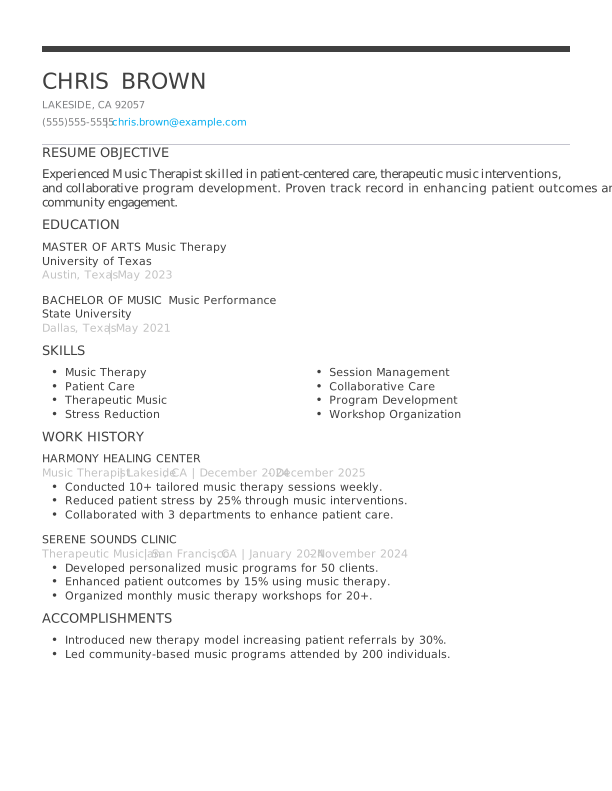
Music therapist resume
What this resume does well:
The resume fonts used in the document create a clear layout, improving readability for hiring managers. These design choices effectively highlight the job seeker's qualifications and experiences, making a positive impression that reflects attention to detail and professionalism.
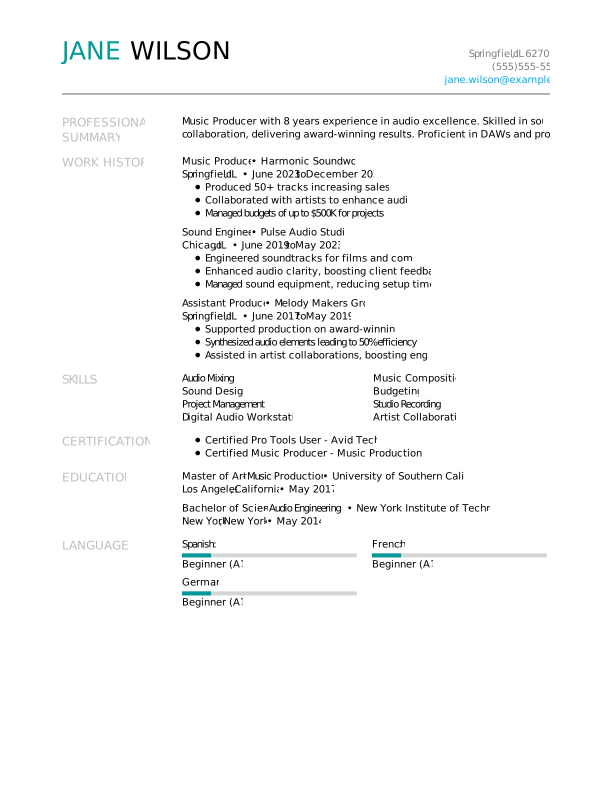
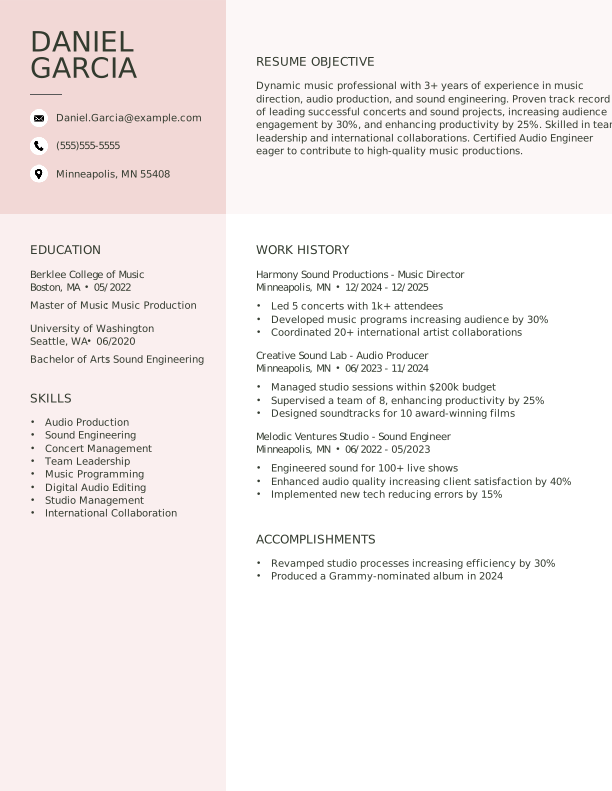
Music producer resume
What this resume does well:
This resume effectively highlights key skills such as audio mixing and project management, paired with substantial work experience. By showcasing these abilities alongside a diverse history in music production, employers can clearly see the job seeker’s expertise and practical application within the industry.
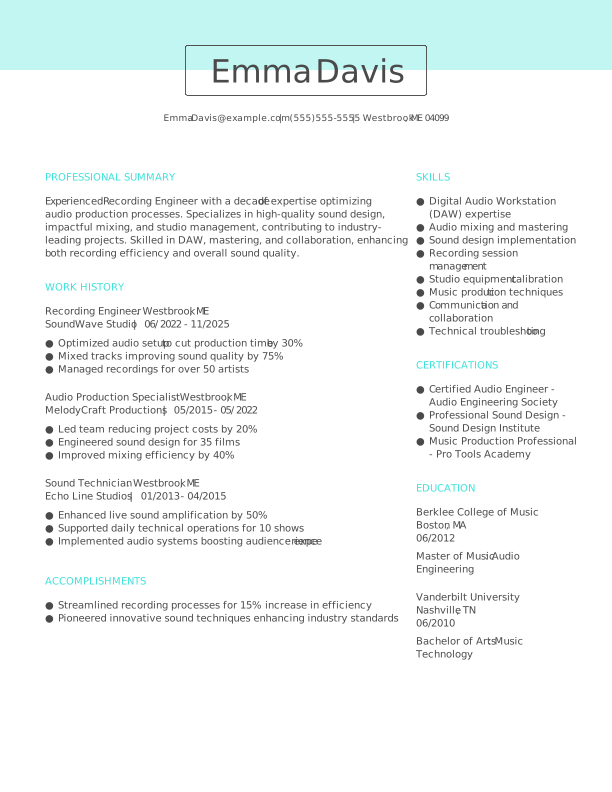
Recording engineer resume
What this resume does well:
This resume effectively uses bullet points to clearly present a wealth of experience, making it easy for hiring managers to spot significant achievements. The thoughtful spacing and organized layout ensure that critical qualifications stand out prominently, improving overall readability without cluttering the page.
Resume Template—Easy to Copy & Paste
Example
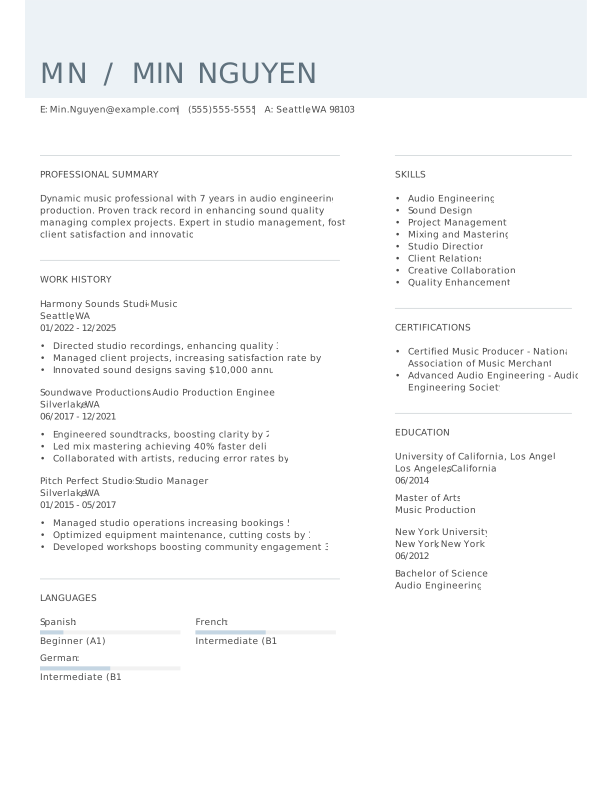
Min Nguyen
Seattle, WA 98103
(555)555-5555
Min.Nguyen@example.com
Professional Summary
Dynamic music professional with 7 years in audio engineering and production. Proven track record in enhancing sound quality and managing complex projects. Expert in studio management, fostering client satisfaction and innovation.
Work History
Music
Harmony Sounds Studio - Seattle, WA
January 2022 - December 2025
- Directed studio recordings, enhancing quality 30%
- Managed client projects, increasing satisfaction rate by 15%
- Innovated sound designs saving 10,000 annually
Audio Production Engineer
Soundwave Productions - Silverlake, WA
June 2017 - December 2021
- Engineered soundtracks, boosting clarity by 20%
- Led mix mastering achieving 40% faster delivery
- Collaborated with artists, reducing error rates by 25%
Studio Manager
Pitch Perfect Studios - Silverlake, WA
January 2015 - May 2017
- Managed studio operations increasing bookings 50%
- Optimized equipment maintenance, cutting costs by 10%
- Developed workshops boosting community engagement 30%
Languages
- Spanish - Beginner (A1)
- French - Intermediate (B1)
- German - Intermediate (B1)
Skills
- Audio Engineering
- Sound Design
- Project Management
- Mixing and Mastering
- Studio Direction
- Client Relations
- Creative Collaboration
- Quality Enhancement
Certifications
- Certified Music Producer - National Association of Music Merchants
- Advanced Audio Engineering - Audio Engineering Society
Education
Master of Arts Music Production
University of California, Los Angeles Los Angeles, California
June 2014
Bachelor of Science Audio Engineering
New York University New York, New York
June 2012
Build Your Resume in Minutes
Creating a custom resume is easier than ever with our Resume Builder!
How to Write a Music Resume Summary
Your resume summary is the first chance to grab employers' attention, making it important for setting a positive tone. As a music professional, you should highlight your unique talents, experiences, and any notable achievements in the industry that align with the position you're applying for. To illustrate effective summaries, we’ve provided examples that showcase what works best and what pitfalls to avoid:
Weak Example
I am a passionate musician with experience in various genres. I want to find an opportunity where I can showcase my talents and contribute to the team. A creative environment that values collaboration and artistic expression is important to me.
Why this summary misses the mark:
- Lacks specific details about the job seeker’s musical skills, achievements, or instruments played
- Focuses more on personal aspirations rather than how the applicant can benefit a potential employer
- Uses generic phrases that do not distinguish the job seeker from others in a competitive field
Strong Example
Creative and passionate music educator with over 8 years of experience teaching diverse groups of students in both private and public settings. Successfully increased student participation in school concerts by 30% through innovative curriculum development and engaging lesson plans. Proficient in piano, guitar, and music theory, fostering a love for music while improving students' performance skills.
Why this summary works:
- Begins with clear indication of experience level and teaching focus
- Includes quantifiable achievement that highlights success in increasing student engagement
- Demonstrates relevant musical skills that are essential for a music educator role

Pro Tip
If you don't have much formal experience yet, consider highlighting your passion with a career objective instead of a summary. There are plenty of resume objective examples available to help you craft one that shines in the music industry.
Showcasing Your Work Experience
The work experience section is important for a resume in the music industry, as it contains the bulk of your content. Good resume templates always emphasize this area to showcase your relevant experiences.
This section should be organized in reverse-chronological order, detailing your past roles in music. Use bullet points to highlight specific achievements and contributions you made during each position.
Now, let’s look at a couple of examples that illustrate what effective entries in the work experience section look like. These examples will help clarify what works well and what doesn’t:
Weak Example
Music Teacher
Sunnydale School – Anytown, USA
- Taught music classes.
- Prepared lesson plans and materials.
- Worked with students of all ages.
- Organized school performances and events.
Why this work experience section misses the mark:
- No details about the employment dates
- Bullet points lack specific achievements or results from teaching
- Focuses on basic responsibilities instead of highlighting unique contributions or successes
Strong Example
Music Teacher
Harmony Arts Academy – Los Angeles, CA
August 2018 - Current
- Develop and implement engaging music curriculum for over 100 students, resulting in a 30% increase in student participation in performances.
- Facilitate weekly ensemble sessions that foster teamwork and creativity, leading to three successful concerts each year.
- Mentor aspiring musicians through personalized lessons, improving their skills and confidence as evidenced by a 40% improvement in student assessments.
Why this work experience section works:
- Starts each bullet with strong action verbs that highlight the applicant’s achievements
- Incorporates specific metrics to demonstrate the impact of the work done
- Showcases relevant skills like mentorship and curriculum development, which are important for educators
While your resume summary and work experience are essential components, don’t overlook the importance of other sections. Each part plays a important role in presenting your qualifications effectively. For detailed guidance, be sure to check out our comprehensive guide on how to write a resume.
Top Skills to Include on Your Resume
A skills section is important for a compelling resume as it quickly showcases your qualifications to potential employers. This segment allows you to highlight your strengths and align them with the job requirements, making you stand out in a competitive market.
Strengthen your resume by including a balanced mix of hard and soft skills.
Soft skills are essential as they involve creativity, teamwork, and communication abilities, which foster collaboration among musicians and improve the overall artistic experience.
Selecting the right resume skills is essential for aligning with employer expectations and navigating automated screening systems. Many employers use software to filter out applicants who lack the required skills for the position.
Carefully reviewing job postings to identify which skills are emphasized can improve your chances of success. This approach helps you prioritize relevant abilities that resonate with both recruiters and ATS algorithms, ensuring your application stands out.
Pro Tip
Make your resume stand out to employers by using our ATS Resume Checker, which identifies over 30 common mistakes to ensure your application passes through applicant tracking software with ease.
10 skills that appear on successful music resumes
Highlighting sought-after skills on your resume can significantly improve your chances of catching a recruiter's eye. Many of these skills are showcased in resume examples, helping you apply for positions with the confidence that comes from a polished professional presentation.
If you find these skills align with your experience and job requirements, consider adding them to your resume:
Creativity
Collaboration
Adaptability
Music theory knowledge
Performance skills
Technical skill in music software
Sound engineering
Composition expertise
Teaching ability
Networking within the industry
Based on analysis of 5,000+ music professional resumes from 2023-2024
Resume Format Examples
Selecting the right resume format is important as it showcases your musical talents, experience, and growth effectively, ensuring that potential employers see your most relevant qualifications at a glance.
Entry-Level 0 - 2 years
Functional
Focuses on skills rather than previous jobs
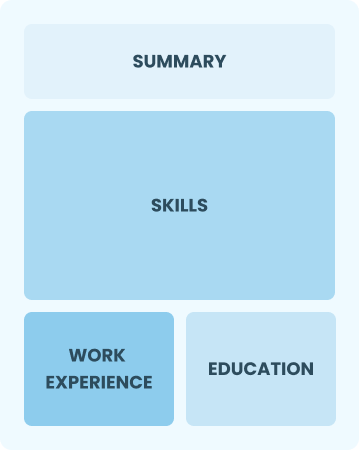
Best for:
Recent graduates and career changers with up to two years of experience.
Mid-Career 3 - 7 years
Combination
Balances skills and work history equally
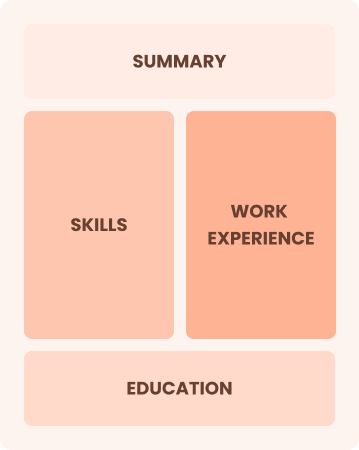
Best for:
Mid-career professionals focused on demonstrating their skills and potential for growth.
Experienced 8+ years
Chronological
Emphasizes work history in reverse order
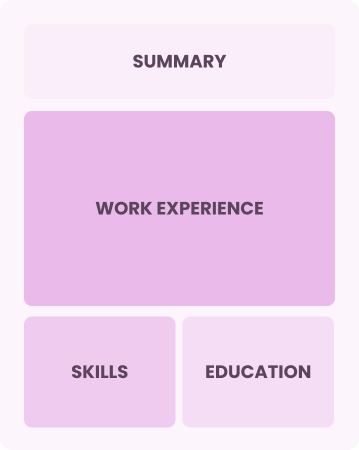
Best for:
Seasoned leaders with expertise in music production and innovation.
Music Salaries in the Highest-Paid States
Our music salary data is based on figures from the U.S. Bureau of Labor Statistics (BLS), the authoritative source for employment trends and wage information nationwide.
Whether you're entering the workforce or considering a move to a new city or state, this data can help you gauge what fair compensation looks like for musics in your desired area.
$0$75K$150K
Frequently Asked Questions
Should I include a cover letter with my music resume?
Absolutely. Including a cover letter with your application can significantly improve your chances of making a memorable impression on hiring managers. It allows you to showcase your personality and clarify how your experiences align with the job. For tips on crafting an effective cover letter, explore our comprehensive guide on how to write a cover letter or try our easy-to-navigate Cover Letter Generator for quick assistance.
Can I use a resume if I’m applying internationally, or do I need a CV?
When applying for jobs internationally, a CV is often required instead of a resume. A CV provides a comprehensive overview of your academic and professional history. To help you craft the perfect document, we offer CV examples that showcase various styles and formats. Additionally, our guide on how to write a CV walks you through formatting and writing tips to meet global standards.
What soft skills are important for musics?
Soft skills, including creativity, collaboration, and interpersonal skills, are essential in music. They allow musicians to connect with audiences and work harmoniously with other artists, fostering a supportive environment that improves creativity and performance quality.
I’m transitioning from another field. How should I highlight my experience?
When transitioning to a music career, highlight your transferable skills like creativity, teamwork, and communication. These abilities prove your value even if you lack direct experience in the field. Share specific instances where these skills led to successful projects or collaborations. This connection will demonstrate to potential employers how you can contribute effectively to their team.
Where can I find inspiration for writing my cover letter as a music?
For job seekers in the music industry, exploring professional cover letter examples can be invaluable. These samples provide inspiration for content ideas and formatting tips, helping you effectively showcase your skills and experiences to stand out in a competitive field.
How do I write a resume with no experience?
Job seekers aiming for music positions with limited experience can benefit from a resume with no experience by highlighting relevant skills such as creativity, collaboration, and passion for the craft. Showcase any performances, projects, or volunteer opportunities that demonstrate your abilities. Remember, your enthusiasm and dedication to music can resonate strongly with employers looking for fresh talent.




Ready to land the job?
Join 28M+ others who've built a resume that works.