Strong cover letters are tailored to the specific job and employer. They highlight relevant accomplishments and explain why you’re a strong fit, making your application more compelling than a generic letter.
Most effective cover letters are one page long and follow a clear structure, including a personalized greeting, engaging introduction, relevant achievements, and a confident closing.
A well-written cover letter can strengthen your application, even when it isn’t required, by showcasing your value, interest in the role, and fit for the position.
A cover letter allows you to expand on your resume and explain why you’re a strong match for a specific role. While your resume highlights your qualifications and experience, a cover letter allows you to add context, demonstrate your interest in the position, and connect your background to the employer’s needs.
Writing a cover letter doesn’t have to be complicated. In this guide, you’ll learn how to write a cover letter step by step, including what to include, how to structure each section, and how to create a polished letter that supports your job application.
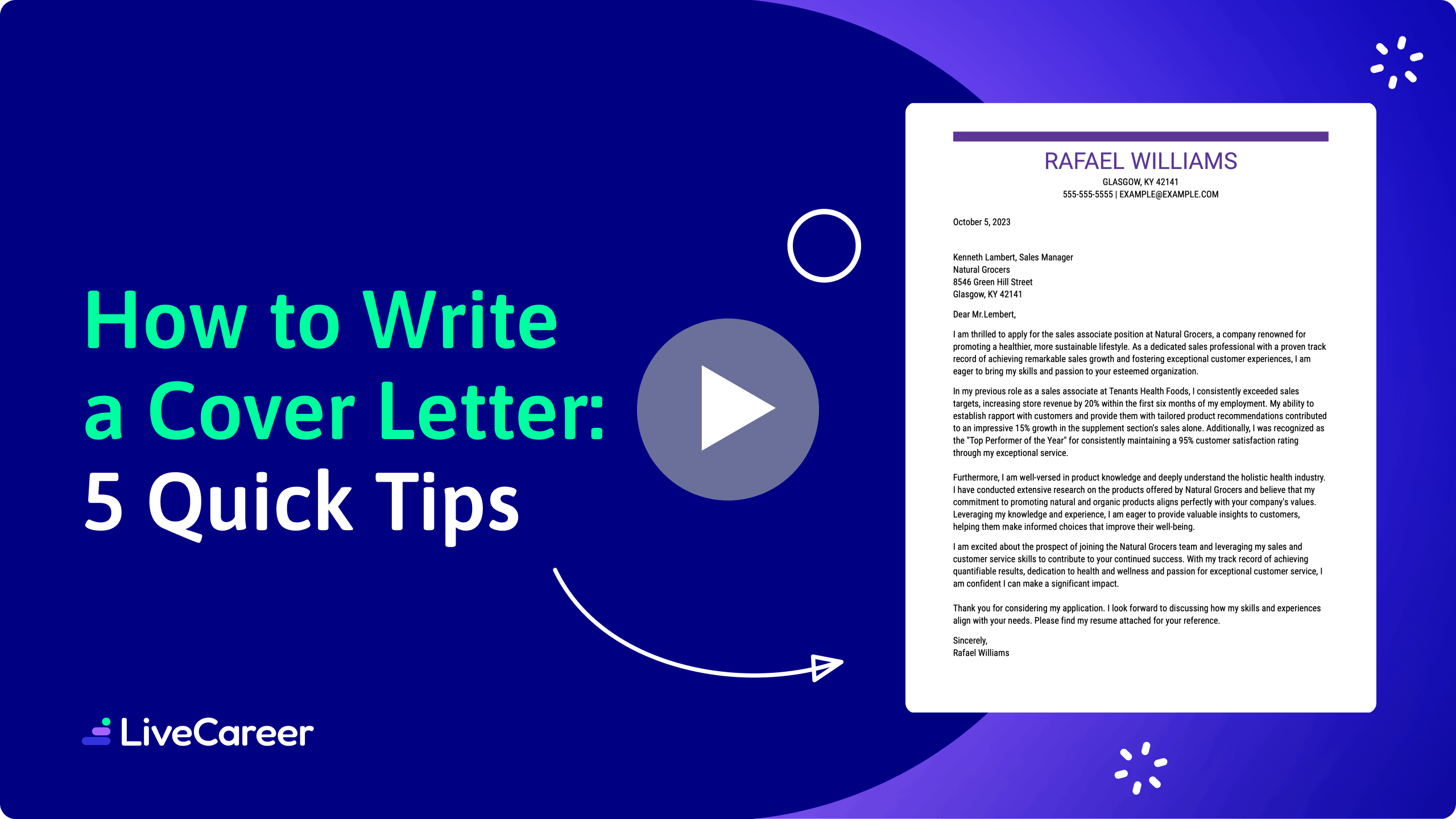
We know the job application process is already time-consuming, so we created a simple guide to help you write a polished, compelling cover letter faster. Watch the video below for quick tips on creating a cover letter with LiveCareer’s Cover Letter Generator.
What Is a Cover Letter & When Should You Use One?
A cover letter is a one-page document you submit with your resume to explain why you're a strong fit for a specific job. It complements your resume by highlighting relevant skills, accomplishments, and motivation that aren't fully captured elsewhere.
You should include a cover letter when a job posting requests one, when you’re applying for a competitive role, or when you want to explain something your resume can’t, such as a career change, employment gaps, or limited direct experience. Even if a cover letter isn’t required, submitting one can help you stand out when done well.
“A cover letter can be a great addition to your resume. A cover letter lets you take more control over your career narrative and provide an employer with additional information as you make the case for why you’re the right candidate for the role they’re hiring for.”
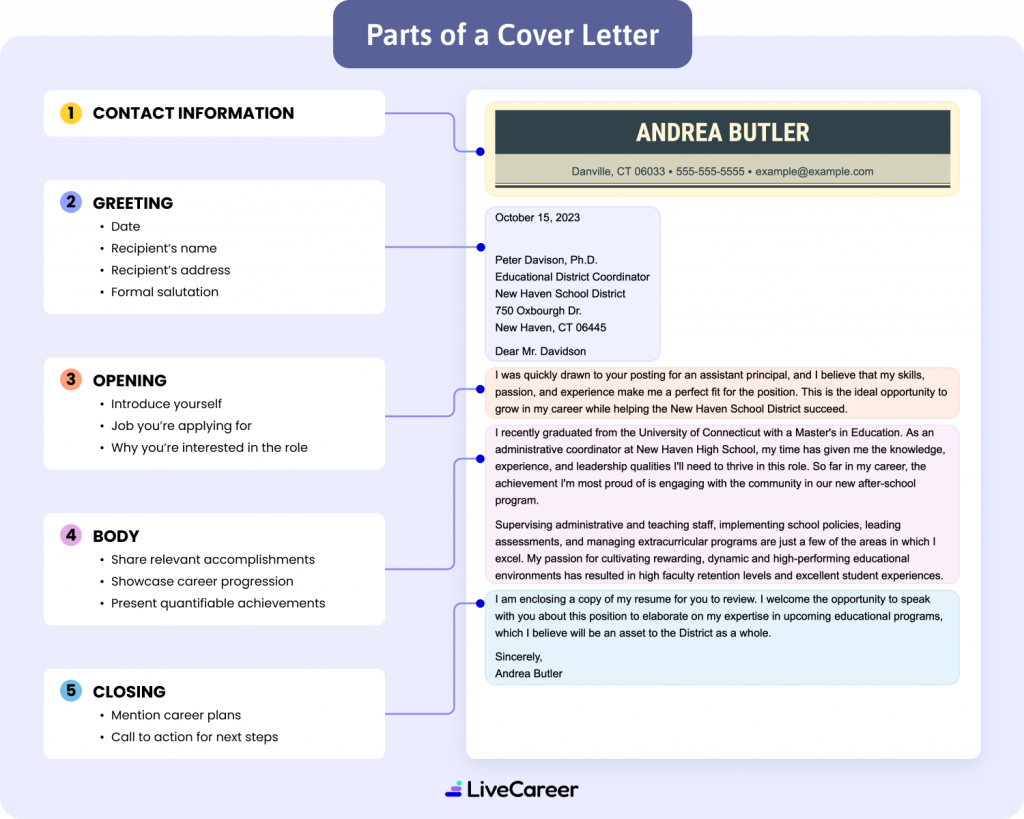
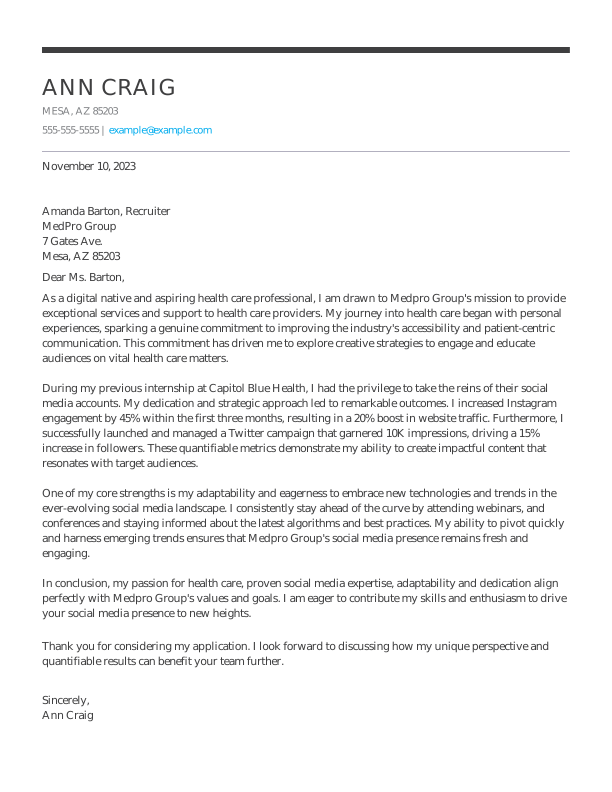
A strong cover letter includes a clear introduction, relevant skills and achievements, and a compelling closing that connects your experience to the job. It should follow a standard business letter format, with the sections placed in this order:
Your contact information
The date you send your letter
The recipient’s information
Personalized greeting
Strong opening paragraph
One to three body paragraphs highlighting relevant achievements
Confident closing paragraph with a call to action
Professional sign-off with your name and signature
How to Write a Cover Letter for a Job Application
By following a structured approach—researching the company, crafting a strong introduction, highlighting relevant achievements, and closing confidently—you can write a compelling letter that improves your chances of landing an interview.
Step 1
Create Your Cover Letter Header
Create a cover letter header that includes your full name, professional email address, phone number, and location (city and state). Below your contact information, add the date, followed by the employer’s name and contact details.
Here’s a closer look at what to include in the header of your document:
Your contact information: Full name, professional email address, phone number, location (city and state), and LinkedIn profile (optional)
Date: The date you’re submitting your letter
Employer’s contact information (if available): Hiring manager’s name, job title, company name, and company address
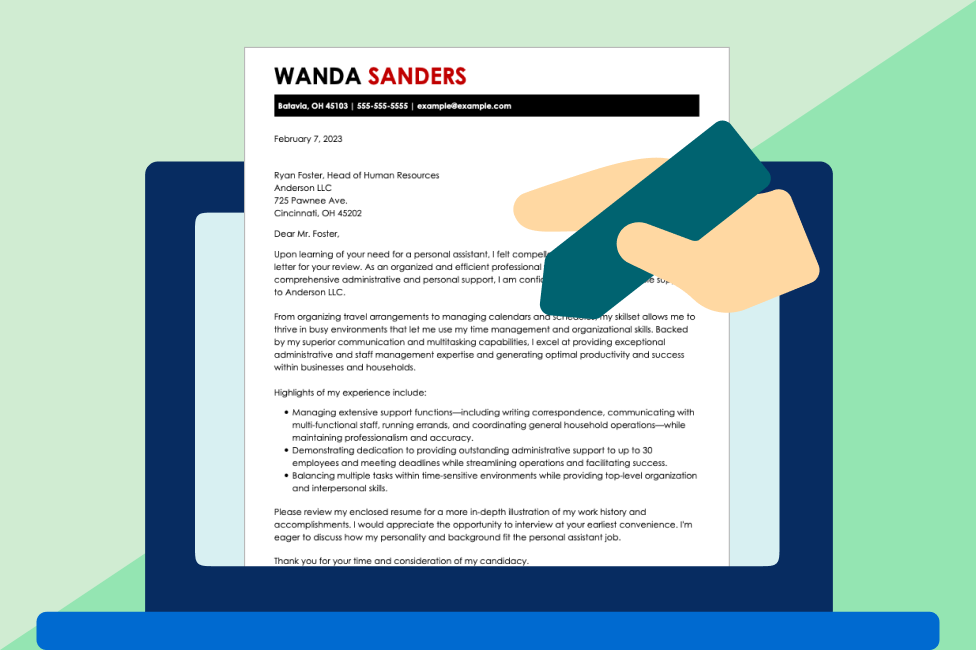
Here’s an example of how it should look:
Tatiana Smith example@email.com | 555-555-5555 | Miami, FL | linkedin.com/in/example
July 9, 2026
Alex Martinez Hiring Manager Tech Solutions Inc. 456 Corporate Blvd. Fort Lauderdale, FL 12345
Step 2
Add a Personalized Greeting
Address your cover letter to the appropriate recipient by name to show attention to detail. A personalized greeting shows you’ve taken the time to research the company and helps create a stronger connection compared to generic openings like “To Whom It May Concern.”
Start with “Dear” followed by the hiring manager’s name (e.g., “Dear Ms. Smith”). Avoid overly casual or outdated salutations. Keeping your greeting professional and tailored sets a positive tone and encourages the reader to continue reading your cover letter.
If you’re unsure of their name, check the job posting, company website, or LinkedIn. If you can’t find a specific person, use a role-based greeting, such as “Dear Hiring Manager” or “Dear [Department] Team,” instead of a generic greeting.
Good Cover Letter Greetings
Dear [Hiring Manager’s Name]
Dear [First and Last Name]
Dear [Job Title] (when the hiring manager’s name is unknown, e.g., “Dear Marketing Director”)
To the [Department] Hiring Team
Dear [Company Name] Team
Cover Letter Greetings to Avoid
To Whom It May Concern
Dear Sir or Madam
Hey [First Name]
Hi there
Greetings
Step 3
Write a Strong Opening Paragraph
A strong cover letter opening paragraph tells the employer who you are, what your intentions are, and why you’re a worthwhile candidate. In just a few sentences, you should clearly state:
Your profession or background
The role you’re applying for
A compelling reason why you’re the best candidate
This can be addressed in several effective ways, depending on your situation. Explore a few examples of how to write the first line of your cover letter to grab attention right away.
Skills-Match Approach
Focus on your most relevant skills and experiences that directly align with the job requirements. Highlight a key achievement or qualification that immediately signals you’re a strong fit.
For example:
With five years of experience in project management and a track record of delivering cross-functional initiatives on time and under budget, I’m excited to apply for the senior project manager role at Thunder Corp.
Company Compatibility or Mission-Driven Approach
Show that you share the company’s values or are passionate about its mission. Demonstrating cultural fit and genuine interest can set you apart as a committed candidate.
For example:
As a lifelong advocate for sustainable design, I’m thrilled to apply for the product designer position at GreenWorks, a company whose commitment to eco-friendly solutions aligns perfectly with my professional goals.
Employee Recommendation or Referral Approach
If a current employee in good standing has agreed to recommend you, mention it in the opening paragraph of your cover letter. A referral from an employee can help establish credibility and may strengthen your application in the eyes of the employer.
For example:
I was referred to this role by Maria Lopez, a UX designer at TechNova, who recommended I apply given my background in user-centered design and product optimization.
Pro Tip
The key to writing a strong cover letter opening paragraph is to tailor it to the job and make it engaging. Show the employer right away why they should keep reading, and avoid generic phrases like “I’m excited to apply” without context.
Step 4
Write 1–3 Body Paragraphs
Use one to three concise body paragraphs to highlight relevant skills, achievements, and results to show how you can contribute to the company. The body paragraphs are where you demonstrate your value by connecting your experience to the job requirements.
Start With Your Relevant Qualifications
Use your body paragraphs to highlight your most relevant qualifications, including job-specific skills, experience, and accomplishments that directly relate to the role’s responsibilities. Provide context for key achievements by explaining your thought process, strategies, and results for specific projects.
Here are a few tips for highlighting your relevant qualifications in your body paragraphs:
Connect your experience to the role. Review the job posting and choose two to three key qualifications you can address in your letter.
Use quantifiable achievements. Numbers make your achievements more tangible. For example, “Increased social media engagement by 35% in six months” is more compelling than “Managed social media accounts.”
Focus on transferable skills. If you’re changing careers or have gaps in your experience, emphasize transferable skills relevant to the new role, such as project management, teamwork, or communication.
For example:
In my previous role as marketing coordinator at Total Media Group, I led a cross-channel campaign that increased website traffic by 40% and grew newsletter subscriptions by 25% in three months. By analyzing audience data and tailoring content strategies, I delivered measurable results that exceeded our quarterly goals.
I also collaborated with design, sales, and product teams to ensure campaigns aligned with company objectives. This experience strengthened my communication, project management, and problem-solving skills—abilities I’m excited to bring to your team to drive similar success.
Explain Why You Want the Job
In addition to outlining your achievements, your cover letter’s body paragraphs should also show employers that you’re not just looking for any job—you want this job at this company.
Explain why the role excites you and how your values align with the company’s mission. You can also highlight shared industry interests and demonstrate your understanding of the company's mission and values. Hiring managers want to see that you’ve done your research and are motivated to contribute.
Research the company’s mission, values, products, or recent initiatives, and reference the ones that genuinely resonate with you. Connect them to your own experience by explaining why they matter. For example, mention how a similar project or core value has shaped your career.
For example:
I’m drawn to GreenLeaf’s commitment to sustainable marketing, particularly your recent campaigns promoting eco-friendly consumer brands. In my previous role, I managed data-driven campaigns for mission-focused clients, increasing engagement by 35% while adhering to strict sustainability guidelines. This role aligns closely with my professional goals, and I’m excited to bring my analytical and creative skills to a team that prioritizes both performance and environmental impact.
Step 5
End With a Confident Closing Paragraph
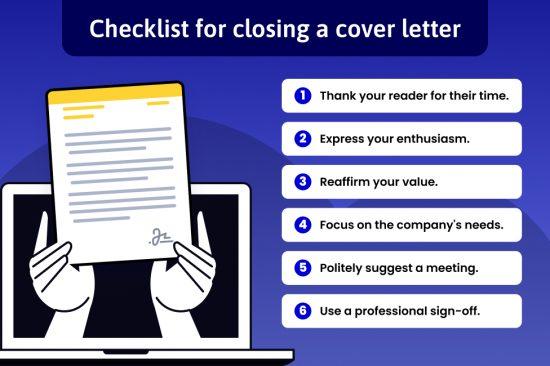
End your cover letter with a confident call to action that encourages the employer to take the next step, such as inviting you for an interview or reviewing your portfolio. Keep your tone professional and courteous, and thank the reader for their time.
Keep this section focused—avoid introducing new information and instead reinforce your strongest qualifications and interest in the position.
For example:
I’m excited about the opportunity to contribute to your team and bring my experience in project management and process improvement to this role. Thank you for considering my application. I look forward to the opportunity to discuss how my skills can support your organization’s goals.
Pro Tip
Avoid apologizing for employment gaps, begging for an interview, or using casual phrases like “Hope to hear from you soon,” as these can undermine your professionalism and confidence. Instead, close with a concise, positive statement that reinforces your enthusiasm and value.
Step 6
Sign Off Professionally
Use standard sign-offs, such as “Sincerely,” “Best regards,” or “Kind regards,” followed by your full name on the next line. Avoid overly casual closings like “Thanks” or “Talk soon,” which can feel unprofessional in formal job applications.
Good Cover Letter Sign-Offs
Sincerely
Regards
Best regards
Kind regards
Respectfully
Cover Letter Sign-Offs to Avoid
Take care
Have a great day
Love
Yours truly
Cheers
Cover Letter Formatting Guidelines
Clean formatting helps hiring managers quickly scan your qualifications and ensures your letter looks polished. Use these guidelines when formatting your letter, or take advantage of pre-formatted cover letter templates for a faster writing process.
A cover letter should typically be one page or less, with most letters falling between 250 and 400 words.
Use a professional, easy-to-read font, such as Arial, Calibri, Helvetica, or Times New Roman, sized at 10–12 points.
Single-space your cover letter and leave one blank line between paragraphs.
Use 1-inch margins on all sides for a balanced layout.
Align text to the left for readability and visual consistency.
Match the font, spacing, and header style of your resume to create a cohesive application. If you need inspiration, explore our resume templates to align both documents.
Avoid excessive graphics, text boxes, or decorative fonts to ensure your cover letter is easy for hiring managers and digital systems to read.
How to Make a Cover Letter Stand Out: Examples for Popular Jobs
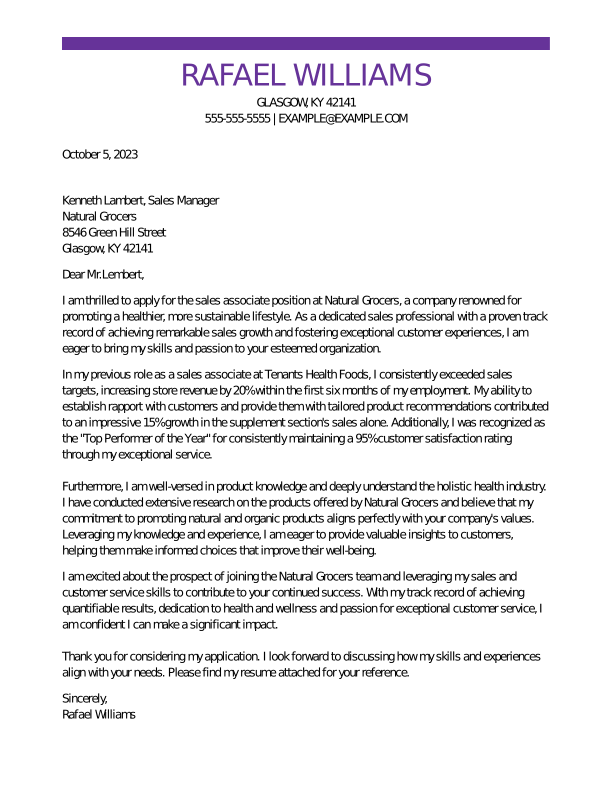
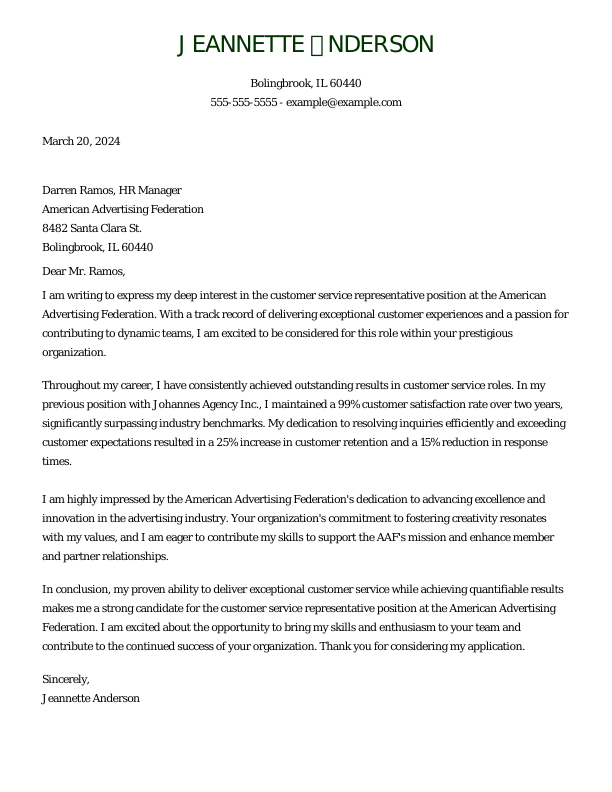
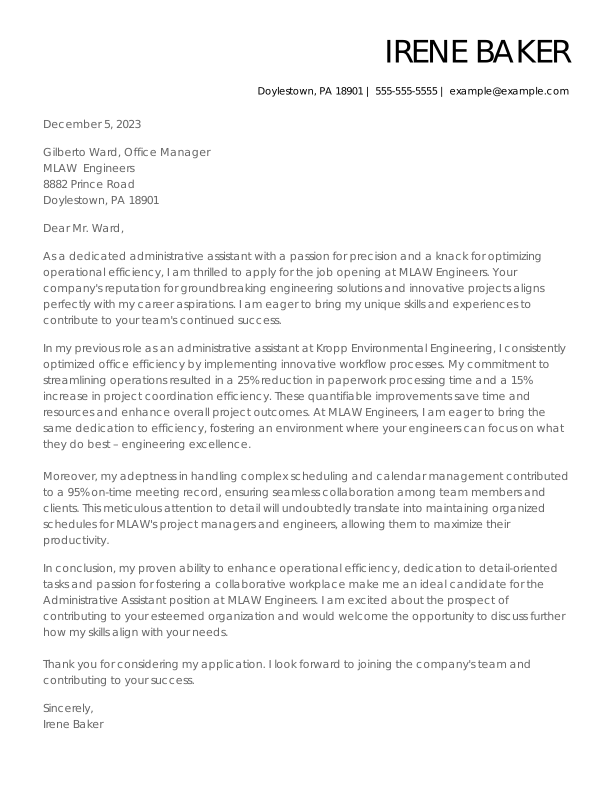
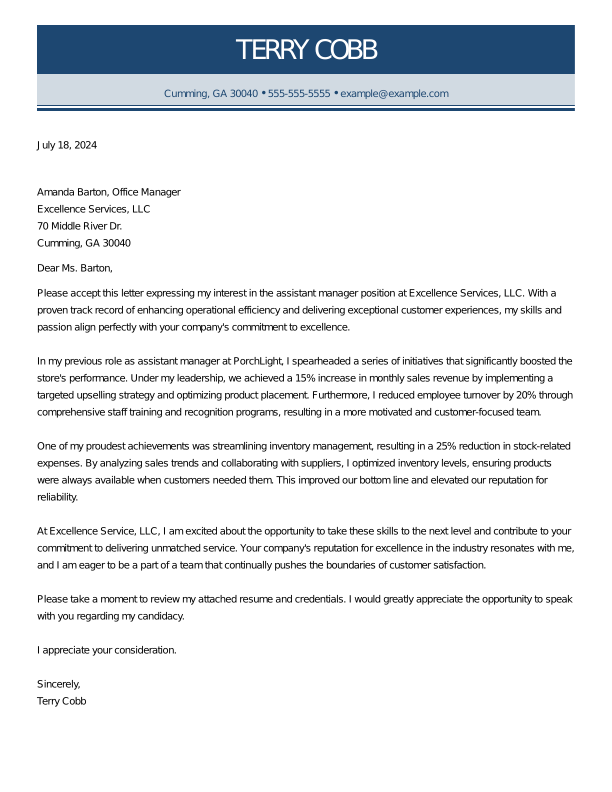
To make a cover letter stand out, tailor it to the specific role, highlight measurable achievements, and use language that reflects the employer’s priorities. The best way to get inspired to write a cover letter is by looking at solid examples written for the same role you’re applying for.
Check out our collection of cover letter examples for various industries and job titles for inspiration to write your letter.
Here are six of the most-searched cover letter examples in our database:
Some mistakes can become instant red flags in a cover letter. They can hurt your chances with recruiters and may also affect how your application performs in applicant tracking systems (ATS).
Here are common mistakes to avoid when writing your cover letter:
Repeating your resume: Your cover letter should add context and insight, not restate bullet points from your resume.
Using a generic template: A one-size-fits-all cover letter makes it easy for employers to skip your application because it doesn’t highlight role-specific skills and experience.
Being too long or unfocused: Keep your cover letter concise so hiring managers can quickly scan your most relevant skills and achievements.
Using outdated or overly formal language: Phrases like “To whom it may concern” or overly stiff openings can feel impersonal.
Focusing on what you want instead of what you offer: Emphasize how you can help the employer, not just what you hope to gain.
Ignoring formatting and proofreading: Typos, inconsistent spacing, or messy formatting can hurt your credibility.
Can You Use AI to Write Your Cover Letter?
You can use AI to help write your cover letter, but it should be used as a tool—not a replacement for your voice. Always review, edit, and personalize the content to reflect your unique experience, achievements, and genuine interest in the role.
How to Create a Cover Letter With AI Support
AI can help generate ideas, improve clarity, and speed up drafting, but your final cover letter should reflect your experience, voice, and the specific role you're applying for.
Here are a few ways you can use AI tools to support the writing process:
Generate a first draft based on your resume and the job description.
Rewrite or improve existing paragraphs for clarity and tone.
Identify keywords and skills from the job posting.
Create multiple versions tailored to different roles.
Check grammar, spelling, and overall readability.
How to Use AI Responsibly for Cover Letters
Use AI as a starting point, then customize the output to ensure it accurately reflects your voice and highlights your most relevant achievements.
Here are a few tips for using AI responsibly:
Use AI as inspiration, not a final draft. Let it help with structure and phrasing, but tailor the output to your background and voice.
Check facts and accuracy. Ensure AI hasn’t introduced skills, dates, or details that don’t match your experience.
Customize for each role. Adapt suggestions to fit the company, industry, and job description.
Add your own perspective. Include personal insights, motivations, and alignment with the role to make your letter stand out.
Cover Letter Writing Checklist
Now that you know how to write a cover letter for a resume, run through this checklist to ensure your document is clear, tailored, and professional before you submit it:
Include a clear heading with your contact information, date, and the recipient’s name and address.
Address the hiring manager by name in your greeting, if possible. If not, use one of the alternatives listed in this article.
Write an opening paragraph that grabs attention, states your current role, the position you’re applying for, and your motivation for joining the company.
Use body paragraphs to demonstrate your value by highlighting relevant skills, accomplishments, and quantifiable achievements.
Explain how your experience and background align with the job requirements.
Show genuine enthusiasm for the company and its mission.
Close your letter professionally by thanking the reader, suggesting a next step such as an interview, and including a formal signature.
Proofread carefully to ensure there are no spelling, grammar, or formatting errors.
Key Takeaways
By following a clear structure, highlighting measurable achievements, and maintaining a professional tone, you can create a compelling cover letter that strengthens your application and helps you stand out to employers.
Here are the key takeaways to keep in mind while writing:
A tailored cover letter is more effective than a generic one.
Employers care most about results, not just responsibilities.
Strong openings and closings shape first and last impressions.
Clarity and relevance matter more than length.
Personalization and authenticity help you stand out.
Even small details like tone and formatting affect professionalism.
A cover letter is necessary when an employer requests one, but including one when optional can still strengthen your application. A cover letter allows you to introduce yourself, explain your motivation, and highlight how your skills align with the role.
What should a cover letter include?
A cover letter should include your contact information, a personalized greeting, an introduction, body paragraphs highlighting relevant qualifications, and a professional closing.
How do you start a cover letter?
Start a cover letter with a professional greeting, then introduce yourself by mentioning the position you're applying for and one or two qualifications that make you a strong candidate. A strong opening immediately explains why you're interested in the role and encourages the hiring manager to keep reading.
How long should a cover letter be?
A cover letter should be one page long—typically 250–400 words and three to four paragraphs. This length follows industry standards and makes it easy for recruiters to scan your key qualifications.
How do I write a cover letter if I don't have experience?
You can write a cover letter without experience by focusing on transferable skills, education, and relevant projects. Highlight strengths like communication, teamwork, or problem-solving, and support them with examples from school, volunteering, or internships. Show enthusiasm for the role and emphasize your willingness to learn and contribute value.
Can I write a cover letter with no manager’s name?
Yes, you can still write a professional cover letter if you can’t find the hiring manager’s name. If research doesn’t reveal a specific person, use a professional alternative such as:
Dear Hiring Manager
Dear Hiring Team
Dear [Department Name] Manager
How do I write a cover letter for an internship?
To write a cover letter for an internship, start by stating the role you’re applying for. Highlight relevant coursework, projects, or skills from school or experience. Then, explain your motivation for the internship and how it supports your career goals. Emphasize what you can contribute and what you hope to learn.
What are the three golden rules of a cover letter?
The three golden rules of a cover letter are to tailor it to the specific job and company, focus on how your skills and accomplishments benefit the employer, and keep it concise, professional, and limited to one page.
Do I introduce myself in a cover letter?
Yes, you should introduce yourself, but you don’t need to restate your name since it appears in the header. Instead, focus your introduction on your job title, background, and interest in the role. A strong opening should quickly establish who you are professionally and why you’re applying.
Over the past 15 years, we’ve helped more than 10 million job seekers build stronger cover letters, discover their career paths, interview confidently, and boost their chances of finding the right job faster. Review our Editorial Policy to learn more about our process.
Gabriela is a Certified Professional Resume Writer (CPRW) and member of the Professional Association of Resume Writers & Career Coaches. She focused on helping job seekers improve their professional resumes to highlight their unique skills and experience. Gabriela holds a BA in journalism from the University of Puerto Rico and brought more than four years of specialized experience to helping candidates navigate the complexities of the online job market, with a strong focus on resume optimization and effective self-presentation.



 Add LiveCareer as a preferred source on Google