The Functional Resume Format: Who Should Use It & Why

Gabriela Hernandez
by Gabriela Hernandez, CPRW, Career Advice WriterLast Updated: January 21, 2026

Hired By:*

Endorsed by trusted media Endorsed by trusted media

What Is a Functional Resume Format?

A functional resume format, also known as a skills-based resume format, emphasizes your skills above all else. There are several reasons why you might choose a functional format resume over a chronological or combination format for your next job application.

Who should use a functional resume format?

The resume with a functional format works well for applicants who have little to no work experience, have gaps in their employment history, or are seasoned professionals who are looking to make a career change.

Here, we outline everything you need to know about functional resume formats to help you decide if it is the right choice for you.

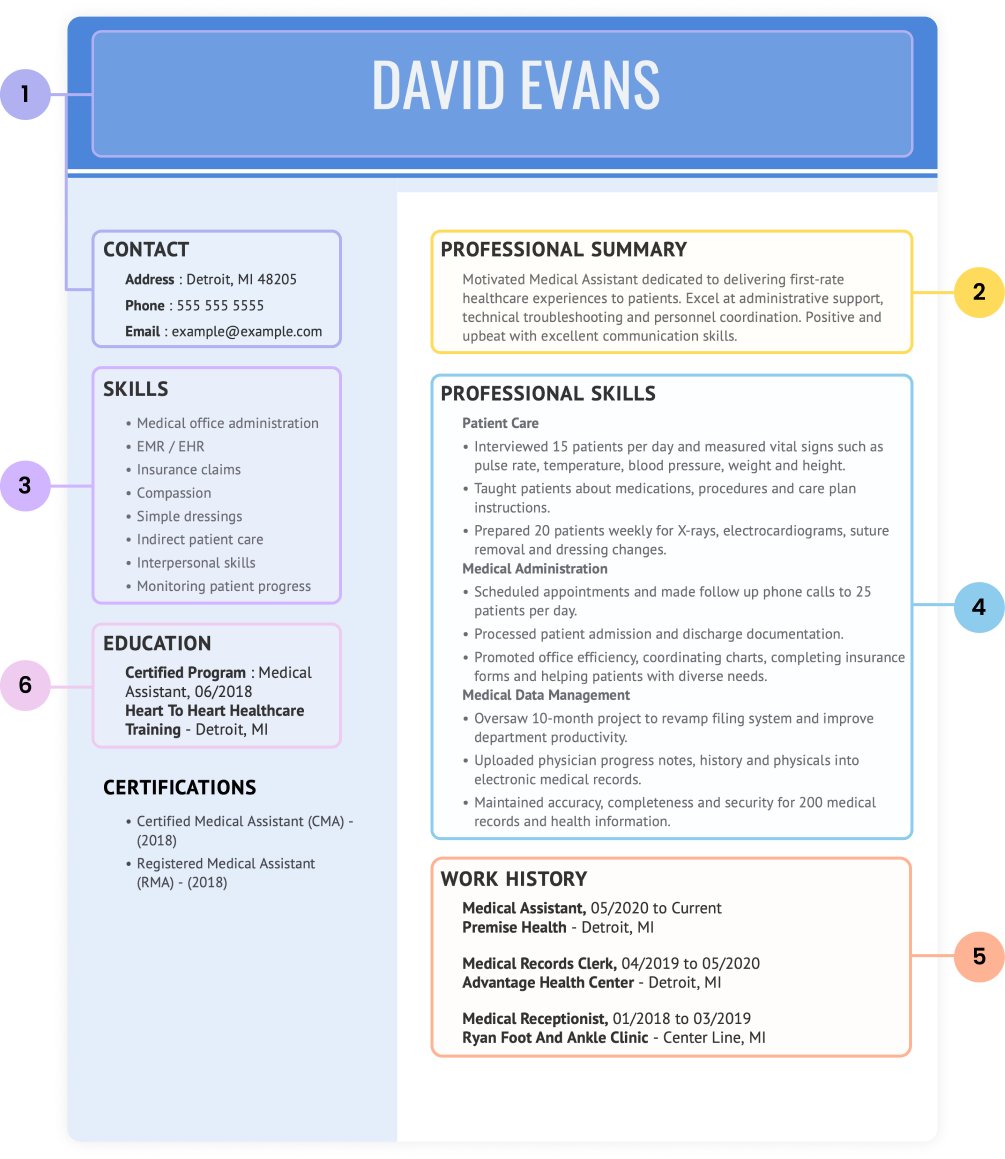
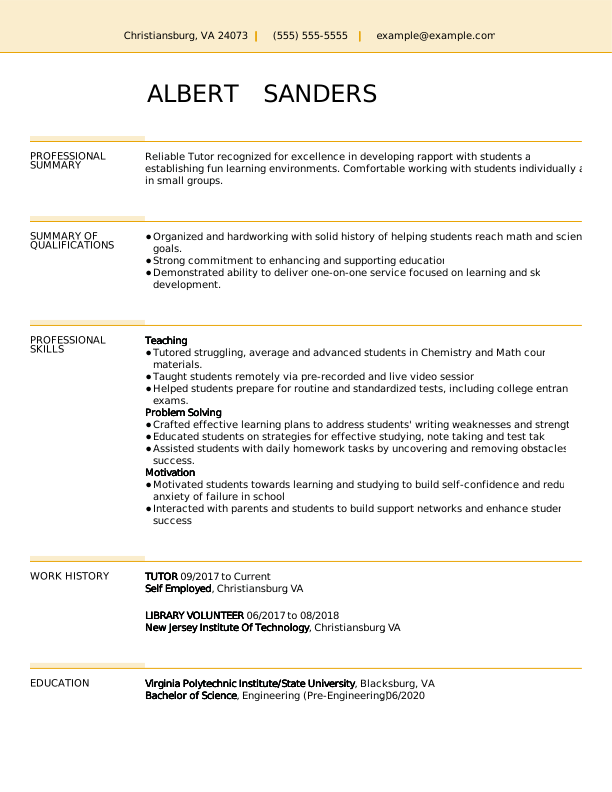
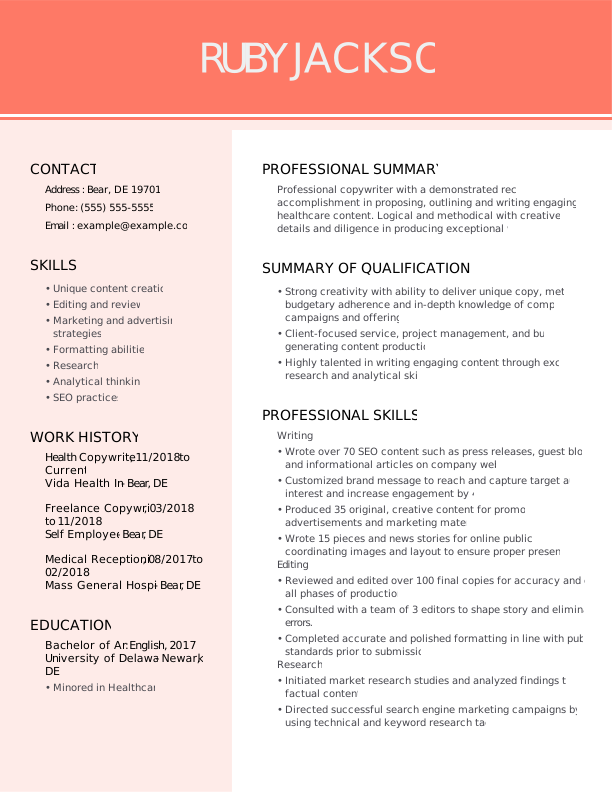
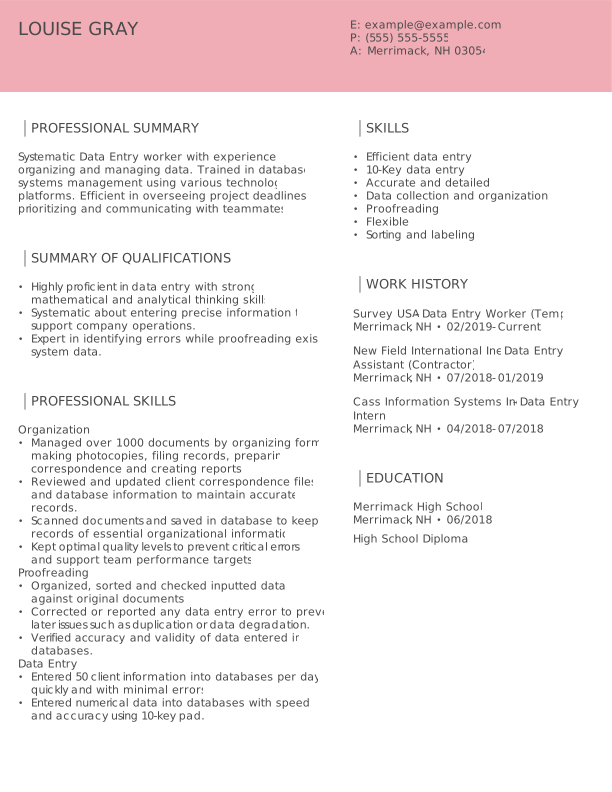
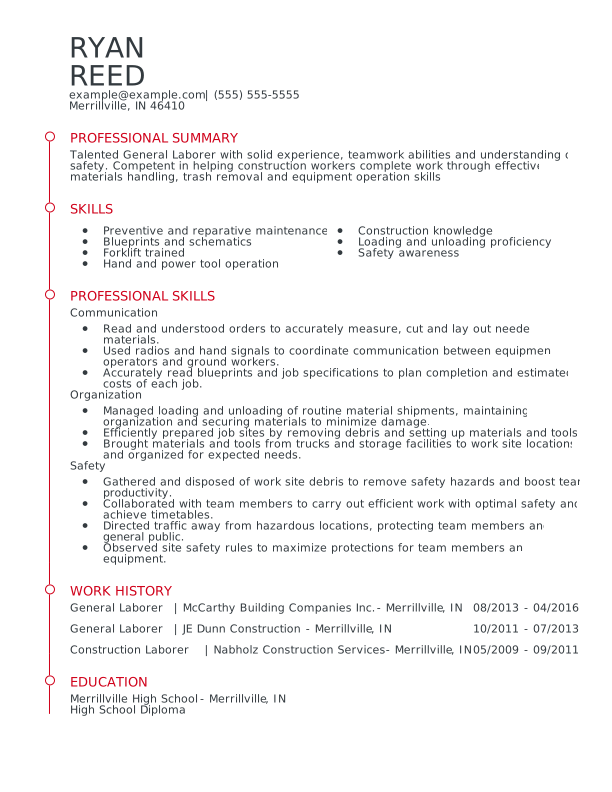
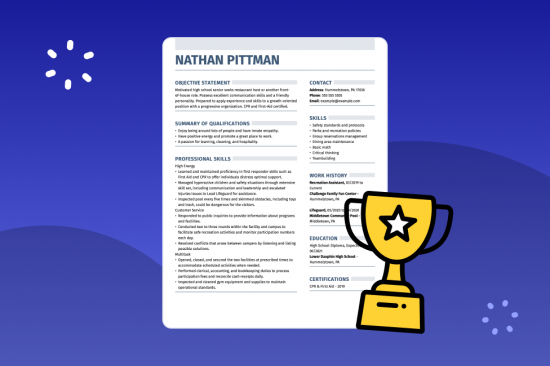
Structure Resume Format Functional
  • Contact information

  • Resume Objective

  • Skills

  • Professional Skills

  • Work History

  • Education

How to Write a Functional Format Resume

The functional resume format is designed to showcase your strengths by focusing on skills rather than work history. Instead of listing jobs in chronological order, the functional resume organizes your experience by the core skills they represent.

The functional format is one of the lesser-known resume formats, so if you’re unfamiliar with this resume layout, the following pointers will help you create one from scratch or update your resume to conform with the skills-based format.

  • Include key personal details in your header.

    At the top of your resume, clearly display your full name, phone number, email address, and location (city and state will suffice). You can also link to a professional profile or your portfolio. Make sure the contact information section is easy to spot and up to date.

  • Craft a focused resume objective.

    The first resume section hiring managers will read on your functional resume is the resume objective, so ensure it’s impactful and relevant to the job. In two to five sentences, communicate the skills and qualifications that make you the ideal candidate and state what you wish to accomplish in this role or in your career.

    Because functional format resumes are best for less experienced candidates, you want to show your commitment to the role and concrete ideas that can benefit the employer.

  • Share accomplishments in your main skills section.

    The focus section in all functional format resumes is the skills section. To write this expanded skills section, you’ll choose three skills that are required for the role (bonus points if you can include a soft skill in here too).

    Under each core skill, you’ll add three to four bullet points describing accomplishments that show how you’ve utilized that ability to accomplish a goal. Remember that because you’re not categorizing achievements by previous jobs, you can share achievements from all sorts of experiences such as college, internships, personal projects, and more.

  • Include a brief work history.

    Just because you have little to no formal work experience doesn’t mean you can omit the work history section from your resume. Employers expect to see this section, even if it’s brief.

    Fortunately, with a functional resume format, you can simply list one or two past jobs without much details. Organize your job titles in reverse-chronological order, share the employer name, employment dates, and location and you’re good to go.

    Don’t rack your brain trying to come up with fake jobs, always be honest about what you’ve achieved. A few examples of roles you can add to your functional resume’s work experience section are: babysitting gigs, a summer gig mowing lawns, helping out at family business or even a leadership role at a school organization.

  • Provide details about your education.

    When writing a functional format resume, you want to compensate for a lack of formal experience any way you can. The education section then becomes a great opportunity to share additional details that prove you’re beyond prepared for the role.

    The basic requirements of an education section include a list of all your degrees in reverse-chronological order. For each degree, mention the institution you attended and its location.

    You should omit graduation dates to avoid hiring bias from employers guessing your age based on graduation years. However, you can mention a few accomplishments to substantiate your application, such as your GPA, information about your minor, relevant coursework, and awards.


When to Consider a Different Format

While the functional resume format can be useful for highlighting skills over work history, it’s not the best choice for everyone. In fact, many recruiters are skeptical of resumes that downplay job timelines, which can make this format a red flag in some cases. The best resume format depends on your background and career goals. You may want to avoid the functional format if:

  • You have a strong, consistent work history.

    If your career includes steady job progression and relevant roles, a reverse-chronological resume will better showcase your experience and achievements.

  • You’re applying to traditional or conservative industries.

    Fields like finance, law, and government tend to prefer more straightforward, experience-focused formats. Using a functional resume may seem unconventional or raise concerns.

  • You want to pass the ATS.

    Because functional resumes often lack detailed work experience sections, they can be harder for applicant tracking software (ATS) to read and rank properly.

  • You’re applying for a promotion within your current industry.

    Hiring managers looking to promote someone usually want to see a clear track record of relevant roles and accomplishments, which is better presented in a chronological or combination resume.

Trustpilot Logo

Resume Success Stories

5 Functional Resume
Format Examples

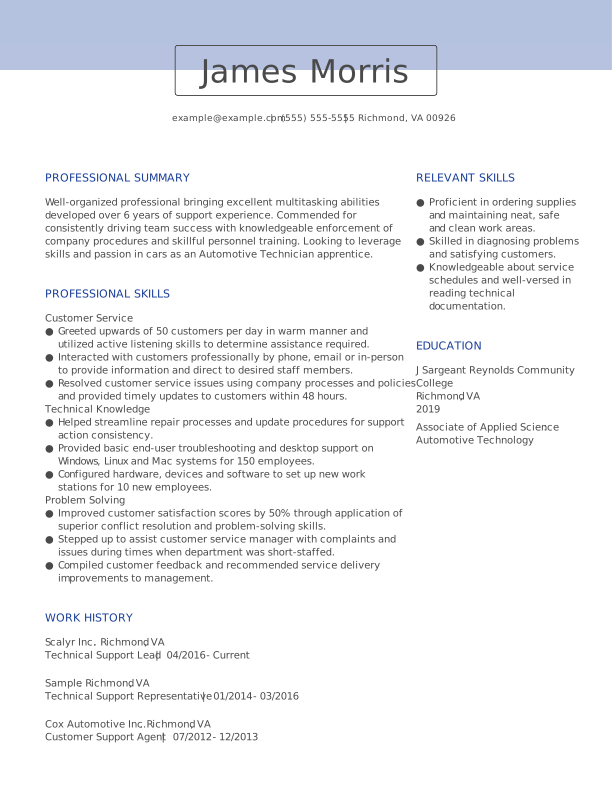
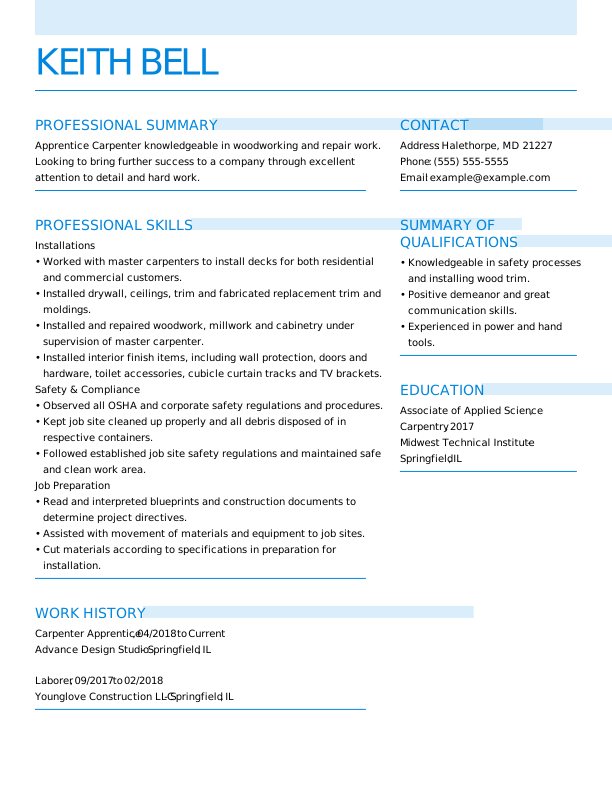
If you have little to no work experience:

  • A functional resume is ideal for entry-level workers with limited job experience.
  • It allows you to highlight your education, training, and transferable skills instead of focusing on work history.
  • For example, a trained carpenter with apprenticeship experience can use this format to emphasize skills and training, drawing attention away from a short employment record.

If you are a recent graduate:

  • The functional resume is ideal for recent graduates with limited work experience.
  • Emphasizes transferable hard and soft skills gained in college.
  • Moves the skills section to the top, reducing the focus on limited job history.
  • Well-suited for those seeking their first or second professional role.

If you are a temp or gig economy worker:

  • Ideal for job seekers with short-term roles or freelance experience.
  • The functional format combines skills, qualifications, and experience into a cohesive resume.
  • Emphasizes strengths in the skills and qualifications sections.
  • Presents a consistent work history and clear career progression, which recruiters value.

If you are a contractor or freelancer:

  • Ideal for freelancers or contract workers with short-term roles.
  • Emphasizes skills and qualifications over job duration.
  • Helps clarify that short roles were intentional and project-based.
  • Showcases the value and expertise gained across various assignments.
  • Appeals to both potential clients and hiring managers.

If you have employment gaps:

  • Ideal for job seekers with gaps in employment history.
  • Common reasons include caregiving, parenting, or personal leave.
  • The functional format highlights skills and strengths instead of timelines.
  • Shifts focus away from employment gaps and toward relevant experience.
  • Brings your most valuable qualifications to the top of the resume.

FAQ

How should you order information on a functional resume?

very resume should contain the same basic five sections. The difference between resume formats is how they are ordered. In the case of the functional resume format, there are often some additional sections added to further emphasize your skills. Here is one of the formations used in a functional resume format: header, summary statement, summary of qualifications, professional skills, work history, education. For more information about the special sections on a functional resume, see our resume formats page.

Do recruiters have a resume format preference?

The resume you create should be formatted in a way that best showcases your unique work experience. While the chronological format is usually considered the standard, and the one recruiters are the most familiar with, this choice is only effective for candidates who have clear work histories. In fact, for those looking for work that don’t have a linear employment history, a recent study found that “removing dates and presenting previous employment in terms of total years of experience increased call-backs by 15%.” People with transferable skills looking to move jobs or those that have gaps in their resumes should consider the functional or combination resume over the basic chronological format.

What does a functional resume highlight?

A functional resume highlights three main areas: your professional goals (in the summary statement), your unique skill set, which is explored deeply in the professional skills section, and your educational experience, which can include vocational and certification programs.. For this reason, a functional resume format is a solid choice for an applicant who is either new to the workforce or making a major career transition.

How to make a functional resume using ChatGPT?

If you’ve used ChatGPT for resume writing, you’ve likely noticed it defaults to a chronological format. To create a functional resume, you must specify this upfront and may need to explain the structure. A quicker option is to use our Resume Builder.

Related Content

Learn more about how to create a winning job application with our career experts’ advice on navigating today’s job market.

☆☆☆☆☆
★★★★★

Rate this article

About the Author

Gabriela Hernandez large profile photo

Gabriela Hernandez CPRW, Career Advice Writer

Gabriela is a Certified Professional Resume Writer (CPRW) and member of the Professional Association of Resume Writers & Career Coaches. She focuses on helping job seekers improve their professional resumes to highlight their unique skills and experience. Gabriela holds a B.A. in journalism from the University of Puerto Rico and offers more than four years of specialized experience helping candidates navigate the complexities of today’s online job market, with a strong focus on resume optimization and effective self-presentation.

Ready to land the job?

Join 28M+ others who’ve built a professional Resume.

Ready To Land Job
Build Your Resume

Build a resume with LiveCareer

Build My Resume
Build My Cover Letter

Craft a Winning Cover Letter

Build My Cover Letter