

Hard skills include specialized techniques such as therapeutic exercise, adaptive equipment training, and functional mobility assessment that are important for occupational therapists to improve patient recovery.
Occupational Therapist Resume Examples & Templates
Looking to elevate your career? Our occupational therapist resume examples showcase vital skills like patient assessment and treatment planning, helping you stand out to potential employers.

by Gabriela Hernandez, Last Updated: March 19, 2026
Hired By:*

- Popular Occupational Therapist Resume Examples
- Resume Template—Easy to Copy & Paste
- Build Your Resume in Minutes
- How to Write a Occupational Therapist Resume Summary
- Showcasing Your Work Experience
- Top Skills to Include on Your Resume
- Resume Format Examples
- Occupational Therapist Salaries in the Highest-Paid States
- Related Health Care Support Resume Examples
- Frequently Asked Questions
- Should I include a cover letter with my occupational therapist resume?
- Can I use a resume if I’m applying internationally, or do I need a CV?
- What soft skills are important for occupational therapists?
- I’m transitioning from another field. How should I highlight my experience?
- How should I format a cover letter for a occupational therapist job?
- Should I use a cover letter template?
Popular Occupational Therapist Resume Examples
Discover our top occupational therapist resume examples that emphasize critical skills such as rehabilitation techniques, patient evaluation, and interdisciplinary collaboration. These examples illustrate how to showcase your accomplishments to stand out in the job market.
Looking to build your own impressive resume? Our Resume Builder offers user-friendly templates specifically crafted for healthcare professionals, making it simple to highlight your strengths and experiences.
Recommended
 Customize This Resume
Entry-level occupational therapist resume
What this resume does well:
This entry-level resume for an occupational therapist highlights the applicant's clinical skills and accomplishments in practical settings alongside academic achievements. New professionals need to showcase their ability to create customized treatment plans and collaborate with healthcare teams, demonstrating competence and dedication despite limited direct work experience.
Mid-career occupational therapist resume
What this resume does well:
This resume effectively presents the job seeker's diverse experience and strong qualifications, showcasing their readiness for leadership roles. The focus on successful program enhancements and patient recovery metrics illustrates their capability to manage complex challenges in occupational therapy.
Experienced occupational therapist resume
What this resume does well:
This resume highlights the applicant's strong background in occupational therapy, showcasing a 30% improvement in patient outcomes and a reduction in recovery time by 20%. The clear bullet-point format improves readability, making it ideal for hiring managers seeking quick insights into achievements.
Resume Template—Easy to Copy & Paste
Example
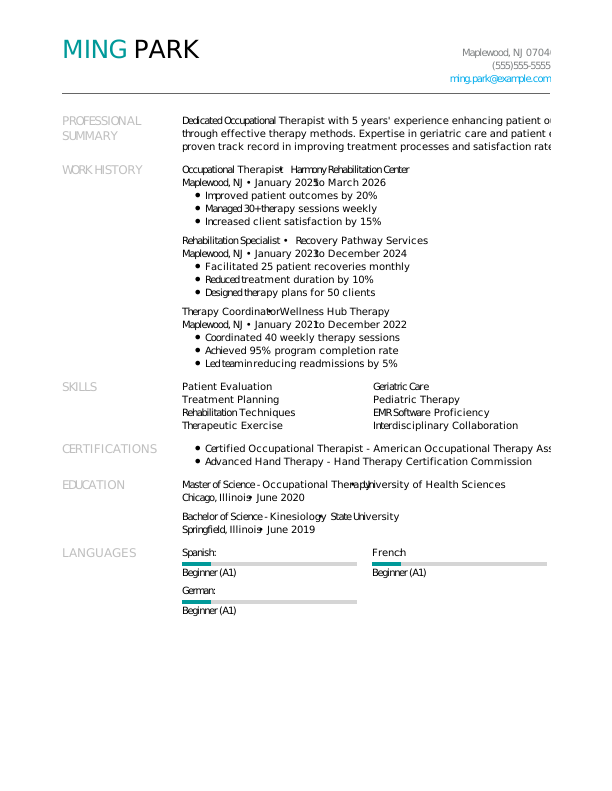
Ming Park
Maplewood, NJ 07040
(555)555-5555
Ming.Park@example.com
Professional Summary
Dedicated Occupational Therapist with 5 years' experience enhancing patient outcomes through effective therapy methods. Expertise in geriatric care and patient evaluation, with proven track record in improving treatment processes and satisfaction rates.
Work History
Occupational Therapist
Harmony Rehabilitation Center - Maplewood, NJ
January 2025 - March 2026
- Improved patient outcomes by 20%
- Managed 30+ therapy sessions weekly
- Increased client satisfaction by 15%
Rehabilitation Specialist
Recovery Pathway Services - Maplewood, NJ
January 2023 - December 2024
- Facilitated 25 patient recoveries monthly
- Reduced treatment duration by 10%
- Designed therapy plans for 50 clients
Therapy Coordinator
Wellness Hub Therapy - Maplewood, NJ
January 2021 - December 2022
- Coordinated 40 weekly therapy sessions
- Achieved 95% program completion rate
- Led team in reducing readmissions by 5%
Skills
- Patient Evaluation
- Treatment Planning
- Rehabilitation Techniques
- Therapeutic Exercise
- Geriatric Care
- Pediatric Therapy
- EMR Software Proficiency
- Interdisciplinary Collaboration
Certifications
- Certified Occupational Therapist - American Occupational Therapy Association
- Advanced Hand Therapy - Hand Therapy Certification Commission
Education
Master of Science Occupational Therapy
University of Health Sciences Chicago, Illinois
June 2020
Bachelor of Science Kinesiology
State University Springfield, Illinois
June 2019
Languages
- Spanish - Beginner (A1)
- French - Beginner (A1)
- German - Beginner (A1)
Build Your Resume in Minutes
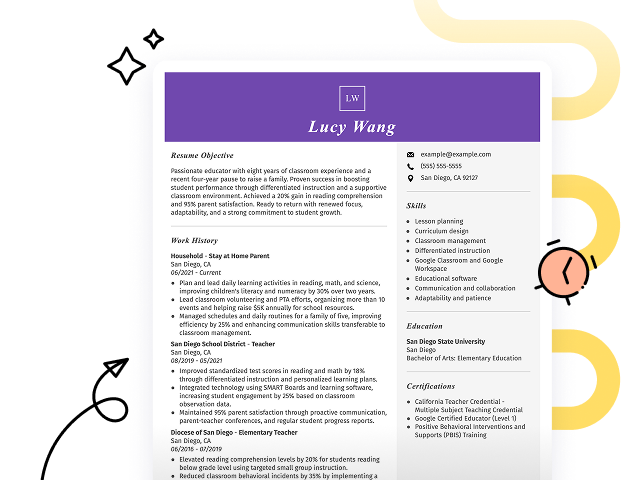
Creating a custom resume is easier than ever with our Resume Builder!
How to Write a Occupational Therapist Resume Summary
Your resume summary is the first thing employers will notice, so it’s important to create a compelling introduction that highlights your qualifications. As an occupational therapist, you should emphasize your expertise in patient care and therapeutic techniques to demonstrate your value.
In this section, focus on showcasing your skills in rehabilitation, communication, and collaboration with multidisciplinary teams. These are key attributes that potential employers seek when evaluating job seekers for this role.
To illustrate what makes an effective resume summary, let’s look at some examples that highlight successful approaches and common pitfalls:
Weak Example
I am an experienced occupational therapist with a diverse background in various settings. I seek a position where I can use my skills to help patients and improve their quality of life. A supportive workplace that values teamwork and professional development is important to me. I believe I can contribute positively if given the chance.
Why this summary misses the mark:
- Lacks specific examples of skills or accomplishments, making it too generic
- Emphasizes what the job seeker seeks rather than highlighting their unique contributions
- Uses vague language without demonstrating actual impact or expertise in occupational therapy
Strong Example
Compassionate occupational therapist with 7+ years of experience in rehabilitative care, focusing on improving patients' functional abilities and quality of life. Successfully increased patient mobility outcomes by 20% through tailored therapeutic interventions and progress tracking. Proficient in assistive technology assessments, manual therapy techniques, and interdisciplinary collaboration to optimize treatment plans.
Why this summary works:
- Begins with a clear indication of experience level and area of expertise
- Highlights measurable achievements that showcase the impact on patient recovery
- Details relevant skills and competencies that align with occupational therapy practices

Pro Tip
If you find yourself short on formal experience, consider a career objective. This approach can showcase your passion and goals. There are plenty of tailored resume objective examples available to help you stand out in the competitive field of occupational therapy.
Showcasing Your Work Experience
The work experience section is the cornerstone of your resume as an occupational therapist. This area typically contains the bulk of your content, and good resume templates always ensure this section is prominent.
In this section, you'll list your previous positions in reverse-chronological order. Be sure to include three to four bullet points that highlight your achievements and specific skills demonstrated in each role.
Now, let’s look at a couple of examples that illustrate effective work history entries for occupational therapists. These examples will clarify what practices are beneficial and which ones to avoid:
Weak work experience
Occupational Therapist
Health First Therapy Center – Orlando, FL
- Helped patients with exercises.
- Wrote reports and planned sessions.
- Worked alongside other therapists.
- Assisted patients in daily activities.
Why this work experience section misses the mark:
- Lacks specific employment dates for context
- Bullet points are generic and do not highlight unique skills or achievements
- Emphasizes routine tasks rather than compelling contributions or patient outcomes
Strong work experience
Occupational Therapist
Sunrise Rehabilitation Center – Phoenix, AZ
March 2020 - Current
- Develop and implement personalized therapy plans for over 30 patients weekly, focusing on improving daily living skills and independence.
- Use evidence-based techniques to achieve an average of 20% improvement in patient mobility scores within six months.
- Conduct workshops for family members on support strategies, increasing caregiver engagement and satisfaction by 30%.
Why this work experience section works:
- Starts each bullet with effective action verbs that clearly articulate the applicant’s contributions
- Incorporates specific metrics to highlight the effectiveness of interventions
- Showcases essential skills relevant to occupational therapy while demonstrating measurable outcomes
While your resume summary and work experience are important, don't overlook the importance of other sections. Each part contributes to creating a complete picture of your qualifications. For detailed advice on structuring your resume, be sure to check out our comprehensive guide on how to write a resume.
Top Skills to Include on Your Resume
Including a skills section on your resume is important for making a strong first impression. It provides a snapshot of your qualifications, helping employers quickly identify job seekers who align with their needs.
This section enables hiring managers to efficiently evaluate whether applicants possess the necessary traits and abilities for the role. Occupational therapists should highlight both technical skills and interpersonal qualities, which will be discussed in more detail below.
Interpersonal abilities like active listening, patience, and encouragement are soft skills that foster trust with clients and improve the therapeutic process in occupational therapy.
When selecting skills for your resume, it's best to align them with what employers expect from ideal job seekers. Many organizations use automated screening systems to filter out applicants lacking essential resume skills, making this alignment even more critical.
To highlight your qualifications, take the time to review job postings relevant to your field. These listings often provide valuable insights into which specific skills are sought after by recruiters and will help ensure your resume stands out in ATS evaluations.
Pro Tip
Ensure your resume stands out in the competitive job market by using our ATS Resume Checker. It can help you spot over 30 common errors, improving your chances of passing applicant tracking software with ease.
10 skills that appear on successful occupational therapist resumes
Highlighting in-demand skills on your resume can significantly capture the attention of recruiters looking for occupational therapists. You can find these essential skills illustrated in our resume examples, enabling you to pursue opportunities with the assurance that a polished resume provides.
By the way, consider integrating relevant skills from the following list into your resume if they align with your qualifications and job expectations:
Patient assessment
Rehabilitation techniques
Communication
Adaptability
Empathy
Time management
Team collaboration
Problem-solving
Report writing
Therapeutic modalities
Based on analysis of 5,000+ health care support professional resumes from 2023-2024
Resume Format Examples
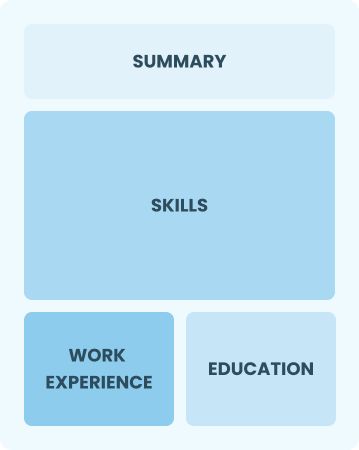
Selecting the appropriate resume format is important for occupational therapists, as it highlights your specialized skills and experience while clearly illustrating your career growth in this rewarding field.
Entry-Level 0 - 2 years
Functional
Focuses on skills rather than previous jobs
Best for:
Recent graduates and career changers with up to two years of experience
Mid-Career 3 - 7 years
Combination
Balances skills and work history equally
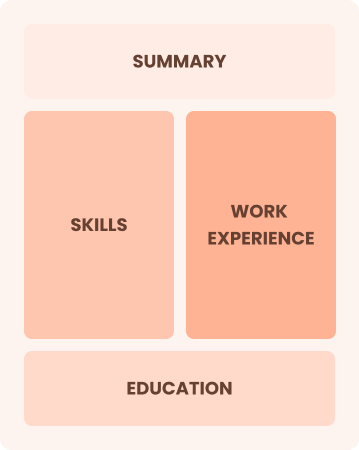
Best for:
Mid-career professionals focused on highlighting their skills and potential for growth
Experienced 8+ years
Chronological
Emphasizes work history in reverse order
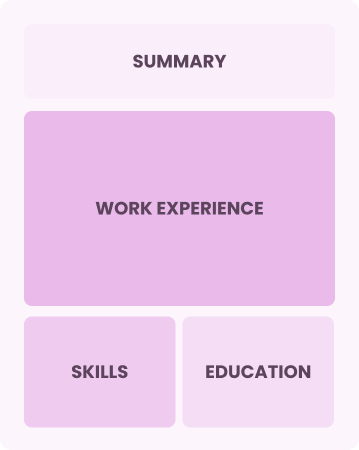
Best for:
Seasoned therapists leading innovative patient care initiatives
Occupational Therapist Salaries in the Highest-Paid States
Our occupational therapist salary data is based on figures from the U.S. Bureau of Labor Statistics (BLS), the authoritative source for employment trends and wage information nationwide.
Whether you're entering the workforce or considering a move to a new city or state, this data can help you gauge what fair compensation looks like for occupational therapists in your desired area.
$0$60K$120K
Frequently Asked Questions
Should I include a cover letter with my occupational therapist resume?
Absolutely, including a cover letter is essential as it allows you to highlight your unique qualifications and demonstrate your enthusiasm for the position. It’s your chance to make a personal connection with recruiters. For tips on crafting an effective cover letter, explore our comprehensive guide on how to write a cover letter or use our Cover Letter Generator tool for quick assistance.
Can I use a resume if I’m applying internationally, or do I need a CV?
For international job applications, particularly outside the U.S., a CV is often more appropriate than a resume. It's best to understand regional preferences. Explore our CV examples for guidance on global standards and formatting tips to create an effective CV that resonates with employers worldwide. Additionally, learn how to write a CV to ensure your application stands out.
What soft skills are important for occupational therapists?
Soft skills like empathy, patience, and effective communication are essential for occupational therapists. These interpersonal skills help you connect with patients, understand their needs, and collaborate with other healthcare professionals, leading to better treatment outcomes and stronger support networks.
I’m transitioning from another field. How should I highlight my experience?
Highlight your transferable skills such as communication, empathy, and teamwork when applying for occupational therapist roles. These abilities show your potential to excel in patient care, even if you lack direct experience. Use concrete examples from past jobs to demonstrate how you've navigated challenges and contributed to team goals relevant to therapy settings.
How should I format a cover letter for a occupational therapist job?
To format a cover letter for occupational therapist positions, start by including your contact details and opening with a courteous greeting. Next, craft an engaging introduction that showcases your passion for therapy. Provide a concise summary of relevant skills and experiences tailored to the job description. Conclude with a confident closing statement that invites further discussion about your application.
Should I use a cover letter template?
Yes, using a cover letter template tailored for occupational therapy can improve your ability to present structured content that highlights essential skills such as patient assessment and treatment planning. This approach ensures you communicate your relevant achievements, making a strong impression on hiring managers.




Ready to land the job?
Join 28M+ others who've built a resume that works.