
Hard skills in denial management include skill in claims processing, understanding insurance policies, and data analysis to identify trends affecting reimbursement.
Denial Management Resume Examples & Templates
Looking to boost your career in denial management? Our denial management resume examples showcase key skills like analytical thinking and problem-solving to help you stand out to employers.

by Gabriela Hernandez, Last Updated: January 18, 2026
Hired By:*

- Popular Denial Management Resume Examples
- Resume Template—Easy to Copy & Paste
- Build Your Resume in Minutes
- How to Write a Denial Management Resume Summary
- Showcasing Your Work Experience
- Top Skills to Include on Your Resume
- Resume Format Examples
- Related Health Care Support Resume Examples
- Frequently Asked Questions
- Should I include a cover letter with my denial management resume?
- Can I use a resume if I’m applying internationally, or do I need a CV?
- What soft skills are important for denial managements?
- I’m transitioning from another field. How should I highlight my experience?
- How do I write a resume with no experience?
- Should I include a personal mission statement on my denial management resume?
Popular Denial Management Resume Examples
Check out our top denial management resume examples that emphasize key skills such as claims processing, compliance expertise, and analytical problem-solving. These examples will guide you in showcasing your qualifications effectively.
Looking to improve your resume? Our Resume Builder offers user-friendly templates designed specifically for professionals in denial management, helping you make a strong impression.
Recommended
 Customize This Resume
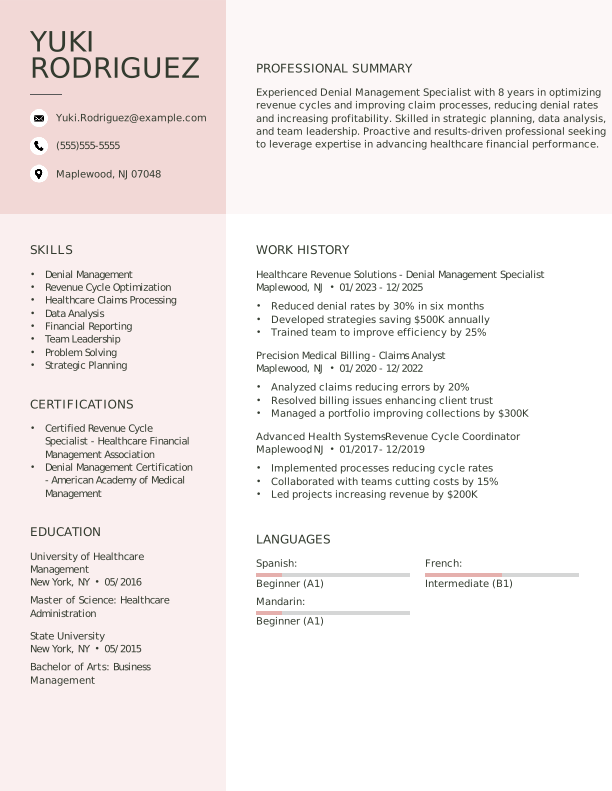
Entry-level denial management resume
What this resume does well:
This entry-level resume for denial management effectively highlights the applicant's expertise in reducing denial rates and optimizing revenue cycles through measurable achievements. New professionals in this field must showcase their analytical skills and ability to implement innovative solutions, demonstrating their potential to contribute positively to an organization's financial health despite limited direct experience.
Mid-career denial management resume
What this resume does well:
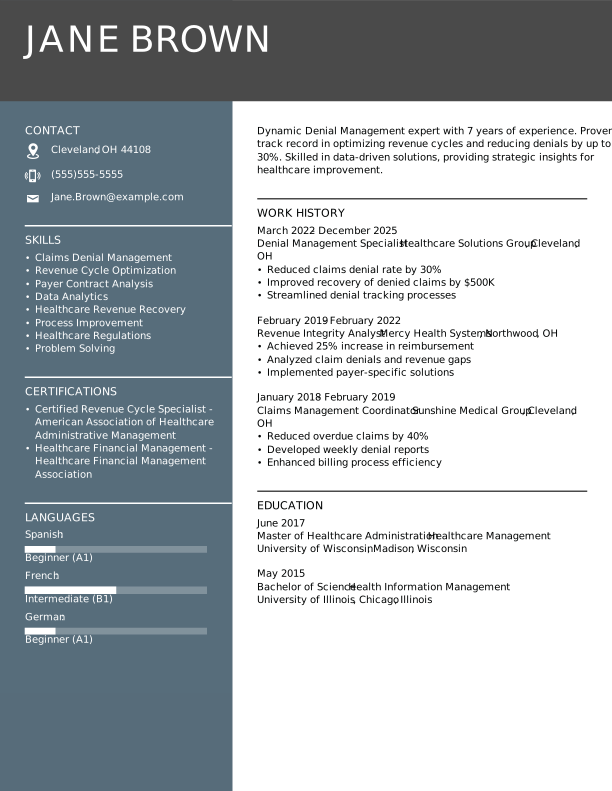
The resume succinctly showcases a robust track record in denial management and revenue cycle optimization. Strategic accomplishments and specialized skills position the applicant as ready for leadership roles, highlighting a progressive career dedicated to healthcare improvement.
Experienced denial management resume
What this resume does well:
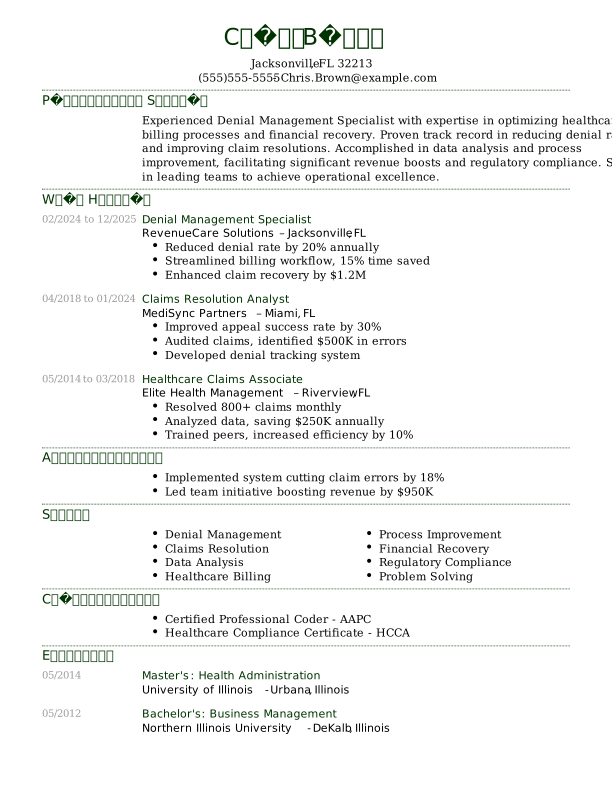
The work history section highlights the applicant's strong background in denial management, showcasing significant achievements such as reducing denial rates by 20% and improving claim recovery by $1.2 million. The bullet-point format effectively emphasizes these quantifiable accomplishments for easy readability.
Resume Template—Easy to Copy & Paste
Example
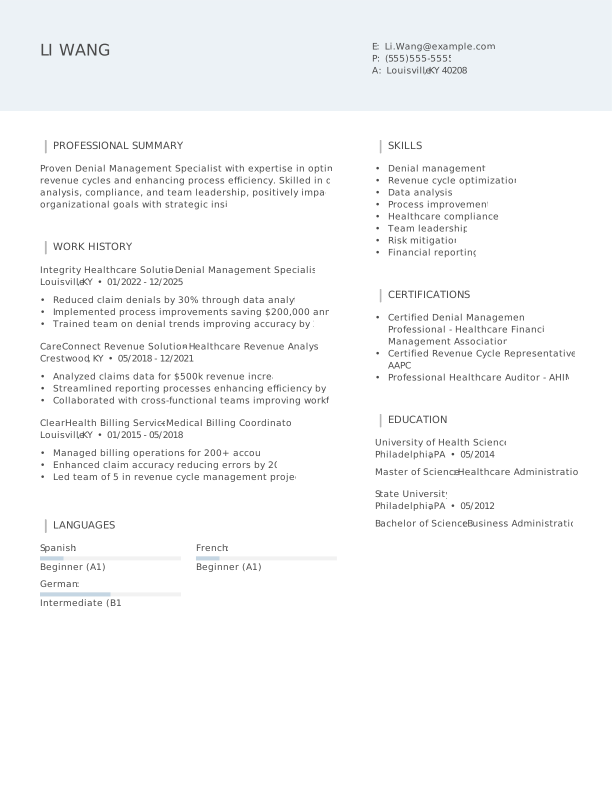
Li Wang
Louisville, KY 40208
(555)555-5555
Li.Wang@example.com
Professional Summary
Proven Denial Management Specialist with expertise in optimizing revenue cycles and enhancing process efficiency. Skilled in data analysis, compliance, and team leadership, positively impacting organizational goals with strategic insight.
Work History
Denial Management Specialist
Integrity Healthcare Solutions - Louisville, KY
January 2022 - December 2025
- Reduced claim denials by 30% through data analytics
- Implemented process improvements saving 200,000 annually
- Trained team on denial trends improving accuracy by 25%
Healthcare Revenue Analyst
CareConnect Revenue Solutions - Crestwood, KY
May 2018 - December 2021
- Analyzed claims data for 0k revenue increase
- Streamlined reporting processes enhancing efficiency by 40%
- Collaborated with cross-functional teams improving workflows
Medical Billing Coordinator
ClearHealth Billing Services - Louisville, KY
January 2015 - May 2018
- Managed billing operations for 200+ accounts
- Enhanced claim accuracy reducing errors by 20%
- Led team of 5 in revenue cycle management projects
Languages
- Spanish - Beginner (A1)
- French - Beginner (A1)
- German - Intermediate (B1)
Skills
- Denial management
- Revenue cycle optimization
- Data analysis
- Process improvement
- Healthcare compliance
- Team leadership
- Risk mitigation
- Financial reporting
Certifications
- Certified Denial Management Professional - Healthcare Financial Management Association
- Certified Revenue Cycle Representative - AAPC
- Professional Healthcare Auditor - AHIMA
Education
Master of Science Healthcare Administration
University of Health Sciences Philadelphia, PA
May 2014
Bachelor of Science Business Administration
State University Philadelphia, PA
May 2012
Build Your Resume in Minutes
Creating a custom resume is easier than ever with our Resume Builder!
How to Write a Denial Management Resume Summary
Your resume summary is the first thing employers will notice, making it essential to create a compelling introduction that showcases your qualifications. In denial management, it's important to highlight your analytical skills and experience in navigating complex healthcare systems.
This role should emphasize your ability to reduce claim denials and improve revenue cycle efficiency. By demonstrating your expertise in compliance and insurance processes, you can set yourself apart from other job seekers.
To illustrate what makes an effective summary, we'll look at some examples that demonstrate key elements of success and pitfalls to avoid:
Weak Example
I have experience in denial management and am looking for a job where I can use my skills effectively. I believe I would be a great addition to your team because I work well with others. A position that allows me to grow professionally is very important to me.
Why this summary misses the mark:
- Lacks specific examples of skills or accomplishments related to denial management
- Overuses personal language, making it sound less professional and more self-centered
- Emphasizes what the applicant seeks in a role rather than their unique contributions to the employer
Strong Example
Results-oriented denial management specialist with over 6 years of experience in healthcare revenue cycle operations. Successfully decreased claim denial rates by 20% through strategic process improvements and comprehensive staff training programs. Proficient in claims analytics, regulatory compliance, and collaborating with cross-functional teams to improve operational efficiency.
Why this summary works:
- Begins with a clear statement of experience level and industry focus
- Highlights a quantifiable achievement that showcases impact on revenue cycle performance
- Mentions relevant technical skills that align with the requirements of denial management roles

Pro Tip
If you’re new to the field of denial management, consider using a career objective in your resume to effectively highlight your goals and enthusiasm. To get started, you can find tailored resume objective examples specific to this area.
Showcasing Your Work Experience
The work experience section is important for your resume in denial management, as it will contain the bulk of your content. Good resume templates always emphasize this important area to demonstrate your relevant skills and experiences.
This section should be organized in reverse-chronological order, detailing each of your previous roles. Use bullet points to highlight key achievements and contributions in denial management for clarity and impact.
To guide you further, we’ll present a couple of examples that showcase effective work history entries in this field. These examples will illustrate what works well and what pitfalls to avoid.
Weak Example
Denial Management Specialist
Healthcare Solutions Inc. – Atlanta, GA
- Reviewed claims for denials
- Communicated with insurance providers
- Updated records and documentation
- Assisted in resolving issues
Why this work experience section misses the mark:
- Lacks specific employment dates to provide context
- Bullet points are overly general and fail to highlight achievements
- Emphasizes routine tasks rather than measurable impact on claim resolutions
Strong Example
Denial Management Specialist
HealthFirst Solutions – Orlando, FL
March 2020 - Current
- Analyze and resolve denied claims, achieving a 30% reduction in outstanding claims within the first year
- Collaborate with billing and coding teams to ensure accurate documentation, leading to a 15% increase in first-pass claim approvals
- Train new staff on denial processes, improving team efficiency and improving turnaround time for claim resolutions by 20%
Why this work experience section works:
- Uses effective action verbs that clearly articulate the applicant's contributions
- Incorporates specific metrics to quantify achievements and demonstrate effectiveness
- Highlights relevant skills such as collaboration, analysis, and training that are important for the role
While your resume summary and work experience are important elements, don’t overlook the importance of other sections. Each part of your resume plays a role in showcasing your qualifications. For more detailed insights, explore our comprehensive guide on how to write a resume.
Top Skills to Include on Your Resume
A strong resume must have a skills section to effectively showcase your qualifications. This area helps employers quickly identify if you possess the essential abilities needed for denial management roles.
In this field, emphasize both technical skills and soft skills. Highlight proficiency with claims processing software, knowledge of coding systems, and experience with data analysis tools, while also showcasing communication and problem-solving abilities to demonstrate your effectiveness in managing denials efficiently.
Soft skills such as problem-solving, communication, and negotiation are essential for effectively addressing patient concerns and collaborating with healthcare providers to ensure optimal care outcomes.
Selecting the right resume skills is important for aligning with what employers expect from applicants. Many organizations use automated screening systems to filter out those who lack essential abilities for the position.
To make your skills stand out, carefully review job postings related to your desired role. This approach helps you identify key competencies that both recruiters and ATS systems prioritize, increasing your chances of making a positive impression.
Pro Tip
Ensure your resume stands out in the hiring process. Use our ATS Resume Checker to uncover over 30 common mistakes and increase your chances of passing through applicant tracking systems with confidence.
10 skills that appear on successful denial management resumes
Improve your resume by highlighting essential skills that are highly sought after in denial management roles. Our resume examples demonstrate these skills effectively, giving you the confidence to apply for positions that match your expertise.
Consider incorporating the following 10 skills into your resume if they align with your background and job expectations:
Analytical skills
Attention to detail
Problem-solving abilities
Strong communication
Organizational prowess
Knowledge of healthcare regulations
Data analysis skill
Negotiation skills
Team collaboration
Adaptability
Based on analysis of 5,000+ health care support professional resumes from 2023-2024
Resume Format Examples
Selecting the appropriate resume format for denial management is important as it showcases your relevant expertise, professional achievements, and growth in the field, making a compelling case for potential employers.
Entry-Level 0 - 2 years
Functional
Focuses on skills rather than previous jobs

Best for:
Recent graduates and career changers with up to two years' experience
Mid-Career 3 - 7 years
Combination
Balances skills and work history equally

Best for:
Mid-career professionals focused on demonstrating their skills and seeking new opportunities
Experienced 8+ years
Chronological
Emphasizes work history in reverse order

Best for:
Experts leading denial management initiatives with extensive experience
Frequently Asked Questions
Should I include a cover letter with my denial management resume?
Absolutely, including a cover letter is essential for making a strong impression on potential employers. It allows you to highlight your relevant skills and share your enthusiasm for the position. If you need assistance crafting yours, explore our comprehensive guide on how to write a cover letter or use our user-friendly Cover Letter Generator for quick help.
Can I use a resume if I’m applying internationally, or do I need a CV?
When applying for jobs outside the U.S., use a CV instead of a resume to provide a comprehensive overview of your academic and professional history. For guidance on how to write a CV, explore our resources designed to help you craft an effective document that meets international expectations. Additionally, reviewing CV examples can provide valuable insights into proper formatting and content.
What soft skills are important for denial managements?
Soft skills such as negotiation, problem-solving, and clear communication are essential in denial management. These interpersonal skills enable collaboration with insurance providers and clients, ensuring disputes are resolved effectively while maintaining relationships throughout the claims process.
I’m transitioning from another field. How should I highlight my experience?
Highlight your transferable skills, such as communication, analytical thinking, and teamwork. These abilities are important for success, even if your experience isn't directly in denial management. Provide concrete examples from previous roles to illustrate how you've effectively navigated challenges and contributed to team goals. This approach will showcase your readiness to excel in this new field.
How do I write a resume with no experience?
When applying for denial management positions with limited experience, highlight your analytical skills, attention to detail, and any relevant coursework or certifications. For tips on crafting a resume with no experience, showcase internships or volunteer work that demonstrate your problem-solving abilities and commitment to accuracy. Employers value potential and a strong work ethic, so believe in your capacity to make an impact.
Should I include a personal mission statement on my denial management resume?
Yes, incorporating a personal mission statement in your resume is advisable. By doing so, you effectively convey your core values and career aspirations, which makes it especially powerful for organizations that emphasize a strong mission or value-driven culture.




Ready to land the job?
Join 28M+ others who've built a resume that works.