

Hard skills include essential competencies like surgical assistance, diagnostic imaging, and animal restraint. These are important for veterinary professionals to ensure optimal animal care.
Veterinary Resume Examples & Templates
Looking to showcase your passion for animal care? Our veterinary resume examples help you emphasize skills like patient assessment and client communication, making it easier to get noticed by employers.

by Gabriela Hernandez, Last Updated: January 18, 2026
Hired By:*

Popular Veterinary Resume Examples
Check out our top veterinary resume examples that emphasize key skills such as animal care, diagnostics, and client communication. These examples will help you effectively showcase your experience and achievements to potential employers.
Looking to build your own resume? Our Resume Builder offers user-friendly templates specifically designed for veterinary professionals, making it simple to create a standout application.
Recommended
 Customize This Resume
Entry-level veterinary resume
What this resume does well:
This entry-level resume for a veterinary position effectively highlights the applicant's clinical skills and significant achievements during their education and early career, showcasing their ability to diagnose conditions and improve client engagement. New professionals in this field must demonstrate practical experience, relevant certifications, and a commitment to animal welfare to attract potential employers despite having limited work history.
Mid-career veterinary resume
What this resume does well:
This resume showcases the job seeker's extensive experience and leadership in veterinary care, highlighting their surgical success and team management. The strategic presentation of qualifications reflects a strong capability to handle complex challenges and advance within the field.
Experienced veterinary resume
What this resume does well:
The work history section highlights the applicant's extensive experience in veterinary care, showcasing impressive achievements like increasing animal recovery rates by 15% and performing surgeries with a 98% success rate. The bullet point format improves clarity, allowing potential employers to quickly grasp key accomplishments.
Resume Template—Easy to Copy & Paste
Example
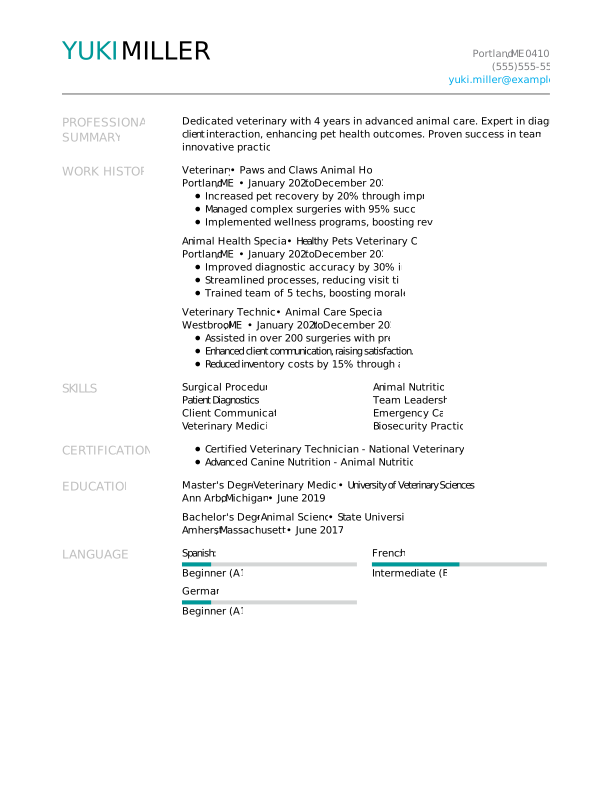
Yuki Miller
Portland, ME 04108
(555)555-5555
Yuki.Miller@example.com
Professional Summary
Dedicated veterinary with 4 years in advanced animal care. Expert in diagnostic solutions and client interaction, enhancing pet health outcomes. Proven success in team leadership and innovative practices.
Work History
Veterinary
Paws and Claws Animal Hospital - Portland, ME
January 2023 - December 2025
- Increased pet recovery by 20% through improved care.
- Managed complex surgeries with 95% success rate.
- Implemented wellness programs, boosting revenue 15%.
Animal Health Specialist
Healthy Pets Veterinary Clinic - Portland, ME
January 2021 - December 2022
- Improved diagnostic accuracy by 30% in 2 years.
- Streamlined processes, reducing visit time 10%.
- Trained team of 5 techs, boosting morale by 40%.
Veterinary Technician
Animal Care Specialists - Westbrook, ME
January 2020 - December 2020
- Assisted in over 200 surgeries with precision.
- Enhanced client communication, raising satisfaction.
- Reduced inventory costs by 15% through audits.
Skills
- Surgical Procedures
- Patient Diagnostics
- Client Communication
- Veterinary Medicine
- Animal Nutrition
- Team Leadership
- Emergency Care
- Biosecurity Practices
Certifications
- Certified Veterinary Technician - National Veterinary Association
- Advanced Canine Nutrition - Animal Nutrition Board
Education
Master's Degree Veterinary Medicine
University of Veterinary Sciences Ann Arbor, Michigan
June 2019
Bachelor's Degree Animal Science
State University Amherst, Massachusetts
June 2017
Languages
- Spanish - Beginner (A1)
- French - Intermediate (B1)
- German - Beginner (A1)
Build Your Resume in Minutes
Creating a custom resume is easier than ever with our Resume Builder!
How to Write a Veterinary Resume Summary
Your resume summary is the first thing employers see, making it important for making a strong impression. As a veterinary professional, you should highlight your hands-on experience with animals, your knowledge of medical procedures, and your commitment to patient care.
In this section, focus on showcasing your unique skills and qualifications that align with the job requirements. Emphasizing your passion for animal welfare and your ability to work in fast-paced environments will set you apart.
To assist you in crafting an effective summary, here are some examples that illustrate what works well and what doesn't:
Weak Example
I am a dedicated veterinarian with years of experience treating animals and I want to find a position that allows me to help pets and their owners. I believe it is important to work in a supportive environment where I can grow professionally. I am eager to contribute my skills and knowledge if given the chance.
Why this summary misses the mark:
- Uses vague phrases like 'years of experience' without detailing specific skills or achievements
- Focuses more on personal desires rather than highlighting what unique value the applicant brings to an employer
- Lacks strong, active language that clearly demonstrates competence and confidence in veterinary care
Strong Example
Compassionate veterinarian with 7+ years of experience in small animal care, focusing on preventive medicine and client education. Successfully increased clinic revenue by 20% through the implementation of new wellness programs and improved service offerings. Proficient in surgical procedures, diagnostics, and using veterinary practice management software to streamline operations.
Why this summary works:
- Starts with a clear indication of experience level and area of expertise
- Highlights measurable achievements that demonstrate positive impact on clinic performance
- Includes relevant technical skills essential for effective veterinary practice

Pro Tip
If you’re new to the veterinary field and lack formal experience, consider using a career objective. This can effectively highlight your passion and skills. Look for tailored resume objective examples that fit your specific aspirations in veterinary medicine.
Showcasing Your Work Experience
The work experience section is important for your resume as a veterinary professional, containing the bulk of your content. Good resume templates always feature this essential section prominently.
Organize this section in reverse-chronological order to present your previous roles clearly. Use bullet points to highlight your key achievements and responsibilities in each position you've held.
To illustrate effective strategies for showcasing your work history, we will share a couple of examples that reveal what stands out and what may fall flat:
Weak Example
Veterinary Technician
Paws and Claws Animal Hospital – Atlanta, GA
- Assisted with animal care.
- Handled paperwork and scheduling.
- Worked alongside veterinarians.
- Administered medications as needed.
Why this work experience section misses the mark:
- Lacks specific employment dates to provide context
- Bullet points are vague and do not highlight unique skills or contributions
- Emphasizes basic responsibilities rather than strong results or achievements
Strong Example
Veterinary Technician
Happy Tails Animal Clinic – Austin, TX
March 2020 - Present
- Assist in surgical procedures and anesthesia monitoring for over 50 patients monthly, ensuring optimal safety and care.
- Educate pet owners on preventive health measures, resulting in a 30% increase in annual wellness visits.
- Implement inventory management processes that reduced supply costs by 15% while maintaining quality of care.
Why this work experience section works:
- Starts each bullet with powerful action verbs to highlight the job seeker's contributions
- Incorporates quantifiable results that demonstrate the applicant's impact on the clinic's operations
- Highlights relevant skills like patient care and client education essential for veterinary professionals
While your resume summary and work experience are important components, don't overlook the importance of other sections that can improve your application. For detailed guidance on crafting an effective resume, be sure to check out our comprehensive guide on how to write a resume.
Top Skills to Include on Your Resume
Including a skills section on your resume is important because it provides a clear snapshot of your qualifications. This allows employers to quickly understand your professional capabilities and evaluate your fit for the job.
Hiring managers often look to this section first to identify essential competencies that align with their needs. Veterinary professionals should highlight both hard skills, like medical knowledge, and soft skills, such as communication, which will be detailed further below.
Soft skills are essential for veterinarians, as they foster trust with pet owners and improve teamwork in providing the best care for animals.
When selecting skills for your resume, it’s important to align them with what employers expect from an ideal applicant. Many organizations use automated screening systems that filter out applicants lacking essential resume skills.
To effectively capture the attention of recruiters and improve your chances with ATS, carefully review job postings related to your desired role. These listings often highlight key skills that are in demand, guiding you on what to emphasize in your application.
Pro Tip
Ensure your resume stands out in the digital crowd. Use our ATS Resume Checker to uncover over 30 common mistakes and increase your chances of getting noticed by applicant tracking systems.
10 skills that appear on successful veterinary resumes
Make your resume stand out to recruiters by highlighting the essential skills needed for veterinary positions. You’ll discover these and other relevant competencies in our resume examples, which can help you apply with confidence and appeal to prospective employers.
Here are 10 skills you should consider including in your resume if they align with your qualifications and job expectations:
Compassionate care
Attention to detail
Communication skills
Team collaboration
Time management
Knowledge of animal behavior
Surgical assistance
Diagnostic imaging skill
Emergency response skills
Client education
Based on analysis of 5,000+ veterinary professional resumes from 2023-2024
Resume Format Examples
Choosing the right resume format is important for veterinarians because it effectively showcases key skills, relevant experience, and career advancements to potential employers.
Entry-Level 0 - 2 years
Functional
Focuses on skills rather than previous jobs

Best for:
Recent graduates and career changers with up to two years of experience
Mid-Career 3 - 7 years
Combination
Balances skills and work history equally

Best for:
Mid-career professionals eager to demonstrate their skills and growth potential
Experienced 8+ years
Chronological
Emphasizes work history in reverse order

Best for:
Experienced veterinarians excelling in specialized care and leadership roles
Veterinary Salaries in the Highest-Paid States
Our veterinary salary data is based on figures from the U.S. Bureau of Labor Statistics (BLS), the authoritative source for employment trends and wage information nationwide.
Whether you're entering the workforce or considering a move to a new city or state, this data can help you gauge what fair compensation looks like for veterinary jobs in your desired area.
$0$30K$60K
Frequently Asked Questions
Should I include a cover letter with my veterinary resume?
Absolutely! Including a cover letter can significantly improve your application by highlighting your passion for veterinary care and detailing your qualifications. It offers a unique opportunity to connect with potential employers on a personal level. If you're looking for guidance, explore our resources on how to write a cover letter or use our Cover Letter Generator for quick assistance.
Can I use a resume if I’m applying internationally, or do I need a CV?
When applying for jobs outside the U.S., a CV is often required instead of a resume. A CV provides a comprehensive view of your academic and professional history. For guidance on formatting and crafting an effective CV, explore our detailed how to write a CV resources and CV examples tailored for international applications.
What soft skills are important for veterinary resumes?
Soft skills like compassion, communication, and problem-solving are essential in veterinary work. These interpersonal skills foster trust with pet owners and improve collaboration with colleagues, ensuring the best care for animals while creating a supportive environment.
I’m transitioning from another field. How should I highlight my experience?
Highlight your transferable skills such as communication, teamwork, and critical thinking when applying for veterinary roles. These abilities showcase your potential to excel in animal care, even if you lack direct experience. Use concrete examples from your previous jobs to illustrate how you've tackled challenges and worked effectively with others, connecting those experiences to the demands of veterinary practice.
Where can I find inspiration for writing my cover letter as a veterinary?
When applying for veterinary positions, using professional cover letter examples can be incredibly beneficial. These samples offer inspiration for content ideas, guidance on formatting, and effective ways to showcase your qualifications. Leverage these resources to craft a compelling application that stands out in the competitive job market.
How should I format a cover letter for a veterinary job?
To learn how to format a cover letter for veterinary positions, start with your contact details and follow up with a professional greeting. Open with an engaging introduction that reflects your passion for animal care. In the body, highlight relevant experience and skills, ensuring you tailor your content to match the job description. Conclude with a strong closing statement that encourages further discussion.


Ready to land the job?
Join 28M+ others who've built a resume that works.