Cover Letter Format: Examples & How-To Guide for 2026
Learn how to format a cover letter for modern job applications. We’ll break down each section and share examples and tips to help you stand out to recruiters.
Cover letters follow a standard business letter structure with left-justified, clearly defined sections, including a header, greeting, introduction, body paragraphs, and closing.
When done right, the proper cover letter format demonstrates your professionalism and helps employers quickly understand your value and fit for the role.
In this guide, we’ll break down how to format a cover letter step by step, providing real examples and best practices so you can craft a polished letter that wins interviews.
What Should a Cover Letter Include?
A cover letter should include a header, greeting, introduction, body paragraphs, closing, and sign-off. This structure ensures your information is organized, easy to scan, and aligned with business letter standards and employer expectations.
Here’s a closer look at the key information every cover letter should include:
Your contact information
The date you submit the letter
The recipient’s information
Personalized greeting
Opening paragraph
Body paragraph(s)
Closing paragraph
Sign-off and your signature
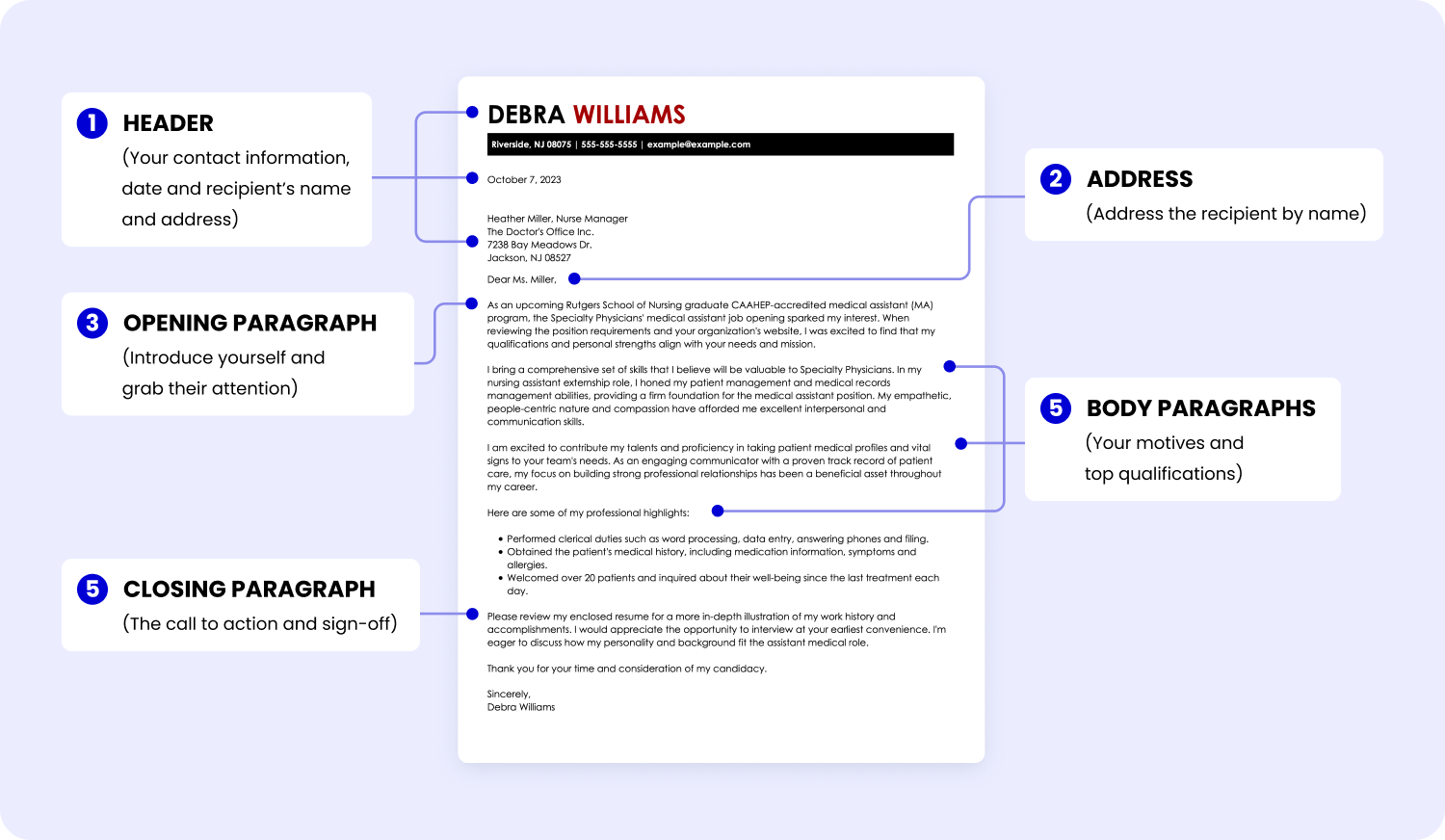
Here’s a diagram showing how the sections of a cover letter fit together:
Want to jump ahead and create your cover letter in just a few minutes? Use our quick and easy Cover Letter Generator, which comes fully loaded with expert tips and ready-to-use content.
A cover letter should be formatted like a professional business letter with clear sections, consistent spacing, and a clean, readable layout.
Use standard fonts, align text to the left, and keep margins even. Proper formatting improves readability, supports compatibility with applicant tracking systems (ATS), and helps employers quickly scan your qualifications.
Follow the steps below for a polished, professional cover letter format.
Step 1
Create a Structured Header
Create a structured cover letter header that includes your name, phone number, and email, followed by the current date and the employer’s name, title, company, and address.
Keep formatting simple, and avoid adding unnecessary design elements to make it easier for ATS and employers to scan and sort your hiring documents.
Add your contact information first, including the following:
Your full name
Your location (city and state; zip code optional)
Your phone number
Your email address
LinkedIn or other relevant online profiles (optional)
Portfolio (optional; best for creative roles)
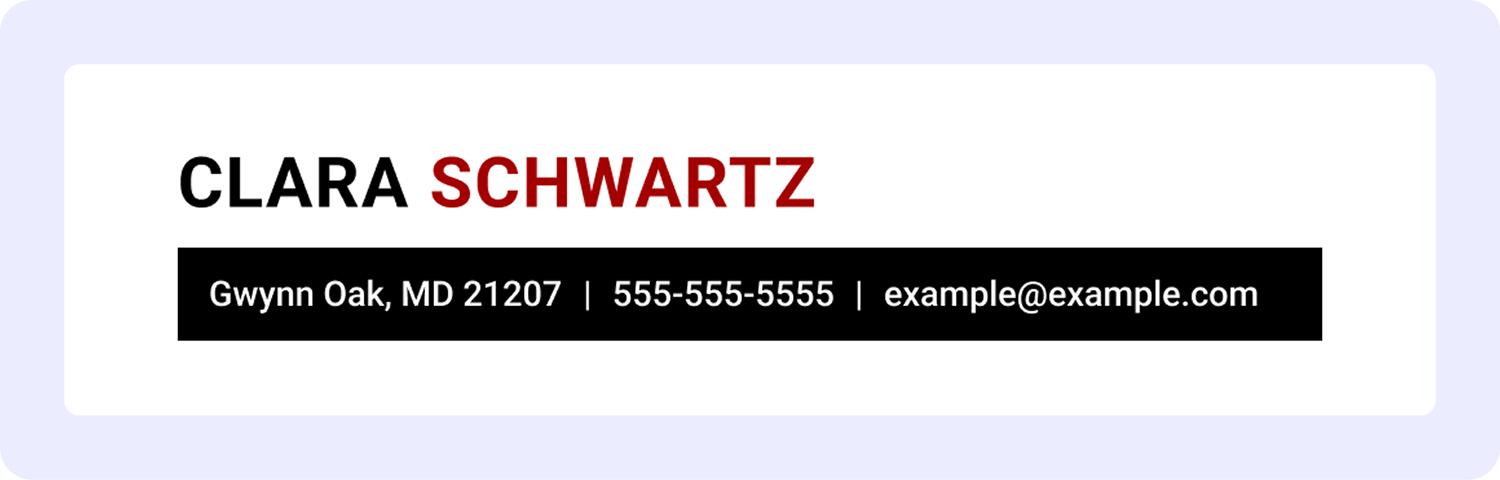
Here’s an example:
Below your contact information, add one blank line, then the date you’re submitting the letter. Add another blank line after the date, then list the hiring manager or recipient’s information:
Hiring manager’s full name
Hiring manager’s job title
Company name
Company’s full address
Here’s how it should look:
April 22, 2026
Lisa M. Wong Director of Marketing The Atlanta Gazette 341 12th Ave. Atlanta, GA 30304
Step 2
Address the Hiring Manager by Name
Whenever possible, address the hiring manager by name using a professional salutation like “Dear [First Name] [Last Name].” Personalizing the greeting shows attention to detail and genuine interest in the role, helping your cover letter feel more direct and engaging.
Avoid outdated terms like “Mr.,” “Ms.,” or “Mrs.” These identifiers imply a person’s gender or marital status, neither of which you’re aware of nor are relevant in a professional setting.
If you can’t find the hiring manager’s name, address your cover letter with a professional fallback like “Dear Hiring Manager” or examples like the following:
Dear HR Director,
Dear Marketing Manager,
Dear Sales Team,
Dear Research and Development Department,
Never, under any circumstance, use “To Whom It May Concern.” This salutation denotes a lack of effort and puts many recruiters off.
Step 3
Write an Attention-Grabbing Introduction
Add an attention-grabbing introduction that clearly states the role you’re applying for and highlights a relevant qualification or achievement. A strong cover letter opening helps employers immediately understand your value and why you’re a strong fit.
Keep it concise and specific to the position. Avoid generic statements, and focus on what makes you uniquely qualified to capture the hiring manager’s interest right away.
Here’s an effective formula for a standout cover letter introduction:
I saw the opening for [job title] and knew my [one to three skills] and [X] years of experience in [area of expertise] made me the ideal candidate for the [Company name] team.
Here’s an example of an opening paragraph that follows this structure:
When I saw the job advertisement for the junior account executive position at LCL Global, I knew I had to take advantage of the opportunity after excelling as a copywriter with brands like Burger King, Lancome, and Porsche for the past three years.
Step 4
Include 1 to 3 Body Paragraphs
Write one to three body paragraphs that highlight your most relevant skills, experience, and achievements. Focused, well-structured paragraphs make your qualifications easier to scan and more persuasive. You can also use bullet points to feature the information for easier reading.
Use each paragraph to share the milestones that made you successful in previous roles. Explain how you got to where you are and how this experience can help you bring similar results to the new position. Keep content concise and tailored to the role, avoiding repetition of your resume.
A few examples of achievements you can include in your body paragraphs are:
Here’s an example of a well-formatted body paragraph for a cover letter:
As a store manager in one of the busiest stores in the largest shopping mall in the state, I’ve trained over 400 employees in sales, stocking, customer service, and warehouse operations. I’m confident I am ready for a promotion to district manager, partly because my peers have consistently recognized me for outstanding leadership and for increasing and maintaining a high level of sales and client satisfaction. When I began my career as a cashier, I knew my discipline, attention to detail, and interpersonal skills would allow me to be a district manager one day.
Step 5
Add a Succinct Closing Paragraph
Complete the body of your letter with a focused closing paragraph that restates your interest, briefly reinforces your value, and includes a clear call to action. A concise, purposeful closing ensures your letter ends clearly and reinforces your fit for the role.
Remember to thank the reader for their time, express interest in an interview, and keep the tone confident but professional.
Thank you for your time and consideration. I am confident that my content, UX writing, and SEO experience make me a strong fit for this role and well-positioned to contribute to your team’s success. I would welcome the opportunity to discuss how my skills can support your goals and look forward to speaking with you soon.
Step 6
Sign Off Professionally
End your cover letter with a professional sign-off followed by your full name. A clean, consistent sign-off helps reinforce professionalism and ensures your letter ends on a polished, credible note.
Avoid overly casual closings like “Thanks” or “Cheers,” as they can weaken the tone of your application. Here’s a list of appropriate cover letter sign-offs:
Sincerely,
Regards,
Best regards,
Kind regards,
Best,
Respectfully,
For digital submissions, you can simply type your name or add a scanned or digital signature for a more formal touch. Both approaches are acceptable in modern job applications.
If you’re submitting a printed copy, you can add a handwritten signature above your typed name for a more formal touch, although most employers expect just a typed name.
Check out our extended guide on how to write a cover letter for more help with writing and even more examples to help you stand out.
Format Your Letter Instantly With Our Cover Letter Generator
Our Cover Letter Generator offers professional templates to help you achieve the perfect cover letter format without the guesswork. It ensures consistency in layout, spacing, and tone, so your letter follows industry standards while saving time.
The builder offers the following benefits:
Step-by-Step Guidance
The builder is fully automated and guides you through writing a cover letter using simple prompts and suggested text at each stage.
Job-Specific Content
Our database includes ready-made phrases tailored to hundreds of job titles. Insert relevant content and customize for your needs.
Multiple File Formats
Once your cover letter is complete, you can download it in multiple formats, including Word, PDF, and plain text (TXT) format.
Cover letter formats stay consistent across industries, but the content should be tailored to each role. Using job-specific cover letter examples helps you understand how to highlight the most relevant qualifications and ensure your letter is professional and impactful.
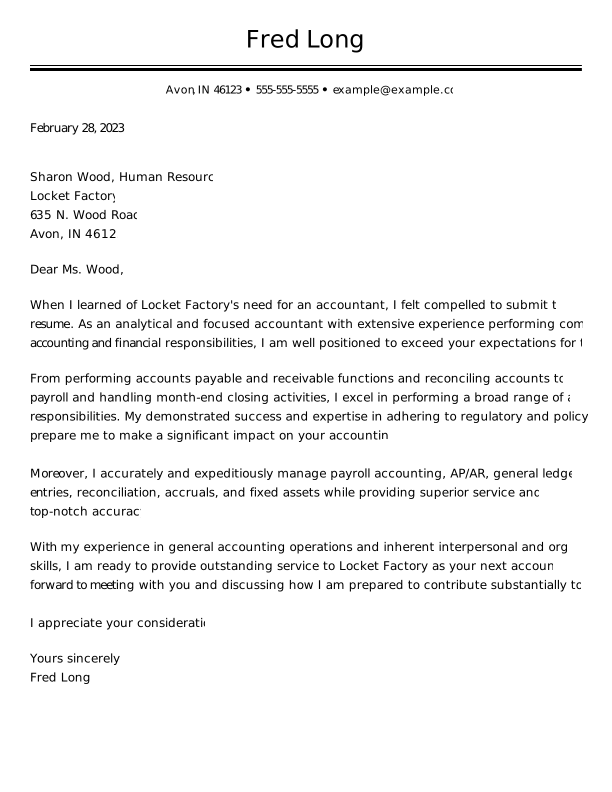
This accountant's cover letter does a great job of showcasing highly relevant expertise in the body paragraph. Pairing the letter with this traditional style template makes it all the more appropriate for an accounting job.
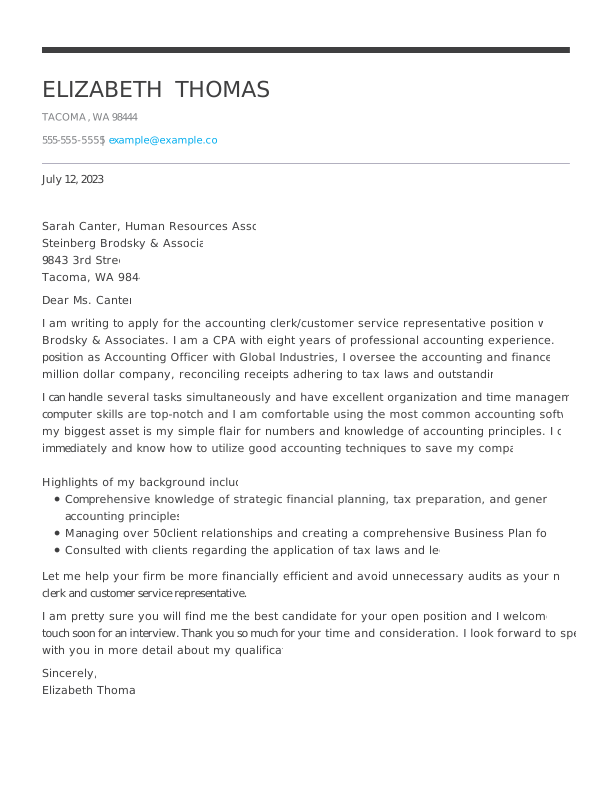
The compelling closing statement sets this customer service representative's cover letter apart, demonstrating their communication skills. This simple cover letter template leaves plenty of room for this slightly longer letter.
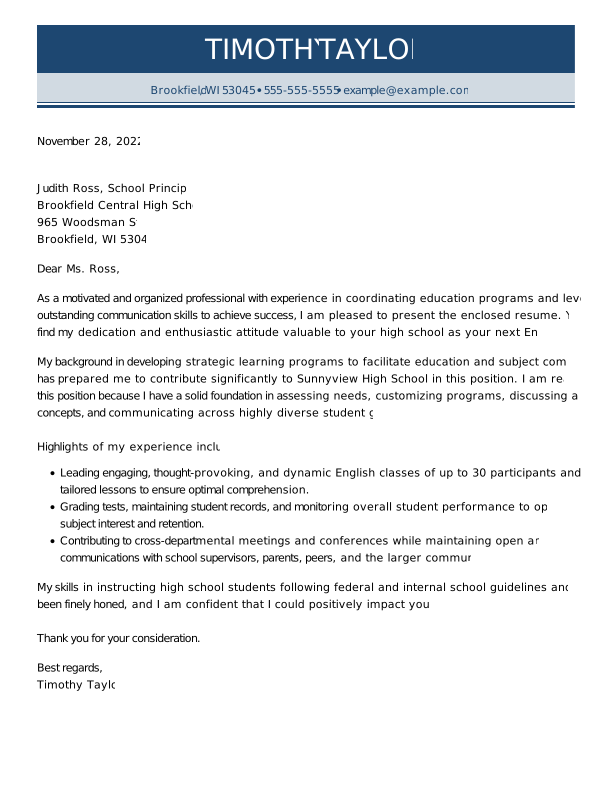
This brilliant cover letter contains professional skills, qualifications, and highly relevant knowledge for this education role. The job seeker opted for one of our bolder templates, which will surely leave a good impression.
Starting strong by sharing their experience in top companies, this cover letter sample cleverly hooks the reader in the opening paragraph. A simple and clean template like this one is ideal for practical job seekers like this project manager.
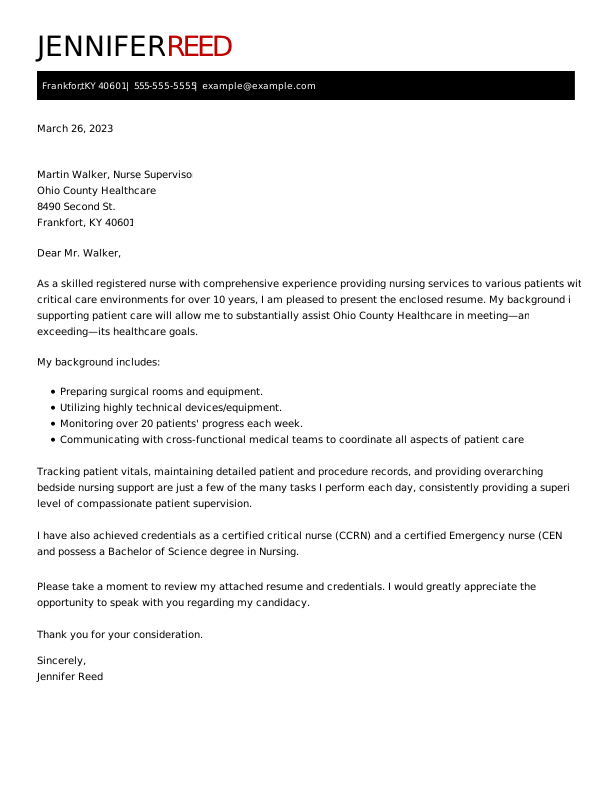
This registered nurse cover letter example shows how to use bullet points in the body paragraph to draw the reader’s eye to key achievements. It also highlights clinical experience, patient care skills, and familiarity with healthcare procedures.
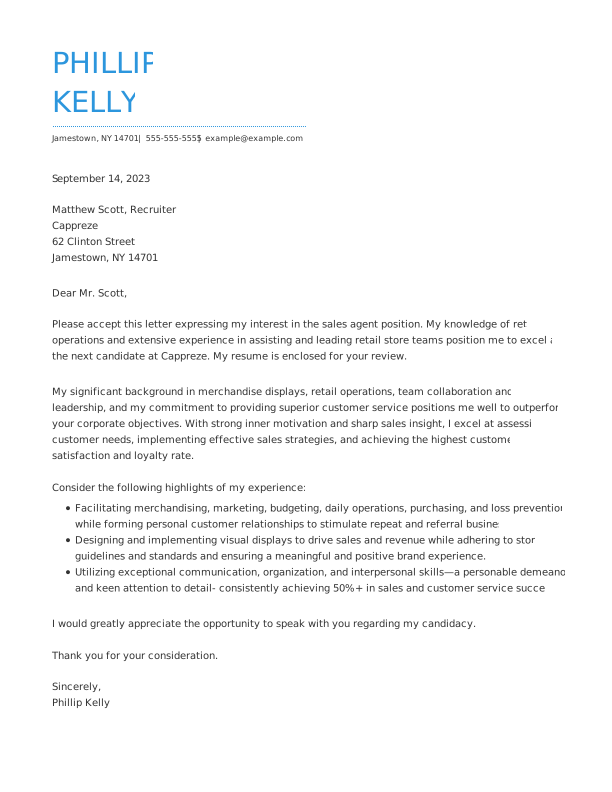
This sales agent cover letter hits the mark by listing all the requirements this role entails, assuring recruiters they’re well-trained for the job. The pop of color makes this otherwise basic cover letter template a favorite for many job seekers.
Guidelines for a Well-Formatted Cover Letter
A well-formatted cover letter uses a clean business letter structure, consistent spacing, and a simple font to ensure it’s easy to read and ATS-friendly. Follow the guidelines below to ensure your cover letter is polished and professional.
Length
Your cover letter should fit onto a single page. It should consist of three to five paragraphs and 250 to 400 words. Submitting a cover letter longer than a page may hurt your job prospects!
Line Spacing
Use single line spacing within paragraphs to keep your cover letter compact and readable, then add a full blank line between each section or paragraph for visual separation.
Margins
One-inch margins are standard on cover letters, and they’re usually the default in word processors. You can double-check your margin size by checking the page layout settings.
Alignment
Your cover letter’s text should all be left-aligned. The only exception is your contact information, which might be centered depending on the style of your cover letter template.
Font
Use a simple, professional font such as Arial, Calibri, or Times New Roman. Stick to a font size between 10 and 12 points for body text, with consistent sizing throughout the document.
File Format
Save your cover letter as a PDF whenever possible to preserve formatting and ensure it appears the same on all devices. You can submit a Word file if the job posting specifically requests it.
Key Takeaways
To recap, make sure you do the following formatting for your cover letter:
Use a standard business letter format with a header, greeting, body, and closing.
Keep formatting clean with one professional font.
Use consistent spacing and 1-inch margins throughout your letter.
Limit your cover letter to one page for clarity and impact.
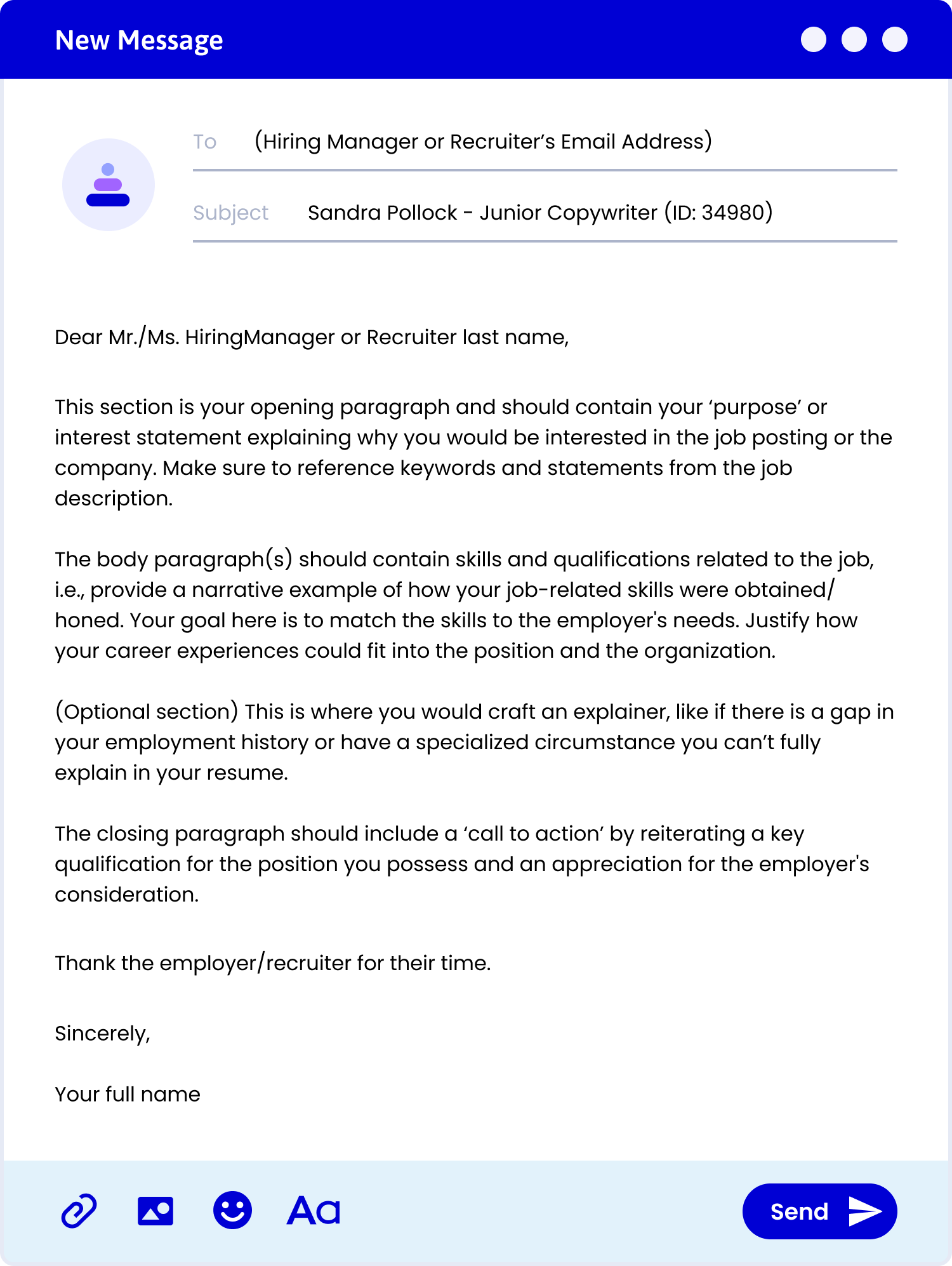
Use a clear subject line and professional email formatting when applying by email.
Save and submit your cover letter as a PDF unless another format is requested.
Tailor your content to each job by highlighting relevant skills and achievements.
Focus on readability over design to ensure readability for recruiters and ATS systems.
Employer’s Information – Hiring manager and company details
Greeting – Professional salutation
Introduction – Role and intent
Body – Skills and experience
Closing/Signature – Sign-off and name
These sections follow a standard business letter format and ensure your cover letter is clear, professional, and easy for employers to scan and evaluate quickly.
What is the proper format for a cover letter?
The proper format for a cover letter is a professional business letter with a left-aligned layout, 1-inch margins, and a clean 10- to 12-point professional font such as Calibri or Arial.
Your cover letter should include your contact details, the date, the employer’s information, a greeting, an opening paragraph, one to three body paragraphs, and a closing paragraph, using single spacing with a blank line between sections and paragraphs.
Do I need a cover letter for every job application?
You don’t always need a cover letter for every job application, but you should include one whenever it’s requested or when you want to strengthen a competitive application. A tailored cover letter helps explain your fit for the role, highlight relevant experience, and show genuine interest, improving your chances of standing out to recruiters and hiring managers.
Repeating your resume instead of adding new insight
Ignoring professional formatting (alignment, margins, font, spacing)
Missing spelling and grammatical errors
Writing long, unfocused paragraphs instead of being concise
Avoiding these mistakes and keeping your cover letter clear, tailored, and professionally formatted can significantly improve your chances of standing out.
What is the rule of three in a cover letter?
The rule of three in a cover letter is a structure where you clearly answer three core questions:
“Why you?”
“Why this role?”
“Why this company?”
This approach keeps your letter focused and persuasive by showing your key strengths, your motivation for the position, and your specific interest in the organization.
What should you not include in a cover letter?
Your cover letter should not include irrelevant personal details, salary expectations unless specifically requested, and content that simply repeats your resume without adding context.
Steer clear of casual language, clichés, spelling or grammar errors, and overly long blocks of text. Negative comments about previous employers should also be excluded to maintain a polished, professional presentation.
How long should a good cover letter be?
A good cover letter should be no longer than one page and is typically around 250 to 400 words when properly formatted. It should use a clean business letter layout with short paragraphs, consistent spacing, and enough white space to remain easy to read.
Most effective cover letters are three to four concise paragraphs that communicate value without overwhelming the reader.
What do recruiters look for in a cover letter?
Recruiters look for a well-structured, professionally formatted cover letter that’s easy to read and tailored to the specific role. They focus on clear alignment between your skills and the job description, evidence of relevant achievements, and a concise explanation of why you want the role. They also expect correct grammar, clean formatting, and a focused, one-page layout.
Gabriela is a Certified Professional Resume Writer (CPRW) and member of the Professional Association of Resume Writers & Career Coaches. She focused on helping job seekers improve their professional resumes to highlight their unique skills and experience. Gabriela holds a BA in journalism from the University of Puerto Rico and brought more than four years of specialized experience to helping candidates navigate the complexities of the online job market, with a strong focus on resume optimization and effective self-presentation.