Men’s Mental Health at Work: Nearly 8 in 10 Hide Their Stress & Struggles to Appear Strong or Professional


Hired By:*

 Add LiveCareer as a preferred source on Google
Men’s mental health issues are often described as a silent crisis, with many struggles going undetected as men face pressure to always appear composed.
LiveCareer’s Men’s Mental Health Check-In Report found that nearly 8 in 10 men have hidden stress, burnout, or mental health struggles at work to appear strong or professional.
Based on a survey of 700 employed U.S. men, the report also found that 84% believe men are expected to “tough it out” and avoid showing mental health struggles at work.
Key Findings
- Workplace expectations encourage silence. 78% have concealed stress, burnout, or mental health struggles at work to appear strong or professional.
- Men feel pressured to “tough it out.” 84% believe men are expected to avoid showing mental health struggles at work.
- Manager check-ins are absent. 52% say their manager hasn’t checked in on their mental well-being in the past year.
- Workplace culture carries a steep price. 65% have considered leaving or left a job because it negatively affected their mental health.
- Many fear speaking up. 34% cite judgment or men’s mental health stigma as a barrier to seeking support, while 32% fear it could hurt their career.
Men Keep Their Struggles Hidden at Work
For many men, appearing strong or professional means keeping stress, burnout, or mental health struggles out of view. Men’s mental health in the workplace statistics reveal that nearly 8 in 10 (78%) say they’ve hidden these struggles at work at least occasionally.
When asked how frequently they’ve done so to appear strong or professional:
- 24% – Constantly
- 54% – Occasionally
- 54% – Never
What this means: With a culture of men hiding mental health at work, coworkers and managers may have little indication that they need support.
Workplace Culture Normalizes Harmful Expectations
More than 8 in 10 (84%) believe that men are expected to “tough it out” and avoid showing mental health struggles at work. When most people feel this way, it suggests dangerous cultural norms have taken root in the workplace.
What this means: When men don’t hear others speak openly about their struggles, they may assume the subject is taboo at work. That silence can make the expectation to power through it feel even stronger.
Most Managers Never Check In
When managers fail to prioritize mental health or check in with employees, they reinforce an atmosphere where mental health struggles go unspoken. More than half of men (52%) say their manager didn’t check in even once about their stress or mental well-being in the past year.
When asked how often their manager had checked in:
- 52% – Never
- 28% – A few times
- 10% – Once
- 10% – Frequently
What this means: A manager’s check-in can open the door to a conversation that an employee might struggle to start. Forgoing these conversations can mean missing a critical opportunity to recognize issues early.
Mental Health Strain Reaches a Breaking Point at Work
When a workplace doesn’t support mental health, men may look elsewhere for a healthier environment rather than wait for conditions to change. Nearly two-thirds (65%) have considered leaving or left a job because it was negatively affecting their mental health.
- 36% – Considered leaving but stayed
- 29% – Left a job because it had a negative effect on mental health
- 35% – Haven’t considered leaving for this reason
What this means: Unaddressed mental health struggles can lead to employee turnover, but the bigger issue is that stress, anxiety, or mental health issues could follow men into their next role.
Why Men Hesitate to Seek Support
Men face many obstacles to discussing mental health concerns or seeking support at work, but most stem from the desire to handle their struggles alone and fears about judgment, career damage, and privacy. Only 15% say they would feel comfortable seeking support.
The biggest barriers preventing men from discussing a mental health concern or seeking support at work are:
- 35% – Desire to handle it on their own
- 34% – Fear of judgment or stigma
- 32% – Fear that speaking up could hurt their career
- 30% – Privacy or confidentiality concerns
- 20% – Lack of trust in their manager
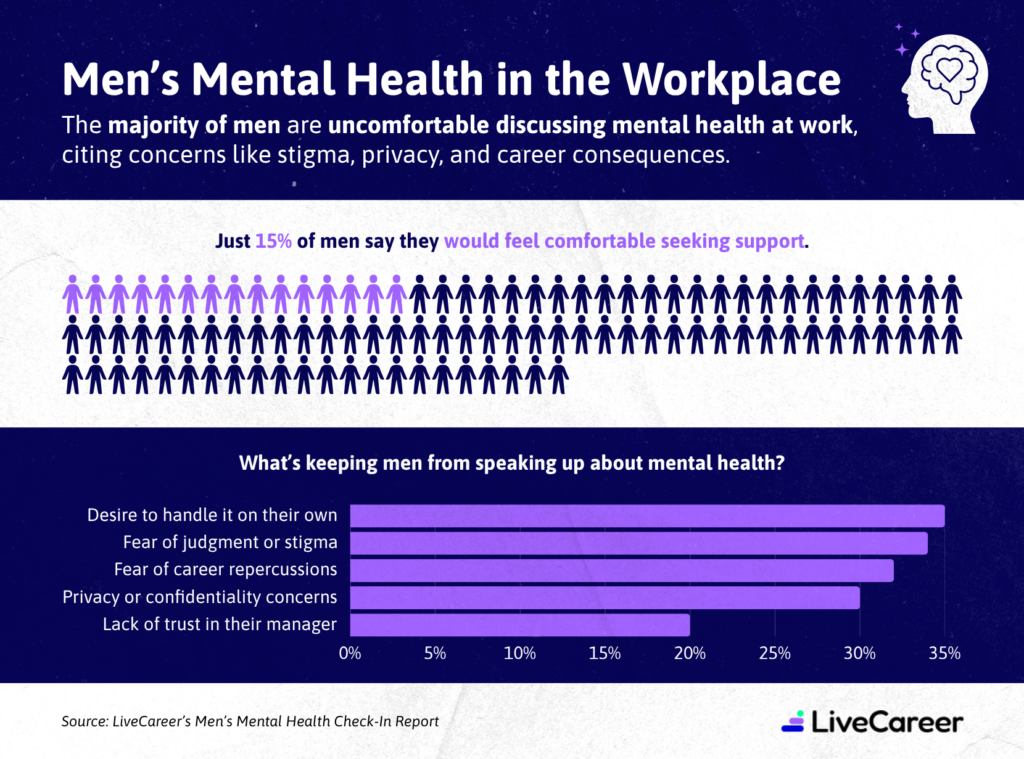
What this means: Having support in place is only part of the equation. Men also need to feel they can ask for help and use available services without risking their professional reputation, privacy, or career prospects.
Workplace Changes Men Want Most
Men also identified the workplace changes that would most improve their mental health:
- 33% – More flexible work arrangements
- 31% – More manageable workloads
- 28% – Additional paid time off for mental health
- 20% – Affordable, confidential mental health services
What this means: Workplace flexibility, manageable workloads, mental health days, and accessible mental health services are important first steps toward improving workplace culture and building systems for men facing mental health challenges.
Currently, today’s workplace can be a negative environment for men dealing with stress, anxiety, or mental health issues. It’s critical that stigmas and outdated perceptions that encourage men to suffer silently are broken down so that men feel comfortable being more open with their struggles and challenges.
For press inquiries, please contact Elizabeth Buccianti at elizabeth.buccianti@bold.com.
Methodology
This report's findings are based on a nationally representative survey conducted by LiveCareer using Pollfish on September 15, 2026. The survey collected responses from 700 U.S. men currently employed and explored their workplace mental health experiences. They answered various question types, including yes/no, open-ended, scale-based (indicating agreement with statements), and multiple-choice questions (selecting from a list of options).
Participants represented a broad cross-section of employed men in the workforce. Age-wise, the distribution was also balanced: 23% were aged 18–28 (Gen Z), 28% were aged 29–44 (millennials), 25% were aged 45–60 (Gen X), and 24% were aged 61–79 (baby boomers).
All participants were screened to ensure they were currently residing in the U.S. and actively employed at the time of the survey. Data collection adhered to Pollfish’s quality control standards to ensure accurate, reliable results.


Ready to
land the job?
Join 28M+ others who’ve built a resume that works.